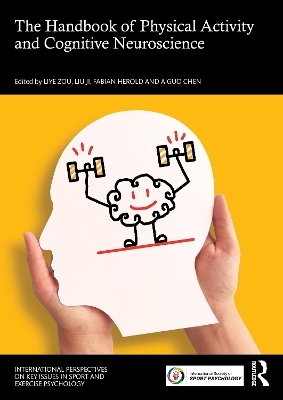
The Handbook of Physical Activity and Cognitive Neuroscience
Routledge (Verlag)
978-1-041-03116-1 (ISBN)
- Noch nicht erschienen (ca. Juni 2026)
- Versandkostenfrei
- Auch auf Rechnung
- Artikel merken
This comprehensive handbook provides an authoritative collection of exercise-cognition research, exploring the historical development, current state, and future implications of the field. Written by international experts, the work unravels the intricate relationship between physical activity and brain function while establishing essential terminologies, definitions, and potential mediators of exercise-induced cognitive changes.
The handbook covers foundational background knowledge, research methodologies, and developmental perspectives across diverse populations. It addresses theoretical frameworks and practical considerations for designing, implementing, and analyzing interventions in exercise-cognition research. Coverage includes widely-used neuroimaging techniques such as fNIRS, EEG, and fMRI, alongside emerging tools including TMS/TES, pupillometry, saccadic eye movements, PET, and transcranial Doppler ultrasound. The work also examines cutting-edge developments in digital applications, exergames, and the critical impact of sedentary behavior on brain health, providing readers with knowledge to design rigorous experiments and implement evidence-based exercise strategies.
This essential resource serves students across multiple disciplines including health psychology, neuroscience, kinesiology, exercise science, public health, and rehabilitation. The accessible yet comprehensive approach makes it invaluable for researchers, practitioners, and anyone seeking to understand the scientific foundations of physical activity's cognitive benefits.
Professor Liye Zou is a full professor and doctoral advisor in the Department of Psychology at Shenzhen University, China. Professor Liu Ji is a distinguished professor at East China Normal University, China. Dr. Fabian Herold is a postdoctoral researcher at HMU Health and Medical University Erfurt, Germany. Professor Aiguo Chen is the Vice President of Nanjing Sport Institute, China.
List of Contributors Acknowledgement Series Foreword About the Editors Preface Section 1: Background 1. History of Exercise-Cognition Research: Rationales and Research 2. Physical Activity and Cognitive Aging from an Evolutionary Neuroscience Perspective: An Update to the Adaptive Capacity Model 3. Physical activity, Physical exercise, Physical training, Fitness - What is the Difference? 4. Cognitive Functions – An Overview of the Different Domains 5. Moderators of the Effects of Acute and Chronic Exercise on Cognitive Performance Section 2: Methods 6. Mapping Human Cognition onto Physical Activity via Electroencephalogram 7. Using fNIRS to Elucidate Exercise and Movement-Induced Brain Adaptations: Methodological Consideration and Application 8. Transcranial Magnetic Stimulation and Exercise-Induced Neuroplasticity 9. Pupillometry in Exercise-Cognition Research 10. The Antisaccade Task: An Oculomotor Measure Providing a ‘Window’ to Exercise-Based Changes in Executive Function 11. Positron emission tomography (PET): Dopamine 12. Transcranial Doppler Ultrasonography Section 3: Population 13. Physical Activity and Preschool Cognitive Development: Evidence, Mechanisms, and Design 14. Physical Activity and Neurocognition in Typically Developing Children 15. Physical Activity for Scholastic Performance in Children and Adolescents 16. Physical activity and higher-order cognition in children and adolescents with Autism Spectrum Disorder 17. Physical Activity and Cognitive Function in Attention-Deficit Hyperactivity Disorder 18. Integrating Behavioral and Neuroelectric Evidence: Exercise-Induced Enhancement of Executive Functions in Children and Adolescents with Preterm Birth 19. Physical Activity and the Optimization of Brain Function in Younger Adults 20. Physical Activity, Cognitive Functioning, and Brain Health in Middle-Aged Adults 21. Physical Activity and Cognitive Function in Older Adults: with and without Cognitive Impairment Section 4: Theoretical & Practical Considerations 22. Methodological Considerations in Behavioral Studies 23. Neuropsychological Mechanisms Underlying Human Motivation for Physical Activity 24. Neural Correlates of Adherence to Exercise, Physical Activity and Sedentary Behaviors 25. Strategies to Improve the Affective Experience of Exercise 26. Who Benefits? Interindividual Variability in Exercise-Induced Cognitive Enhancement 27. Digital solutions to remotely assess physical and cognitive fitness in research and healthcare 28. Technological Frontiers in Exercise and Cognitive Function: Interplay, Intervention, and Individualization 29. Exergames – from Leisure Time Fun and Games to Superior Exercise Delivery for Enhancing Cognition 30. Designing Movement-Based Digital Learning Environments: Interdisciplinary Principles for Physical Activity and Cognition 31. E-sport and cognition Section 5: Future direction 32. The 24-Hour Day and Cognitive Health in Middle Aged and Older Adult 33. Sedentary Behavior and Brain Health Across the Lifespan 34. Body Composition (Obesity) and Brain Health 35. The combination of Exercise and Hypoxia for Brain Health Index
| Erscheint lt. Verlag | 16.6.2026 |
|---|---|
| Reihe/Serie | ISSP Key Issues in Sport and Exercise Psychology |
| Zusatzinfo | 10 Tables, black and white; 44 Line drawings, black and white; 2 Halftones, black and white; 46 Illustrations, black and white |
| Verlagsort | London |
| Sprache | englisch |
| Maße | 174 x 246 mm |
| Themenwelt | Sachbuch/Ratgeber ► Sport |
| Geisteswissenschaften ► Psychologie ► Sozialpsychologie | |
| Medizin / Pharmazie | |
| Naturwissenschaften ► Biologie ► Humanbiologie | |
| Naturwissenschaften ► Biologie ► Zoologie | |
| Weitere Fachgebiete ► Sportwissenschaft | |
| ISBN-10 | 1-041-03116-5 / 1041031165 |
| ISBN-13 | 978-1-041-03116-1 / 9781041031161 |
| Zustand | Neuware |
| Informationen gemäß Produktsicherheitsverordnung (GPSR) | |
| Haben Sie eine Frage zum Produkt? |
aus dem Bereich