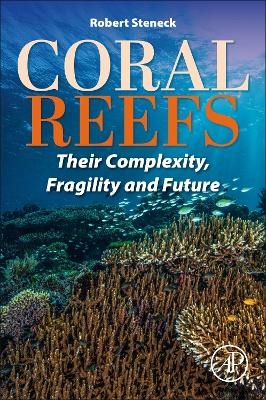
Coral Reefs
Academic Press Inc (Verlag)
978-0-443-30164-3 (ISBN)
- Noch nicht erschienen (ca. August 2026)
- Versandkostenfrei
- Auch auf Rechnung
- Artikel merken
Dr. Robert Steneck is Professor of Marine Sciences at the University of Maine’s School of Biology and Ecology. He obtained his PhD from John’s Hopkins University and brings 50 years of research experience on Caribbean and Indopacific corals to the project. He specializes in the ecology and evolutionary biology of benthic marine algae, invertebrates, and communities. He is a distinguished marine researcher who has been awarded Fellow of the American Association for the Advancement of Science (AAAS), Pew Fellow in Marine Conservation, Bates-Morse Mountain Award for Environmental Lifetime Achievement, and, most recently, the University of Maine Presidential Research and Creative Achievement Award.
I. Overview • What are coral reefs and why should we care?
1. Where do we find reefs and where are they most diverse?
2. Why are coral reefs not found everywhere? Physical and chemical needs
II. Types of Coral Reefs
3. How many kinds of coral reefs are there and how do they differ?
4. Barrier reefs, atolls, and fringing reefs
III. Organisms that Build Coral Reefs
5. The phylum (Cnidaria) and the symbiosis that makes coral reefs happen
6. The role of sunlight and algal symbionts in coral calcification and growth
7. Other reef builders such as calcareous algae
IV. Reef Corals and Other Reef Creatures
8. It takes a village: Which critters thrive on coral reefs, and which help coral reefs thrive?
9. Macrophytes
10. Echinoderms
11. Lobsters
12. Mollusks
13. Fish
V. Geological Patterns and Processes
14. How do coral reefs form and how old are they?
15. Darwin’s volcanoes and other theories of how reefs form over geological time
16. Relative sea level changes: Catch up, keep up, or drown
VI. Biological Patterns and Processes
17. Who needs sexual reproduction on coral reefs and who doesn’t?
18. Fundamental distinctions between aclonal, clonal, and colonial animals
19. How and why populations are established on coral reefs
20. Larval dispersal and connectivity
21. What limits populations?
22. Interacting processes and their role in population dynamics
23. Thresholds, feedbacks, and resilience
VII. Scaling Up in Space and Time
24. Coral reefs before there were dinosaurs
25. Macroevolution of reef corals
26. Macroevolution of reef fishes
27. Why are coral reefs so different from place to place? Biodiversity hotspots
VII. Coral Reefs in the Anthropocene
28. Global climate stresses
29. Coral bleaching & disease
30. Overfishing, management, and MPAs
31. Coral restoration
32. Next-gen coral reefs and extreme measures to save reefs
33. Causes for optimism
| Erscheint lt. Verlag | 1.8.2026 |
|---|---|
| Verlagsort | San Diego |
| Sprache | englisch |
| Maße | 152 x 229 mm |
| Gewicht | 450 g |
| Themenwelt | Naturwissenschaften ► Biologie ► Limnologie / Meeresbiologie |
| Naturwissenschaften ► Biologie ► Ökologie / Naturschutz | |
| Naturwissenschaften ► Geowissenschaften ► Geografie / Kartografie | |
| Weitere Fachgebiete ► Land- / Forstwirtschaft / Fischerei | |
| ISBN-10 | 0-443-30164-6 / 0443301646 |
| ISBN-13 | 978-0-443-30164-3 / 9780443301643 |
| Zustand | Neuware |
| Informationen gemäß Produktsicherheitsverordnung (GPSR) | |
| Haben Sie eine Frage zum Produkt? |
aus dem Bereich