


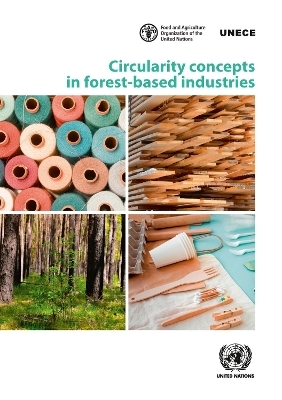
Circularity concepts in forest-based industries
Seiten
2022
United Nations (Verlag)
978-92-1-117288-1 (ISBN)
United Nations (Verlag)
978-92-1-117288-1 (ISBN)
Analyses the existing and possible limitations to circular approaches in forest-based industries, namely the woodworking industry, the furniture industry, the paper and pulp industry as well as industry using cellulose-based fibres and cellulose-based plastics.
The world's prevalent economic model, based on a 'take-make-use-dispose' approach, cannot maintain and raise human standards of living without causing environmental degradation and incurring economic risks. Decoupling economic activity from the increasing demand for natural resources could be done through circular, bio-based economy approaches leading to a regenerative growth model, allowing humankind to reduce its environmental footprint on the planet. The forest sector, situated in both the biological and technical cycles of a circular economy, is well suited to embrace a circular, bio-based economic model. However, challenges in the overall circularity of forest-based value chains persist as a result of the sector's traditional means of operation. To ensure the sustainability of the forest-based value chains, continuous consideration and coordination of circularity at all stages of the value chains are needed. This study analyses the existing and possible limitations to circular approaches in forest-based industries, namely the woodworking industry, the furniture industry, the paper and pulp industry as well as industry using cellulose-based fibres and cellulose-based plastics. The analysis provides evidence that not all circular approaches are sustainable under all circumstances. In some cases, the focus on circularity may cause environmental externalities, in other cases, it may not guarantee economic viability. While the transition to a circular, bio-based economy can be facilitated by a legislator, the process will need to develop organically, based on the location of industries, proximity to available (waste) resources and consumer preferences
The world's prevalent economic model, based on a 'take-make-use-dispose' approach, cannot maintain and raise human standards of living without causing environmental degradation and incurring economic risks. Decoupling economic activity from the increasing demand for natural resources could be done through circular, bio-based economy approaches leading to a regenerative growth model, allowing humankind to reduce its environmental footprint on the planet. The forest sector, situated in both the biological and technical cycles of a circular economy, is well suited to embrace a circular, bio-based economic model. However, challenges in the overall circularity of forest-based value chains persist as a result of the sector's traditional means of operation. To ensure the sustainability of the forest-based value chains, continuous consideration and coordination of circularity at all stages of the value chains are needed. This study analyses the existing and possible limitations to circular approaches in forest-based industries, namely the woodworking industry, the furniture industry, the paper and pulp industry as well as industry using cellulose-based fibres and cellulose-based plastics. The analysis provides evidence that not all circular approaches are sustainable under all circumstances. In some cases, the focus on circularity may cause environmental externalities, in other cases, it may not guarantee economic viability. While the transition to a circular, bio-based economy can be facilitated by a legislator, the process will need to develop organically, based on the location of industries, proximity to available (waste) resources and consumer preferences
| Erscheinungsdatum | 31.08.2022 |
|---|---|
| Reihe/Serie | Geneva timber and forest study paper |
| Zusatzinfo | col. ill., col. figs, tables |
| Verlagsort | New York |
| Sprache | englisch |
| Themenwelt | Sozialwissenschaften ► Politik / Verwaltung ► Europäische / Internationale Politik |
| Weitere Fachgebiete ► Land- / Forstwirtschaft / Fischerei | |
| ISBN-10 | 92-1-117288-8 / 9211172888 |
| ISBN-13 | 978-92-1-117288-1 / 9789211172881 |
| Zustand | Neuware |
| Informationen gemäß Produktsicherheitsverordnung (GPSR) | |
| Haben Sie eine Frage zum Produkt? |
Mehr entdecken
aus dem Bereich



aus dem Bereich
kurze Geschichte einer langen Beziehung
Buch | Hardcover (2025)
Suhrkamp (Verlag)
CHF 36,40
Amerikas Strategie der Vorherrschaft und der Kampf um Eurasien
Buch | Softcover (2024)
NOMEN Verlag
CHF 27,95
erfolgreiche Interessenvertretung durch Prozesskompetenz im komplexen …
Buch | Hardcover (2023)
Wiley-VCH (Verlag)
CHF 58,75


