Endangered Maize (eBook)
336 Seiten
University of California Press (Verlag)
978-0-520-97379-4 (ISBN)
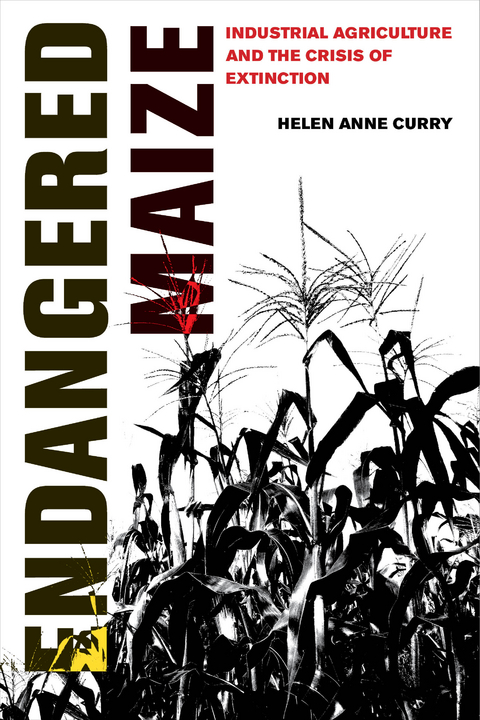
Many people worry that we're losing genetic diversity in the foods we eat. Over the past century, crop varieties standardized for industrial agriculture have increasingly dominated farm fields. Concerned about what this transition means for the future of food, scientists, farmers, and eaters have sought to protect fruits, grains, and vegetables they consider endangered. They have organized high-tech genebanks and heritage seed swaps. They have combed fields for ancient landraces and sought farmers growing Indigenous varieties. Behind this widespread concern for the loss of plant diversity lies another extinction narrative that concerns the survival of farmers themselves, a story that is often obscured by urgent calls to collect and preserve. Endangered Maize draws on the rich history of corn in Mexico and the United States to uncover this hidden narrative and show how it shaped the conservation strategies adopted by scientists, states, and citizens.
In Endangered Maize, historian Helen Anne Curry investigates more than a hundred years of agriculture and conservation practices to understand the tasks that farmers and researchers have considered essential to maintaining crop diversity. Through the contours of efforts to preserve diversity in one of the world's most important crops, Curry reveals how those who sought to protect native, traditional, and heritage crops forged their methods around the expectation that social, political, and economic transformations would eliminate diverse communities and cultures. In this fascinating study of how cultural narratives shape science, Curry argues for new understandings of endangerment and alternative strategies to protect and preserve crop diversity.
Contents
List of Figures
Acronyms
Introduction
1 • Collect
2 • Classify
3 • Preserve
4 • Copy
5 • Negotiate
6 • Evaluate
7 • Grow
Coda
Acknowledgments
Notes
Archives and Bibliography
Index
| Erscheint lt. Verlag | 25.1.2022 |
|---|---|
| Sprache | englisch |
| Themenwelt | Sachbuch/Ratgeber ► Essen / Trinken ► Themenkochbücher |
| Geisteswissenschaften ► Geschichte ► Regional- / Ländergeschichte | |
| Naturwissenschaften ► Biologie ► Ökologie / Naturschutz | |
| Sozialwissenschaften | |
| Technik ► Lebensmitteltechnologie | |
| Weitere Fachgebiete ► Land- / Forstwirtschaft / Fischerei | |
| Schlagworte | Agricultural • Agriculture • biodiversity • books by science historians • conservation efforts • corn cultivation • Crop Science • Cultural • History • human diversity • Indigenous • Latin America • Latin American • Science history • seed banks and exchanges |
| ISBN-10 | 0-520-97379-8 / 0520973798 |
| ISBN-13 | 978-0-520-97379-4 / 9780520973794 |
| Informationen gemäß Produktsicherheitsverordnung (GPSR) | |
| Haben Sie eine Frage zum Produkt? |
 PDF (Adobe DRM)
Kopierschutz: Adobe-DRM
Adobe-DRM ist ein Kopierschutz, der das eBook vor Mißbrauch schützen soll. Dabei wird das eBook bereits beim Download auf Ihre persönliche Adobe-ID autorisiert. Lesen können Sie das eBook dann nur auf den Geräten, welche ebenfalls auf Ihre Adobe-ID registriert sind.
Details zum Adobe-DRM
Dateiformat: PDF (Portable Document Format)
Mit einem festen Seitenlayout eignet sich die PDF besonders für Fachbücher mit Spalten, Tabellen und Abbildungen. Eine PDF kann auf fast allen Geräten angezeigt werden, ist aber für kleine Displays (Smartphone, eReader) nur eingeschränkt geeignet.
Systemvoraussetzungen:
PC/Mac: Mit einem PC oder Mac können Sie dieses eBook lesen. Sie benötigen eine
eReader: Dieses eBook kann mit (fast) allen eBook-Readern gelesen werden. Mit dem amazon-Kindle ist es aber nicht kompatibel.
Smartphone/Tablet: Egal ob Apple oder Android, dieses eBook können Sie lesen. Sie benötigen eine
Geräteliste und zusätzliche Hinweise
Buying eBooks from abroad
For tax law reasons we can sell eBooks just within Germany and Switzerland. Regrettably we cannot fulfill eBook-orders from other countries.
aus dem Bereich