Sustainable Agriculture Reviews 41 (eBook)
216 Seiten
Springer International Publishing (Verlag)
978-3-030-33996-8 (ISBN)
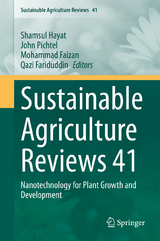
This book presents recent developments involving the role of nanoparticles on plant physiology and growth. Nanotechnology applications include improvement of agricultural production using bio-conjugated NPs (encapsulation), transfer of DNA in plants for development of insect pest-resistant varieties, nanoformulations of agrochemicals such as pesticides and fertilizers for crop improvement, and nanosensors/nanobiosensors in crop protection for identification of diseases and residues of agrochemicals. Recent findings on the increased use of nanotechnology in agriculture by densely populated countries such as China and India indicate that this technology may impart a substantial impact on reducing hunger, malnutrition, and child mortality.
Preface 6
Contents 8
About the Editors 10
Contributors 13
Chapter 1: Nanomaterials: Scope, Applications, and Challenges in Agriculture and Soil Reclamation 15
1.1 Introduction 15
1.2 Nanotechnology Applications in Agriculture 18
1.2.1 Plant Germination and Growth 18
1.2.2 Plant Protection and Production 19
1.2.3 Pesticide Residue Detection 22
1.2.4 Plant Pathogen Detection 24
1.2.5 Nanomaterials for (Mine?) Soil Reclamation and Environmental Remediation 24
1.2.5.1 Zeolites as a Soil Conditioner 25
Reducing Soil Bulk Density and Improving Soil Water Holding Capacity 25
Improving Soil pH and Cation Exchange Capacity 26
1.2.5.2 Nano-Enhanced Fertilizers 27
Zeolite-Enhanced Fertilizers 27
Other Nano-Enhanced Fertilizers 28
1.2.5.3 Nanomaterials for Remediating the Mine Soils Contaminated with Heavy Metals and Other Toxins 28
Zeolites 28
Iron Oxide Nanoparticles (nFeOs) 29
Nanoscale Zero-Valent Iron Particles (nZVI) 32
Phosphate-Based Nanoparticles 35
Iron Sulfide Nanoparticles 36
Carbon Nanotubes 38
1.2.5.4 Using Nanoenhanced Materials as Solid Waste Stabilizers/Conditioners 40
1.2.5.5 Using Nanoenhanced Materials to Control Soil Erosion 41
1.3 Conclusion 42
References 43
Chapter 2: Phosphorus Phytoavailability upon Nanoparticle Application 54
2.1 Introduction 55
2.2 Phosphorous as a Macronutrient 55
2.3 Soil Status 55
2.4 Forms of Phosphorus in Soil 57
2.4.1 Soil Solution Phosphorus 58
2.4.2 Inorganic Labile Phosphorus 58
2.4.3 Soil Organic Phosphorus 59
2.5 Abiotic Factors Affecting Phosphorus Availability 59
2.5.1 Temperature 59
2.5.2 pH 59
2.6 Environmental Concerns 60
2.7 Nanotechnology as an Option in Soil Fertility 61
2.8 Applications of NPs in Agriculture 61
2.9 NP Amendments and Soil Nutrients 62
2.9.1 Soil Properties and the Effect of NPs 66
2.9.2 Effect of NPs on Phosphorus Availability 67
2.10 Phytotoxic Effects of NPs on Plants 67
2.11 Mechanisms and Entry Routes of NPs in Plants 68
2.12 Microscopic and Spectrometric Techniques Used to Determine NPs Effects 70
2.13 Conclusions 71
References 71
Chapter 3: Synthesis of Metal/Metal Oxide Nanoparticles by Green Methods and Their Applications 75
3.1 Introduction 76
3.2 Methods of NP Synthesis 76
3.2.1 Nanoparticle Synthesis by Green Methods 77
3.2.2 Bacteria 78
3.2.3 Fungi 78
3.2.4 Algae 79
3.2.5 Plants 79
3.3 Synthesis of Metal Nanoparticles From Plants 80
3.3.1 Plant Extract Preparation 80
3.3.2 Metal/Metal Oxide Nanoparticle Preparation 81
3.3.3 Specifications of Synthesized Nanoparticles 81
3.3.3.1 Color Change 81
3.3.3.2 Spectrophotometry 82
3.3.3.3 Transmission Electron Microscopy (TEM) and Scanning Electron Microscopy (SEM) 82
3.4 Applications of Nanoparticles 82
3.4.1 Antibacterial and Antifungal Properties of Silver Nanoparticles 82
3.4.2 Effects of Nanoparticles on Plant Growth and Development 86
3.5 Conclusion 88
References 89
Chapter 4: Effects of Zinc Oxide Nanoparticles on Crop Plants: A Perspective Analysis 94
4.1 Introduction 94
4.2 Synthesis of ZnO-NPs 96
4.2.1 Chemical Synthesis 97
4.2.1.1 Reaction of Metabolic Zinc with Alcohol 97
4.2.1.2 Vapor Transport Synthesis 97
4.2.1.3 Hydrothermal Technique 97
4.2.1.4 Precipitation Method 98
4.2.2 Green Synthesis 98
4.3 Uptake of ZnO-NPs in Plants 99
4.4 Distinguishing Properties of ZnO-NPs 99
4.4.1 Physical Properties 100
4.4.2 Antibacterial Properties 100
4.5 The Role of ZnO-NPs in Agriculture 100
4.6 Zinc Oxide Nanoparticles and Plants Under Abiotic Stress 102
4.6.1 Drought Stress 103
4.6.2 Metal Stress 103
4.6.3 Salinity Stress 105
4.7 Conclusion 105
References 106
Chapter 5: Response of Titanium Nanoparticles to Plant Growth: Agricultural Perspectives 111
5.1 Introduction 111
5.2 Biosynthesis of TiO2 Nanoparticles 112
5.3 Uptake, Transport, and Translocation of Ti/TiO2 NPs 113
5.4 Titanium Nanoparticles in Plants 114
5.4.1 Beneficial Role of Ti/TiO2 NPs in Plants 115
5.4.2 Negative Impacts of TiO2 NPs to Plants 116
5.5 Conclusions and Future Perspectives 117
References 117
Chapter 6: Impact of Silver Nanoparticles on Plant Physiology: A Critical Review 121
6.1 Introduction 121
6.2 Effect of Silver Oxide Nanoparticles in Plant Physiological Processes 123
6.2.1 Seed Germination 123
6.2.2 Photosynthesis 123
6.2.3 Plant Growth 128
6.2.4 Reactive Oxygen Species Generation 129
6.2.5 Accumulation of Compatible Solutes 129
6.2.6 Enzymatic and Non-enzymatic Antioxidants 131
6.3 Effect of Silver Nanoparticles Under Plant Abiotic Stress 131
6.3.1 Salt Stress 131
6.3.2 Flooding Stress 132
6.3.3 Heat Stress 133
6.4 Conclusions 134
References 134
Chapter 7: Silicon Nanoparticles and Plants: Current Knowledge and Future Perspectives 138
7.1 Introduction 138
7.2 Silicon Nanoparticle-Mediated Regulation of Physiological Processes 139
7.2.1 Germination 139
7.2.2 Growth 140
7.2.3 Photosynthesis 141
7.2.4 Cellular Redox Status during Abiotic Stress 141
7.2.4.1 Salt Stress 142
7.2.4.2 Water Stress 143
7.2.4.3 Heavy Metals 144
7.3 Si Nanoparticle-Generated Phytotoxicity 145
7.4 Summary and Conclusions 146
References 147
Chapter 8: Interaction Between Copperoxide Nanoparticles and Plants: Uptake, Accumulation and Phytotoxicity 152
8.1 Introduction 153
8.2 Synthesis of Copper Oxide Nanoparticles (CuO NPs) 154
8.2.1 Physical Methods of Copper Nanoparticlesynthesis 155
8.2.2 Chemical Method of Copper Nanoparticles Synthesis 156
8.2.3 Biosynthesis of Copper Nanoparticles 156
8.3 Uptake, Translocation and Accumulation of Engineered CuO Nanoparticles 157
8.4 Phytotoxicity of CuO Nanoparticles to Algae and Plant Seedlings 158
8.5 Tolerance Mechanisms of Plants Against CuO Nanoparticle Toxicity 161
8.6 Future Prospects 164
References 165
Chapter 9: Nanotechnological Advances with PGPR Applications 171
9.1 Introduction 171
9.2 Titania Nanoparticles 173
9.3 Silica Nanoparticles 176
9.4 Silver Nanoparticles 177
9.5 Gold Nanoparticles 178
9.6 Nanozeolites 179
9.7 Nano Zinc Oxide 179
9.8 Nano Carbon 180
9.9 Nano Boron 181
9.10 Nano Chitosan 181
9.11 Advances of Nanotechnology with PGPR 181
9.11.1 Nano Encapsulation of PGPR 182
9.11.2 Nanobiofertilizers with PGPR 183
9.12 Conclusions 183
References 183
Chapter 10: Interaction of Engineered Nanomaterials with Soil Microbiome and Plants: Their Impact on Plant and Soil Health 189
10.1 Introduction 189
10.2 Plant and Soil Microbiomes 190
10.3 Nanomaterials – A Brief Introduction 192
10.4 Nanomaterials in Soil, Their Release Routes, and Fate 194
10.5 Effect of Nanomaterials on Plant Health and Plant Microbiome 195
10.5.1 Direct Effects of ENMs on Plants 196
10.5.1.1 Influence of ENMs on Soil and Plant Microbiome 197
10.6 Effect of ENMs on Soil Microbial Processes 199
10.7 Role of ENMs in Protecting Plants Against Pathogens 201
10.8 Conclusion 202
References 203
Chapter 11: Nanoparticles: A New Threat to Crop Plants and Soil Rhizobia? 208
11.1 Introduction 209
11.2 Toxicity of NPs to Plants 210
11.3 Toxicity of NPs to Soil Rhizobia 216
11.4 Conclusion 217
References 218
Index 222
| Erscheint lt. Verlag | 6.2.2020 |
|---|---|
| Reihe/Serie | Sustainable Agriculture Reviews | Sustainable Agriculture Reviews |
| Zusatzinfo | XIV, 216 p. 29 illus. |
| Sprache | englisch |
| Themenwelt | Naturwissenschaften ► Biologie |
| Technik | |
| Weitere Fachgebiete ► Land- / Forstwirtschaft / Fischerei | |
| Schlagworte | crop plants • Distribution • Fruit Development • photosynthesis • Plant Physiology • Zinc oxide |
| ISBN-10 | 3-030-33996-3 / 3030339963 |
| ISBN-13 | 978-3-030-33996-8 / 9783030339968 |
| Informationen gemäß Produktsicherheitsverordnung (GPSR) | |
| Haben Sie eine Frage zum Produkt? |
 PDF (Wasserzeichen)
DRM: Digitales Wasserzeichen
Dieses eBook enthält ein digitales Wasserzeichen und ist damit für Sie personalisiert. Bei einer missbräuchlichen Weitergabe des eBooks an Dritte ist eine Rückverfolgung an die Quelle möglich.
Dateiformat: PDF (Portable Document Format)
Mit einem festen Seitenlayout eignet sich die PDF besonders für Fachbücher mit Spalten, Tabellen und Abbildungen. Eine PDF kann auf fast allen Geräten angezeigt werden, ist aber für kleine Displays (Smartphone, eReader) nur eingeschränkt geeignet.
Systemvoraussetzungen:
PC/Mac: Mit einem PC oder Mac können Sie dieses eBook lesen. Sie benötigen dafür einen PDF-Viewer - z.B. den Adobe Reader oder Adobe Digital Editions.
eReader: Dieses eBook kann mit (fast) allen eBook-Readern gelesen werden. Mit dem amazon-Kindle ist es aber nicht kompatibel.
Smartphone/Tablet: Egal ob Apple oder Android, dieses eBook können Sie lesen. Sie benötigen dafür einen PDF-Viewer - z.B. die kostenlose Adobe Digital Editions-App.
Buying eBooks from abroad
For tax law reasons we can sell eBooks just within Germany and Switzerland. Regrettably we cannot fulfill eBook-orders from other countries.
aus dem Bereich