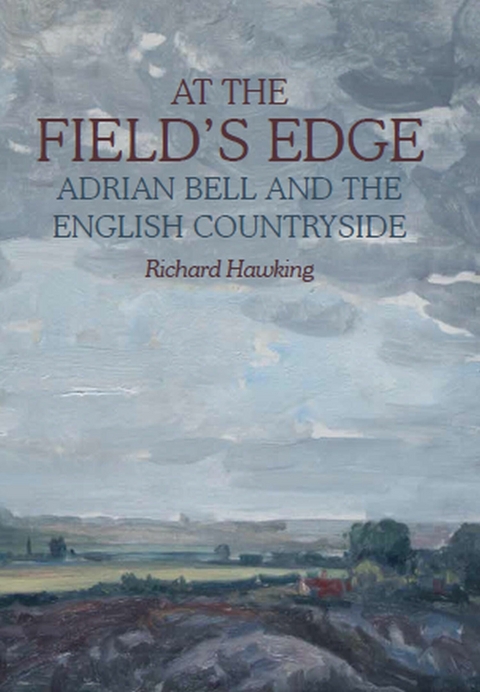
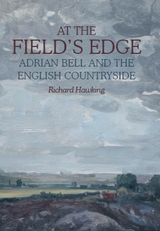
At The Field's Edge (eBook)
224 Seiten
Robert Hale Non Fiction (Verlag)
978-0-7198-2907-9 (ISBN)
Richard Hawking's interest in the writing of Adrian Bell, rural communities and the countryside stems from his own time growing up on a small, 70-acre farm in Somerset. Like Adrian Bell, his father - and his uncle and grandfather - ran small mixed-method farms and they struggled to see the long-term wisdoms of the changes in agricultural practice in the mid-twentieth century. Richard furthered his interest in Bell's work with the creation of The Adrian Bell Society website, which he now edits. He also created and edits The Walter de la Mare Society website. Richard is currently an English Teacher at The Royal Grammar School, Worcester.
Adrian Bell was farming and writing during a period when the English countryside underwent its most significant transformation for hundreds of years. His work, spanning sixty years from 1920 to 1980, not only documents this agricultural revolution, but also warns of the effects it will have both for the environment and for society. As these consequences dominate the English countryside today, Bell's views have relevance and importance to its future management. At the Field's Edge appraises Bell's prescient but still timely observations about the ecology, economy and culture of the British countryside, and introduces his beautifully crafted prose to a new generation of readers. Though he has been largely neglected until now, Bell's voice is one we should listen to, not least because he is one of our greatest writers about farming and rural life. If we pause at the field's edge with him for a moment, we get a lesson not only in aesthetic appreciation, but also a message about what is disappearing from the countryside.
INTRODUCTION: AT THE FIELD’S EDGE
PAUSING ‘AT THE FIELD’S EDGE’ is a purposeful habit of farmers. It is their opportunity to survey the field and assess its future uses and needs. At the same time, it is also a reflective moment when farmers contemplate their own relationship with, and appreciation for, the land. At the Field’s Edge hopes to take such a practical as well as reflective and appreciative approach. The book pauses to offer the reader unfamiliar with Adrian Bell an introduction to the prose and ideas of this important writer. At the same time, it provides those readers well versed in writers of the countryside with a thoughtful and engaging exploration of Bell’s writing, and his ‘practical’ relevance to contemporary debates about the countryside. In doing so, it will address factors that continue to impact and jeopardize our countryside: the rise of industrial farming and its environmental impact on the countryside; the growing separation of the country and the city; and the disconnection of producer and consumer, and the impact of capitalist consumerism on the countryside. In these considerations, At the Field’s Edge will also examine how these factors have contributed to the decline of rural communities and rural culture, and how they challenge constructions of English identity.
Adrian Bell is the perfect writer to help a largely urban population reconnect with England’s land and the values enshrined in farming life. Born in 1901 in London, Adrian Bell came from an educated, middle-class family and was destined for a career in the city. However, he became disillusioned with his options very quickly, and made the radical decision to become an apprentice farmer, moving to Suffolk in 1920. He wrote his first book, Corduroy, in 1929, and although there were periods of time during the next fifty years when he stopped farming, he continued to write about rural life until his death in 1980. In total he published twenty-five books, most of which were based on his life and work in Suffolk; he also contributed many articles to various magazines and anthologies throughout his life; and from 1950 to 1980 his Countryman’s Notebook was a weekly feature in the Eastern Daily Press, published in Suffolk. In 1930 he also set the first Times crossword – the first to appear in any publication in Britain – and went on to compile over four thousand in a fifty-year period. Bell understood farming and rural life, but he was, first and foremost, an indefatigable and engaging writer.
Suffolk Sky
Image courtesy of Nicholas Holloway Fine Art, Private Collection
Throughout his writing Bell frames and enhances our view of the countryside. If we pause at the field’s edge with him for a moment and reflect on, for example, the wild rose, we get a lesson not only in aesthetic appreciation, but also a message about what is disappearing from the countryside. In Apple Acre (1940), he describes the wild roses that could be found around the edges of his fields. He implies the importance of the relationship between the ‘practical’ field and its wider environment when he writes:
The long days blow the wild roses. They open and are soon bleached white. The buds at the first show are even crimson: points of crimson. Opening cup-shaped, with still the crumple in their petals, they are at their true colour, a flush so delicate you cannot tell where it begins and ends, with the thick saffron ring of pollen round the centres. These differing colours harmonizing because there is life shining out of them, and not merely colours. […] The roses open and bleach and reflect back the light. They focus the beams like lenses; to look at them long is dazzling. By noon the whole bush is flashing with white, wide-open roses. It is their final shape, that of a Maltese cross with one too many arms. A white butterfly comes over the hedge, followed by another. But at another glance I see they are two petals: they have already begun to fall.
Celebrating nature’s ‘harmonizing’ beauty, yet lamenting her inevitable decay and the ‘fall’, this is a writer who looks with honest eyes at the changes he sees happening around him.
While Bell constantly assessed and described the diurnal changes that he noticed in the countryside about him, he also sought to educate his readers about the larger and long-term picture. Thus in the same work he also notes how:
The concern for the home-grown and the home-made was one of the conditions which gave a tone of emergency to the writing of this book. […] Our emphasis was on organic farming and living. We felt that a balanced life of people in an organic relationship with their home place was important. Compost, of course, was a potent word among us; the utilisation of natural wastes. The basic premise of the Kinship in Husbandry was that man was plundering the earth’s resources at a spendthrift rate and impoverishing posterity. […] Today, food production is becoming more like a branch of big business year by year. (Apple Acre, 1940)
Bell’s Kinship in Husbandry evolved into today’s Soil Association, and the concerns he expresses above are even more pressing in the twenty-first century. At the Field’s Edge shows how Bell was living and writing on the eve of, and during, an agricultural revolution himself, and therefore felt the same urgency as many of us do today. Using his concerns as a focusing lens, this book considers the changing agricultural practices he witnessed, and their effect on our countryside. For example, increasing mechanization, together with the hugely significant 1947 Agriculture Act, which enshrined the subsidy system, led to the decline of small farms and the beginning of agribusinesses. Monoculture and industrialization has transformed not only the look, but the ecology and economy of the land Bell once lived and worked on.
Indeed, in the fifty years since the Agriculture Act, which pushed subsidies for farmers and encouraged production through increasing industrialization of farming, more than 150,000 miles of hedgerows have been lost, flower-rich meadowland has declined by 97 per cent, and the diversity of wildlife – from tree sparrows and corn buntings to butterflies and hedgehogs – has been decimated. But it is not just the environment that has been affected: it has also impacted on those who work and live in rural communities. Bell foresaw the possible effects of this ‘progress’. Consequently, this book tries to show that Bell’s values and vision of husbandry should inform our own relationship with, and future custody of, the countryside.
There are signs that the traditional methods of husbandry advocated by Bell are beginning once again to gain traction. The Campaign to Protect Rural England’s recent publication 2026 Vision for the Countryside notes that ‘the role of farming in helping to deliver a brighter, better future is critical. This vision sets out our aspirations for a farming system which, by 2026, will be helping to create a more vibrant countryside, environmentally, socially and economically.’ Moreover, greater numbers of people have become interested in environmental concerns at a more local level in recent years. An effect of this is a desire from consumers to re-establish a stronger relationship with the countryside. For example, there is a growing availability and popularity of organic produce through box schemes and farm shops, whilst two primarily locally sourced ‘organic’ motorway service stations now exist off the M6 and M5 motorways. You can now buy ‘wonky vegetables’ in supermarkets, with some offering ‘Wonky Selection Boxes’. Moreover, in an article in The Guardian in 2012 entitled ‘London 2012: How Rural Writing Inspired the Olympic Opening Ceremony’, Jamie Andrews highlights that this ‘greening’ of the public conscience influenced the vision of Britain that was presented to billions around the world. Indications of a growing political base are also evident, with, for example, Green Party membership doubling in recent years.
This greening of the public conscience has in part been inspired by an expanding readership for literature about the countryside, with a growing range of publications that explore our relationship with the immediate natural world. Writers such as Robert Macfarlane, Roger Deakin, W. G. Sebald, Jonathan Bate, Tim Dee, Richard Mabey, Madeleine Bunting and Chris Yates follow in the tradition of earlier authors writing about farming and the countryside, including Richard Jefferies, Edward Thomas, H. J. Massingham, W. H. Hudson, John Stewart Collis and Ronald Blythe. Nature writing, often synonymous with rural literature or countryside writing, has finally developed a wider appeal and readership, so that every bookshop has its countryside shelf or, increasingly, its ‘nature table’. Happily it appears that Bell, too, is enjoying a resurgence of interest. This is evident in the republications of Corduroy (2009), Silver Ley (2015) and The Cherry Tree (2017) by Slightly Foxed, and Men and the Fields (2009) and Apple Acre (2012) by Little Toller. Naturally I highly recommend that you pick up some copies.
In his wonderful book Landscape and Englishness, David Matless exemplifies the nature-writing trend, noting that there has been a ‘cultural braiding of the Green’ in the twenty-first...
| Erscheint lt. Verlag | 22.4.2019 |
|---|---|
| Zusatzinfo | 34 black & white photographs |
| Verlagsort | London |
| Sprache | englisch |
| Themenwelt | Sachbuch/Ratgeber ► Natur / Technik ► Natur / Ökologie |
| Naturwissenschaften ► Biologie | |
| Technik | |
| Weitere Fachgebiete ► Land- / Forstwirtschaft / Fischerei | |
| Schlagworte | Adrian Bell • Agriculture • Countryman's Notebook • countryside • countryside books • Eastern Daily Press • english countryside • farming • History • Husbandry • Land • literary nostalgia • presents for farmers • rural history • rural life • Suffolk • writings on farming |
| ISBN-10 | 0-7198-2907-0 / 0719829070 |
| ISBN-13 | 978-0-7198-2907-9 / 9780719829079 |
| Informationen gemäß Produktsicherheitsverordnung (GPSR) | |
| Haben Sie eine Frage zum Produkt? |
 EPUB (Wasserzeichen)
DRM: Digitales Wasserzeichen
Dieses eBook enthält ein digitales Wasserzeichen und ist damit für Sie personalisiert. Bei einer missbräuchlichen Weitergabe des eBooks an Dritte ist eine Rückverfolgung an die Quelle möglich.
Dateiformat: EPUB (Electronic Publication)
EPUB ist ein offener Standard für eBooks und eignet sich besonders zur Darstellung von Belletristik und Sachbüchern. Der Fließtext wird dynamisch an die Display- und Schriftgröße angepasst. Auch für mobile Lesegeräte ist EPUB daher gut geeignet.
Systemvoraussetzungen:
PC/Mac: Mit einem PC oder Mac können Sie dieses eBook lesen. Sie benötigen dafür die kostenlose Software Adobe Digital Editions.
eReader: Dieses eBook kann mit (fast) allen eBook-Readern gelesen werden. Mit dem amazon-Kindle ist es aber nicht kompatibel.
Smartphone/Tablet: Egal ob Apple oder Android, dieses eBook können Sie lesen. Sie benötigen dafür eine kostenlose App.
Geräteliste und zusätzliche Hinweise
Buying eBooks from abroad
For tax law reasons we can sell eBooks just within Germany and Switzerland. Regrettably we cannot fulfill eBook-orders from other countries.
aus dem Bereich