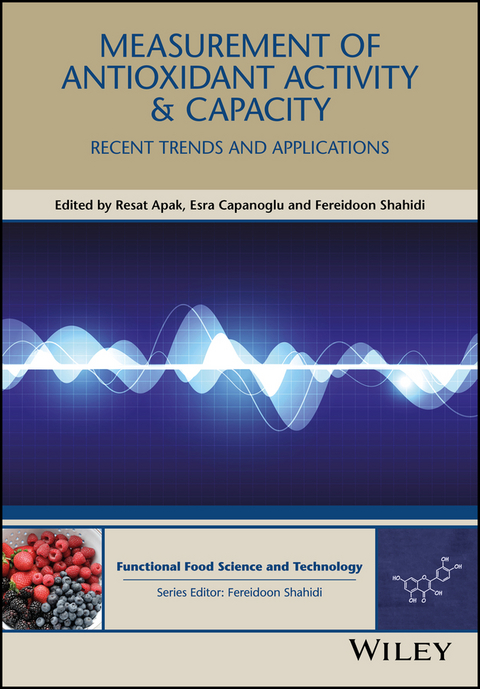
Measurement of Antioxidant Activity and Capacity (eBook)
John Wiley & Sons (Verlag)
978-1-119-13537-1 (ISBN)
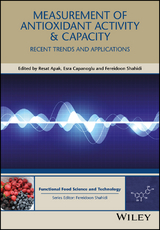
A comprehensive reference for assessing the antioxidant potential of foods and essential techniques for developing healthy food products
Measurement of Antioxidant Activity and Capacity offers a much-needed resource for assessing the antioxidant potential of food and includes proven approaches for creating healthy food products. With contributions from world-class experts in the field, the text presents the general mechanisms underlying the various assessments, the types of molecules detected, and the key advantages and disadvantages of each method. Both thermodynamic (i.e. efficiency of scavenging reactive species) and kinetic (i.e. rates of hydrogen atom or electron transfer reactions) aspects of available methods are discussed in detail.
A thorough description of all available methods provides a basis and rationale for developing standardized antioxidant capacity/activity methods for food and nutraceutical sciences and industries. This text also contains data on new antioxidant measurement techniques including nanotechnological methods in spectroscopy and electrochemistry, as well as on innovative assays combining several principles. Therefore, the comparison of conventional methods versus novel approaches is made possible. This important resource:
- Offers suggestions for assessing the antioxidant potential of foods and their components
- Includes strategies for the development of healthy functional food products
- Contains information for identifying antioxidant activity in the body
- Presents the pros and cons of the available antioxidant determination methods, and helps in the selection of the most appropriate method
Written for researchers and professionals in the nutraceutical and functional food industries,academia and government laboratories, this text includes the most current knowledge in order to form a common language between research groups and to contribute to the solution of critical problems existing for all researchers working in this field.
About the editors
Resat Apak is Professor of Analytical Chemistry Division, Department of Chemistry, Faculty of Engineering, Istanbul University, Turkey.
Esra Capanoglu is Associate Professor at the Food Engineering Department, Faculty of Chemical and Metallurgical Engineering, Istanbul Technical University, Turkey.
Fereidoon Shahidi is a University Research Professor at the Department of Biochemistry, Memorial University of Newfoundland, St. John's, Canada.
A comprehensive reference for assessing the antioxidant potential of foods and essential techniques for developing healthy food products Measurement of Antioxidant Activity and Capacity offers a much-needed resource for assessing the antioxidant potential of food and includes proven approaches for creating healthy food products. With contributions from world-class experts in the field, the text presents the general mechanisms underlying the various assessments, the types of molecules detected, and the key advantages and disadvantages of each method. Both thermodynamic (i.e. efficiency of scavenging reactive species) and kinetic (i.e. rates of hydrogen atom or electron transfer reactions) aspects of available methods are discussed in detail. A thorough description of all available methods provides a basis and rationale for developing standardized antioxidant capacity/activity methods for food and nutraceutical sciences and industries. This text also contains data on new antioxidant measurement techniques including nanotechnological methods in spectroscopy and electrochemistry, as well as on innovative assays combining several principles. Therefore, the comparison of conventional methods versus novel approaches is made possible. This important resource: Offers suggestions for assessing the antioxidant potential of foods and their components Includes strategies for the development of healthy functional food products Contains information for identifying antioxidant activity in the body Presents the pros and cons of the available antioxidant determination methods, and helps in the selection of the most appropriate method Written for researchers and professionals in the nutraceutical and functional food industries,academia and government laboratories, this text includes the most current knowledge in order to form a common language between research groups and to contribute to the solution of critical problems existing for all researchers working in this field.
About the editors Resat Apak is Professor of Analytical Chemistry Division, Department of Chemistry, Faculty of Engineering, Istanbul University, Turkey. Esra Capanoglu is Associate Professor at the Food Engineering Department, Faculty of Chemical and Metallurgical Engineering, Istanbul Technical University, Turkey. Fereidoon Shahidi is a University Research Professor at the Department of Biochemistry, Memorial University of Newfoundland, St. John's, Canada.
1
Nomenclature and general classification of antioxidant activity/capacity assays
Yong Sun, Cheng Yang, and Rong Tsao
Guelph Research and Development Centre, Agriculture and Agri‐Food Canada, Guelph, Ontario, Canada
1.1 Introduction
In the last three decades, significant changes have been made to the definition of “antioxidants.” These changes have largely reflected the tremendous advances in food science, nutrition, and molecular and cell biology. Antioxidants are no longer mere chemical substances that make a food last longer or phytochemicals such as polyphenols and carotenoids that show stronger antioxidant activity/capacity (AOA/TAC) than vitamin C or E in a chemical reaction. Antioxidants were broadly defined as “any substance that, when present at low concentrations compared to that of an oxidizable substrate, significantly delays or inhibits oxidation of that substrate” (Halliwell & Gutteridge 1995) in 1995, but later the word “oxidation” was altered to “oxidative damage” that suggests an in vivo biological process: “any substance that delays, prevents or removes oxidative damage to a target molecule”(Halliwell 2007). Most recently, Apak et al. (2016a) gave a more specific definition: “natural or synthetic substances that may prevent or delay oxidative cell damage caused by physiological oxidants having distinctly positive reduction potentials, covering reactive oxygen species (ROS)/reactive nitrogen species (RNS) and free radicals (i.e. unstable molecules or ions having unpaired electrons).” These definitions demonstrate the roles of antioxidants at cellular levels in humans as they are related to oxidative stress and free radicals and further to potential health effects in humans.
Oxidative stress (OS), defined as the imbalance between prooxidants and antioxidants, is characterized by the inability of endogenous antioxidants to counteract the oxidative damage on tissues and organisms owing to overproduction of cellular ROS/RNS that are highly reactive and can cause oxidative modification of biological macromolecules, such as lipid, protein, and DNA, leading to tissue injury, accelerated cellular death (Trevisan et al. 2001), and various diseases such as atherosclerosis, diabetes mellitus, chronic inflammation, neurodegenerative disorders, cardiovascular disease, Alzheimer’s disease (Smith et al. 2000), mild cognitive impairment (Guidi et al. 2006), Parkinson’s disease (Bolton et al. 2000), and certain types of cancer. OS from ROS/RNS is important in the etiology of these chronic diseases. Abundant evidence suggests that antioxidants play a pivotal role in the maintenance of human health and prevention and treatment of these diseases because of their ability to reduce OS. Measuring the AOA/TAC of foods and biological samples is therefore not only crucial for assuring the quality of functional foods and nutraceuticals, but more importantly for efficacy of dietary antioxidants in the protection and treatment of oxidative stress‐related diseases.
Many AOA/TAC assays have been developed over the years, based on different chemical, physicochemical, and biochemical mechanisms. While the mechanisms of some assays are clearly understood, some are complex systems with multiple modes of action. Several attempts have been made to categorize the various AOA/TAC assays (López‐Alarcón & Denicola 2013; Niki 2010), but thus far there is no unified and standardized system for the nomenclature and classification of these assays. This chapter intends to find a way to reconcile the different views and provides a relatively simplified approach to the nomenclature and general classification of various AOA/TAC assays currently in use for the assessment of AOA/TAC in diets and biological fluids.
1.2 Nomenclature of antioxidant activity/capacity assays
The concept of AOA/TAC may be traced back to its origin in chemistry and then its applications in food science, in biology and medicine, and in nutrition and epidemiology. Many terms have been used for this concept over the years, including antioxidant activity (Rice‐Evans et al. 1995), antioxidant capacity (Sies 1999), antioxidant power (Benzie & Strain 1996), and antioxidant potential (Jovanovic et al. 1995), to mean almost the same thing – the ability of a compound or a mixture of compounds to prevent or stop oxidative reactions occurring to another molecule. Other terms such as total antioxidant performance (Hollman et al. 2011), antioxidant effect (Talegawkar et al. 2009) and antioxidant status (Bouanane et al. 2009) have also been used, albeit relatively less widely.
Meanwhile, regardless of these terminologies, even more names have been given to the assay methods used to measure antioxidant activity or similar terms crowned with the word “total”. Because these AOA/TAC assays have their origin in chemistry, the majority of the currently used methods are seriously limited in that they preclude meaningful application to in vivo conditions, so critical appraisal is needed to reassess the inherent flaws in the nomenclature and classification of these assays (Sies 2007). Also, due to the large number of different assay methods, comparison of different foods or the physiological effects of different foods can be very challenging, and often one compares apples with oranges. A systematic approach to this is critically important to the food, functional food and nutraceutical, and dietary supplement industries, and to better understanding of the relationship between diet and chronic diseases. Most of the current AOA/TAC assays are named based on the reactants, the reaction mechanism and/or the corresponding techniques, and these are summarized in Table 1.1.
Table 1.1 Nomenclature of antioxidant activity/capacity assays.
| Name of assay | Abbreviations |
| Hydrogen atom transfer‐based assays | HAT‐based assays |
| Oxygen radical absorbance capacity assays | ORAC assays |
| Total radical‐trapping antioxidant parameter assay | TRAP assay |
| Total oxyradical scavenging capacity assay | TOSC assay |
| Crocin bleaching assay | − |
| Single electron transfer‐based assays | SET‐based assays |
| Ferric reducing antioxidant power FRAP assay | FRAP assay |
| Cupric reducing antioxidant capacity assay | CUPRAC assay |
| Ferricyanide‐Prussian blue assay | − |
| Ce(IV) reducing antioxidant capacity assay | CERAC assay |
| Cr(VI) reducing antioxidant capacity assay | CHROMAC assay |
| Acidic potassium permanganate chemiluminescence | − |
| Cyclic voltametry‐based assay | CV based assay |
| Differential pulse‐based assay | DPV based assay |
| Square‐wave voltametry‐based assay | SWV based assay |
| Dropping mercury electrode‐based assay | DME based assay |
| Silver nanoparticles‐based assay | SNPAC‐based assay |
| Gold nanoparticles‐based assay | AuNPs‐based assay |
| 2,2′‐azinobis(3‐ethylbenzothiazoline‐6‐sulfonic acid)/Trolox‐equivalent antioxidant capacity assay | ABTS/TEAC assay |
| 2,2‐diphenyl‐1‐picrylhydrazyl radical scavenging assay | DPPH radical scavenging assay |
| N,N‐dimethyl‐p‐phenylenediamine dihydrochloride radical scavenging assay | DMPD radical scavenging assay |
| Galvinoxyl radical scavenging assay | − |
| (2,6‐di‐tert‐butyl‐4‐(4'‐methoxyphenyl) phenoxyl radical) scavenging assay | − |
| Luminol‐based chemiluminescence | − |
| Nitroblue tetrazolium‐based chemiluminescence | NBT‐based chemiluminescence |
| Electron spin resonance (ESR) spin trapping method | (ESR) spin trapping method |
| Hydrogen peroxide scavenging assay | − |
| Hydroxyl radical scavenging assay | − |
| Hypochlorous acid scavenging assay | − |
| Singlet oxygen scavenging assay | − |
| Nitric oxide radical scavenging assay | − |
| Peroxynitrite anion scavenging assay | − |
| Peroxyl radical scavenging assay | − |
| β‐Carotene bleaching assay | − |
| Iodometric hydroperoxide measurement | − |
| Ferric thiocyanate and ferric xylenol orange... |
| Erscheint lt. Verlag | 18.12.2017 |
|---|---|
| Reihe/Serie | Food Science and Technology |
| Food Science and Technology | Hui: Food Science and Technology |
| Sprache | englisch |
| Themenwelt | Naturwissenschaften ► Biologie |
| Technik ► Lebensmitteltechnologie | |
| Weitere Fachgebiete ► Land- / Forstwirtschaft / Fischerei | |
| Schlagworte | Analytical Chemistry • Analytische Chemie • antioxidant determination methods • approaches for creating healthy food • approaches for identifying antioxidant activity in the body • Assays based on competitive measurement of the scavenging ability of reactive oxygen/nitrogen species • Chemie • Chemistry • Esra Capanoglu • Fereidoon Shahidi • Food Science & Technology • Functional Food, Nutraceuticals • Functional Foods & Nutraceuticals • Gesundheits- u. Sozialwesen • Guide to antioxidants in food • Health & Social Care • Lebensmittelforschung u. -technologie • Measurement of Antioxidant Activity and Capacity • Metabolism & Biochemistry of Nutrition • methods for detecting molecules in food • molecules detected in food • nanotechnological methods in electrochemistry • nanotechnological methods in spectroscopy • Nomenclature and general classification of antioxidant activity/capacity assays • nutraceutical industries • nutraceutical sciences • Resat Apak • Resource for assessing antioxidants in food • standardized antioxidant capacity • Stoffwechsel u. Biochemie der Ernährung • The Ferric Reducing/Antioxidant Power Assay for Non-Enzymatic Antioxidant Capacity • trends in the measurement of Antioxidant Activity &Capacity |
| ISBN-10 | 1-119-13537-0 / 1119135370 |
| ISBN-13 | 978-1-119-13537-1 / 9781119135371 |
| Informationen gemäß Produktsicherheitsverordnung (GPSR) | |
| Haben Sie eine Frage zum Produkt? |
 EPUB (Adobe DRM)
Kopierschutz: Adobe-DRM
Adobe-DRM ist ein Kopierschutz, der das eBook vor Mißbrauch schützen soll. Dabei wird das eBook bereits beim Download auf Ihre persönliche Adobe-ID autorisiert. Lesen können Sie das eBook dann nur auf den Geräten, welche ebenfalls auf Ihre Adobe-ID registriert sind.
Details zum Adobe-DRM
Dateiformat: EPUB (Electronic Publication)
EPUB ist ein offener Standard für eBooks und eignet sich besonders zur Darstellung von Belletristik und Sachbüchern. Der Fließtext wird dynamisch an die Display- und Schriftgröße angepasst. Auch für mobile Lesegeräte ist EPUB daher gut geeignet.
Systemvoraussetzungen:
PC/Mac: Mit einem PC oder Mac können Sie dieses eBook lesen. Sie benötigen eine
eReader: Dieses eBook kann mit (fast) allen eBook-Readern gelesen werden. Mit dem amazon-Kindle ist es aber nicht kompatibel.
Smartphone/Tablet: Egal ob Apple oder Android, dieses eBook können Sie lesen. Sie benötigen eine
Geräteliste und zusätzliche Hinweise
Buying eBooks from abroad
For tax law reasons we can sell eBooks just within Germany and Switzerland. Regrettably we cannot fulfill eBook-orders from other countries.
aus dem Bereich