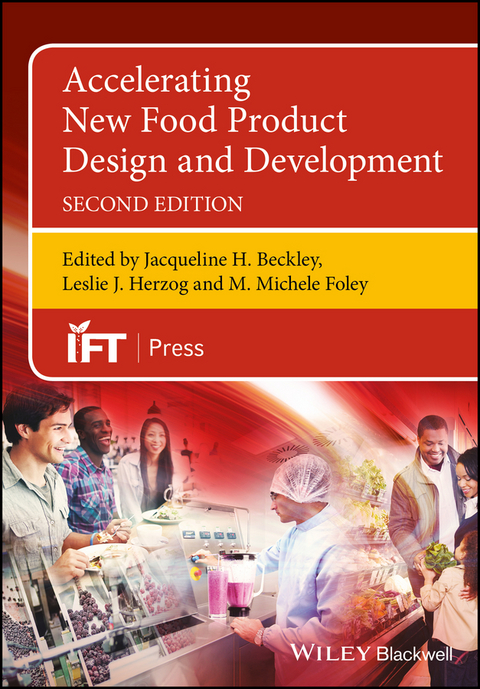
Accelerating New Food Product Design and Development (eBook)
John Wiley & Sons (Verlag)
978-1-119-14931-6 (ISBN)
Written primarily for directors and managers of food design and development, food scientists, technologists, and product developers, this book explains all the necessary information in order to help meet the increasing demands for innovation in an industry that is providing fewer resources. This updated edition, by a group of seasoned food industry business professionals and academics, provides a real-world perspective of what is occurring in the food industry right now, offers strategic frameworks for problem solving and R&D strategies, and presents methods needed to accelerate and optimize new product development.
Accelerating New Food Product Design and Development, Second Edition features five brand new chapters covering all the changes that have occurred within the last decade: A Flavor Supplier Perspective, An Ingredient Supplier Perspective, Applying Processes that Accelerate New Product Development, Looking at How the University Prepares Someone for a Career in Food, and Innovative Packaging and Its Impact on Accelerated Product Development.
- Offers new perspectives on what really goes on during the development process
- Includes updated chapters fully describing the changes that have occurred in the food industry, both from a developer's point of view as well as the consumer requirements
- Features a completely rewritten chapter covering the importance of packaging which is enhanced through 3D printing
- All of this against the impact on speed to market
Filled with unique viewpoints of the business from those who really know and a plethora of new information, Accelerating New Food Product Design and Development, Second Edition will be of great interest to all professionals engaged in new food product design and development.
Jacqueline H. Beckley is Founder and President of The Understanding & Insight Group, LLC, Denville, New Jersey.
Leslie J. Herzog is Vice President of Operations and Research Services for The Understanding & Insight Group, LLC, Denville, New Jersey.
M. Michele Foley is Director of Consumer Sensory Insight for Nestlé, Fremont, Michigan.
Written primarily for directors and managers of food design and development, food scientists, technologists, and product developers, this book explains all the necessary information in order to help meet the increasing demands for innovation in an industry that is providing fewer resources. This updated edition, by a group of seasoned food industry business professionals and academics, provides a real-world perspective of what is occurring in the food industry right now, offers strategic frameworks for problem solving and R&D strategies, and presents methods needed to accelerate and optimize new product development. Accelerating New Food Product Design and Development, Second Edition features five brand new chapters covering all the changes that have occurred within the last decade: A Flavor Supplier Perspective, An Ingredient Supplier Perspective, Applying Processes that Accelerate New Product Development, Looking at How the University Prepares Someone for a Career in Food, and Innovative Packaging and Its Impact on Accelerated Product Development. Offers new perspectives on what really goes on during the development process Includes updated chapters fully describing the changes that have occurred in the food industry, both from a developer s point of view as well as the consumer requirements Features a completely rewritten chapter covering the importance of packaging which is enhanced through 3D printing All of this against the impact on speed to market Filled with unique viewpoints of the business from those who really know and a plethora of new information, Accelerating New Food Product Design and Development, Second Edition will be of great interest to all professionals engaged in new food product design and development.
Jacqueline H. Beckley is Founder and President of The Understanding & Insight Group, LLC, Denville, New Jersey. Leslie J. Herzog is Vice President of Operations and Research Services for The Understanding & Insight Group, LLC, Denville, New Jersey. M. Michele Foley is Director of Consumer Sensory Insight for Nestlé, Fremont, Michigan.
Title Page 5
Copyright Page 6
Contents 11
Contributors 15
Preface 17
Chapter 1 Introduction 19
Why Read a Chapter? Why Read a Part? Why Read the Book? 21
Part I Understanding Product Development in Today’s Food Industry 27
Chapter 2 How did the Food Industry Get (From There) to Here? 29
Turn of the Century 30
Looking in the Fridge 30
Challenges for the Future 42
Opportunities for the Future 43
References 44
Further Reading 45
Chapter 3 Why Understanding Trends is Important to Product Success 47
Three Evergreen Trends 49
Healthy Eating 51
Paleo: A Diet Fat That Looks to the Far-Off Past 53
A More Sustainable Way to Manage Wellness: The Role of Protein in the Diet 54
From Niche to Mainstream: Gluten Free 55
Natural Nutrition: The Trend to Drive Healthy Eating Forward 55
Pleasure: Food as a Sensory Experience 56
Convenience 59
Final Thoughts 63
References 64
Chapter 4 Developing Partnerships: Using Outside Resources for Product Development 65
Introduction 65
White Space Opportunities – We Want to do This, But We Don’t Know How (Given Our Time Frame) 66
Choice Opportunities – We Want to Do This, But We Are Making a Choice to Outsource (Given Our Time Frame) 72
Conclusion 75
Chapter 5 Building Superior R& D Organizations
The Challenge 78
R& D Skills: Level 1 – Technical Basics, Required Skills??????????????????????????????????????????????????????????????????????????????????????????????????????????????????????????????????????????????????????????????????????????????????????????????????????????????????????????????????????????????????????????????????????????????????????????????????????????????????????????????????????????????????????????????????????????
R& D Skills: Level 2 – Team Player??????????????????????????????????????????????????????????????????????????????????????????????????????????????????????????????????????????????????????????????????????????????????????????????????????????????????????????????????????
R& D Skills: Level 3 – Business Partner????????????????????????????????????????????????????????????????????????????????????????????????????????????????????????????????????????????????????????????????????????????????????????????????????????????????????????????????????????????????????????????????????
Skill and Capability Assessment 83
Further Reading 87
Chapter 6 A Flavor Supplier Perspective – Let’s Cut to the Chase and Win Together! 89
Introduction 89
New Business Models 90
Conclusion 97
Chapter 7 Supplier Collaboration and Open Innovation to Accelerate Food Product Development 99
Introduction 99
A Product Development Process is the First Step 100
Why a Growth Process? 100
Supplier Offerings 103
Products 104
Services 104
Network 105
Complementary Knowledge and Skills 106
The Role of the Supplier in the Product Development Process (Supplier Collaboration/Open Innovation) 106
Case Study: Addressing Texture Challenges of Salad Dressing Through Novel Formulation Approaches (Ingredion, 2012) 108
Success Story #1: Reduction of Oil and Building Back the Eating Experience in Light Creamy Ranch Dressing 114
Success Story #2: Transforming Texture: Expanding Product Range by Producing a Variety of Textures on the Same Process Equipment 119
Collaboration is Key 121
References 122
Chapter 8 One Company’s Perspective on Innovation – Starbucks Coffee, Circa 2006 123
Introduction 123
Innovation Defined 124
Key Principles and Applications 125
Maintaining Relevance with Your Consumer 128
Target the Possibilities: Map Your Product Adjacencies 130
Don’t Focus on the Enormity of the Goal 132
Reference 133
Chapter 9 Innovation versus Invention: Serendipity, Chance, and Experience Favoring Prepared Minds 135
Introduction 135
Innovation Example 1 138
Invention Example 1 138
Innovation Example 2 139
Protecting the Project (and Product) via Continuous Assessment of Strengths, Weaknesses, Opportunities, and Threats (SWOT) 141
Consider SWOT at all Times 143
Part II Accelerating Food Product Design and Development 145
Chapter 10 Brands: A Discussion on the Difference Between Creating Good Brands and Meaningful Brands 147
Introduction 147
The “Meaningful” Brand, One Key to the Puzzle 148
Where Good and Great Brands Might Arrive and Where Meaningful Brands Start 151
From Great Brands to Meaningful Brands 155
Pragmatics – How to Discover Meaning for a Brand 157
What About the Money? 159
References 160
Chapter 11 Market Forces: The Push-Pull of Marketing and Advertising in the New Product Business 163
Introduction 163
What is a Brand? 164
Why Product Developers Should Understand the Inner Working of Brands 164
Brands as Frames of Reference 167
The Relation Between the Brand and the Product 167
How Can Marketing and Product Development Teams Ensure They Are Achieving Alignment Between the Brand and the Potential New Product? 169
Brands as Added Value – Interactions and Scenarios 172
Some Empirical Data – Results of a Study to Understand What “Brand” Really Does 173
Implications for New Products 178
References 178
Chapter 12 Looking at How the University Prepares Someone for a Career in Food Science 181
Introduction 181
Academic Accreditations 184
Graduate School Academic Criteria 189
Integrated Experiences 189
Product Development Competitions 189
In-Class Experiences 190
New University Program Offerings 192
Research Experiences 193
UMass’s Strategies for Soft Skill Development 194
Future Direction and Academic Opportunities 195
References 196
Chapter 13 Applying Processes that Accelerate New Product Development 197
Background 197
Use This…Not That – Making Decisions Between Qualitative or Quantitative Research 199
Discovery: Understanding Consumer Needs 199
Scoping: Developing a Viable Business or Product Idea 212
References 221
Chapter 14 Design of Packaging that Fills the Promise and Meets/Exceeds Consumer Expectations 223
Introduction 223
Product Failures and Successes and Their Implications on Packaging 225
Consumer Driven Packaging Design (CDPD) 234
Discovery for CPDP 236
Summary 249
References 250
Chapter 15 Making Lemon Bars out of Lemons: Using the Power of Teamwork to Transform Concepts to Reality 253
Introduction 253
Start with the Essentials: An Overview 254
Leadership is Key 255
Team Roles and Responsibilities: Trust Beats Failure 256
The Flexible Plan 257
Process Management 258
Ideas are Everywhere 258
Adequate Funding of Research Yields Growth 259
Open Innovation and Partnerships 260
“Embrace Innovation”…But Ready to Change 261
Walking Away is “OK” 261
Conclusion 262
Acknowledgments 262
References 263
Part III Optimizing Food Product Design and Development 265
Chapter 16 Identifying Critical Steps in the New Product Development Process 267
Introduction 267
Overview of the New Product Development Process 268
Critical Steps for the New Product Development Process 269
Keys for a Successful New Product Development Process 274
References 275
Chapter 17 Category Appraisal and Ingredient Search: Identifying Key Sensory Factors and Product Features at the Early Development Stage 277
General Introduction 277
Strategies – Ideation 278
Descriptive Analysis 279
Psychophysics and the Contribution of Experimental Psychology 280
Psychophysical Thinking Unchained – Beyond S-R Thinking to R-R Thinking 281
What Does the Developer Learn from Simple R-R (Sensory-Liking) Analyses? 282
Illustrating the Approach Through a Case History – Healthy Bread 288
An Overview to the Product Modeling 305
But What About the Specific Ingredients Themselves? 307
References 314
Chapter 18 Applications of Discriminant and Logistic Regression Analysis for Consumer Acceptance and Consumer-Oriented Product Optimization Study 317
Introduction 317
Case Study I: Acceptance and Purchase Intent of U.S. Consumers for the Nonwheat Rice Butter Cakes 319
Case Study II: Consumer-Oriented Product Optimization of Butter Cake Formulations Made Predominantly with Long-Grain Rice Flour 326
References 338
Chapter 19 Response Surface Methodology and Consumer-DrivenProduct Optimization 341
Introduction 341
What is?RSM?and What Does It Do? 343
Experimental Design 344
Product Optimization Designs 368
References 381
Chapter 20 Accelerating and Optimizing New Food Product Design and Development – Where Does Design and Development go Next? 383
A Tale of Two Old Dogs – Comparing P& G with Unilever
Finding a Place in the Pack – Food Kits… Dinner-in-a-Box 388
What’s the Short-Term Focus? 389
References 390
Index 391
Supplemental Images 406
EULA 418
| Erscheint lt. Verlag | 26.7.2017 |
|---|---|
| Reihe/Serie | Institute of Food Technologists Series |
| Institute of Food Technologists Series | Institute of Food Technologists Series |
| Sprache | englisch |
| Themenwelt | Naturwissenschaften ► Biologie |
| Technik ► Lebensmitteltechnologie | |
| Wirtschaft ► Betriebswirtschaft / Management ► Unternehmensführung / Management | |
| Weitere Fachgebiete ► Land- / Forstwirtschaft / Fischerei | |
| Schlagworte | Accelerating New Food Product Design and Development • Branding • Business & Management • category appraisal • Consumer Packaged Goods • CpG • food branding • food engineering • food engineers • food industry • food industry design • Food Marketing & Product Development • Food Packaging • food packaging R&D • food product design • food product design and development • food R&D • food science • Food Science & Technology • food scientists • food technologists • Jacqueline H. Beckley • Lebensmittelforschung u. -technologie • Lebensmittelsensorik • Lebensmittel-Vermarktung u. -Produktentwicklung • Leslie J. Herzog • Logistic regression analysis • M. Michele Foley • New Product Development • Product design • product developers • Production Operations Management • Produktionssteuerung • quality assurance personnel • response surface methodology • Sensory Science • Speed-to-market • Wirtschaft u. Management • zbb • zero-based budgeting |
| ISBN-10 | 1-119-14931-2 / 1119149312 |
| ISBN-13 | 978-1-119-14931-6 / 9781119149316 |
| Informationen gemäß Produktsicherheitsverordnung (GPSR) | |
| Haben Sie eine Frage zum Produkt? |
 PDF (Adobe DRM)
Kopierschutz: Adobe-DRM
Adobe-DRM ist ein Kopierschutz, der das eBook vor Mißbrauch schützen soll. Dabei wird das eBook bereits beim Download auf Ihre persönliche Adobe-ID autorisiert. Lesen können Sie das eBook dann nur auf den Geräten, welche ebenfalls auf Ihre Adobe-ID registriert sind.
Details zum Adobe-DRM
Dateiformat: PDF (Portable Document Format)
Mit einem festen Seitenlayout eignet sich die PDF besonders für Fachbücher mit Spalten, Tabellen und Abbildungen. Eine PDF kann auf fast allen Geräten angezeigt werden, ist aber für kleine Displays (Smartphone, eReader) nur eingeschränkt geeignet.
Systemvoraussetzungen:
PC/Mac: Mit einem PC oder Mac können Sie dieses eBook lesen. Sie benötigen eine
eReader: Dieses eBook kann mit (fast) allen eBook-Readern gelesen werden. Mit dem amazon-Kindle ist es aber nicht kompatibel.
Smartphone/Tablet: Egal ob Apple oder Android, dieses eBook können Sie lesen. Sie benötigen eine
Geräteliste und zusätzliche Hinweise
Buying eBooks from abroad
For tax law reasons we can sell eBooks just within Germany and Switzerland. Regrettably we cannot fulfill eBook-orders from other countries.
aus dem Bereich