Zum Hauptinhalt springen
Nicht aus der Schweiz? Besuchen Sie lehmanns.de

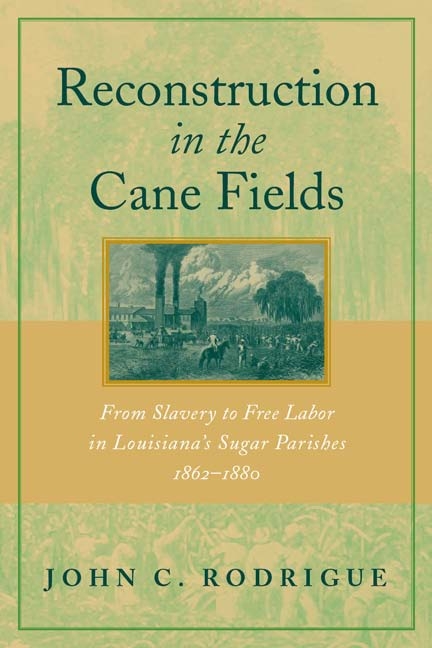
Reconstruction in the Cane Fields (eBook)

From Slavery to Free Labor in Louisiana's Sugar Parishes, 1862--1880
eBook Download: EPUB
2001
256 Seiten
LSU Press (Verlag)
978-0-8071-5263-8 (ISBN)
Lese- und Medienproben

Reconstruction in the Cane Fields - John C. Rodrigue
Systemvoraussetzungen
17,99 inkl. MwSt
(CHF 17,55)
Der eBook-Verkauf erfolgt durch die Lehmanns Media GmbH (Berlin) zum Preis in Euro inkl. MwSt.
  • Download sofort lieferbar
  • Zahlungsarten anzeigen
In Reconstruction in the Cane Fields, John C. Rodrigue examines emancipation and the difficult transition from slavery to free labor in one enclave of the South -- the cane sugar region of southern Louisiana. In contrast to the various forms of sharecropping and tenancy that replaced slavery in the cotton South, wage labor dominated the sugar industry. Rodrigue demonstrates that the special geographical and environmental requirements of sugar production in Louisiana shaped the new labor arrangements. Ultimately, he argues, the particular demands of Louisiana sugar production accorded freedmen formidable bargaining power in the contest with planters over free labor.Rodrigue addresses many issues pivotal to all post-emancipation societies: How would labor be reorganized following slavery's demise? Who would wield decision-making power on the plantation? How were former slaves to secure the fruits of their own labor? He finds that while freedmen's working and living conditions in the postbellum sugar industry resembled the prewar status quo, they did not reflect a continuation of the powerlessness of slavery. Instead, freedmen converted their skills and knowledge of sugar production, their awareness of how easily they could disrupt the sugar plantation routine, and their political empowerment during Radical Reconstruction into leverage that they used in disputes with planters over wages, hours, and labor conditions. Thus, sugar planters, far from being omnipotent overlords who dictated terms to workers, were forced to adjust to an emerging labor market as well as to black political power.The labor arrangements particular to postbellum sugar plantations not only propelled the freedmen's political mobilization during Radical Reconstruction, Rodrigue shows, but also helped to sustain black political power -- at least for a few years -- beyond Reconstruction's demise in 1877.By showing that freedmen, under the proper circumstances, were willing to consent to wage labor and to work routines that strongly resembled those of slavery, Reconstruction in the Cane Fields offers a profound interpretation of how former slaves defined freedom in slavery's immediate aftermath. It will prove essential reading for all students of southern, African American, agricultural, and labor history.

lt;p>John C. Rodrigue is assistant professor of history at Louisiana State University. He is coeditor of Freedom: A Documentary History of Emancipation, Series 3, Volume 1, Land, Labor, and Capital: 1865.

Erscheint lt. Verlag 1.5.2001
Zusatzinfo 19 halftones, 1 map
Verlagsort Baton Rouge
Sprache englisch
Maße 150 x 150 mm
Themenwelt Geschichte Allgemeine Geschichte Neuzeit (bis 1918)
Geisteswissenschaften Geschichte Regional- / Ländergeschichte
Geschichte Teilgebiete der Geschichte Kulturgeschichte
Geschichte Teilgebiete der Geschichte Wirtschaftsgeschichte
Weitere Fachgebiete Land- / Forstwirtschaft / Fischerei
ISBN-10 0-8071-5263-3 / 0807152633
ISBN-13 978-0-8071-5263-8 / 9780807152638
Informationen gemäß Produktsicherheitsverordnung (GPSR)
Haben Sie eine Frage zum Produkt?
EPUBEPUB (Adobe DRM)

Kopierschutz: Adobe-DRM
Adobe-DRM ist ein Kopierschutz, der das eBook vor Mißbrauch schützen soll. Dabei wird das eBook bereits beim Download auf Ihre persönliche Adobe-ID autorisiert. Lesen können Sie das eBook dann nur auf den Geräten, welche ebenfalls auf Ihre Adobe-ID registriert sind.
Details zum Adobe-DRM

Dateiformat: EPUB (Electronic Publication)
EPUB ist ein offener Standard für eBooks und eignet sich besonders zur Darstellung von Belle­tristik und Sach­büchern. Der Fließ­text wird dynamisch an die Display- und Schrift­größe ange­passt. Auch für mobile Lese­geräte ist EPUB daher gut geeignet.

Systemvoraussetzungen:
PC/Mac: Mit einem PC oder Mac können Sie dieses eBook lesen. Sie benötigen eine Adobe-ID und die Software Adobe Digital Editions (kostenlos). Von der Benutzung der OverDrive Media Console raten wir Ihnen ab. Erfahrungsgemäß treten hier gehäuft Probleme mit dem Adobe DRM auf.
eReader: Dieses eBook kann mit (fast) allen eBook-Readern gelesen werden. Mit dem amazon-Kindle ist es aber nicht kompatibel.
Smartphone/Tablet: Egal ob Apple oder Android, dieses eBook können Sie lesen. Sie benötigen eine Adobe-ID sowie eine kostenlose App.
Geräteliste und zusätzliche Hinweise

Buying eBooks from abroad
For tax law reasons we can sell eBooks just within Germany and Switzerland. Regrettably we cannot fulfill eBook-orders from other countries.

Mehr entdecken
aus dem Bereich
Eine kurze Einführung in das Gesamtwerk

von Gottfried Gabriel

eBook Download (2024)
UTB GmbH (Verlag)
CHF 17,55