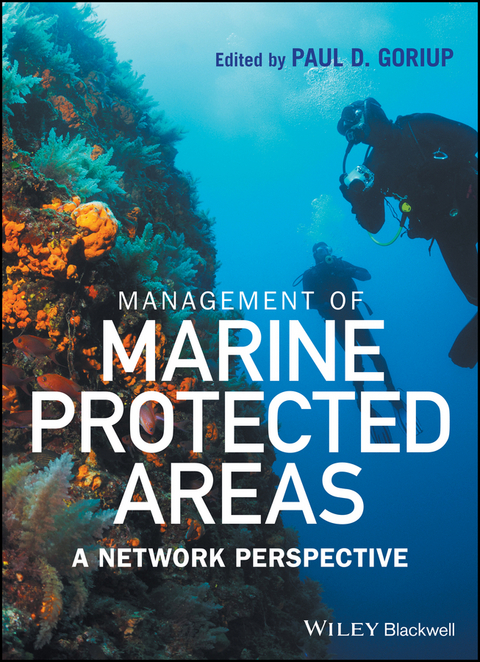
Management of Marine Protected Areas (eBook)
John Wiley & Sons (Verlag)
978-1-119-07579-0 (ISBN)

With the health of the world's oceans threatened as never before, it is becoming increasingly apparent that Marine Protected Areas (MPAs) play a vitally important role in protecting marine and coastal habitats.
Management of Marine Protected Areas: A Network Perspective draws on the results of a major EU-sponsored research project related to the establishment of networks of MPAs in the Mediterranean and Black Seas that transpired from February 2011 to January 2016. Featuring contributions by leading university- and national research institute-based scientists, chapters utilize the latest research data and developments in marine conservation policy to explore issues related to ways in which networks of MPAs may amplify the effectiveness and conservation benefits of individual areas within them. Topics addressed include the broader socio-economic impacts of MPAs in the Mediterranean and Black Seas; the use of Marine Spatial Planning (MSP) to resolve conflicts between marine resource use and protection; special protection measures under the EU's Marine Strategy Framework Directive (MSFD); ecological value assessments in the Black Sea; the Ecosystem Approach (EA) for managing marine ecosystems; MPAs along Turkey's Black Sea coast; MPAs and offshore wind farms; and managing and monitoring MPA networks within and between the Black and Mediterranean Seas.
Timely and important, Management of Marine Protected Areas: A Network Perspective offers invaluable insights into the role of MPAs in preserving the welfare and long-term viability of our world's oceans.
PAUL D. GORIUP is Chairman of the NatureBureau, Newbury, UK
With the health of the world s oceans threatened as never before, it is becoming increasingly apparent that Marine Protected Areas (MPAs) play a vitally important role in protecting marine and coastal habitats. Management of Marine Protected Areas: A Network Perspective draws on the results of a major EU-sponsored research project related to the establishment of networks of MPAs in the Mediterranean and Black Seas that transpired from February 2011 to January 2016. Featuring contributions by leading university- and national research institute-based scientists, chapters utilize the latest research data and developments in marine conservation policy to explore issues related to ways in which networks of MPAs may amplify the effectiveness and conservation benefits of individual areas within them. Topics addressed include the broader socio-economic impacts of MPAs in the Mediterranean and Black Seas; the use of Marine Spatial Planning (MSP) to resolve conflicts between marine resource use and protection; special protection measures under the EU s Marine Strategy Framework Directive (MSFD); ecological value assessments in the Black Sea; the Ecosystem Approach (EA) for managing marine ecosystems; MPAs along Turkey s Black Sea coast; MPAs and offshore wind farms; and managing and monitoring MPA networks within and between the Black and Mediterranean Seas. Timely and important, Management of Marine Protected Areas: A Network Perspective offers invaluable insights into the role of MPAs in preserving the welfare and long-term viability of our world s oceans.
PAUL D. GORIUP is Chairman of the NatureBureau, Newbury, UK
Title Page 5
Copyright Page 6
Contents 7
List of Contributors 9
Foreword 13
Editor’s Preface 17
Chapter 1 From Marine Protected Areas to MPA Networks 21
The Ecology of Beauty 21
From Landscapes to Habitats 22
From Hunting and Gathering to Farming 23
Landscapes, Habitats and Fish are Not Enough 24
Good Environmental Status 25
Connectivity 27
Networking According to Nature or to Bureaucracy? 28
Towards a Holistic View of Marine Systems 29
The Cells of Ecosystem Functioning 32
Mapping the Seas 32
Upgrading the Observation Systems and Managing the Networks 34
Human Capacity Building 35
Extinction in the Mediterranean Sea 36
Conclusion and Recommendations 37
Acknowledgements 38
References 38
Chapter 2 Ecological Effects and Benefits of Mediterranean Marine Protected Areas: Management Implications 41
Introduction 41
Ecological Benefits of MPAs 41
Effects on Fish Populations 41
Ecosystem Characteristics Affecting the Benefits of MPAs 44
Partially Protected Areas 46
Effects on Communities (Secondary Effects of Protection) 48
The MPA as a Touchstone: Estimation of the Degree of Exploitation Outside MPAs 52
Spillover and Larval Export 55
Management Implications 57
References 61
Chapter 3 Typology, Management and Monitoring of Marine Protected Area Networks 69
Introduction 69
Network Formation Characteristics 70
Unplanned (Ad Hoc) Networks 70
Planned and Semi-Planned Networks 71
Overlapping Networks 71
Nested Networks 71
MPA Network Typology 72
Conservation Networks 72
Connectivity Networks 72
Socio-economic Networks 73
Geographic Networks 75
Collaborative Networks 75
Cultural Networks 75
Transnational Networks 76
MPA Network Management and Monitoring 76
Conservation Network Sites 76
Connectivity Network Sites 78
Socio-economic Network Sites 79
Geographic Network Sites 80
Collaborative Network Sites 81
Cultural Network Sites 82
Transnational Network Sites 83
Conclusions 83
Acknowledgements 84
References 84
Chapter 4 Marine Protected Area Governance and Effectiveness Across Networks 89
Introduction 89
How the MPA is Managed: Management Structures within MPAs 91
Who Makes Decisions: Different Governance Types within MPAs 94
The Effectiveness of MPAs 99
Conclusion: Priorities for MPA Management 103
References 104
Chapter 5 Marine Protected Areas as Spatial Protection Measures under the Marine Strategy Framework Directive 109
Introduction 109
Area of Application of the MSFD 109
Implementation Process 110
Spatial Protection Measures 110
Background: Global International Law 111
Networks of MPAs 112
Types of Spatial Protection Measures 114
MPAs Designated under EU Law 114
MPAs Established in the Framework of Global and Regional International Agreements 115
Further Spatial Protection Measures 116
Initiation of Spatial Protection Measures 118
Closing Remarks 118
Notes 119
References 120
Chapter 6 Socioeconomic Impacts of Networks of Marine Protected Areas 123
Introduction 123
State of the Art 124
Socioeconomic Impacts of MPAs 124
Tools for MPA Socioeconomic Assessments 125
MPAs in the Mediterranean and Black Seas 131
Mediterranean Sea 132
Black Sea 136
Lessons Learned for MPAs 137
Mismatch between Regulations and Actual Implementation and Management Performance 137
Protection Level 138
Naturalistic Approaches versus Socioeconomic-Ecosystem (Network) Approaches 139
Stakeholder Involvement in Governance and Management from the Early Design of MPAs 139
Lack of Resources (Including Political Will) Needed to Reduce Human Pressures 140
Concluding Remarks 140
Acknowledgements 141
References 141
Chapter 7 Multi-criteria Decision-Making for Marine Protected Area Design and Management 145
Introduction 145
Multi-criteria Decision Methods 147
Multi-attribute Utility Theory 150
Analytic Hierarchy Process 152
Dealing with Uncertainty 154
Choosing the Right Approach 156
Multi-criteria Analysis in a Spatial Dimension 158
Conclusions 159
References 160
Chapter 8 Ecosystem-Based Management for Marine Protected Areas: A Systematic Approach 165
Introduction 165
Marine Protected Areas and Networks 167
Network of Marine Protected Area Managers in the Mediterranean (MedPAN) 167
North-East Asian Marine Protected Areas Network (NEAMPAN) 169
The Use of Ecosystem-Based Management for MPAs and Networks 171
Setting the Scene of Management 171
Using a Systems Approach to Management 171
Implementing Adaptive Management 173
Advocating the Use of the Ecosystem Services Vocabulary 173
Working with Decision?making Procedures in a Decentralized Way 173
Developing an Environmental Accounting Framework 174
Considering Humans as Part of Global Ecosystems 174
A Systematic Approach for Using the EBMS in MPA Management 176
Discussion and Conclusions 179
Acknowledgements 180
References 180
Chapter 9 Developing Collaboration among Marine Protected Area Managers to Strengthen Network Management 183
Introduction 183
Once Upon a Time, the Mediterranean Basin Filled Up Again … and Soon Emptied 184
How the ‘Reasonable’ Person Revelation Sparks Environmental Conservation Policies 184
The Escalating Establishment of MPAs in the Mediterranean since 1960 186
From Marine Natural Features under a Bell Jar … to Participatory Measures for Managing Pressures 188
What is a Social Network? 188
MedPAN: An Example of an MPA Social Network 189
Social Network Analysis: MedPAN Network under Scrutiny 193
Possible Reasons for Joining a Niche Social Network such as MedPAN 195
How a Network of MPA Managers Strengthens the Management of MPA Networks 197
Lessons from Other MPA Social Networks Worldwide 199
What Could Come Next? 201
Acknowledgements 202
Notes 202
References 204
Chapter 10 Eyes Wide Shut:: Managing Bio-Invasions in Mediterranean Marine Protected Areas 207
Introduction 207
Marine Alien Species in the Mediterranean Sea 208
Porous Borders: Alien Species in MPAs 211
See No Evil 215
Management: Eyes Wide Shut 217
So What Is To Be Done? 219
References 219
Chapter 11 Marine Protected Areas and Marine Spatial Planning, with Special Reference to the Black Sea 227
Marine Spatial Planning and Marine Protected Areas: Compatible or Conflicting Concepts? 227
Protection of the Sea 228
Protection of Open Space 228
Cumulative Effects and Interactions 229
Prevention of and Compensation for Negative Effects 229
Flexible and Proportionate Planning 230
Creation of an Efficient Network of MPAs 230
Towards Implementation of the Ecosystem Approach 231
Limits of MSP 232
The Law of the Sea: A Hindrance to MSP? 232
EU Instruments: A Fresh Impetus to MSP 233
Recommendation on Integrated Coastal Zone Management 233
Marine Strategy Framework Directive 234
Maritime Spatial Planning Directive 234
The Black Sea: Evaluation of Progress on MSP at a Regional Level 235
The Bucharest Convention on the Protection of the Black Sea Against Pollution 236
Efforts towards ICZM and MSP 236
Evaluation of Progress at National Level 239
Conclusion 242
Notes 242
References 243
Chapter 12 Black Sea Network of Marine Protected Areas: European Approaches and Adaptation to Expansion and Monitoring in Ukraine 247
Introduction 247
Overview of MPAs in the Black Sea 247
Ecological Characteristics of the Ukrainian Part of the Black Sea 248
Geographic Features 248
Biodiversity 248
Eutrophication of the Black Sea Shelf Area 250
The MPA Network of Ukraine 250
Approaches to Management and Monitoring of MPAs in Ukraine 252
Taking Account of Anthropogenic Influence in the Justification of an MPA 252
Plant Morphological Indicators for Rapid Monitoring of MPAs 254
Method for Determining the Ecological Value of MPAs 257
Using Environmental Sentinels for Public Monitoring of MPAs 261
Expansion of the Ukrainian MPA Network 262
Conclusion 263
Acknowledgements 264
References 264
Chapter 13 Prospects for Marine Protected Areas in the Turkish Black Sea 267
Introduction 267
Overview of the Regional Situation 268
Turkish Perspectives and Rationale for Establishing MPAs 269
Ecoregions of the Black Sea 270
Connectivity Between the Proposed Turkish Black Sea MPAs 270
A Case Study of ?ile Proposed MPA 274
Fishing 276
Marine Mammals 277
Legal Framework Concerning MPAs in the Turkish Part of the Black Sea 277
Socio-economic Benefits of MPAs in the Turkish Part of the Black Sea 278
Conclusion 279
References 280
Chapter 14 Marine Protected Areas and Offshore Wind Farms 283
Introduction 283
Offshore Wind Farms 285
Construction Stage 287
Operational Stage 287
Decommissioning Stage 287
Potential Impacts of OWFs on Marine Life 288
Impacts on Benthos 288
Impacts on Fish 289
Impacts on Marine Mammals 290
Impacts on Birds 293
Rejected OWF Proposals 294
Potential of Floating Platforms 295
Conclusions 296
References 296
Index 301
EULA 314
| Erscheint lt. Verlag | 17.1.2017 |
|---|---|
| Sprache | englisch |
| Themenwelt | Naturwissenschaften ► Biologie ► Limnologie / Meeresbiologie |
| Naturwissenschaften ► Biologie ► Ökologie / Naturschutz | |
| Technik | |
| Weitere Fachgebiete ► Land- / Forstwirtschaft / Fischerei | |
| Schlagworte | Ãkologie / Salzwasser • Aquaculture, Fisheries & Fish Science • Aquakultur, Fischereiwesen u. Fischforschung • Biowissenschaften • Black Sea • coastal habitats • conservation • Conservation Science • EA • ecological value assessments in the Black Sea • EU’s Marine Strategy Framework Directive • Fisch u. Fischfang • Fish & Fisheries • Life Sciences • long-term viability of the world’s oceans • Management of Marine Protected Areas: A Network Perspective • managing marine ecosystems • managing MPA networks • Marine conservation • marine conservation policy • Marine Ecology • Marine Ecosystems • Marine habitats • Marine protected areas • Marine protection • marine resources • Marine Spatial Planning • Mediterranean Sea • monitoring MPA networks • MPAs • MPAs and offshore wind farms • MSFD • MSP • Naturschutzbiologie • Offshore wind farms • Ökologie / Salzwasser • socio-economic impacts of MPAs • the Ecosystem Approach • Turkey’s Black Sea coast • world’s oceans |
| ISBN-10 | 1-119-07579-3 / 1119075793 |
| ISBN-13 | 978-1-119-07579-0 / 9781119075790 |
| Informationen gemäß Produktsicherheitsverordnung (GPSR) | |
| Haben Sie eine Frage zum Produkt? |
 PDF (Adobe DRM)
Kopierschutz: Adobe-DRM
Adobe-DRM ist ein Kopierschutz, der das eBook vor Mißbrauch schützen soll. Dabei wird das eBook bereits beim Download auf Ihre persönliche Adobe-ID autorisiert. Lesen können Sie das eBook dann nur auf den Geräten, welche ebenfalls auf Ihre Adobe-ID registriert sind.
Details zum Adobe-DRM
Dateiformat: PDF (Portable Document Format)
Mit einem festen Seitenlayout eignet sich die PDF besonders für Fachbücher mit Spalten, Tabellen und Abbildungen. Eine PDF kann auf fast allen Geräten angezeigt werden, ist aber für kleine Displays (Smartphone, eReader) nur eingeschränkt geeignet.
Systemvoraussetzungen:
PC/Mac: Mit einem PC oder Mac können Sie dieses eBook lesen. Sie benötigen eine
eReader: Dieses eBook kann mit (fast) allen eBook-Readern gelesen werden. Mit dem amazon-Kindle ist es aber nicht kompatibel.
Smartphone/Tablet: Egal ob Apple oder Android, dieses eBook können Sie lesen. Sie benötigen eine
Geräteliste und zusätzliche Hinweise
Buying eBooks from abroad
For tax law reasons we can sell eBooks just within Germany and Switzerland. Regrettably we cannot fulfill eBook-orders from other countries.
aus dem Bereich