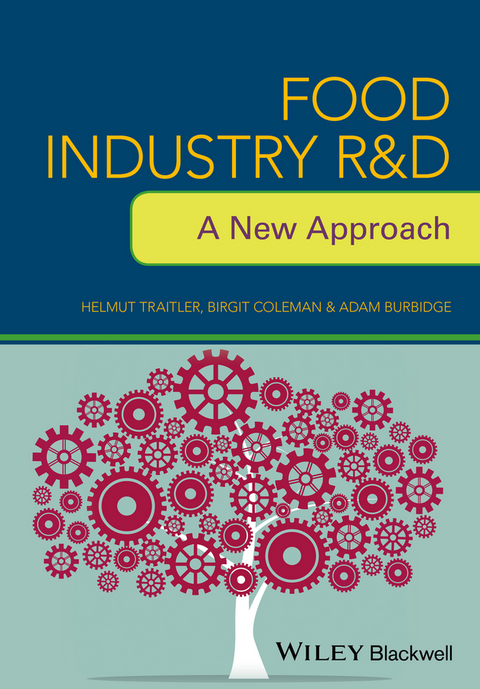
Food Industry R&D (eBook)
John Wiley & Sons (Verlag)
978-1-119-08940-7 (ISBN)
Research and development represents a vast spread of topics and can be an arena for controversy. In academia, such controversy may stem from conflicting interpretations of data and subsequent conclusions, the question of who was first to discover a particular finding and whether or not the said finding is of any value to the scientific community. R&D in corporate environments is mostly defined and driven by costs and clearly identified, consumer-focused targets. There is, however, common ground between these two approaches as both strive to maximize knowledge, though for different reasons and in differnt ways. The equipment and scientific rigor may be similar or identical, however their usage, approach and interpretation are different.
This book discusses the history and background of today's food industry R&D as seen by consumers, academia and the industry itself, with several chapters dedicated to new and disruptive approaches. A must-read for all professionals in the packaged goods industry as well as students who aspire to contribute to this new industry, forcefully driven by R&D.
Helmut Traitler has a PhD in Organic Chemistry from the University of Vienna, Austria. In 2010, after decades' of experience with Nestlé in various roles around the world, Helmut co-founded Life2Years, Inc, a start-up company producing healthy beverages for the over-fifties.
Birgit Coleman holds a Master of Arts in Business, MA from the University of Applied Sciences, Vienna. She is a strategic thinker and Connections Explorer in her current role at Swissnex San Francisco.
Research and development represents a vast spread of topics and can be an arena for controversy. In academia, such controversy may stem from conflicting interpretations of data and subsequent conclusions, the question of who was first to discover a particular finding and whether or not the said finding is of any value to the scientific community. R&D in corporate environments is mostly defined and driven by costs and clearly identified, consumer-focused targets. There is, however, common ground between these two approaches as both strive to maximize knowledge, though for different reasons and in differnt ways. The equipment and scientific rigor may be similar or identical, however their usage, approach and interpretation are different. This book discusses the history and background of today's food industry R&D as seen by consumers, academia and the industry itself, with several chapters dedicated to new and disruptive approaches. A must-read for all professionals in the packaged goods industry as well as students who aspire to contribute to this new industry, forcefully driven by R&D.
Helmut Traitler has a PhD in Organic Chemistry from the University of Vienna, Austria. In 2010, after decades' of experience with Nestlé in various roles around the world, Helmut co-founded Life2Years, Inc, a start-up company producing healthy beverages for the over-fifties. Birgit Coleman holds a Master of Arts in Business, MA from the University of Applied Sciences, Vienna. She is a strategic thinker and Connections Explorer in her current role at Swissnex San Francisco.
Title Page 5
Copyright Page 6
Contents 7
About the Authors 19
Foreword 21
Preface 23
Acknowledgment 25
Part 1 What we have today and how we got here 27
Chapter 1 A typical food R& D organization: Personal observations
1.1 Introduction 29
1.1.1 Business people always know better 30
1.2 A Look Back in Wonderment 31
1.2.1 Innovation is everyone’s business 31
1.2.2 Let’s go and have a drink 32
1.2.3 Never give up and continue to hope 32
1.3 A Look Back to the Beginnings of a Typical Food Industry R& D
1.3.1 It all starts with a great idea 34
1.3.2 People were frightened 34
1.3.3 Are we depleting our resources? 35
1.3.4 Focus, focus, focus 36
1.3.5 A historic perspective 37
1.3.6 Let’s cut costs 37
1.3.7 Food industry has simple and tangible goals 38
1.4 From Single and Large to Multiple and Complex 39
1.4.1 Nutrition has growing pains 39
1.4.2 The new risk management approach: Many projects 40
1.4.3 Too many projects? No problem, reorganize 41
1.5 Why Does the Food Industry Need R& D After All?
1.5.1 Million dollar answers to the million dollar question 42
1.5.2 Here we go: Justifications 43
1.5.3 Because we can is a great reason! 43
1.5.4 New product development is everything, or is it not? 44
1.5.5 Consumer is king 45
1.5.6 It’s all about long-term thinking, stupid 46
1.6 Summary and Major Learning 47
REFERENCES 48
Chapter 2 A typical food R& D organization: The world consists of projects
2.1 All R& D Work Is Project Based
2.1.1 Project has many meanings 49
2.1.2 Third-generation R& D
2.1.3 Strategic business units became popular 51
2.1.4 Organization is everything 52
2.1.5 Freeze the project design 52
2.1.6 How free can you be? 53
2.1.7 Small is beautiful 53
2.1.8 pipelines 54
2.1.9 Try it out first 55
2.2 Project Management 56
2.2.1 Manage or lead? Manage and lead 56
2.2.2 Select the right project and deliver 57
2.2.3 Teamwork is not everything, it’s the only thing! 58
2.3 All Projects Are Sponsored 58
2.3.1 SBUs: The new, old kid on the block, happy anniversary! 59
2.3.2 Accountability and responsibility: A “repartition” of roles 60
2.3.3 SBU demands, R& D delivers
2.3.4 A brief comes from above 62
2.4 The Predictable Organization 62
2.4.1 First ritual: Research the consumer 62
2.4.2 From “business scenario” to “business plan” 63
2.4.3 More rituals 64
2.4.4 Projects never seem to die 65
2.4.5 It’s all about results 65
2.5 Valuation of Projects 67
2.5.1 Your project could have delivered more! 67
2.5.2 That’s what others invest 67
2.5.3 Sell your project better: Start by explaining it so that everyone can understand it 67
2.5.4 Communication is king! 69
2.5.5 Speed is everything 69
2.6 Summary and Major Learning 70
References 72
Chapter 3 A critical view of today’s R& D organization in the food industry: Structures and people
3.1 A Typical Setup of a Food R& D Organization
3.1.1 New idea? Let’s wait 74
3.1.2 Food is a conservative beast 74
3.1.3 Small is beautiful, or is it not? 75
3.1.4 Ingredient is king 75
3.1.5 Quality and safety are not everything, they’re the only thing! 76
3.1.6 Technologies are always product related 77
3.1.7 What’s my project worth? 77
3.1.8 Cui bono? 78
3.2 The People in the Food R& D
3.2.1 Do I stay, or shall I move on? 79
3.2.2 Twenty percent! Are you out of your mind? 79
3.2.3 More hoppers 81
3.2.4 More stayers 81
3.2.5 Change can be frightening 82
3.3 The Role of Discovery and Innovation in Food R& D
3.3.1 It’s all about discovery 83
3.3.2 It’s all about innovation, or is it renovation? 84
3.3.3 Size matters 85
3.3.4 Here’s a way out 85
3.3.5 What would the consumer say? 86
3.4 Additional Personal Observations and R& D-Related Stories
3.4.1 The business project 88
3.4.2 The secret project 89
3.4.3 The pet project 90
3.4.4 The never-ending project 90
3.4.5 The trial-and-error project 91
3.4.6 The please-someone project 91
3.4.7 The defensive project 92
3.4.8 The knowledge-building project 92
3.4.9 Change is needed! 93
3.5 Summary and Major Learning 93
References 95
Chapter 4 Understanding intellectual property and how it is handled in a typical food R& D environment
4.1 Quest for Intellectual Property: An Important Driver 96
4.1.1 Patents 96
4.1.2 Recipes 97
4.1.3 Trademarks 98
4.1.4 Trade secrets and secrecy agreements 98
4.1.5 Experts: Actions and results 99
4.1.6 Alliances and partnerships 100
4.1.7 Protect everything! 100
4.1.8 One last attempt 102
4.2 The Value of Intellectual Property for a Food Company 102
4.2.1 Poor principles in practice 103
4.2.2 Change is on its way 103
4.2.3 Patents forever 104
4.2.4 Numbers and more numbers 105
4.2.5 And more numbers 105
4.2.6 Here are more and even bigger numbers 106
4.2.7 Is my patent actually profitable? 107
4.2.8 It’s all about brands! And about service level! 108
4.2.9 Good communication is key, great communication creates value 109
4.3 Intellectual Property as the Basis for Industrial Intelligence and Counterintelligence 109
4.3.1 List everything 110
4.3.2 Technologies and people 110
4.3.3 Who are the experts? 110
4.3.4 Don’t ask questions, just fill in the form! 111
4.3.5 I want monthly highlights, although I don’t read them 112
4.3.6 Open up! 112
4.4 Commercializing IP Assets 113
4.4.1 A good license deal is better than no license deal or so you would think 114
4.4.2 Licensing out most often is a deviation of the traditional business model of a food company 114
4.5 Summary and Major Learning 115
References 116
Part 2 Possible future of the food industry 117
Chapter 5 The need for a new approach to R& D in the food industry
5.1 R& D in the Food Industry Is Inefficient: An Analysis
5.1.1 Innovation at zero extra costs 119
5.1.2 Real changes are required 120
5.1.3 Small is beautiful large becomes inefficient
5.1.4 The good, the creative, and the productive 121
5.1.5 What’s wrong with R& D?
5.1.6 I don’t know which half to cut! 122
5.1.7 Let’s eliminate every second word 123
5.1.8 Let’s do another budget cut 124
5.1.9 Innovation is key! 124
5.1.10 The secret: Combine sensible budget cuts with instilling a creative constraints atmosphere 125
5.2 R& D under the Influence and Guidance of Consultants
5.2.1 Consultants sell you back your idea What’s wrong with this?
5.2.2 It’s you or your boss who asked for help 127
5.2.3 Consultants well used can be of real help 127
5.2.4 Being coached is everything 128
5.2.5 How to bring it to the consultant 129
5.3 R& D under the Tutelage and Guidance of Marketing and Operations
5.3.1 Marketing has greater leverage 130
5.3.2 Marketing gives orders marketing does not make compromises
5.3.3 Operations act like a strict father 132
5.3.4 A bit of humor 133
5.3.5 Here’s one example 134
5.3.6 Let’s be respectful with each other 134
5.4 Evolutionary Change in a Typical Food R& D Organization
5.4.1 R& D is not alone in mediocrity
5.4.2 Let’s change, gradually! 136
5.4.3 Watch out for support and best timing 136
5.4.4 Cyclical versus anti-cyclical 137
5.4.5 From 10 make 1 or make 10: Which do you prefer? 137
5.4.6 Let us team up! 138
5.4.7 Change comes easy 138
5.5 Summary and Major Learning 138
References 140
Chapter 6 Consumer perspectives for change to R& D in the food industry
6.1 The Fast Moving Consumer Goods Industry (FMCGI) 141
6.1.1 Fast, furious, and cheap! 142
6.1.2 What consumers really want? The million dollar question, the billion dollar answer! 143
6.1.3 Food should be all natural it should be all this… 144
6.1.4 Food companies don’t like risks they “wait them away”
6.1.5 Lean and efficient: Don’t you get it? 146
6.1.6 Mutual understanding is not everything it’s the only thing
6.1.7 Here are some ways out 147
6.2 The Consumer in the Center 147
6.2.1 No risk, no fun, or else? 148
6.2.2 What’s architecture got to do with this? 149
6.2.3 In search of the ultimate answer 149
6.2.4 Emancipate from the consumers! 150
6.2.5 I think we may have the wrong people, oops! 151
6.2.6 Observation and smart conclusion: Two successful siblings 151
6.2.7 Observation is king 152
6.2.8 What do I do with what I have seen? 153
6.2.9 Tell the consumers, don’t let them tell you! At least try 153
6.2.10 The ultimate downturn: Administrative processes 154
6.3 The Consumer-Driven Food R& D
6.3.1 The “a-ha” moment 156
6.3.2 Take the risk and become independent 157
6.3.3 And better back it up with successful results! 157
6.3.4 I want to play with my own toys and make my own rules 158
6.4 Consumer Groups: The Public Opinion 158
6.4.1 Early warning is the name of the game 159
6.4.2 Oops, we got it wrong 160
6.4.3 Working together for the common goal: Consumer benefits 160
6.5 Summary and Major Learning 161
References 163
Chapter 7 University perspectives for change to R& D in the food industry
7.1 How Did We Get to This? 164
7.1.1 Why have “food science” and “food engineering” developed in parallel to mainstream science disciplines? 165
7.1.2 Why does industry sponsor research 166
7.1.3 IP “there’s gold in them there hills”: The intellectual gold rush 167
7.2 The “State of the Art” 169
7.2.1 What does the food industry know about academia? 169
7.2.2 Academics: Three different ones 169
7.2.3 Nutrition, medical science, claims, and regulatory bodies 172
7.2.4 Getting money from governments via grants and awards 175
7.2.5 Academics as consultants 177
7.3 Where Are We Heading? 177
7.3.1 Reunification? 177
7.3.2 Research as a marketing tool 177
7.3.3 Crowd-sourcing solutions: Open innovation pros and cons 178
7.3.4 Scientific publication in the future 179
7.3.5 A multidisciplinary future 180
7.3.6 How to collaborate better? 180
7.4 Summary and Major Learning 180
Reference 182
Chapter 8 Industry perspectives for change to R& D in the food industry
8.1 A Typical Food Industry Set-up 183
8.1.1 Branded products or private label? 184
8.1.2 The food industry: A champion of complexity 184
8.1.3 Some stories: Small food businesses and simplicity in their setup 185
8.1.4 How it all started 186
8.1.5 A bit of history: Strategic business units 187
8.1.6 It’s getting really confusing now 188
8.1.7 One important change of R& D setup as a consequence of a changing business structure
8.1.8 What’s first: The chicken or the egg? 189
8.2 The Food Industry: An Easy Money-Maker or a Daily Battle? 190
8.2.1 Marketing is really old, really, really old 190
8.2.2 Can the food industry turn to a new direction and new business model? Is a revolution possible? 191
8.2.3 Let’s do this together 192
8.2.4 Easy money or daily struggle? 193
8.3 Is the Food Industry Really Innovation Driven? 194
8.3.1 Innovation in the food industry is rather an antique affair 195
8.3.2 IBM or Kodak: Which would you rather follow? 195
8.3.3 Change or perish! 196
8.3.4 Small is beautiful and creative 196
8.3.5 Change your business model 197
8.4 The Perceived Value of the R& D Organization: It’s in the Eye of the Beholder
8.4.1 Why R& D is useless…
8.4.2 And why R& D is great!
8.4.3 It’s because of the tax man 200
8.4.4 The sense of urgency is really missing 200
8.4.5 “Good-weather” versus “bad-weather” managers 201
8.4.6 Constraint is good, smartly dealing with it is better 202
8.5 Summary and Major Learning 203
References 205
Part 3 Disruptive outlook for the food industry‘s R& D
Chapter 9 undefined 209
9.1 Introduction 209
9.2 Brief Historical Review 210
9.3 Let the Journey Begin: What We Can Learn from Their Players and Industries 210
9.3.1 Google 210
9.3.2 Google X 211
9.3.3 Back to Google X and the future 212
9.3.4 Google Research 213
9.3.5 Google for Entrepreneurs (GfE) 214
9.3.6 Google Ventures 214
9.3.7 Westfield Labs: Designing the mall of the future 215
9.3.8 Attack on the the brick-and-mortar model by e-tailers Zappos and Amazon 216
9.3.9 The rise of social shopping 217
9.3.10 Traditional industries meet tech 219
9.3.11 The art of dating 219
9.3.12 Learning from the least sexy industry role model 220
9.4 Halftime 221
9.4.1 The lean startup methodology 222
9.4.2 The lean network approach: The nomad approach 222
9.4.3 R& D-I-Y
9.4.4 The IKEA effect 223
9.4.5 Open source 223
9.4.6 The street is your R& D lab
9.4.7 Projects to promote interdependence 225
9.5 Summary and Major Learning 225
References 225
Chapter 10 Utopia or visions for the future: A new reality? 227
10.1 What If I Had a Magic Wand? My First Set of Magic Tricks 227
10.1.1 Abracadabra… 228
10.1.2 Integration across the borders in the food industry 228
10.1.3 Open innovation still remains much of a lip service approach 229
10.1.4 Brand strength is volatile 230
10.1.5 Store brands become more popular, or so it seems 231
10.1.6 Let’s join forces 231
10.1.7 We have to accept that there are problems out there 232
10.1.8 We need to take the consumers’ fears seriously 232
10.1.9 It’s so confusing out there, please help me! 233
10.1.10 The new business model 2.0 234
10.1.11 The R& D-centric company model 2.0 (equally applicable to model 2.1)
10.2 What If I Had a Magic Wand? My Second Set of Magic Tricks 237
10.2.1 Change is inevitable in all areas! 238
10.2.2 The new product will be know-how 239
10.2.3 That’s what’s important for business model 2.1 240
10.2.4 Here are the details 241
10.2.5 Some calculations, just examples 242
10.2.6 The company can earn more with model 2.1! 243
10.2.7 More changes: A new type of employee 244
10.3 The New Scientists and Engineers: A New Type of People 244
10.3.1 The new educational focus: Communicate 245
10.3.2 Choose your words and help me to understand 246
10.3.3 That’s what it takes 246
10.4 The New R& D Organization
10.4.1 Change is a risky business 248
10.4.2 Here’s the list 248
10.5 Summary and Major Learning 250
References 252
Chapter 11 Testing the hypotheses 253
11.1 Too Good to Be True or Simply Wrong? 253
11.1.1 Let’s look at business model 2.0 first 254
11.1.2 Let me take stock 254
11.1.3 Model 2.0: It’s either all or nothing 255
11.1.4 We don’t want to change anything all is just perfect or is it not?
11.1.5 It’s about time for R& D to jump into the driver’s seat
11.1.6 What about business model 2.1? Too disruptive and outlandish? 258
11.1.7 So, what’s bad about model 2.1? 259
11.1.8 We better start the gradual transition today 259
11.1.9 It’s all about people 260
11.1.10 Selling the intangible: The new mantra 261
11.?2? The New People: What Does It Mean? 261
11.2.1? Really new people with a new level of education are needed 262
11.2.2? And there has to be more 263
11.2.3? Hiring by committee 264
11.3 Some Case Studies: Personal Views 264
11.3.1 Charlie and the Chocolate Factory 265
11.3.2 It’s all about talking to clients 265
11.3.3 Observe and learn don’t impose and remodel
11.3.4 Citius, altius, fortius 266
11.3.5 Some reasons for the separation 267
11.4 Business Model 3.0 for R& D
11.4.1 Change was in the air 269
11.4.2 A short commercial 269
11.4.3 Change or perish 270
11.5 Summary and Major Learning 271
Reference 273
Chapter 12 Summary, conclusions, learning, and outlook 274
12.1 The Typical R& D Organization in the Food Industry
12.1.1 You are too old for marketing 275
12.1.2 How it all started 275
12.1.3 Why R& D?
12.1.4 Everything’s a project 277
12.1.5 And here came the strategic business units 277
12.1.6 Clever project management 278
12.1.7 The role of the SBUs and how it influenced R& D
12.1.8 The rituals: Consumer research, business plans, and the project definition 279
12.1.9 A critical view of today’s R& D organizations in the food industry
12.1.10 People in the food R& D
12.1.11 Discovery and innovation: More projects 281
12.2 Understanding Intellectual Property 281
12.2.1 We want to own everything: Should we really? 282
12.2.2 Service: An added value for any food company 282
12.2.3 What are other companies doing? What is my company working on? 283
12.2.4 I want to know who stands behind the competencies 283
12.2.5 What’s my IP worth? 284
12.3 New Approaches and Perspectives for Change 284
12.3.1 Something’s wrong in the state of R& D
12.3.2 Consultants: A necessary evil? 285
12.3.3 Lessons from marketing and operations 285
12.3.4 Evolutionary change in a typical R& D organization
12.3.5 How would consumers see changes in the food industry’s R& D?
12.3.6 Consumer research isn’t everything sometimes it’s actually the only thing
12.3.7 Consumer groups and the public opinion 288
12.3.8 University perspectives for change 289
12.3.9 IP: The intellectual gold rush 290
12.3.10 What does the food industry know about the world of academia? 290
12.3.11 Nutrition, medical science, claims, and regulatory 291
12.3.12 Where to get the money from: The role of grants and awards 291
12.3.13 Academics as consultants 291
12.3.14 What’s the future direction? 291
12.3.15 Scientific publication in the future: Multidisciplinary future and collaboration 292
12.3.16 Industry perspectives regarding change in food R& D
12.3.17 Food and beverage companies are really old 293
12.3.18 Anticipate change or be forced to change 294
12.4 Outlook to R& D Organizations in Other Industries
12.4.1 And the winner in the innovation competition is 295
12.4.2 The street is your lab 295
12.5 The Vision for the Future: Testing the Vision 295
12.5.1 The new reality for the food industry’s R& D and for the entire food industry
12.5.2 The new suggested business models 296
12.5.3 Brand strength is becoming increasingly volatile 296
12.5.4 We are not there yet 297
12.5.5 This change is going to be really tough 298
12.5.6 Testing the hypotheses: First model 2.0 298
12.5.7 What about suggested business model 2.1? Too disruptive and detached from reality? 299
12.5.8 Finally, here yet another business model 3.0 for the R& D in a food company
Reference 300
Index 301
EULA 312
| Erscheint lt. Verlag | 25.10.2016 |
|---|---|
| Sprache | englisch |
| Themenwelt | Naturwissenschaften ► Biologie |
| Naturwissenschaften ► Chemie | |
| Technik ► Lebensmitteltechnologie | |
| Wirtschaft ► Betriebswirtschaft / Management | |
| Weitere Fachgebiete ► Land- / Forstwirtschaft / Fischerei | |
| Schlagworte | academia • Business & Management • Business & Management in Chemistry • Chemie • Chemistry • Collaborative research • Consumers • Creativity & Innovation Management • food industry • Food Marketing & Product Development • Food Science & Technology • Future of Retail • Independent corporate • Industry • Innovations- u. Kreativitätsmanagement • Innovations- u. Kreativitätsmanagement • Lean Network Approach • Lebensmittelforschung u. -technologie • Lebensmittel-Vermarktung u. -Produktentwicklung • New Business Models • Research and Development • Wirtschaft u. Management • Wirtschaft u. Management in der Chemischen Industrie |
| ISBN-10 | 1-119-08940-9 / 1119089409 |
| ISBN-13 | 978-1-119-08940-7 / 9781119089407 |
| Informationen gemäß Produktsicherheitsverordnung (GPSR) | |
| Haben Sie eine Frage zum Produkt? |
 PDF (Adobe DRM)
Kopierschutz: Adobe-DRM
Adobe-DRM ist ein Kopierschutz, der das eBook vor Mißbrauch schützen soll. Dabei wird das eBook bereits beim Download auf Ihre persönliche Adobe-ID autorisiert. Lesen können Sie das eBook dann nur auf den Geräten, welche ebenfalls auf Ihre Adobe-ID registriert sind.
Details zum Adobe-DRM
Dateiformat: PDF (Portable Document Format)
Mit einem festen Seitenlayout eignet sich die PDF besonders für Fachbücher mit Spalten, Tabellen und Abbildungen. Eine PDF kann auf fast allen Geräten angezeigt werden, ist aber für kleine Displays (Smartphone, eReader) nur eingeschränkt geeignet.
Systemvoraussetzungen:
PC/Mac: Mit einem PC oder Mac können Sie dieses eBook lesen. Sie benötigen eine
eReader: Dieses eBook kann mit (fast) allen eBook-Readern gelesen werden. Mit dem amazon-Kindle ist es aber nicht kompatibel.
Smartphone/Tablet: Egal ob Apple oder Android, dieses eBook können Sie lesen. Sie benötigen eine
Geräteliste und zusätzliche Hinweise
Buying eBooks from abroad
For tax law reasons we can sell eBooks just within Germany and Switzerland. Regrettably we cannot fulfill eBook-orders from other countries.
aus dem Bereich