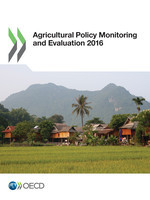
Agricultural Policy Monitoring and Evaluation 2016 (eBook)
136 Seiten
OECD Publishing (Verlag)
978-92-64-25912-6 (ISBN)
This annual publication provides information on policy developments and related support to agriculture in OECD countries and selected partner economies, measured with the OECD Producer Support Estimate methodology. Countries covered by the report represent almost 90% of the global value added in agriculture. The report includes a general discussion on developments in agricultural policies and two-page country snapshots. Detailed country profiles and statistical tables are available online.
This annual publication provides information on policy developments and related support to agriculture in OECD countries and selected partner economies, measured with the OECD Producer Support Estimate methodology. Countries covered by the report represent most of the global value added in agriculture. The report includes a general discussion on developments in agricultural policies and two-page country snapshots. Detailed country profiles and statistical tables are available online.
Foreword 5
Table of contents 7
Acknowledgements 11
Reader’s guide Definition of OECD indicators of agricultural support 13
Nominal indicators used in this report 13
Ratio indicators and percentage indicators 14
Box 1. Definitions of categories in the PSE classification 15
Decomposition indicators 16
Definition of GSSE categories 17
Box 2. Definitions of categories in the GSSE classification 17
Table: OECD indicators of support 18
Sources and definitions of contextual indicators 19
Table 2.X.1. Contextual indicators 19
Table 2.X.2. Productivity and environmental indicators 20
Figure 2.X.1. Main macro-economic indicators 21
Figure 2.X.2. Agro-food trade 21
Figure 2.X.3. Composition of agricultural output growth 21
Figure 2.X.4. Composition of agro-food trade 21
Figure 2.X.5. Environmental indicators 21
Currencies 22
List of acronyms and abbreviations 22
Executive summary 27
Recommendations 28
Chapter 1. Developments in agricultural policy and support 29
Key economic and market developments 30
Table 1.1. Key economic indicators* 30
Figure 1.1. Commodity world price indices, 2007 to 2015 31
Developments in agricultural policies 32
Box 1.1. Meeting of the OECD Committee for Agriculture at Ministerial Level 7-8 April 2016 32
Box 1.2. Sizing up the SDGs: What is the importance of the United Nations Sustainable Development Goals for Agriculture? 35
Box 1.3. What are the implications of COP 21 for agriculture? 38
Box 1.4. What does the Nairobi package imply for agriculture? 39
Developments in agricultural support 41
Agricultural sectors and total support as measured by the TSE 42
Figure 1.2. Country shares in total agricultural value added and total TSE, 1995-97 and 2013-15 42
Figure 1.3. Total Support Estimate by country, 1995-97 and 2013-15 43
Support to farmers shows opposite trends in OECD and emerging economies 44
Figure 1.4. Composition of Total Support Estimate by country, 2013-15 (percentage of GDP) 45
Figure 1.5. Evolution of Producer Support Estimate, 1995 to 2015 (percentage of gross farm receipts) 46
Figure 1.6. Producer Support Estimate by country, 1995-97 and 2013-15 (percentage of gross farm receipts) 46
Box 1.5. What drove changes in the monetary value of producer support in 2015? 47
Figure 1.7. Contribution of MPS and budgetary payments to the change in the Producer Support Estimate in 2015 47
Figure 1.8. Contribution of price gaps and output quantities to the change in the MPS in 2015 48
Figure 1.9. Composition of Producer Support Estimate by country, 2013-15 (percentage of gross farm receipts) 50
Figure 1.10. Composition of payments based on area, animal numbers, receipts, and income by country, 1995-97 and 2013-15 (percentage of gross farm receipts) 52
Figure 1.11. Producer Nominal Protection Coefficient by country, 1995-97 and 2013-15 53
Figure 1.12. Single Commodity Transfers, all countries, 1995-97 and 2013-15 (percentage of gross receipts for each commodity) 54
Figure 1.13. Support conditional on the adoption of specific production practices, 1995-97 and 2013-15 (percentage of gross farm receipts) 55
Box 1.6. The role of exchange rates in measuring support to agriculture 55
Figure 1.14. Exchange rate movements of selected currencies against the US dollar, 2000-15 55
Table 1.2. Development in total PSE in selected currencies, 2014 to 2015 56
Figure 1.15. Evolution of relative support indicators for the aggregate of all countries covered in this report, 1995 to 2015 57
Support to general services varies significantly across countries in both size and priorities 57
Figure 1.16. General Services Support Estimate: share in TSE and composition 58
Consumers in most countries continue to pay for agricultural support 59
Figure 1.17. Consumer Support Estimate by country, 1995-97 and 2013-15 (percentage of consumption expenditure at farm gate) 60
Assessing support and reforms 60
Box 1.7. Agricultural risk management: A holistic approach 62
Notes 64
References 64
Chapter 2. Country snapshots 67
2.1. Australia 68
Support to agriculture 68
Figure 2.1. Australia: Level, structure and evolution of agricultural support 68
Main policy changes 68
Assessment and recommendations 69
Table 2.1. Australia: Estimates of support to agriculture 70
2.2. Brazil 71
Support to agriculture 71
Figure 2.2. Brazil: Level, structure and evolution of agricultural support 71
Main policy changes 71
Assessment and recommendations 71
Table 2.2. Brazil: Estimates of support to agriculture 73
2.3. Canada 74
Support to agriculture 74
Figure 2.3. Canada: Level, structure and evolution of agricultural support 74
Main policy changes 74
Assessment and recommendations 75
Table 2.3. Canada: Estimates of support to agriculture 76
2.4. Chile 77
Support to agriculture 77
Figure 2.4. Chile: Level, structure and evolution of agricultural support 77
Main policy changes 77
Assessment and recommendations 78
Table 2.4. Chile: Estimates of support to agriculture 79
2.5. China 80
Support to agriculture 80
Figure 2.5. China: Level, structure and evolution of agricultural support 80
Main policy changes 80
Assessment and recommendations 81
Table 2.5. China: Estimates of support to agriculture 82
2.6. Colombia 83
Support to agriculture 83
Figure 2.6. Colombia: Level, structure and evolution of agricultural support 83
Main policy changes 83
Assessment and recommendations 84
Table 2.6. Colombia: Estimates of support to agriculture 85
2.7. European Union 86
Support to agriculture 86
Figure 2.7. European Union: Level, structure and evolution of agricultural support 86
Main policy changes 86
Assessment and recommendations 86
Table 2.7. European Union: Estimates of support to agriculture 88
2.8. Iceland 89
Support to agriculture 89
Figure 2.8. Iceland: Level, structure and evolution of agricultural support 89
Main policy changes 90
Assessment and recommendations 90
Table 2.8. Iceland: Estimates of support to agriculture 91
2.9. Indonesia 92
Support to agriculture 92
Figure 2.9. Indonesia: Level, structure and evolution of agricultural support 92
Main policy changes 92
Assessment and recommendations 93
Table 2.9. Indonesia: Estimates of support to agriculture 94
2.10. Israel 95
Support to agriculture 95
Figure 2.10. Israel: Level, structure and evolution of agricultural support 95
Main policy changes 95
Assessment and recommendations 96
Table 2.10. Israel: Estimates of support to agriculture 97
2.11. Japan 98
Support to agriculture 98
Figure 2.11. Japan: Level, structure and evolution of agricultural support 98
Main policy changes 98
Assessment and recommendations 99
Table 2.11. Japan: Estimates of support to agriculture 100
2.12. Kazakhstan 101
Support to agriculture 101
Figure 2.12. Kazakhstan: Level, structure and evolution of agricultural support 101
Main policy changes 101
Assessment and recommendations 102
Table 2.12. Kazakhstan: Estimates of support to agriculture 103
2.13. Korea 104
Support to agriculture 104
Figure 2.13. Korea: Level, structure and evolution of agricultural support 104
Main policy changes 104
Assessment and recommendations 105
Table 2.13. Korea: Estimates of support to agriculture 106
2.14. Mexico 107
Support to agriculture 107
Figure 2.14. Mexico: Level, structure and evolution of agricultural support 107
Main policy changes 107
Assessment and recommendations 108
Table 2.14. Mexico: Estimates of support to agriculture 109
2.15. New Zealand 110
Support to agriculture 110
Figure 2.15. New Zealand: Level, structure and evolution of agricultural support 110
Main policy changes 110
Assessment and recommendations 111
Table 2.15. New Zealand: Estimates of support to agriculture 112
2.16. Norway 113
Support to agriculture 113
Figure 2.16. Norway: Level, structure and evolution of agricultural support 113
Main policy changes 113
Assessment and recommendations 114
Table 2.16. Norway: Estimates of support to agriculture 115
2.17. Russian Federation 116
Support to agriculture 116
Figure 2.17. Russian Federation: Level, structure and evolution of agricultural support 116
Main policy changes 116
Assessment and recommendations 117
Table 2.17. Russia: Estimates of support to agriculture 118
2.18. South Africa 119
Support to agriculture 119
Figure 2.18. South Africa: Level, structure and evolution of agricultural support 119
Main policy changes 119
Assessment and recommendations 120
Table 2.18. South Africa: Estimates of support to agriculture 121
2.19. Switzerland 122
Support to agriculture 122
Figure 2.19. Switzerland: Level, structure and evolution of agricultural support 122
Main policy changes 122
Assessment and recommendations 123
Table 2.19. Switzerland: Estimates of support to agriculture 124
2.20. Turkey 125
Support to agriculture 125
Figure 2.20. Turkey: Level, structure and evolution of agricultural support 125
Main policy changes 125
Assessment and recommendations 126
Table 2.20. Turkey: Estimates of support to agriculture 127
2.21. Ukraine 128
Support to agriculture 128
Figure 2.21. Ukraine: Level, structure and evolution of agricultural support 128
Main policy changes 128
Assessment and recommendations 129
Table 2.21. Ukraine: Estimates of support to agriculture 130
2.22. United States 131
Support to agriculture 131
Figure 2.22. United States: Level, structure and evolution of agricultural support 131
Main policy changes 131
Assessment and recommendations 132
Table 2.22. United States: Estimates of support to agriculture 133
2.23. Viet Nam 134
Support to agriculture 134
Figure 2.23. Viet Nam: Level, structure and evolution of agricultural support 134
Main policy changes 134
Assessment and recommendations 134
Table 2.23. Viet Nam: Estimates of support to agriculture 136
Notes 135
Reader’s guide Definition of OECD indicators of agricultural support
Nominal indicators used in this report
Producer Support Estimate (PSE): The annual monetary value of gross transfers from consumers and taxpayers to agricultural producers, measured at the farm gate level, arising from policy measures that support agriculture, regardless of their nature, objectives or impacts on farm production or income. It includes market price support, budgetary payments and budget revenue foregone, i.e. gross transfers from consumers and taxpayers to agricultural producers arising from policy measures based on: current output, input use, area planted/animal numbers/receipts/incomes (current, non-current), and non-commodity criteria.
Market Price Support (MPS): The annual monetary value of gross transfers from consumers and taxpayers to agricultural producers arising from policy measures that create a gap between domestic market prices and border prices of a specific agricultural commodity, measured at the farm gate level. MPS is also available by commodity.
Producer Single Commodity Transfers (producer SCT): The annual monetary value of gross transfers from consumers and taxpayers to agricultural producers, measured at the farm gate level, arising from policies linked to the production of a single commodity such that the producer must produce the designated commodity in order to receive the payment. This includes broader policies where transfers are specified on a per-commodity basis. Producer SCT is also available by commodity.
Group Commodity Transfers (GCT): The annual monetary value of gross transfers from consumers and taxpayers to agricultural producers, measured at the farm gate level, arising from policies whose payments are made on the basis that one or more of a designated list of commodities is produced, i.e. a producer may produce from a set of allowable commodities and receive a transfer that does not vary with respect to this decision.
All Commodity Transfers (ACT): The annual monetary value of gross transfers from consumers and taxpayers to agricultural producers, measured at the farm gate level, arising from policies that place no restrictions on the commodity produced but require the recipient to produce some commodity of their choice.
Other Transfers to Producers (OTP): The annual monetary value of gross transfers from consumers and taxpayers to agricultural producers, measured at the farm gate level, arising from policies that do not require any commodity production at all.
Consumer Single Commodity Transfers (consumer SCT): The annual monetary value of gross transfers from (to) consumers of agricultural commodities, measured at the farm gate level, arising from policies linked to the production of a single commodity. Consumer SCT is also available by commodity.
Consumer Support Estimate (CSE): The annual monetary value of gross transfers from (to) consumers of agricultural commodities, measured at the farm gate level, arising from policy measures that support agriculture, regardless of their nature, objectives or impacts on consumption of farm products. If negative, the CSE measures the burden (implicit tax) on consumers through market price support (higher prices), that more than offsets consumer subsidies that lower prices to consumers.
General Services Support Estimate (GSSE): The annual monetary value of gross transfers arising from policy measures that create enabling conditions for the primary agricultural sector through development of private or public services, institutions and infrastructure, regardless of their objectives and impacts on farm production and income, or consumption of farm products. The GSSE includes policies where primary agriculture is the main beneficiary, but does not include any payments to individual producers. GSSE transfers do not directly alter producer receipts or costs or consumption expenditures. GSSE categories are defined in Box 2.
Total Support Estimate (TSE): The annual monetary value of all gross transfers from taxpayers and consumers arising from policy measures that support agriculture, net of the associated budgetary receipts, regardless of their objectives and impacts on farm production and income, or consumption of farm products.
Ratio indicators and percentage indicators
Percentage PSE (%PSE): PSE transfers as a share of gross farm receipts (including support in the denominator).
Percentage SCT (%SCT): Is the commodity SCT expressed as a share of gross farm receipts for the specific commodity (including support in the denominator).
Share of SCT in total PSE (%): Share of Single Commodity Transfers in the total PSE. This indicator is also calculated by commodity.
Producer Nominal Protection Coefficient (producer NPC): The ratio between the average price received by producers (at farm gate), including payments per tonne of current output, and the border price (measured at farm gate). The Producer NPC is also available by commodity.
Producer Nominal Assistance Coefficient (producer NAC): The ratio between the value of gross farm receipts including support and gross farm receipts (at farm gate) valued at border prices (measured at farm gate).
Percentage CSE (%CSE): CSE transfers as a share of consumption expenditure on agricultural commodities (at farm gate prices), net of taxpayer transfers to consumers. The %CSE measures the implicit tax (or subsidy, if CSE is positive) placed on consumers by agricultural price policies.
Consumer Nominal Protection Coefficient (consumer NPC): The ratio between the average price paid by consumers (at farm gate) and the border price (measured at farm gate). The Consumer NPC is also available by commodity.
Consumer Nominal Assistance Coefficient (consumer NAC): The ratio between the value of consumption expenditure on agricultural commodities (at farm gate) and that valued at border prices.
Percentage TSE (%TSE): TSE transfers as a percentage of GDP.
Percentage GSSE (%GSSE): Share of expenditures on general services in the Total Support Estimate (TSE).
Box 1. Definitions of categories in the PSE classification
Definitions of categories
Category A1, Market price support (MPS): Transfers from consumers and taxpayers to agricultural producers from policy measures that create a gap between domestic market prices and border prices of a specific agricultural commodity, measured at the farm gate level.
Category A2, Payments based on output: Transfers from taxpayers to agricultural producers from policy measures based on current output of a specific agricultural commodity.
Category B, Payments based on input use: Transfers from taxpayers to agricultural producers arising from policy measures based on on-farm use of inputs:
-
Variable input use that reduces the on-farm cost of a specific variable input or a mix of variable inputs.
-
Fixed capital formation that reduces the on-farm investment cost of farm buildings, equipment, plantations, irrigation, drainage, and soil improvements.
-
On-farm services that reduce the cost of technical, accounting, commercial, sanitary and phyto-sanitary assistance and training provided to individual farmers.
Category C, Payments based on current A/An/R/I, production required: Transfers from taxpayers to agricultural producers arising from policy measures based on current area, animal numbers, revenue, or income, and requiring production.
Category D, Payments based on non-current A/An/R/I, production required: Transfers from taxpayers to agricultural producers arising from policy measures based on non-current (i.e. historical or fixed) area, animal numbers, revenue, or income, with current production of any commodity required.
Category E, Payments based on non-current A/An/R/I, production not required: Transfers from taxpayers to agricultural producers arising from policy measures based on non-current (i.e. historical or fixed) area, animal numbers, revenue, or income, with current production of any commodity not required but optional.
Category F, Payments based on non-commodity criteria: Transfers from taxpayers to agricultural producers arising from policy measures based on:
-
Long-term resource retirement: Transfers for the long-term retirement of factors of production from commodity production. The payments in this subcategory are distinguished from those requiring short-term resource retirement, which are based on commodity production criteria.
-
A specific non-commodity output: Transfers for the use of farm resources to produce specific non-commodity outputs of goods and services, which are not required by regulations.
-
Other non-commodity criteria: Transfers provided equally to all farmers, such as a flat rate or lump sum payment.
Category G, Miscellaneous payments: Transfers from taxpayers to farmers for which there is a lack of information to allocate them among the appropriate categories.
Note: A (area), An (animal numbers), R (receipts) or I (income).
Definitions of...
| Erscheint lt. Verlag | 16.6.2016 |
|---|---|
| Sprache | englisch |
| Themenwelt | Technik |
| Weitere Fachgebiete ► Land- / Forstwirtschaft / Fischerei | |
| ISBN-10 | 92-64-25912-0 / 9264259120 |
| ISBN-13 | 978-92-64-25912-6 / 9789264259126 |
| Informationen gemäß Produktsicherheitsverordnung (GPSR) | |
| Haben Sie eine Frage zum Produkt? |
 EPUB (Adobe DRM)
Kopierschutz: Adobe-DRM
Adobe-DRM ist ein Kopierschutz, der das eBook vor Mißbrauch schützen soll. Dabei wird das eBook bereits beim Download auf Ihre persönliche Adobe-ID autorisiert. Lesen können Sie das eBook dann nur auf den Geräten, welche ebenfalls auf Ihre Adobe-ID registriert sind.
Details zum Adobe-DRM
Dateiformat: EPUB (Electronic Publication)
EPUB ist ein offener Standard für eBooks und eignet sich besonders zur Darstellung von Belletristik und Sachbüchern. Der Fließtext wird dynamisch an die Display- und Schriftgröße angepasst. Auch für mobile Lesegeräte ist EPUB daher gut geeignet.
Systemvoraussetzungen:
PC/Mac: Mit einem PC oder Mac können Sie dieses eBook lesen. Sie benötigen eine
eReader: Dieses eBook kann mit (fast) allen eBook-Readern gelesen werden. Mit dem amazon-Kindle ist es aber nicht kompatibel.
Smartphone/Tablet: Egal ob Apple oder Android, dieses eBook können Sie lesen. Sie benötigen eine
Geräteliste und zusätzliche Hinweise
Buying eBooks from abroad
For tax law reasons we can sell eBooks just within Germany and Switzerland. Regrettably we cannot fulfill eBook-orders from other countries.
aus dem Bereich