Water Stress and Crop Plants (eBook)
John Wiley & Sons (Verlag)
978-1-119-05446-7 (ISBN)
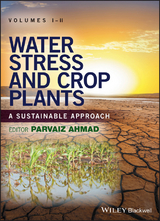
Plants are subjected to a variety of abiotic stresses such as drought, temperature, salinity, air pollution, heavy metals, UV radiations, etc. To survive under these harsh conditions plants are equipped with different resistance mechanisms which vary from species to species. Due to the environmental fluctuations agricultural and horticultural crops are often exposed to different environmental stresses leading to decreased yield and problems in the growth and development of the crops. Drought stress has been found to decrease the yield to an alarming rate of some important crops throughout the globe. During last few decades, lots of physiological and molecular works have been conducted under water stress in crop plants.
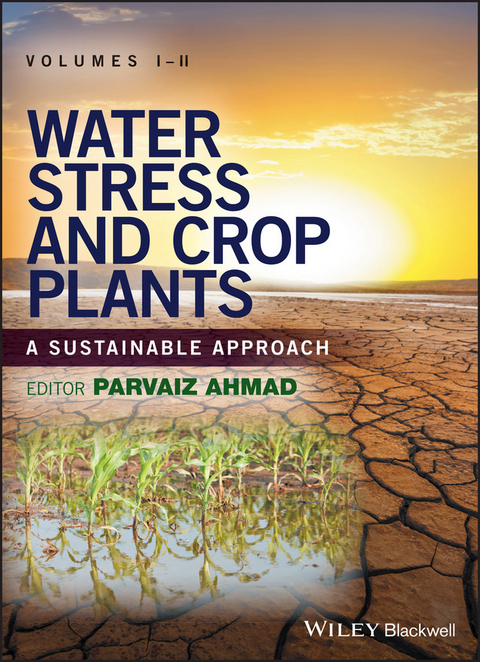
Water Stress and Crop Plants: A Sustainable Approach presents an up-to-date in-depth coverage of drought and flooding stress in plants, including the types, causes and consequences on plant growth and development. It discusses the physiobiochemical, molecular and omic approaches, and responses of crop plants towards water stress. Topics include nutritional stress, oxidative stress, hormonal regulation, transgenic approaches, mitigation of water stress, approaches to sustainability, and modern tools and techniques to alleviate the water stress on crop yields.
This practical book offers pragmatic guidance for scientists and researchers in plant biology, and agribusinesses and biotechnology companies dealing with agronomy and environment, to mitigate the negative effects of stress and improve yield under stress. The broad coverage also makes this a valuable guide enabling students to understand the physiological, biochemical, and molecular mechanisms of environmental stress in plants.
Dr Parvaiz Ahmad, Department of Botany, S.P. College, University of Kashmir, India
Dr Ahmad is currently Senior Assistant Professor in the Department of Botany where he teaches on stress physiology and molecular biology. Previous to this he taught at GDC (Boys) Anantnag, Kashmir, India, until May 2013. He has been working on environmental stress in plants since 2001, and his areas of expertise include plant molecular biology (abiotic stress responses in plants (physio-biochemical responses and enzyme activity during stress), developing abiotic tolerant plants), plant microbe interaction (crop improvement through AMF), plant tissue culture, and stress physiology. Dr Ahmad is on the Editorial boards of Botany Research International and Journal of Phytologym, and he is a reviewer on sixteen other international journals including Physiologia Plantarum (Wiley-Blackwell). He has contributed chapters to 26 books and co-edited 14 volumes with Springer, Elsevier and Wiley.
Plants are subjected to a variety of abiotic stresses such as drought, temperature, salinity, air pollution, heavy metals, UV radiations, etc. To survive under these harsh conditions plants are equipped with different resistance mechanisms which vary from species to species. Due to the environmental fluctuations agricultural and horticultural crops are often exposed to different environmental stresses leading to decreased yield and problems in the growth and development of the crops. Drought stress has been found to decrease the yield to an alarming rate of some important crops throughout the globe. During last few decades, lots of physiological and molecular works have been conducted under water stress in crop plants. Water Stress and Crop Plants: A Sustainable Approach presents an up-to-date in-depth coverage of drought and flooding stress in plants, including the types, causes and consequences on plant growth and development. It discusses the physiobiochemical, molecular and omic approaches, and responses of crop plants towards water stress. Topics include nutritional stress, oxidative stress, hormonal regulation, transgenic approaches, mitigation of water stress, approaches to sustainability, and modern tools and techniques to alleviate the water stress on crop yields. This practical book offers pragmatic guidance for scientists and researchers in plant biology, and agribusinesses and biotechnology companies dealing with agronomy and environment, to mitigate the negative effects of stress and improve yield under stress. The broad coverage also makes this a valuable guide enabling students to understand the physiological, biochemical, and molecular mechanisms of environmental stress in plants.
Dr Parvaiz Ahmad, Department of Botany, S.P. College, University of Kashmir, India Dr Ahmad is currently Senior Assistant Professor in the Department of Botany where he teaches on stress physiology and molecular biology. Previous to this he taught at GDC (Boys) Anantnag, Kashmir, India, until May 2013. He has been working on environmental stress in plants since 2001, and his areas of expertise include plant molecular biology (abiotic stress responses in plants (physio-biochemical responses and enzyme activity during stress), developing abiotic tolerant plants), plant microbe interaction (crop improvement through AMF), plant tissue culture, and stress physiology. Dr Ahmad is on the Editorial boards of Botany Research International and Journal of Phytologym, and he is a reviewer on sixteen other international journals including Physiologia Plantarum (Wiley-Blackwell). He has contributed chapters to 26 books and co-edited 14 volumes with Springer, Elsevier and Wiley.
List of contributors
About the Editor
Foreword
Preface
Chapter 1: Drought stress and photosynthesis in plants
Chapter 2: The Role of Crassulacean Acid Metabolism Induction in Plants Adaptation to Water Deficit
Chapter 3: Stomatal Responses to Drought Stress
Chapter 4: Recurrent droughts: keys for sustainable water management from case studies of tree fruit orchards in central Chile
Chapter 5: Global explicit profiling of water deficit-induced diminutions in agricultural crop sustainability: a key emerging trends and challenges
Chapter 6: Sustainable Agricultural Practices for Water Quality Protection
Chapter 7: Salinity and Drought Stress: Similarities and Differences in Oxidative Responses and Cellular Redox regulation
Chapter 8: Oxidative stress and plant responses to pathogens under drought conditions
Chapter 9: Potential Usage of Antioxidants, Hormones and Plant Extracts: An Innovative Approach in Taming Water Stress Limitation in Crop Plants
Chapter 10: Water stress in plants: From gene to biotechnology
Chapter 11: Plant Aquaporin Biotechnology: Challenges and Prospects for abiotic stress tolerance under changing global environment
Chapter 12: Role of proteins in alleviating drought stress in plants
Chapter 13: Avenues for improving drought tolerance in crops by ABA regulation: Molecular and physiological basis
Chapter 14: MYB transcription factors for enhanced drought tolerance in plants
Chapter 15: Analysis of novel haplotype variations at TaDREB-D1 and TaCwi-D1 genes influencing drought tolerance in bread/synthetic wheat derivatives: An Overview
Chapter 16: Towards integration of system based approach for understanding drought stress in plants
Chapter 17: MiRNA/siRNA-based approaches to enhance drought tolerance of barley and wheat under drought stress
Chapter 18: MicroRNAs and Their Role in Drought Stress Response in Plants
Chapter 19: Sugar Signaling in Plants: A Novel Mechanism to Drought Stress Management
Chapter 20: Agricultural, socio-economic, and cultural relevance of crop wild relatives, in particular food legume landraces, in Northern Africa
List of contributors
Chedly Abdelly
Laboratoire des Plantes Extrêmophiles,
Centre de Biotechnologie de Borj-Cedria (CBBC), Tunisia
Fakiha Afzal
Atta-ur-Rahman School of Applied Biosciences,
National University of Sciences and Technology (NUST),
Islamabad, Pakistan
Mohammad Abass Ahanger
Stress Physiology Lab, Department of Botany,
Jiwaji University Gwalior, India
Parvaiz Ahmad
Department of Botany, S.P. College,
Srinagar, Jammu and Kashmir, India
Muhammad Asif Ahsan
Australian Centre for Plant Functional Genomics,
University of Adelaide, Urrbrae, South Australia, Australia
Muhammad Ali
Institute of Molecular Biology and Biotechnology, Bahauddin
Zakariya University, Multan and Government College
University Faisalabad, Faisalabad, Pakistan
E.F. Abd Allah
Plant Production Department, College of Food and
Agricultural Sciences, King Saud University, Riyadh,
Saudi Arabia
Galieni Angelica
Faculty of Bioscience and Technologies for Food, Agriculture
and Environment, University of Teramo, Teramo, Italy
Muhammad Shahzad Anjam
Institute of Molecular Biology and Biotechnology, Bahauddin
Zakariya University, Multan, Pakistan and Rheinische
Friedrich-Wilhelms-University of Bonn, INRES – Molecular
Phytomedicine, Bonn, Germany
Saroj Arora
Department of Botanical and Environmental Sciences,
Guru Nanak Dev University, Punjab, India
Muhammad Ashraf
Pakistan Science Foundation, Islamabad, Pakistan
Habib-ur-Rehman Athar
Institute of Pure and Applied Biology,
Bahauddin Zakariya University, Multan, Pakistan
Maurizio Badiani
Dipartimento di Agraria, Università Mediterranea
di Reggio Calabria, Reggio Calabria, Italy
Shagun Bali
Department of Botanical and Environmental Sciences,
Guru Nanak Dev University, Punjab, India
Nahidah Bashir
Institute of Pure and Applied Biology,
Bahauddin Zakariya University, Multan, Pakistan
Maali Benzarti
Laboratoire des Plantes Extrêmophiles,
Centre de Biotechnologie de Borj-Cedria (CBBC),
Tunisia
Renu Bhardwaj
Department of Botanical and Environmental Sciences,
Guru Nanak Dev University, Punjab, India
Faical Brini
Plant Protection and Improvement Laboratory,
Centre of Biotechnology of Sfax (CBS) University of Sfax,
Sfax, Tunisia
David J. Burritt
Department of Botany, University of Otago, Dunedin,
New Zealand
Devendra Kumar Chauhan
D.D. Pant Interdisciplinary Research Laboratory,
Department of Botany, University of Allahabad,
Allahabad, India
Ahmed Debez
Laboratoire des Plantes Extrêmophiles, Centre de
Biotechnologie de Borj-Cedria (CBBC), Tunisia
Murat Dikilitas
Department of Plant Protection, Faculty of Agriculture,
Harran University, S. Urfa, Turkey
Nawal Kishore Dubey
Center of Advanced Study in Botany,
Banaras Hindu University, Varanasi, India
Fabio Stagnari
Faculty of Bioscience and Technologies for Food,
Agriculture and Environment, University of Teramo, Teramo, Italy
Kaouthar Feki
Plant Protection and Improvement Laboratory,
Centre of Biotechnology of Sfax (CBS)
University of Sfax, Sfax, Tunisia
Estrella Garrido
Faculty of Agricultural Sciences and Forestry,
Universidad Católica del Maule, Curicó, Chile
Vandana Gautam
Department of Botanical and Environmental Sciences,
Guru Nanak Dev University, Punjab, India
Naima Ghalmi
Ecole Nationale Supérieure Agronomique d’Alger,
El Harrach, Algeria
Sónia Gonçalves
Centro de Biotecnologia Agrícola e Agro-Alimentar do
Alentejo (CEBAL), Beja, Portugal
Alvina Gul
Atta-ur-Rahman School of Applied Biosciences,
National University of Sciences and Technology (NUST),
Islamabad, Pakistan
Ghader Habibi
Department of Biology, Payame Noor University (PNU), Iran
Roghieh Hajiboland
Plant Science Department, University of Tabriz, Tabriz, Iran
Neha Handa
Department of Botanical and Environmental Sciences, Guru
Nanak Dev University, Punjab, India
Abeer Hashem
Botany and Microbiology Department, College of Science,
King Saud University, Riyadh, Saudi Arabia
Mohammad Anwar Hossain
Department of Genetics & Plant Breeding, Bangladesh
Agricultural University, Bangladesh
Syed Sarfraz Hussain
Australian Centre for Plant Functional Genomics,
University of Adelaide, Urrbrae, South Australia,
Australia and School of Agriculture, Food and Wine,
University of Adelaide, Urrbrae, South Australia,
Australia
Sameen Ruqia Imadi
Atta-ur-Rahman School of Applied Biosciences,
National University of Sciences and Technology,
Islamabad, Pakistan
Sumira Jan
ICAR-Central Institute of Temperate Horticulture,
Srinagar, Jammu and Kashmir, India
Tehseen Kanwal
Institute of Molecular Biology and Biotechnology,
Bahauddin Zakariya University,
Multan, Pakistan
Sema Karakas
Department of Soil Science and Plant Nutrition,
Faculty of Agriculture, Harran University,
S. Urfa, Turkey
Harpreet Kaur
Department of Botanical and Environmental Sciences,
Guru Nanak Dev University, Punjab, India
Maria Khalid
Atta-ur-Rahman School of Applied Biosciences,
National University of Sciences and Technology (NUST),
Islamabad, Pakistan
Mourad Latati
Ecole Nationale Supérieure Agronomique d’Alger,
El Harrach, Algeria
Mohamed Lazali
Ecole Nationale Supérieure Agronomique d’Alger,
El Harrach, Algeria
Hamid Manzoor
Institute of Molecular Biology and Biotechnology,
Bahauddin Zakariya University,
Multan, Pakistan
Seema Mahmood
Institute of Pure and Applied Biology,
Bahauddin Zakariya University,
Multan, Pakistan
Pisante Michele
Faculty of Bioscience and Technologies for Food,
Agriculture and Environment, University of Teramo,
Teramo, Italy
Enrique Misle
Faculty of Agricultural Sciences and Forestry,
Universidad Católica del Maule, Curicó, Chile
Narghes Morad-Talab
Plant Science Department, University of Tabriz, Tabriz, Iran
Sibgha Noreen
Institute of Pure and Applied Biology,
Bahauddin Zakariya University, Multan, Pakistan
Puja Ohri
Department of Zoology, Guru Nanak Dev University,
Punjab, India
Ghania Ounane
Ecole Nationale Supérieure Agronomique d’Alger,
El Harrach, Algeria
Sidi Mohamed Ounane
Ecole Nationale Supérieure Agronomique d’Alger,
El Harrach, Algeria
Hassan Pakniyat
Crop Production and Plant Breeding Department,
College of Agriculture, Shiraz University, Shiraz, Iran
Mohammad Pessarakli
School of Plant Sciences, The University of Arizona,
Tuscan, Arizona, USA
Hadi Pirasteh-Anosheh
National Salinity Research Center, Yazd, Iran
Poonam
Department of Botanical and Environmental Sciences,
Guru Nanak Dev University, Punjab, India
Muhammad Kamran Qureshi
Department of Plant Breeding and Genetics,
Bahauddin Zakariya University, Multan, Pakistan
Bushra Rashid
National Centre of Excellence in Molecular Biology,
Thokar Niaz Baig University of the Punjab, Lahore, Pakistan
Sumaira Rasul
Institute of Molecular Biology and Biotechnology,
Bahauddin Zakariya University, Multan, Pakistan
Amandeep Rattan
Department of Botanical and Environmental Sciences,
Guru Nanak Dev University, Punjab, India
Kilani Ben Rejeb
Laboratoire des Plantes Extrêmophiles,
Centre de Biotechnologie de Borj-Cedria (CBBC),
Tunisia and Adaptation des Plantes aux Contraintes
Environnementales, Université Pierre et Marie Curie
(UPMC), Paris, France
Armin Saed-Moucheshi
Crop Production and Plant Breeding Department,
College of Agriculture, Shiraz University, Shiraz, Iran
Arnould Savouré
Adaptation des Plantes aux Contraintes Environnementales,
Université Pierre et Marie Curie (UPMC), Paris, France
Anket Sharma
Department of Botanical and Environmental Sciences,
Guru Nanak Dev University, Punjab, India
Bu-Jun Shi
Australian Centre for Plant Functional Genomics,
University of Adelaide, Urrbrae, South Australia,
Australia and School of Agriculture, Food and Wine,
University of Adelaide, Urrbrae, South Australia, Australia
Zoya Siddique
Atta-ur-Rahman School of Applied Biosciences, National
University of Sciences and Technology, Islamabad, Pakistan
Shweta Singh
D.D. Pant Interdisciplinary Research Laboratory,
Department of Botany, University of Allahabad,
Allahabad, India
Geetika Sirhindi
Department of Botany, Punjabi University, Punjab, India
Agostino Sorgonà
Dipartimento di Agraria,...
| Erscheint lt. Verlag | 8.6.2016 |
|---|---|
| Sprache | englisch |
| Themenwelt | Naturwissenschaften ► Biologie ► Botanik |
| Technik | |
| Weitere Fachgebiete ► Land- / Forstwirtschaft / Fischerei | |
| Schlagworte | Agriculture • Biowissenschaften • Botanik • Botanik / Biotechnologie • crop plants • crops • Crop yields • drought and flooding stress • Feldfrüchte • Feldfrüchte • Getreide • Landwirtschaft • Life Sciences • Mitigation • molecular • OMIC • physiobiochemical • Plant Biotechnology • plant science • Trockenstress • wasserstress • Water Stress |
| ISBN-10 | 1-119-05446-X / 111905446X |
| ISBN-13 | 978-1-119-05446-7 / 9781119054467 |
| Informationen gemäß Produktsicherheitsverordnung (GPSR) | |
| Haben Sie eine Frage zum Produkt? |
 EPUB (Adobe DRM)
Kopierschutz: Adobe-DRM
Adobe-DRM ist ein Kopierschutz, der das eBook vor Mißbrauch schützen soll. Dabei wird das eBook bereits beim Download auf Ihre persönliche Adobe-ID autorisiert. Lesen können Sie das eBook dann nur auf den Geräten, welche ebenfalls auf Ihre Adobe-ID registriert sind.
Details zum Adobe-DRM
Dateiformat: EPUB (Electronic Publication)
EPUB ist ein offener Standard für eBooks und eignet sich besonders zur Darstellung von Belletristik und Sachbüchern. Der Fließtext wird dynamisch an die Display- und Schriftgröße angepasst. Auch für mobile Lesegeräte ist EPUB daher gut geeignet.
Systemvoraussetzungen:
PC/Mac: Mit einem PC oder Mac können Sie dieses eBook lesen. Sie benötigen eine
eReader: Dieses eBook kann mit (fast) allen eBook-Readern gelesen werden. Mit dem amazon-Kindle ist es aber nicht kompatibel.
Smartphone/Tablet: Egal ob Apple oder Android, dieses eBook können Sie lesen. Sie benötigen eine
Geräteliste und zusätzliche Hinweise
Buying eBooks from abroad
For tax law reasons we can sell eBooks just within Germany and Switzerland. Regrettably we cannot fulfill eBook-orders from other countries.
aus dem Bereich