Electricity in Fish Research and Management (eBook)
Wiley (Verlag)
978-1-118-93556-9 (ISBN)
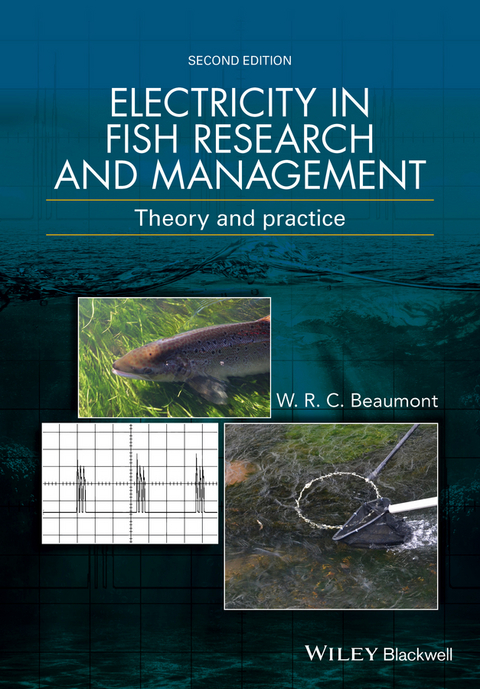
Electricity in Fish Research and Management, 2nd Edition provides a comprehensive discussion of the uses of both electricity and electrical principles in fishery management and research. It covers electric fishing (including theory, equipment, data analysis and practical factors affecting efficiency), fish barriers, fish counters and fish welfare issues.
The book concentrates on Electric Fishing (or Electrofishing); an internationally accepted and widely used procedure for sampling fish. Over the past 50 years electric fishing has become a standard method for fishery studies and management e.g. establishing population densities and abundance. However, due to the potential hazards of the method (both to operators and fish) there is a continuing need to develop and promote best practice guidelines.
The author has studied fish ecology for 40 years and understands the need for information that reaches out to all levels of understanding in the field. Previous books on this subject have either been collections of scientific papers and/or technical reports or very simple instruction manuals. In this book theory and practice is explained using non-technical language and simple equations. It brings depth as well as breadth in both information and principles behind the methods and should be an invaluable tool to both fisheries managers and researchers.
Although the book is aimed at undergraduates, the clear explanation of the factors means that the book is suitable for all levels of practitioners.
Electricity in Fish Research and Management, 2nd Edition provides a comprehensive discussion of the uses of both electricity and electrical principles in fishery management and research. It covers electric fishing (including theory, equipment, data analysis and practical factors affecting efficiency), fish barriers, fish counters and fish welfare issues. The book concentrates on Electric Fishing (or Electrofishing); an internationally accepted and widely used procedure for sampling fish. Over the past 50 years electric fishing has become a standard method for fishery studies and management e.g. establishing population densities and abundance. However, due to the potential hazards of the method (both to operators and fish) there is a continuing need to develop and promote best practice guidelines. The author has studied fish ecology for 40 years and understands the need for information that reaches out to all levels of understanding in the field. Previous books on this subject have either been collections of scientific papers and/or technical reports or very simple instruction manuals. In this book theory and practice is explained using non-technical language and simple equations. It brings depth as well as breadth in both information and principles behind the methods and should be an invaluable tool to both fisheries managers and researchers. Although the book is aimed at undergraduates, the clear explanation of the factors means that the book is suitable for all levels of practitioners.
William (Bill) Beaumont currently works as Senior Fisheries Scientist with the Game & Wildlife Conservation Trust, UK. Bill has covered a wide range of research topics from the effect of afforestation and acidification on upland trout populations to studies on lowland pike home range. Bill has also undertaken joint research projects in France, Lithuania, USA, Greece and Cyprus. Bill has specialized in developing methods and techniques used for fish ecological research including the use of telemetry and electrofishing. Bill has managed a salmon counting facility at East Stoke since 1981 and also runs electric fishing training courses. Bill is currently UK Representative for Smith-Root, a North American Internationally-respected?company, which produces and sells fisheries investigation products, including electrofishing equipment.
Acknowledgements, viii
1 Introduction, 1
2 The history of electricity in fish research, 3
3 Electric fishing, 7
3.1 Health and safety, 13
3.1.1 Electric shock, 14
3.1.2 Drowning, 16
3.1.3 Tripping or falling, 16
3.1.4 Trauma, 16
3.2 General issues, 16
4 Electrical terms, 17
4.1 Circuit, 19
4.2 Voltage, 19
4.2.1 Voltage gradient, 22
4.3 Voltage waveforms, 26
4.3.1 Alternating current, 27
4.3.2 Direct current, 28
4.3.3 Pulsed direct current, 30
4.3.3.1 Pulse frequency, 35
4.3.3.2 Pulse width, 38
4.4 Electrical current, 41
4.5 Power, 42
4.5.1 Power factor, 44
4.6 Resistance and resistivity, 44
4.6.1 Electrode resistance, 47
4.6.2 Kirchoff's Law, 49
4.7 Conductance and conductivity, 51
4.7.1 High?]conductivity water, 52
4.7.2 Low?]conductivity water, 52
4.8 Fish conductivity, 53
4.8.1 Water-fish conductivity ratio, 55
4.8.1.1 Graphic depiction, 57
4.8.1.2 Circuit theory, 57
4.8.1.3 Power Transfer Theory (PTT), 58
5 Electric fishing equipment, 63
5.1 Generators, 64
5.1.1 Use of multiple generators and control boxes, 65
5.2 Control boxes, 66
5.2.1 Generator?]based control boxes, 67
5.2.1.1 Control boxes with no facility to control output, 68
5.2.1.2 Control boxes with limited ability to control output, 68
5.2.1.3 Control boxes where many parameters of the output can be controlled, 70
5.2.2 Battery?]powered control boxes, 71
5.3 Electrodes, 72
5.3.1 Anodes, 73
5.3.1.1 Anode shape, 75
5.3.1.2 Anode size, 77
5.3.1.3 Twin and multiple anodes, 79
5.3.1.4 Anode ergonomics, 81
5.3.2 Pre?]positioned area samplers (PPAS), 82
5.3.3 Point abundance sampling using electricity (PASE), 83
5.3.4 Electric nets, 84
5.3.5 Cathodes, 85
5.4 Hand nets, 87
5.4.1 Banner nets, 90
5.5 Stop nets, 90
5.6 Protective and safety equipment, 92
5.6.1 Waders, 92
5.6.2 Gloves, 92
5.6.3 Other protective clothing, 93
5.6.4 Lifejackets, 93
6 Practical factors affecting electric fishing efficiency, 94
6.1 Manpower requirements, 94
6.2 Streambed: conductivity and substrate type, 95
6.3 Weather, 96
6.4 Water temperature, 96
6.5 Fish size, 97
6.6 Fish species, 98
6.7 Fish numbers, 99
6.8 Water clarity, 100
6.9 Site length, 100
6.10 Water depth, 101
6.11 Site width, 101
6.12 Time of day, 102
7 Electric fishing working techniques, 103
7.1 Operator skill and fishing and processing methods, 103
7.2 Fishing using wading, 106
7.2.1 Wading fishing using boats, 108
7.3 Fishing from boats, 110
7.3.1 Boom?]boats, 111
8 Electric fishing 'best' practice, 116
9 Fish population assessment methods, 122
9.1 Estimating relative abundance, 124
9.2 Estimating actual population size, 126
9.2.1 Capture-mark-recapture estimates (CMRs), 127
9.2.2 Catch depletion estimates, 128
10 Fish barriers, 132
11 Fish counters, 138
12 Electroanaesthesia, 142
13 Fish welfare, 145
13.1 Fish handling, 146
13.2 Stress, 146
13.3 Anaesthesia, 148
13.4 Fish density in holding bins, 151
13.5 Oxygen and carbon dioxide, 153
13.6 Ammonia, 154
13.7 Temperature, 155
13.8 Osmotic balance, 155
13.9 Sensitive or robust fish, 155
13.10 Fish eggs, 156
13.11 Bio?]security, 156
14 Record keeping required, 158
15 Summary, 159
Glossary, 161
References, 166
CHAPTER 3
Electric fishing
Electric fishing (or electrofishing) is the term given to a number of very different sampling methods. All have in common the utilisation of the reaction of fish to electrical fields in water for facilitating capture (Hartley 1980a, Pusey et al. 1998). At its most basic, electric fishing can be described as ‘the application of an electric field into water in order to incapacitate fish, thus rendering them easier to catch’.
Despite over 100 years of study, the exact nature by which these effects are caused is still a matter of some debate (Sharber & Black 1999, cf. Kolz 1989, Reynolds et al. 1988, Snyder 2003). The basic principle is that the electrical field stimulates a muscular reaction (either involving the central and/or autonomic nervous system or not) resulting in the characteristic behaviour and immobilisation of the fish.
Two views on the underlying cause of the effect predominate, the ‘Biarritz Paradigm’ and the ‘Bozeman Paradigm’. The former, which was proposed by Lamarque (1967, 1990) but also includes the principles underlying Kolz’s Power Transfer Theory (Kolz 1989), considers the phenomenon to be a reaction to electrostimulation of both the central nervous system (CNS) and autonomic nervous system and the direct response of the muscles of the fish (i.e. a reflex response) (Sharber & Black 1999). In 1999, Sharber and Black (1999) proposed an alternative theory, the Bozeman Paradigm. In this theory the fish response is basically that of electrically induced epilepsy, and when the electrical stimulation overwhelms the CNS the (epileptic) seizures occur.
Little external research has been carried out on Sharber and Black’s epilepsy theory, but many studies have either supported or refuted the theory regarding the role of the fish’s nervous system in determining the effect. Haskell et al. (1954) considered that the effect was independent of the CNS, as freshly killed fish that had had their spines removed or been pithed still reacted to an electric field and ‘swam’ towards the anode. Flux (1967) also found that dead fish responded to an alternating current (AC) voltage gradient and attributed this to Vibert’s (1963) assertion that, for a direct current (DC) waveform, in tetanus (where the fish’s muscles go into spasm and are in a cramped state) the electricity is acting directly on the fish muscles (i.e. no CNS reaction). Sternin et al. (1976), quoting work by Danyulite and Malyukina (1967), also considered that their work disproved the role of neural action in stimulating the fish muscles and proved that electrotaxis is possible without participation of the brain. However, Stewart (1990), working on marine fish species, observed that a pulsed DC (pDC) waveform acted directly on the fish muscles, with the fish muscle reacting to each pulse, and considered that the electrical waveform was working in parallel with the nervous system to activate the fish’s muscle system.
Given the wide variety of research findings on the fundamental cause of the effect, for the time being we need to accept that the underlying principles behind the response are not proven.
It is generally accepted by all researchers that it is the current density (amps/cm2), which can also be expressed as the power density (watts/cm3), which is the principle determinant of the behavioural response. The magnitude of the current density that the fish experience is governed by the applied voltage (and thus the voltage gradient (E) in the water), the conductivity of the water and the electrical conductivity of the fish.
In addition, it is possible that the fish skin acts in a way whereby electricity is more easily transmitted into the fish when there is a change in voltage potential around the fish: it is thought that this is due to the fish skin acting as a capacitor. This can be seen in experiments where fish have been put in water that has a gradually increasing DC voltage applied; eventually, when the voltage gradient is high enough, the fish will react, but the same reaction will occur at much lower voltage gradients if the voltage is switched off, then on. This would also explain the different fish reactions between DC and pDC waveforms (see Section 4.2) and also the cause of the increasing injury rates as pulse frequency increases (see Section 4.2.3.1).
The factors that affect the effectiveness of electrofishing include:
- Electrical waveform type
- Including pulse shape, pulse frequency and pulse width
- Electrode design
- Water conductivity
- Fish conductivity
- Streambed conductivity and substratum type/topography
- Water temperature
- Fish size
- Time of day
- Fish species
- Water clarity
- Water width and depth
- Operator skill.
Within the user community, the lack of adequate information regarding these factors has resulted in electric fishing being regarded as an art rather than a science (Kolz 1989). This lack of fundamental perception is encapsulated by the once-common practice of referring to the pulse box as the ‘magic box’. Whilst it is possible to capture fish without knowing how the technique works, knowledge of the fundamentals will enhance catch efficiency and help reduce some of the drawbacks concerning injury, as mentioned here. Knowledge of the basic electrical principles will also allow equipment to be calibrated to produce similar fish capture probabilities and thus improve standardisation between sampling in different locations.
Electric fishing has advantages over many of the other fish survey methods available (e.g. snorkelling, netting and bankside observation) regarding the composition of the species captured. Wiley and Tsai (1983) found that electric fishing produced better and more consistent results than seines, gave better population estimates, caught larger fish than seine netting and caught more fish by total weight. Capture rates can also be much higher; Growns et al. (1996) found capture rates nearly 30 times greater for electric fishing compared to gill netting with twice as many species captured. Likewise, Pugh and Schramm (1998) found that electric fishing was far more cost-effective than hoop nets, with hoop netting only catching two species compared with 19 by electric fishing. Snorkelling has also been suggested as an alternative to electric fishing; again, however, sampling efficiency is lower and results are more variable than for electric fishing (Cunjak et al. 1988, Hayes & Baird 1994). Shallow areas with high velocities and coarse substrate are particularly difficult for fish assessment by snorkelling (Heggenes et al. 1990). Observing fish from the bankside has also been tried as a method of estimating fish species. Whilst good agreement between observations and depletion electric fishing estimates has been obtained for trout fry, correlations between bankside visual counts and adult numbers were low (Bozek & Rahel 1991). An additional advantage of electric fishing is that it does not require prior preparation of the site (with consequent delay and disturbance of the fish to be investigated), and the requirements in terms of manpower are small when compared with many of the other methods.
Electric fishing is not, however, a universal success. Researchers have found drawbacks with the method regarding assessing species assemblage patterns (Pusey et al. 1998), post-fishing induced movement (Nordwall 1999), immune system suppression (VanderKooi et al. 2001) and elevated blood plasma–cortisol levels (Beaumont et al. 2000). The method also has potential to cause injury (both physical and physiological) and, in extreme circumstances, death to the fish. Physical damage can occur when fish muscles react so strongly to the electric field that they break the fish’s spine or ribs. The problem is not simply one of too high a voltage gradient, as Ruppert and Muth (1997) found that injuries occurred at field intensities lower than the threshold required even for narcosis. The most common injury observed is ‘burn’ or ‘brand’ marks (Figure 3.1). These brands can also take the form of making one quarter of the fish dark (Figure 3.2). Sometimes two quarters are coloured, and these tend to be opposing quarters (e.g. front left and rear right). These can be caused by melanophore discharge resulting from too close contact with (but not necessarily touching) the electrode, and they can be indicative of underlying spinal nerve damage. Spinal haematomas (Figure 3.3) and broken spines and ribs are caused by the electrical stimulation causing over-vigorous flexing of the muscles around the spine. Snyder (1995, 2003) gives a comprehensive review of pre-2000 research findings relating to fish damage.
Figure 3.1 Example of an electrode ‘burn’ (indicated by arrow) on an Atlantic salmon.
Figure 3.2 Example of an electrode ‘Harlequin burn’ on an Atlantic salmon parr.
Figure 3.3 Example of a spinal haematoma (indicated by arrow) caused by electric fishing on a rainbow trout.
The problems of fish injury and mortality have been the subjects of much debate and research since the 1940s. However, the literature is complex, often inconsistent and sometimes contradictory (Snyder 2003, Solomon 1999). Evidence exists that different species react differently to the...
| Erscheint lt. Verlag | 3.3.2016 |
|---|---|
| Sprache | englisch |
| Themenwelt | Naturwissenschaften ► Biologie |
| Technik | |
| Weitere Fachgebiete ► Land- / Forstwirtschaft / Fischerei | |
| Schlagworte | Ãkologie • Ãkologie / Aquatische Lebensräume • Aquaculture, Fisheries & Fish Science • Aquakultur, Fischereiwesen u. Fischforschung • aquatic ecology • Biowissenschaften • Electric fishing • Electro-anaesthesia • Electrofishing • Elektrofischerei • Fischerei • Fischereiwesen • Fish barriers • Fish capture • Fish counters • fisheries • Fisheries Management • Fish welfare • Life Sciences • Ökologie • Ökologie / Aquatische Lebensräume |
| ISBN-10 | 1-118-93556-X / 111893556X |
| ISBN-13 | 978-1-118-93556-9 / 9781118935569 |
| Informationen gemäß Produktsicherheitsverordnung (GPSR) | |
| Haben Sie eine Frage zum Produkt? |
 EPUB (Adobe DRM)
Kopierschutz: Adobe-DRM
Adobe-DRM ist ein Kopierschutz, der das eBook vor Mißbrauch schützen soll. Dabei wird das eBook bereits beim Download auf Ihre persönliche Adobe-ID autorisiert. Lesen können Sie das eBook dann nur auf den Geräten, welche ebenfalls auf Ihre Adobe-ID registriert sind.
Details zum Adobe-DRM
Dateiformat: EPUB (Electronic Publication)
EPUB ist ein offener Standard für eBooks und eignet sich besonders zur Darstellung von Belletristik und Sachbüchern. Der Fließtext wird dynamisch an die Display- und Schriftgröße angepasst. Auch für mobile Lesegeräte ist EPUB daher gut geeignet.
Systemvoraussetzungen:
PC/Mac: Mit einem PC oder Mac können Sie dieses eBook lesen. Sie benötigen eine
eReader: Dieses eBook kann mit (fast) allen eBook-Readern gelesen werden. Mit dem amazon-Kindle ist es aber nicht kompatibel.
Smartphone/Tablet: Egal ob Apple oder Android, dieses eBook können Sie lesen. Sie benötigen eine
Geräteliste und zusätzliche Hinweise
Buying eBooks from abroad
For tax law reasons we can sell eBooks just within Germany and Switzerland. Regrettably we cannot fulfill eBook-orders from other countries.
aus dem Bereich