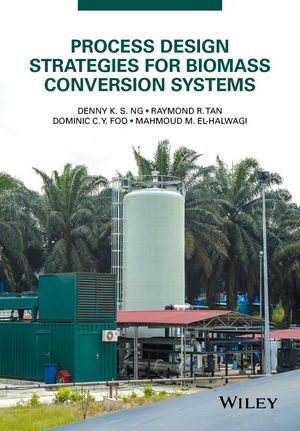
Process Design Strategies for Biomass Conversion Systems (eBook)
John Wiley & Sons (Verlag)
978-1-118-69913-3 (ISBN)
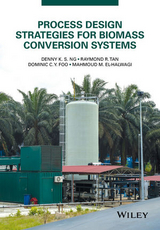
The chapters are written by leading experts from around the world, and present an integrated set of contributions. Providing a comprehensive, multi-dimensional analysis of various aspects of bioenergy systems, the book is suitable for both academic researchers and energy professionals in industry.
Denny Ng is a Professor at the Department of Chemical and Environmental Engineering, University of Nottingham Malaysia Campus.
Raymond R. Tan is a University Fellow and Professor of Chemical Engineering at De La Salle University, Manila, Philippines. He is also Director of that institution's Center for Engineering and Sustainable Development Research. His main research interests are process systems engineering, life cycle assessment and pinch analysis.
Dominic Foo is a Professor of Process Design and Integration at the University of Nottingham Malaysia Campus. He is a world leading researcher in resource conservation with process integration techniques, and has two forthcoming books and over 180 scientific papers. He is the winner of the Innovator of the Year Award 2009 (Institution of Chemical Engineers, UK) 2010 Young Engineer Award (Institution of Engineers Malaysia (IEM), Outstanding Young Malaysian Award 2012 (Junior Chamber International, JCI) and winner of the SCEJ Award for Outstanding Asian Researcher and Engineer 2013 (Society of Chemical Engineers, Japan).
Mahmoud M. El-Halwagi is Professor at the Artie McFerrin Department of Chemical Engineering at Texas A&M University. Prof El-Halwagi is the author of three textbooks on process integration and sustainable design and more than a 150 papers and book chapters in the fields of sustainability, biorefining, and integrated process design.
This book covers recent developments in process systems engineering (PSE) for efficient resource use in biomass conversion systems. It provides an overview of process development in biomass conversion systems with focus on biorefineries involving the production and coproduction of fuels, heating, cooling, and chemicals. The scope includes grassroots and retrofitting applications. In order to reach high levels of processing efficiency, it also covers techniques and applications of natural-resource (mass and energy) conservation. Technical, economic, environmental, and social aspects of biorefineries are discussed and reconciled. The assessment scales vary from unit- to process- and life-cycle or supply chain levels. The chapters are written by leading experts from around the world, and present an integrated set of contributions. Providing a comprehensive, multi-dimensional analysis of various aspects of bioenergy systems, the book is suitable for both academic researchers and energy professionals in industry.
Denny Ng is a Professor at the Department of Chemical and Environmental Engineering, University of Nottingham Malaysia Campus. Raymond R. Tan is a University Fellow and Professor of Chemical Engineering at De La Salle University, Manila, Philippines. He is also Director of that institution's Center for Engineering and Sustainable Development Research. His main research interests are process systems engineering, life cycle assessment and pinch analysis. Dominic Foo is a Professor of Process Design and Integration at the University of Nottingham Malaysia Campus. He is a world leading researcher in resource conservation with process integration techniques, and has two forthcoming books and over 180 scientific papers. He is the winner of the Innovator of the Year Award 2009 (Institution of Chemical Engineers, UK) 2010 Young Engineer Award (Institution of Engineers Malaysia (IEM), Outstanding Young Malaysian Award 2012 (Junior Chamber International, JCI) and winner of the SCEJ Award for Outstanding Asian Researcher and Engineer 2013 (Society of Chemical Engineers, Japan). Mahmoud M. El-Halwagi is Professor at the Artie McFerrin Department of Chemical Engineering at Texas A&M University. Prof El-Halwagi is the author of three textbooks on process integration and sustainable design and more than a 150 papers and book chapters in the fields of sustainability, biorefining, and integrated process design.
1
Early-Stage Design and Analysis of Biorefinery Networks
Peam Cheali, Alberto Quaglia, Carina L. Gargalo, Krist V. Gernaey, Gürkan Sin, and Rafiqul Gani
CAPEC-PROCESS Research Center, Department of Chemical and Biochemical Engineering, Technical University of Denmark (DTU), Kongens Lyngby, Denmark
1.1 Introduction
The limited resources of fossil fuel as well as other important driving forces (e.g., environmental, social, and sustainability concerns) are expected to shape the future development of the chemical processing industries. These challenges motivate the development of new and sustainable technologies for the production of fuel, chemicals, and materials from renewable feedstock instead of fossil fuel. An emerging technology in response to these challenges is the biorefinery concept. The biorefinery is defined as the set of processes converting a bio-based feedstock into products such as fuels, chemicals, materials, and/or heat and power.
The design of a biorefinery process is a challenging task. First, several different types of biomass feedstock and many alternative conversion technologies can be selected to match a range of products, and therefore, a large number of potential processing paths are available for biorefinery development. Furthermore, being based on a natural feedstock, the economic and environmental viability of these processes is deeply dependent on local factors such as weather conditions, availability of raw materials, national or regional subsidies and regulations, etc. Therefore, the replication of a standard process configuration is often not convenient or impossible. Designing a biorefinery, therefore, requires screening among a set of potential configurations in order to identify the most convenient option for the given set of conditions.
Detailed evaluation of each process alternative requires a substantial amount of information such as conversions and efficiencies for the different steps involved. Moreover, considerable time and resources are needed to execute the analysis, and it is therefore not practically possible to consider more than a handful of candidate processing paths. In order to partially overcome these drawbacks, a second level of decomposition is often employed based on the so-called development funnel approach (see Figure 1.1). The basic idea of the development funnel approach is to progressively reduce the number of candidate alternatives by employing simplified model and shortcut evaluation methods to identify nonconvenient or nonfeasible options and eliminate those from the set of candidate configurations.
Figure 1.1 A schematic representation of the development funnel for a project in the processing industries.
Reproduced from Alberto Quaglia, Ph.D. thesis, with permission
One of the challenges associated with this development funnel approach lies in the ability of performing the early-stage screening in a project phase characterized by lack of detailed data. As a consequence, it is important to simplify and manage the complexity related to the vast amount of data that needs to be processed prior to identifying the optimal biorefinery processing path with respect to economics, consumption of resources, sustainability, and environmental impact.
In order to manage the complexity and perform synthesis and design of biorefineries, several publications have focused on simplification and different aspects of the problem: the study of Voll and Marquardt (2012) explored the use of reaction flux network analysis for synthesis and design of biorefinery processing paths, Pham and El-Halwagi (2012) proposed a systematic two-stage methodology to reduce the number of processing steps, Martin and Grossmann (2012) evaluated the heat integration on a biorefinery process flowsheet producing FT-diesel, Baliban et al. (2012) studied the heat and water integration and supply chain optimization of thermochemical conversion of biomass, Zondervan et al. (2011) studied the identification of the optimal processing paths of the biochemical platform, and finally, Cheali et al. (2014) presented a generic modeling framework to manage the complexity of the multidisciplinary data needed for superstructure-based optimization of biorefinery systems. A more detailed review of studies on the process synthesis of a biorefinery is given in Yuan et al. (2013).
While each of the abovementioned studies provided a valuable contribution, however, the scope of these studies was limited to one processing/conversion platform. Or, in other words, the studies focused either on biochemical, thermochemical, or biological platforms. In this contribution, as we focus on early-stage design and analysis of biorefinery systems, the scope of the biorefinery synthesis is broadened by considering a combination of thermochemical and biochemical platforms. In this way, the design space is extended significantly, meaning that more potential platforms and design alternatives can be compared resulting in a more robust and sustainable design solution. It is important to note that designing a biorefinery includes other challenges as well, such as the supply chain of the feedstock and land use, among others. These are beyond the scope of this study and will be considered in future work.
A methodology to generate and identify optimal biorefinery networks was developed earlier in our group (Zondervan et al., 2011; Quaglia et al., 2013). We present here the adaptation and extension of the methodology for the biorefinery problem. We expand the scope and the size of the biorefinery network problem by extending the database, the models, and the superstructure of the methodology with thermochemical biomass conversion routes. We then integrate the thermochemical superstructure with the superstructure of the biochemical conversion network. We then present a generic process modeling approach together with data collection and management for the multidisciplinary and multidimensional data related to different biorefinery processing steps. The optimal processing paths are then identified with respect to the given scenarios and specifications by formulating and solving an MILP/mixed-integer nonlinear programming problem (MINLP) problem using the GAMS optimization software. The resulting optimal biorefinery network is then further studied with respect to sustainability and environmental impact using two in-house software tools, SustainPro (Carvalho et al., 2013) and LCSoft (Piyarak, 2012), respectively.
1.2 Framework
This study uses the integrated business and engineering framework (Figure 1.2) which was successfully applied to synthesis and design of a wide range of different processes (Quaglia et al., 2013). The framework uses a superstructure optimization-based process synthesis combined with a generic modeling approach, thus allowing the possibility of generating a larger design space, of managing the data and model complexity, and of identifying the optimal processing path with respect to technical and economic feasibility. The framework is integrated with the analysis and evaluation of sustainability and environmental impact.
Figure 1.2 The integrated business and engineering framework adapted: the dashed boxes indicate the outcome of each step of the workflow
A schematic representation of the framework is reported in Figure 1.2. The description of the framework is presented step by step in this chapter:
Step 1: Problem definition
The first step includes the definition of the problem scope (i.e., design a biorefinery network, wastewater treatment plant network, a processing network for vegetable oil production), the selection of suitable objective functions (i.e., maximum profit of the biorefinery, minimum total annualized cost (TAC) of the wastewater treatment plant), and optimization scenarios with respect to either business strategy, engineering performance, sustainability, or a combination of such objectives.
Step 2: Superstructure definition
A superstructure representing different biorefinery concepts and networks is formulated by performing a literature review. A typical biorefinery network consists of a number of processing steps converting or connecting biomass feedstock to bioproducts such as pretreatment, primary conversion (gasification, pyrolysis), gas cleaning and conditioning, fuel synthesis, and product separation and purification. Each processing step is defined by one or several blocks depending on the number of unit operations considered in the step (several unit operations can be modeled using one process block). Each block incorporates the generic model to represent various tasks carried out in the block such as mixing, reaction, and separation (Figure 1.3).
Figure 1.3 The generic process model block.
Reproduced from Cheali et al. (2014), © 2014, American Chemical Society
Step 3: Data collection and modeling
Once the superstructure is defined, the data are collected and modeling is performed. Generally, the models for each processing technology are rigorous, nonlinear, and complex (e.g., kinetics, thermodynamics). However, in this step, a simple input–output-type generic model block is used, and this model is identified from the data generated from the aforementioned rigorous models. This generic model block thus consists of four parts of the typical simple mass balance equations:...
| Erscheint lt. Verlag | 19.1.2016 |
|---|---|
| Sprache | englisch |
| Themenwelt | Naturwissenschaften ► Chemie ► Technische Chemie |
| Technik ► Elektrotechnik / Energietechnik | |
| Technik ► Umwelttechnik / Biotechnologie | |
| Weitere Fachgebiete ► Land- / Forstwirtschaft / Fischerei | |
| Schlagworte | Agriculture • Biomass conversion • Biomasse • Biomass Supply Chain • Biorefinery • Biorenewable Resources • chemical engineering • Chemie • Chemische Verfahrenstechnik • Chemistry • Industrial efficiency • Landwirtschaft • Nachhaltige u. Grüne Chemie • Nachhaltige u. Grüne Chemie • Nachwachsende Rohstoffe • Optimization • process development • Process Engineering • Process Integration • process synthesis and design • Resource Conservation • Supply Chain • Sustainable Chemistry & Green Chemistry • Verfahrensentwicklung |
| ISBN-10 | 1-118-69913-0 / 1118699130 |
| ISBN-13 | 978-1-118-69913-3 / 9781118699133 |
| Informationen gemäß Produktsicherheitsverordnung (GPSR) | |
| Haben Sie eine Frage zum Produkt? |
 EPUB (Adobe DRM)
Kopierschutz: Adobe-DRM
Adobe-DRM ist ein Kopierschutz, der das eBook vor Mißbrauch schützen soll. Dabei wird das eBook bereits beim Download auf Ihre persönliche Adobe-ID autorisiert. Lesen können Sie das eBook dann nur auf den Geräten, welche ebenfalls auf Ihre Adobe-ID registriert sind.
Details zum Adobe-DRM
Dateiformat: EPUB (Electronic Publication)
EPUB ist ein offener Standard für eBooks und eignet sich besonders zur Darstellung von Belletristik und Sachbüchern. Der Fließtext wird dynamisch an die Display- und Schriftgröße angepasst. Auch für mobile Lesegeräte ist EPUB daher gut geeignet.
Systemvoraussetzungen:
PC/Mac: Mit einem PC oder Mac können Sie dieses eBook lesen. Sie benötigen eine
eReader: Dieses eBook kann mit (fast) allen eBook-Readern gelesen werden. Mit dem amazon-Kindle ist es aber nicht kompatibel.
Smartphone/Tablet: Egal ob Apple oder Android, dieses eBook können Sie lesen. Sie benötigen eine
Geräteliste und zusätzliche Hinweise
Buying eBooks from abroad
For tax law reasons we can sell eBooks just within Germany and Switzerland. Regrettably we cannot fulfill eBook-orders from other countries.
aus dem Bereich