Dairy Processing and Quality Assurance (eBook)
John Wiley & Sons (Verlag)
978-1-118-81030-9 (ISBN)
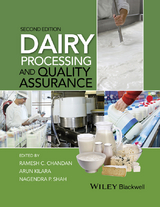
Dairy Processing and Quality Assurance, Second Edition describes the processing and manufacturing stages of market milk and major dairy products, from the receipt of raw materials to the packaging of the products, including the quality assurance aspects.
The book begins with an overview of the dairy industry, dairy production and consumption trends. Next are discussions related to chemical, physical and functional properties of milk; microbiological considerations involved in milk processing; regulatory compliance; transportation to processing plants; and the ingredients used in manufacture of dairy products. The main section of the book is dedicated to processing and production of fluid milk products; cultured milk including yogurt; butter and spreads; cheese; evaporated and condensed milk; dry milks; whey and whey products; ice cream and frozen desserts; chilled dairy desserts; nutrition and health; sensory evaluation; new product development strategies; packaging systems; non-thermal preservation technologies; safety and quality management systems; and dairy laboratory analytical techniques.
This fully revised and updated edition highlights the developments which have taken place in the dairy industry since 2008. The book notably includes:
- New regulatory developments
- The latest market trends
- New processing developments, particularly with regard to yogurt and cheese products
- Functional aspects of probiotics, prebiotics and synbiotics
- A new chapter on the sensory evaluation of dairy products
Intended for professionals in the dairy industry, Dairy Processing and Quality Assurance, Second Edition, will also appeal to researchers, educators and students of dairy science for its contemporary information and experience-based applications.
Ramesh C. Chandan, Ph.D., a consultant in dairy science and technology, served for more than 40 years in various food companies, including Unilever, Land O'Lakes and General Mills, with special expertise in the manufacture of dairy products. He has served on the faculty of Michigan State University and has taught dairy technology courses for seven years. He has authored/edited nine other books in the area of dairy food science.
Arun Kilara, Ph.D., has long established expertise in teaching and research in dairy food science at Penn State University. He has authored/edited five books related to dairy food science.
Nagendra P. Shah, Ph.D., a Professor at the University of Hong Kong is very well known for his contribution in Dairy Technology area. He has served on the Faculty of Victoria University, Melbourne, Australia for 22 years.
Dairy Processing and Quality Assurance, Second Edition describes the processing and manufacturing stages of market milk and major dairy products, from the receipt of raw materials to the packaging of the products, including the quality assurance aspects. The book begins with an overview of the dairy industry, dairy production and consumption trends. Next are discussions related to chemical, physical and functional properties of milk; microbiological considerations involved in milk processing; regulatory compliance; transportation to processing plants; and the ingredients used in manufacture of dairy products. The main section of the book is dedicated to processing and production of fluid milk products; cultured milk including yogurt; butter and spreads; cheese; evaporated and condensed milk; dry milks; whey and whey products; ice cream and frozen desserts; chilled dairy desserts; nutrition and health; sensory evaluation; new product development strategies; packaging systems; non-thermal preservation technologies; safety and quality management systems; and dairy laboratory analytical techniques. This fully revised and updated edition highlights the developments which have taken place in the dairy industry since 2008. The book notably includes: New regulatory developments The latest market trends New processing developments, particularly with regard to yogurt and cheese products Functional aspects of probiotics, prebiotics and synbiotics A new chapter on the sensory evaluation of dairy products Intended for professionals in the dairy industry, Dairy Processing and Quality Assurance, Second Edition, will also appeal to researchers, educators and students of dairy science for its contemporary information and experience-based applications.
Ramesh C. Chandan, Ph.D., a consultant in dairy science and technology, served for more than 40 years in various food companies, including Unilever, Land O'Lakes and General Mills, with special expertise in the manufacture of dairy products. He has served on the faculty of Michigan State University and has taught dairy technology courses for seven years. He has authored/edited nine other books in the area of dairy food science. Arun Kilara, Ph.D., has long established expertise in teaching and research in dairy food science at Penn State University. He has authored/edited five books related to dairy food science. Nagendra P. Shah, Ph.D., a Professor at the University of Hong Kong is very well known for his contribution in Dairy Technology area. He has served on the Faculty of Victoria University, Melbourne, Australia for 22 years.
Contributors, vii
Preface to the Second Edition, ix
Preface to the First Edition, xi
1. Dairy Processing and Quality Assurance: An Overview, 1
Ramesh C. Chandan
2. Dairy Industry: Production and Consumption Trends, 41
Ramesh C. Chandan
3. Mammary Gland and Milk Biosynthesis: Nature's Virtual Bioprocessing Factory, 60
Ramesh C. Chandan, Dilip A. Patel, Raul A. Almeida, and Stephen P. Oliver
4. Chemical Composition, Physical, and Functional Properties of Milk and Milk Ingredients, 77
Kasipathy Kailasapathy
5. Microbiological Considerations Related to Dairy Processing, 106
Ronald H. Schmidt
6. Regulations for Product Standards and Labeling, 152
Cary P. Frye and Arun Kilara
7. Milk from Farm to Plant, 178
Cary P. Frye and Arun Kilara
8. Dairy-Based Ingredients, 197
Ramesh C. Chandan and Arun Kilara
9. Fluid Milk Products, 220
John Partridge
10. Cultured Milk and Yogurt, 235
Nagendra P. Shah and Claude P. Champagne
11. Butter and Fat Spreads: Manufacture and Quality Assurance, 266
Ashok A. Patel, Prateek Sharma, and Hasmukh Patel
12. Cheese, 287
Donald J. McMahon and Maria Brym
13. Evaporated and Sweetened Condensed Milks, 310
Prateek Sharma, Hasmukh Patel, and Ashok Patel
14. Dry Milk Products, 333
Pranav K. Singh and Harjinder Singh
15. Whey and Whey Products, 349
Arun Kilara
16. Ice Cream and Frozen Desserts, 367
Arun Kilara and Ramesh C. Chandan
17. Puddings and Dairy-Based Desserts, 397
Ramesh C. Chandan and Arun Kilara
18. Role of Milk and Dairy Foods in Nutrition and Health, 428
Ramesh C. Chandan
19. Sensory Evaluation of Milk and Milk Products, 467
Valente B. Alvarez
20. Product Development Strategies, 488
Vijay Kumar Mishra
21. Packaging Milk and Milk Products, 506
Aaron L. Brody
22. Potential Applications of Nonthermal Processing Technologies in the Dairy Industry, 528
Hasmukh A. Patel, Tim Carroll, and Alan L. Kelly
23. Management Systems for Safety and Quality, 553
Dilip Patel, Stephen P. Oliver, Raul A. Almeida, and Ebenezer R. Vedamuthu
24. Laboratory Analysis of Milk and Dairy Products, 600
C. T. Deibel and R. H. Deibel
Index, 647
1
Dairy Processing and Quality Assurance: An Overview
Ramesh C.Chandan
Global Technologies, Inc., Coon Rapids, MN 55448, USA
Introduction
Dairy processing involves conversion of raw milk into fluid milk products, and an array of dairy products such as butter, yogurt and fermented milks, cheeses, dry milk powders, dry whey products, ice cream, and frozen desserts, and refrigerated desserts.
Factors related to the cow such as breed, intervals of milking, stages of milking, different quarters of udder, lactation period, season, feed, nutritional level, environmental temperature, health status, age, weather, estrus cycle, gestation period and exercise are known to cause variations in fat, protein, lactose and mineral levels in milk derived from individual cows. In general, these variations tend to average out and display an interesting pattern in commercial milk used by the processors. However, the seasonal variations in major milk constituents are relevant to the processor since they impact important properties of finished products. In general, in the United States, approximately 10% variation in fat and protein is observed in milk received in July–August (lowest level) as compared to milk delivered in October–November (highest level). Subsequently, functional contribution of milk proteins (viscosity in yogurt, buttermilk as well as curd firmness in cheese manufacture) also follows similar trend. Furthermore, cheese yield and whey protein production are also negatively affected by seasonal variations in milk composition.
The concentration of minerals such as chloride, phosphates, and citrates of potassium, sodium, calcium, and magnesium in milk is important in processing, nutritive value, and shelf life of dairy products. Their concentration is <1% in milk but are involved in heat stability of milk, alcohol coagulation of milk, age-thickening of sweetened condensed milk, feathering of coffee cream, rennin coagulation, and clumping of fat globules on homogenization. All the minerals considered essential for human nutrition are found in milk (Chandan, 2007a).
From consumer standpoint, quality factors associated with milk are appearance, color, and sensory attributes such as aroma, flavor, and mouthfeel.
The color of milk is perceived by consumer to be indicative of purity and richness. The white color of milk is due to the scattering of reflected light by the inherent ultramicroscopic particles, fat globules, colloidal casein micelles, and calcium phosphate. The intensity of white color is directly proportional to size and number of particles in suspension. Homogenization increases the surface area of fat globules significantly as a result of breakup of larger globules. Accordingly, homogenized milk and cream are whiter than nonhomogenized counterparts. After the precipitation of casein and fat by the addition of a dilute acid or rennet, whey is separated, which possesses a green–yellow color due to the pigment riboflavin. The depth of color varies with the amount of fat remaining in the whey. Lack of fat globules gives skim milk a blue tinge. Physiological disturbances in the cow make the milk bluer.
Cow's milk contains pigments carotene and xanthophylls, which tend to give golden yellow color to the milk. Guernsey and Jersey breeds produce especially golden yellow milk. Milk from goats, sheep, and water buffalo tends to be much whiter in color because their milk lacks the pigments.
The flavor (taste and aroma) of milk is critical to its assessment criterion of quality by the consumer. Flavor is an organoleptic property where both odor and taste interact. The sweet taste of lactose is balanced against the salty taste of chloride, and both are somewhat moderated by proteins. This balance is maintained over a fairly wide range of milk composition even when chloride ion varies from 0.06 to 0.12%. Saltiness can be detected organoleptically in samples containing 0.12% or more of chloride ions and becomes marked in samples containing 0.15%. Some workers attribute the characteristic rich flavor of dairy products to the lactones, methyl ketones, certain aldehydes, dimethyl sulfide, and certain short chain fatty acids. As lactation advances, lactose declines while chlorides increase, so that the balance is slanted towards “salty”. A similar dislocation is caused by mastitis and other udder disturbances. Accordingly, milk flavor is related to its lactose/chloride ratio.
Freshly drawn milk from any mammal possesses a faint odor of a natural scent peculiar to the animal. This is particularly true of the goat, mare, and cow. The “cow” odor of cows' milk is variable, depending upon the individual season of the year, and the hygienic conditions of milking. A strong “cowy” odor frequently observed during the winter months may be due to the entry into milk of acetone bodies from the blood of cows suffering from ketosis. Feed flavors in milk originate from feed aromas in the barn; for instance, aroma of silage. In addition, some feed flavors are imparted directly on their ingestion by the animal. Plants containing essential oils impart the flavor of the volatile constituent to the milk. Garlic odor and flavor in milk is detected even after 1 minute of feeding garlic. Weed flavor of chamomile or mayweed arises from the consumption of the weed in mixtures of ryegrass and clover. Cows on fresh pasture give milk with a less well-defined “grassy” flavor, due to coumarin in the grass. A “clovery” flavor is observed when fed on clover pasture and these taints are not perceptible when dried material is fed. Prolonged ultraviolet radiation and oxidative taints lead to “mealiness”, “oiliness”, “tallowiness,” or “cappy” odor. Traces of copper (3 ppm) exert development of metallic/oxidized taints in milk. Microbial growth in milk leads to off-flavors such as acid (sour), proteolytic (bitter), and rancid. Raw milk received at the plant should not exhibit any off-flavors. Certain minor volatile flavor could be volatilized off by dairy processing procedures.
Dairy technology may be defined as the application of theoretical and applied scientific knowledge to transforming milk into articles of commerce. Dairy processing involves chemical, microbiological, physical, and engineering principles and it is imperative to understand them for effective management of a dairy plant. Additionally, meeting consumer expectations by controlling the processes to deliver quality, safety, and shelf life of the products is paramount to successful dairy processing operation. In the recent past, major advances in dairy processing have resulted in improvement in safety and quality of products. Such developments have led to increased sophistication in mechanization, automation, computerization, sanitation, ultra-pasteurization, and aseptic packaging in dairy plants. Research and development work undertaken at the university, government, and private industry level has further added basic and applied knowledge to dairy industry. The work has benefited consumer by making products safer and extending their shelf life for making them available over wider distribution areas. Furthermore, research and development efforts have led to the introduction of an array of new products providing a wide variety of new products in market place.
The industry continues to consolidate and make large investments in new dairy processing facilities handling significantly more volume of milk than ever before. Chapter 2 discusses the production and consumption trends in dairy industry. The consolidated plant operations have taken advantage of innovations in plant design and machinery and new systematic quality management programs like Hazard Analysis Critical Control Points (HACCP) to insure product quality and safety. Developments in electronic data processing and process control are routinely practiced in many dairy plants. In addition, modern membrane technologies like ultrafiltration, reverse osmosis, and electrodialysis in whey and cheese manufacture have resulted in profitable utilization of erstwhile waste streams from dairy product manufacturing. Sewage treatment facilities attached to manufacturing plants have helped in control of effluent pollution problems. Furthermore, advances in biotechnology of lactic cultures and enzymes have been adopted for optimization in cheese production and ripening as well as for efficiencies in yogurt and fermented milk processes. Ultra-pasteurization techniques and aseptic packaging systems have presented the consumer with extended and long shelf-life products.
Dairy personnel are the key to the operation of a dairy plant. They make sure that raw materials of optimum quality and prescribed specifications are available, stored, and utilized in a timely manner. They apply the standard analytical procedures (approved by regulatory authorities) for optimum processing and packaging, storage, and shipment of the final products. In this area, they make crucial decisions relative to acceptance or rejection of raw materials as well as of finished products. In short, they are responsible for quality control programs for raw materials, in-process controls, and finished product specifications to insure compliance with regulatory and proprietary standards. All the sensory, chemical, physical, and microbiological aspects must be met for proper functioning of the plant. In addition, approved sanitation programs and other quality systems have to be implemented for successful management of the plant.
This chapter deals with major dairy products and outlines of basic dairy processes...
| Erscheint lt. Verlag | 15.10.2015 |
|---|---|
| Sprache | englisch |
| Themenwelt | Naturwissenschaften ► Biologie |
| Technik ► Lebensmitteltechnologie | |
| Weitere Fachgebiete ► Land- / Forstwirtschaft / Fischerei | |
| Schlagworte | Dairy Food • Dairy processing, dairy industry, dairy production, milk, yoghurt, butter, cheese, condensed milk, whey, ice cream, nutrition, human health, sensory evaluation, product development, food quality and safety • Food Processing, Production & Manufacture • Food Quality Assurance • Food Science & Technology • Herstellung u. Verarbeitung von Lebensmitteln • Lebensmittel • Lebensmittelforschung u. -technologie • Lebensmittel / Qualitätskontrolle • Lebensmittel / Qualitätskontrolle • Milcherzeugnis • Milchprodukte |
| ISBN-10 | 1-118-81030-9 / 1118810309 |
| ISBN-13 | 978-1-118-81030-9 / 9781118810309 |
| Informationen gemäß Produktsicherheitsverordnung (GPSR) | |
| Haben Sie eine Frage zum Produkt? |
 EPUB (Adobe DRM)
Kopierschutz: Adobe-DRM
Adobe-DRM ist ein Kopierschutz, der das eBook vor Mißbrauch schützen soll. Dabei wird das eBook bereits beim Download auf Ihre persönliche Adobe-ID autorisiert. Lesen können Sie das eBook dann nur auf den Geräten, welche ebenfalls auf Ihre Adobe-ID registriert sind.
Details zum Adobe-DRM
Dateiformat: EPUB (Electronic Publication)
EPUB ist ein offener Standard für eBooks und eignet sich besonders zur Darstellung von Belletristik und Sachbüchern. Der Fließtext wird dynamisch an die Display- und Schriftgröße angepasst. Auch für mobile Lesegeräte ist EPUB daher gut geeignet.
Systemvoraussetzungen:
PC/Mac: Mit einem PC oder Mac können Sie dieses eBook lesen. Sie benötigen eine
eReader: Dieses eBook kann mit (fast) allen eBook-Readern gelesen werden. Mit dem amazon-Kindle ist es aber nicht kompatibel.
Smartphone/Tablet: Egal ob Apple oder Android, dieses eBook können Sie lesen. Sie benötigen eine
Geräteliste und zusätzliche Hinweise
Buying eBooks from abroad
For tax law reasons we can sell eBooks just within Germany and Switzerland. Regrettably we cannot fulfill eBook-orders from other countries.
aus dem Bereich