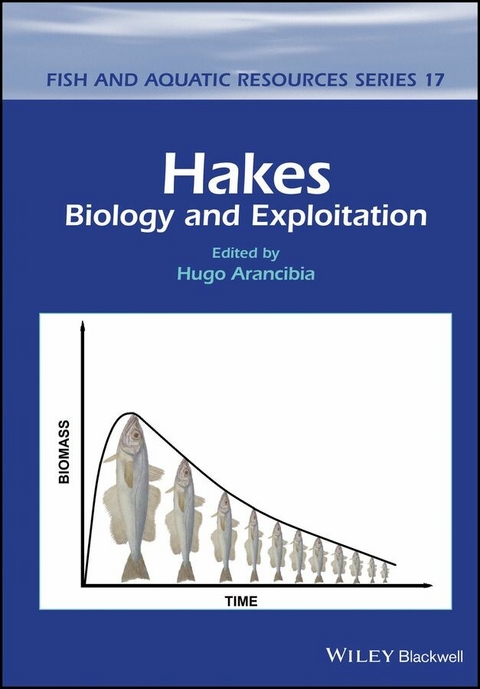
Hakes (eBook)
John Wiley & Sons (Verlag)
978-1-118-56840-8 (ISBN)
The species of hake, making up the genus Merluccius, are commercially important and currently largely over exploited, with many stocks badly depleted and showing only limited signs of recovery.
From the end of the 1990s, concepts such as sustainability, ecosystem-based approaches to fisheries management, a code for the responsible conduct for fisheries, governance and others have emerged or have been considered by politicians, stakeholders and society. Moreover, new tools for stock assessment have been developed. But many hake stocks of the genus Merluccius show no sign of restoration.
Hakes: Biology and Exploitation brings together a wealth of important information on the biology and exploitation of hake and hoki stocks around the world. Each chapter provides an overview of the fisheries of each species in an ecological and environmental context, looking at stock distribution, characteristics of the environment, life history, reproduction, diet, growth, mortality, pricing and markets of each geographical region and the hake species found there.
With chapters written by regional experts on hake species and included within Wiley-Blackwell’s prestigious Fish and Aquatic Resources Series, Hakes: Biology and Exploitation provides up-to-date and comparative information, including new approaches to fisheries management, for all those involved in fisheries management, aquatic ecology and biological sciences.
About the Editor
Hugo Arancibia is Marine Biologist, Titular Professor at the University of Concepcion (Chile), Dr. Rerum Nature from the University of Bremen (Germany) and Diplom in Competence Assessment from the Major University of Santiago (Chile). At present he is Director of the Doctorate Program in Management of Aquatic Living Resources at his university and gives lectures in research and innovation projects, biology of marine exploited populations and others. His fields of interest are R+D in new fishing resources and the use of indicators in fisheries management.
The species of hake, making up the genus Merluccius, are commercially important and currently largely over exploited, with many stocks badly depleted and showing only limited signs of recovery. From the end of the 1990s, concepts such as sustainability, ecosystem-based approaches to fisheries management, a code for the responsible conduct for fisheries, governance and others have emerged or have been considered by politicians, stakeholders and society. Moreover, new tools for stock assessment have been developed. But many hake stocks of the genus Merluccius show no sign of restoration. Hakes: Biology and Exploitation brings together a wealth of important information on the biology and exploitation of hake and hoki stocks around the world. Each chapter provides an overview of the fisheries of each species in an ecological and environmental context, looking at stock distribution, characteristics of the environment, life history, reproduction, diet, growth, mortality, pricing and markets of each geographical region and the hake species found there. With chapters written by regional experts on hake species and included within Wiley-Blackwell s prestigious Fish and Aquatic Resources Series, Hakes: Biology and Exploitation provides up-to-date and comparative information, including new approaches to fisheries management, for all those involved in fisheries management, aquatic ecology and biological sciences.
About the Editor Hugo Arancibia is Marine Biologist, Titular Professor at the University of Concepcion (Chile), Dr. Rerum Nature from the University of Bremen (Germany) and Diplom in Competence Assessment from the Major University of Santiago (Chile). At present he is Director of the Doctorate Program in Management of Aquatic Living Resources at his university and gives lectures in research and innovation projects, biology of marine exploited populations and others. His fields of interest are R+D in new fishing resources and the use of indicators in fisheries management.
List of contributors ix
Preface xvii
Acknowledgement xxi
1 European hake (Merluccius merluccius) in the Northeast Atlantic Ocean 1
Maria Korta, Dorleta García, Marina Santurtún, Nerea Goikoetxea, Eider Andonegi, Hilario Murua, Paula Álvarez, Santiago Cerviño, José Castro and Arantza Murillas
2 Fisheries, ecology and markets of South African hake 38
M. D. Durholtz, L. Singh, T. P. Fairweather, R. W. Leslie, C.D. van der Lingen, C. A. R. Bross, L. Hutchings, R. A. Rademeyer, D. S. Butterworth and A. I. L. Payne
3 Biology and fisheries of the shallow-water hake (Merluccius capensis) and the deep-water hake (Merluccius paradoxus) in Namibia 70
M. R. Wilhelm, C. H. Kirchner, J. P. Roux, A. Jarre, J. A. Iitembu, J. N. Kathena and P. Kainge
4 Southern hake (Merluccius australis) in New Zealand: biology, fisheries and stock assessment 101
Peter L. Horn
5 The biology, fishery and market of Chilean hake (Merluccius gayi gayi) in the Southeastern Pacific Ocean 126
C. Gatica, S. Neira, H. Arancibia and S. Vásquez
6 Biology and fishery of common hake (Merluccius hubbsi) and southern hake (Merluccius australis) around the Falkland/Malvinas Islands on the Patagonian Shelf of the Southwest Atlantic Ocean 154
A. I. Arkhipkin, V. V. Laptikhovsky and A. J. Barton
7 The biology and fishery of hake (Merluccius hubbsi) in the Argentinean-Uruguayan Common Fishing Zone of the Southwestern Atlantic Ocean 185
María Inés Lorenzo and Omar Defeo
8 Biology and fisheries of hake (Merluccius hubbsi) in Brazilian waters, Southwestern Atlantic Ocean 211
André Martins Vaz-dos-Santos and Paulo Ricardo Schwingel
9 Biology, fisheries, assessment and management of Pacific hake (Merluccius productus) 234
Owen S. Hamel, Patrick H. Ressler, Rebecca E. Thomas, Daniel A. Waldeck, Allan C. Hicks, John A. Holmes and Guy W. Fleischer
10 Biology and fisheries of New Zealand hoki (Macruronus novaezelandiae) 263
Mary E. Livingston, Rosemary J. Hurst, Richard L. O'Driscoll, Andy McKenzie, Sira L. Ballara and Peter L. Horn
11 Biology, fishery and products of Chilean hoki (Macruronus novaezelandiae magellanicus) 294
Rubén Alarcún and Hugo Arancibia
12 An overview of hake and hoki fisheries: analysis of biological, fishery and economic indicators 324
Arancibia Hugo, Tony Pitcher and Mary Livingston
Index 341
Chapter 1
European hake (Merluccius merluccius) in the Northeast Atlantic Ocean
Maria Korta1, Dorleta García2, Marina Santurtún2, Nerea Goikoetxea2, Eider Andonegi2, Hilario Murua1, Paula Álvarez1, Santiago Cerviño3, José Castro3 and Arantza Murillas2
1AZTI, Herrera Kaia Portu-aldea z/g, 20110, Pasaia, Basque Country, Spain
2AZTI, Txatxarramendi Ugartea z7g, 48395, Sukarrieta, Basque Country, Spain
3Instituto Español de Oceanografía, Subida Radio Faro 50, 36390, Vigo, Galicia, Spain
1.1 Distribution
The European hake (Merluccius merluccius) is widely distributed over the Northeast Atlantic shelf. Its range extends from Mauritania to off the western coast of Norway (between 21°N and 62°N) and the waters south of Iceland (Casey and Pereiro, 1995), being more abundant from the British Isles to the south of Spain (ICES, 2008). It is also found in the Mediterranean and Black Sea (Casey and Pereiro, 1995). M. merluccius is a demersal and pelagic species; it lives mostly between the depths of 70 and 370 m, although it is found in both shallower and deeper waters, from coastal waters (30 m) down to the depths of 1000 m (Lloris et al., 2003; Meiners, 2007).
The spatial behaviour of M. merluccius is strongly linked to its biology. Mature fish aggregate during their spawning season (Casey and Pereiro, 1995; Poulard, 2001) over the continental shelf slope from Portugal to Scotland. Besides, there is a northward displacement of mature fish, followed by a coastward displacement of the peak of spawning, as the season progresses along the French waters (Álvarez et al., 2004). This general pattern of distribution is consistent with previous data available on M. merluccius spawning periodicity (Arbault and Lacroix-Boutin, 1969; Solá and Franco, 1985; Valencia et al., 1989; Motos et al., 2000). The area around the shelf edge appears as a preferred region for spawning, the shelf break being a natural barrier for spawning of this species. Individuals of M. Merluccius appear to be dispersed during non-spawning season (Drouineau et al., 2010). In Portuguese continental waters, the abundance of small individuals of M. merluccius is higher in autumn and early spring. In the Southwest area, main concentrations of M. merluccius occur at 200–300 m depths, while in the South, they are mainly distributed at coastal waters. In the north of Portugal, juveniles are more abundant between 100 and 200 m depths. In contrast, northern juveniles concentrate in two main nursery areas: the Grande Vasière in the Bay of Biscay and the continental shelf of the Celtic Sea (Álvarez et al., 2001, 2004; Kacher and Amara, 2005).
Depth preferences also vary throughout the life of the individuals of M. merluccius showing an ontogenetic distribution pattern (Woillez et al., 2007). Vertical distribution of M. merluccius eggs and larvae from the northern Bay of Biscay and Celtic sea shelf-edge region shows an occurrence down to 150 m depth with a sub-surface peak of larvae at about 50–60 m depth (Coombs and Mitchell, 1982). The maximum egg abundance occurs close to the isobaths of 200 m depth (Motos et al., 2000). Larvae of M. merluccius remain resident in plankton about 2 months in depths from 50 to 150 m until they metamorphose to the juvenile stage (Motos et al., 1998). Individuals of age 0 years concentrate almost exclusively between 75 and 125 m depths, whereas individuals of M. merluccius of ages 1 and 2 years are found in shallower waters on the shelf (25–125 m depth), but a fraction of older fish is distributed on the slope at 200–500 m depths (Figure 1.1) (Woillez et al., 2007). Moreover, young individuals of M. merluccius (age 0 and 1 years) prefer muddy beds on the continental shelf, while large adults are found on the shelf slope where the bottom is rough and associated with canyons and cliffs (Murua, 2010).
Figure 1.1 Preferential distribution of M. merluccius individuals of age 0, 4 and 5 years for the period 1987–2004 (adapted from Woillez et al., 2007).
(Source: Woillez et al. 2007. Reproduced with permission of authors and ICES.)
1.1.1 Distribution change
Despite its wide distribution, M. merluccius is not evenly distributed over the Northeast Atlantic continental shelf. Furthermore, the abundance of individuals of age 0 years in the two main nursery areas varies inter-annually (Figure 1.2 for the period 1997–2007; Figure 1.3 for the period 2007–2012). In the Celtic Sea, the inter-annual variation in abundance of individuals of age 0 years of M. merluccius is higher, whereas concentration of M. merluccius over the French continental shelf does not significantly change over time (except for 1998, 1999 and 2003). Sánchez and Gil (2000) reported that in Galician–Cantabrian Sea, nursery areas remained stable and extent independently on the inter-annual density variability. Individuals of age 1 years remain on nursery grounds until spring. Afterwards, some seasonal displacement is detected in individuals of age 2, 3 and 4 years. Younger hakes (age of 2 and 3 years) are preferentially found in shallow waters in spring and scattered over the shelf in autumn.
Figure 1.2 Spatial distribution of individuals of age 0 years in M. merluccius in the two main nursery areas (Bay of Biscay and Celtic Sea) from 1997 to 2007 (ICES, 2008).
(Source: ICES 2008. Reproduced with permission of ICES.)
Figure 1.3 Spatial distribution of individuals of age 0 years in M. merluccius in the two main nursery areas (Bay of Biscay and Celtic Sea) from 2007 to 2012 (ICES, 2013).
(Source: ICES 2013. Reproduced with permission of ICES.)
1.2 Physical environment and hydrography
The hydrography of the Northeast Atlantic Ocean is affected by the North Atlantic current, which is a warm ocean current that carries the Gulf Stream northeast towards the European coast (OSPAR Commission, 2000). The North Atlantic current splits into two branches around west Ireland. While the Canary current takes a southerly direction, the other warm-water branch continues north along the coast of northwestern Europe, heating the cold northern atmosphere.
In the North Atlantic Ocean, two major zonally orientated water masses are found. In general, the water masses in the upper layer (down to 1000 m depth) are characterised by Northeast Atlantic Central Water (ENACW), with temperatures ranging between 10.5 and 12°C and salinity between 35.45 and 35.75 (Koutsikopoulos and Le Cann, 1996; Valencia and Franco, 2004). Two sources of ENACW masses are identified in this area: colder water mass with a sub-polar origin (ENACWp) and warmer water mass with sub-tropical origin (ENACWt) (Ríos et al., 1992). Upper waters are influenced by seasonal variations in the atmosphere, whereas below 1000 m, the oceanic waters are characterised by the Mediterranean Sea overflow water, which spreads into the Northeast Atlantic Ocean from the Gibraltar Strait. It moves northwards from the Portuguese continental slope, entering the Bay of Biscay (Lavin et al., 2006). Most of the water masses of the Bay of Biscay and the Atlantic coast of the Iberian Peninsula are the result of a mixture of North Atlantic water masses and waters of Mediterranean Sea origin (OSPAR Commission, 2000).
The oceanic circulation in the Bay of Biscay is characterised by weak clockwise circulation (Figure 1.4), with a mean geostrophic current of about 1–2 cm/s at a depth of 4000 m (Koutsikopoulos and Le Cann, 1996). However, while the deep regions of the bay might be influenced primarily by general oceanic circulation, the shelf is characterised by the dominance of mesoscale structures, which are strongly influenced by regional or local hydroclimatic conditions (Planque et al., 2003). Slope currents in the Bay of Biscay show a consistent poleward transport (Pingree and Le Cann, 1990). Instead, the currents over the shelf are mainly driven by wind, buoyancy and tides.
Figure 1.4 Main physical features in the Celtic Sea and the Bay of Biscay (after Mason et al., 2006).
(Source: Mason et al. 2006. Reproduced with permission of IPMA.)
In addition to the general clockwise circulation, and depending on the season, the circulation can become cyclonic along the Portuguese, Galician and northern Spanish and French continental slopes due to the slope current. In winter, when the northerly wind component relaxes, a warm and saline polewards surface flow (ENACWt) takes place at 20–30 m/s off the Iberian Peninsula, moving eastwards along the Cantabrian coast to enter into the Bay of Biscay (Figure 1.4). As this warm water usually reaches the Bay of Biscay near Christmas, it has been referred to as the Navidad or Christmas current (Pingree and Le Cann, 1992). Moreover, in winter, clockwise and anticlockwise eddies are formed in the continental slope due to the interaction between the slope current and topography. These eddies are named ‘swoddies’ (slope water oceanic eddies) (Pingree and Le Cann, 1992).
On the French coast, the general northerly wind circulation over the shelf...
| Erscheint lt. Verlag | 8.9.2015 |
|---|---|
| Reihe/Serie | Fish and Aquatic Resources |
| Fish and Aquatic Resources | Fish and Aquatic Resources |
| Sprache | englisch |
| Themenwelt | Naturwissenschaften ► Biologie ► Zoologie |
| Technik | |
| Wirtschaft | |
| Weitere Fachgebiete ► Land- / Forstwirtschaft / Fischerei | |
| Schlagworte | Aquaculture, Fisheries & Fish Science • Aquakultur, Fischereiwesen u. Fischforschung • Biowissenschaften • Fischereiwesen • fisheries • Fleisch, Fisch, Geflügel • Food Science & Technology • Hake, Merluccius, Hoki, Macruronus, Biomass, Growth, Mortality, Stock assessment, Products and prices, Markets • Lebensmittelforschung u. -technologie • Life Sciences • Marine Ecology • Meat, Fish & Poultry • Ökologie / Salzwasser |
| ISBN-10 | 1-118-56840-0 / 1118568400 |
| ISBN-13 | 978-1-118-56840-8 / 9781118568408 |
| Informationen gemäß Produktsicherheitsverordnung (GPSR) | |
| Haben Sie eine Frage zum Produkt? |
 EPUB (Adobe DRM)
Kopierschutz: Adobe-DRM
Adobe-DRM ist ein Kopierschutz, der das eBook vor Mißbrauch schützen soll. Dabei wird das eBook bereits beim Download auf Ihre persönliche Adobe-ID autorisiert. Lesen können Sie das eBook dann nur auf den Geräten, welche ebenfalls auf Ihre Adobe-ID registriert sind.
Details zum Adobe-DRM
Dateiformat: EPUB (Electronic Publication)
EPUB ist ein offener Standard für eBooks und eignet sich besonders zur Darstellung von Belletristik und Sachbüchern. Der Fließtext wird dynamisch an die Display- und Schriftgröße angepasst. Auch für mobile Lesegeräte ist EPUB daher gut geeignet.
Systemvoraussetzungen:
PC/Mac: Mit einem PC oder Mac können Sie dieses eBook lesen. Sie benötigen eine
eReader: Dieses eBook kann mit (fast) allen eBook-Readern gelesen werden. Mit dem amazon-Kindle ist es aber nicht kompatibel.
Smartphone/Tablet: Egal ob Apple oder Android, dieses eBook können Sie lesen. Sie benötigen eine
Geräteliste und zusätzliche Hinweise
Buying eBooks from abroad
For tax law reasons we can sell eBooks just within Germany and Switzerland. Regrettably we cannot fulfill eBook-orders from other countries.
aus dem Bereich