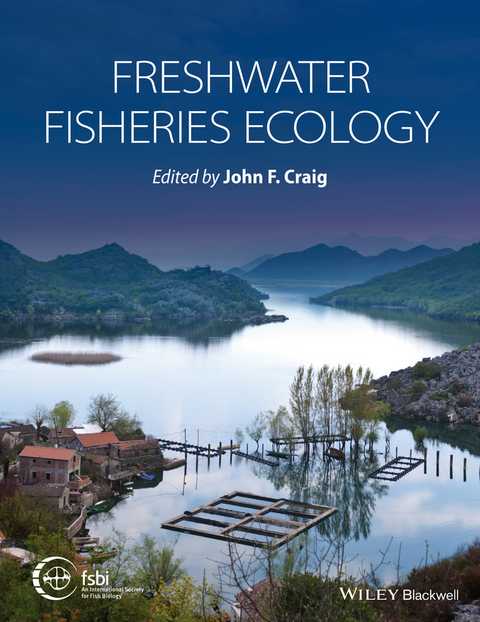
Freshwater Fisheries Ecology (eBook)
John Wiley & Sons (Verlag)
978-1-118-39441-0 (ISBN)
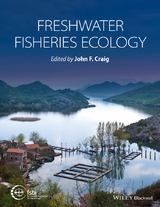
Inland fisheries are vital for the livelihoods and food resources of humans worldwide but their importance is underestimated, probably because large numbers of small, local operators are involved.
Freshwater Fisheries Ecology defines what we have globally, what we are going to lose and mitigate for, and what, given the right tools, we can save. To estimate potential production, the dynamics of freshwater ecosystems (rivers, lakes and estuaries) need to be understood. These dynamics are diverse, as are the earth?s freshwater fisheries resources (from boreal to tropical regions), and these influence how fisheries are both utilized and abused. Three main types of fisheries are illustrated within the book: artisanal, commercial and recreational, and the tools which have evolved for fisheries governance and management, including assessment methods, are described.
The book also covers in detail fisheries development, providing information on improving fisheries through environmental and habitat evaluation, enhancement and rehabilitation, aquaculture, genetically modified fishes and sustainability. The book thoroughly reviews the negative impacts on fisheries including excessive harvesting, climate change, toxicology, impoundments, barriers and abstractions, non-native species and eutrophication. Finally, key areas of future research are outlined.
Freshwater Fisheries Ecology is truly a landmark publication, containing contributions from over 100 leading experts and supported by the Fisheries Society of the British Isles. The global approach makes this book essential reading for fish biologists, fisheries scientists and ecologists and upper level students in these disciplines. Libraries in all universities and research establishments where biological and fisheries sciences are studied and taught should have multiple copies of this hugely valuable resource.
About the Editor
John Craig is Editor-in-Chief of the Journal of Fish Biology and has an enormous range of expertise and a wealth of knowledge of freshwater fishes and their ecology, having studied them around the globe, including in Asia, North America, Africa, the Middle East and Europe. His particular interests have been in population dynamics and life history strategies. He is a Fellow of the Linnean Society of London and the Royal Society of Biology.
Inland fisheries are vital for the livelihoods and food resources of humans worldwide but their importance is underestimated, probably because large numbers of small, local operators are involved. Freshwater Fisheries Ecology defines what we have globally, what we are going to lose and mitigate for, and what, given the right tools, we can save. To estimate potential production, the dynamics of freshwater ecosystems (rivers, lakes and estuaries) need to be understood. These dynamics are diverse, as are the earth's freshwater fisheries resources (from boreal to tropical regions), and these influence how fisheries are both utilized and abused. Three main types of fisheries are illustrated within the book: artisanal, commercial and recreational, and the tools which have evolved for fisheries governance and management, including assessment methods, are described. The book also covers in detail fisheries development, providing information on improving fisheries through environmental and habitat evaluation, enhancement and rehabilitation, aquaculture, genetically modified fishes and sustainability. The book thoroughly reviews the negative impacts on fisheries including excessive harvesting, climate change, toxicology, impoundments, barriers and abstractions, non-native species and eutrophication. Finally, key areas of future research are outlined. Freshwater Fisheries Ecology is truly a landmark publication, containing contributions from over 100 leading experts and supported by the Fisheries Society of the British Isles. The global approach makes this book essential reading for fish biologists, fisheries scientists and ecologists and upper level students in these disciplines. Libraries in all universities and research establishments where biological and fisheries sciences are studied and taught should have multiple copies of this hugely valuable resource. About the EditorJohn Craig is Editor-in-Chief of the Journal of Fish Biology and has an enormous range of expertise and a wealth of knowledge of freshwater fishes and their ecology, having studied them around the globe, including in Asia, North America, Africa, the Middle East and Europe. His particular interests have been in population dynamics and life history strategies. He is a Fellow of the Linnean Society of London and the Royal Society of Biology.
About the Editor John Craig is Editor-in-Chief of the Journal of Fish Biology and has an enormous range of expertise and a wealth of knowledge of freshwater fishes and their ecology, having studied them around the globe, including in Asia, North America, Africa, the Middle East and Europe. His particular interests have been in population dynamics and life history strategies. He is a Fellow of the Linnean Society of London and the Society of Biology.
"As a former publisher, I feel able to suggest thatthose who write the blurbs that appear on book covers
are sometimes prone to hyperbole when they claim that the content therein represents a 'landmark publication', worth every penny of the eighty quid they want you to part with to own a printed copy. But as a thwarted fisheries ecologist, I'd happily agree with whoever made that claim for this book, and not just because at 900 pages and 2.7kg it fits both possible definitions of the term landmark, being simultaneously 'an object recognizable from a distance' as well as 'an event marking a stage or important turning point'.
Trying to provide a comprehensive account of inland fisheries worldwide is a daunting task, one that could not sensibly be tackled by a single author, or even a small group. You need a big international team, recruited and guided by someone with experience of fisheries in different climates and cultures, able to identify and bring together a diverse collection of authors, capable of encouraging them to write contributions to meet a common aim rather than to their own agenda, and someone with the ability to edit many contributions into a coherent whole. Persuading John Craig to take on the role was a masterstroke; the longserving editor of the Journal of Fish Biology has the perfect meld of research experience, editorial expertise and familiarity with the writing skills of the population of fisheries scientists. The result is a book drawing together the expertise of over 100 high-calibre contributors that works as a coherent whole, and as a resource likely to stand the test of time. Contributions of varying length are grouped together in eight sections, on topics such as the basics of freshwater ecosystems; freshwater resources of fisheries by geographical region; fishing operations; fishery management; fisheries development; the effects of perturbations; and a final section on future developments.
No volume of this type is ever going to be perfect and there are doubtless a few gaps and inconsistencies in the coverage. But the flaws are utterly trivial compared to the strengths, and if I were still an aspiring young fish biologist, or an academic freshwater biologist, a fisheries manager or consultant, I wouldn't hesitate to buy my own copy. I know, I know, eighty pounds for a book makes the eyes water, but you can get a guided tour of the whole world of fisheries ecology for trivially more than the cost of renewing a UK passport. The book will last you at least as long and make much more interesting reading". (BES Bulletin Vol 48:3 September 2017)
List of contributors
Eleanor A. S. Adamson
Department of Life Sciences, Natural History Museum, London, UK
Angelo A. Agostinho
Nupelia, Universidade Estadual de Maringá, Maringá, Brazil
Upali S. Amarasinghe
Department of Zoology, University of Kelaniya, Kelaniya, Sri Lanka
Carlos Antunes
Centro Interdisciplinar de Investigação Marinha e Ambiental (CIIMAR/CIMAR), Universidade do Porto, Porto, Portugal; Aquamuseu do Rio Minho. Parque do Castelinho, V. N. Cerveira, Portugal and ESG – Escola Superior Gallaecia, Largo das Oliveiras, V. N. Cerveira, Portugal
Mário Jorge Araújo
Centro Interdisciplinar de Investigação Marinha e Ambiental (CIIMAR/CIMAR), Universidade do Porto, Porto, Portugal
Robert Arlinghaus
Department of Biology and Ecology of Fishes, Leibniz-Institute of Freshwater Ecology and Inland Fisheries, Berlin, Germany and Faculty of Life Sciences, Humboldt-Universität zu Berlin, Berlin, Germany
Robert Arthur
MRAG Ltd, London, UK
Claudio Baigún
Instituto Tecnologico de Chascomus, Chascomus, Argentina
Ian G. Baird
Department of Geography, University of Wisconsin-Madison, Madison, USA
Mário Barletta
Laboratório de Ecologia e Gerenciamento de Ecossistemas Costeiros e Estuarinos, Departamento de Oceanografia, Universidade Federal de Pernambuco, Cidade Universitária, Recife, Brazil
Devin M. Bartley
Fisheries and Aquaculture Department, Food and Agriculture Organization of the United Nations, Rome, Italy
Vandick S. Batista
Universidade Federal de Alagoas, Maceió, Brazil
Christophe Béné
International Center for Tropical Agriculture (CIAT), Cali, Colombia
Malcolm C. M. Beveridge
WorldFish, Lusaka, Zambia
Pier Giorgio Bianco
Biological Department, Zoological Section, University of Naples, Naples, Italy
John Robert Britton
School of Applied Sciences, Bournemouth University, Dorset, UK
Randall E. Brummett
World Bank, Washington, USA
Mary Burridge
Royal Ontario Museum, Toronto, Canada
Nic Bury
Faculty of Life Sciences and Medicine, Division of Diabetes and Nutritional Sciences, King’s College London, UK
Agostinho Carlos Catella
Recursos Pesqueiros, Embrapa Pantanal, Empresa Brasileira de Pesquisa Agropecuária (Embrapa Pantanal), Corumbá, Brazil
Lauren J. Chapman
Department of Biology, McGill University, Montréal, Canada
Louise Chavarie
Department of Biological Sciences, University of Alberta, Edmonton, Canada
Fernando Cobo
Departamento de Zoología y Antropología Física, Universidad de Santiago de Compostela, Santiago de Compostela, Spain and Estación de Hidrobiología “Encoro do Con”, Castroagudín s/n, Pontevedra, Spain
Steven J. Cooke
Fish Ecology and Conservation Physiology Laboratory, Institute of Environmental Science and Department of Biology, Carleton University, Ottawa, Canada
Paul D. Cowley
South African Institute for Aquatic Biodiversity, Grahamstown, South Africa
Ian G. Cowx
Hull International Fisheries Institute, Department of Biological Sciences, The University of Hull, Kingston-upon-Hull, UK
John F. Craig
Craig Consultancy, Dumfries, Scotland, UK
Victor E. Cussac
Instituto de Investigaciones en Biodiversidad y Medioambiente (INIBIOMA), Universidad Nacional del Comahue (UNCO) – Consejo Nacional de Investigaciones Científicas y Técnicas (CONICET), Bariloche, Argentina
Gertjan de Graaf
Fisheries and Aquaculture Department, Food and Agriculture Organization of the United Nations, Rome, Italy
Sena S. De Silva
School of Life and Environment Sciences, Deakin University, Warrnambool Campus, Princes Highway, Warrnambool, Australia
Robert H. Devlin
Fisheries and Oceans Canada, West Vancouver, Canada
Yury Yu. Dgebuadze
Severtsov Institute of Ecology & Evolution, Moscow, Russia
David Dudgeon
School of Biological Sciences, The University of Hong Kong, Hong Kong, China
Inna Ermolaeva
Scientific and Practical Centre for Bioresources, National Academy of Sciences, Minsk, Republic of Belarus
Tibor Erős
Balaton Limnological Institute, MTA Centre for Ecological Research, Tihany, Hungary
Nídia N. Fabré
Universidade Federal de Alagoas, Maceió, Brazil
Nelson F. Fontoura
Departamento de Biodiversidade e Ecologia, Faculdade de Biociências – PUCRS, Porto Alegre, Brazil
Nicole Franz
Fisheries and Aquaculture Department, Food and Agriculture Organization of the United Nations, Rome, Italy
Richard Friend
Institute for Social & Environmental Transition (ISET), Bangkok, Thailand
Carlos Fuentevilla
Fisheries and Aquaculture Department, Food and Agriculture Organization of the United Nations, Rome, Italy
Peter C. Gehrke
Opus International Consultants, Spring Hill, Australia
Daniel Gerdeaux
INRA, Thonon les Bains, France
Marie-Pierre Gosselin
Stricklandgate, Kendal, UK
Rodolphe Elie Gozlan
Unité Mixte de Recherche Biologie des Organismes et Écosystèmes Aquatiques (Institut de Recherche pour le Développement 207, Centre National de la Recherche Scientifique 7208, Muséum National d’Histoire Naturelle, Université Pierre et Marie Curie), Muséum National d’Histoire Naturelle, Paris Cedex, France
Joanna Grabowska
Department of Ecology and Vertebrate Zoology, University of Łódź, Łódź, Poland
Janina Gray
The University of Westminster, London, UK
Hiroshi Hakoyama
National Research Institute of Aquaculture, Fisheries Research Agency, Ueda, Japan
Norm G. Hall
Centre for Fish and Fisheries Research, School of Veterinary & Life Sciences, Murdoch University, Murdoch, Australia
Ashley Halls
Aquae Sulis (Research) Ltd (ASL), Bradford-on-Avon, Wiltshire, UK
Justin Hanisch
Department of Biological Sciences, University of Alberta, Edmonton, Canada
John H. Harris
Centre for Ecosystem Science, UNSW, Australia
Chris Harrod
Instituto de Ciencias Naturales Alexander Von Humboldt, Universidad de Antofagasta, Antofagasta, Chile
Pavel Horký
Department of Zoology and Fisheries, Faculty of Agrobiology Food and Natural Resources, Czech University of Life Sciences Prague, Prague, Czech Republic
David A. Hurwood
Science and Engineering Faculty, Queensland University of Technology, Brisbane, Australia
Donald J. Jellyman
National Institute of Water and Atmosphere, Christchurch, New Zealand
Luz F. Jiménez-Segura
Instituto de Biología, Universidad de Antioquia, Medellín, Colombia
Brett M. Johnson
Department of Fish, Wildlife and Conservation Biology, Colorado State University, Fort Collins, USA
Thomas A. Johnston
Ontario Ministry of Natural Resources, Aquatic Research and Monitoring Section, Cooperative Freshwater Ecology Unit, Vale Living with Lakes Centre, Laurentian University, Sudbury, Canada
Bror Jonsson
Norwegian Institute for Nature Research, Oslo, Norway
Nina Jonsson
Norwegian Institute for Nature Research, Oslo, Norway
Zbigniew Kaczkowski
Department of Applied Ecology, University of Łódź, Łódź, Poland
Osamu Katano
National Research Institute of Aquaculture, Fisheries Research Agency, Ueda, Japan
Paul S. Kemp
International Centre for Ecohydraulics Research, Faculty of Engineering and the Environment, University of Southampton, Southampton, UK
Valerio Ketmaier
Unit of Evolutionary Biology/Systematic Zoology, Institute of Biochemistry and Biology, University of Potsdam, Potsdam, Germany and Department of Biology and Biotechnology “Charles Darwin”, University of Rome “Sapienza”, Rome, Italy
Jeppe Kolding
Department of Biology, University of Bergen, Bergen, Norway
Vladimír Kováč
Faculty of Natural Sciences,...
| Erscheint lt. Verlag | 11.9.2015 |
|---|---|
| Sprache | englisch |
| Themenwelt | Naturwissenschaften ► Biologie ► Limnologie / Meeresbiologie |
| Technik | |
| Weitere Fachgebiete ► Land- / Forstwirtschaft / Fischerei | |
| Schlagworte | Ãkologie / Aquatische Lebensräume • Aquaculture, Fisheries & Fish Science • Aquakultur, Fischereiwesen u. Fischforschung • aquatic ecology • Biowissenschaften • Fische / Ãkologie • Fische / Ökologie • Fischereiwesen • Fish Ecology • fisheries • Freshwater ecosystem, Artisanal fisheries, Recreational fisheries, Commerecial fisheries, Sustainability, Fisheries management, Climate change, Aquaculture, Eutrophication, Craig • Life Sciences • Ökologie / Aquatische Lebensräume |
| ISBN-10 | 1-118-39441-0 / 1118394410 |
| ISBN-13 | 978-1-118-39441-0 / 9781118394410 |
| Informationen gemäß Produktsicherheitsverordnung (GPSR) | |
| Haben Sie eine Frage zum Produkt? |
 EPUB (Adobe DRM)
Kopierschutz: Adobe-DRM
Adobe-DRM ist ein Kopierschutz, der das eBook vor Mißbrauch schützen soll. Dabei wird das eBook bereits beim Download auf Ihre persönliche Adobe-ID autorisiert. Lesen können Sie das eBook dann nur auf den Geräten, welche ebenfalls auf Ihre Adobe-ID registriert sind.
Details zum Adobe-DRM
Dateiformat: EPUB (Electronic Publication)
EPUB ist ein offener Standard für eBooks und eignet sich besonders zur Darstellung von Belletristik und Sachbüchern. Der Fließtext wird dynamisch an die Display- und Schriftgröße angepasst. Auch für mobile Lesegeräte ist EPUB daher gut geeignet.
Systemvoraussetzungen:
PC/Mac: Mit einem PC oder Mac können Sie dieses eBook lesen. Sie benötigen eine
eReader: Dieses eBook kann mit (fast) allen eBook-Readern gelesen werden. Mit dem amazon-Kindle ist es aber nicht kompatibel.
Smartphone/Tablet: Egal ob Apple oder Android, dieses eBook können Sie lesen. Sie benötigen eine
Geräteliste und zusätzliche Hinweise
Buying eBooks from abroad
For tax law reasons we can sell eBooks just within Germany and Switzerland. Regrettably we cannot fulfill eBook-orders from other countries.
aus dem Bereich