Agricultural and Food Electroanalysis (eBook)
John Wiley & Sons (Verlag)
978-1-118-68408-5 (ISBN)
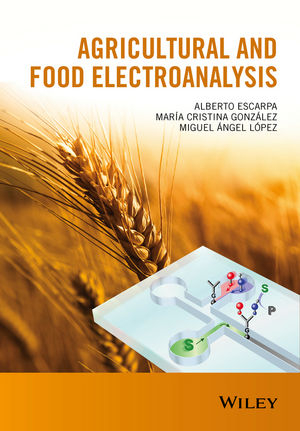
Agricultural and Food Electroanalysis offers a comprehensive rationale of electroanalysis, revealing its enormous potential in agricultural food analysis. A unique approach is used which fills a gap in the literature by bringing in applications to everyday problems.
This timely text presents in-depth descriptions about different electrochemical techniques following their basic principles, instrumentation and main applications. Such techniques offer invaluable features such as inherent miniaturization, high sensitivity and selectivity, low cost, independence of sample turbidity, high compatibility with modern technologies such as microchips and biosensors, and the use of exciting nanomaterials such as nanoparticles, nanotubes and nanowires.
Due to the advantages that modern electroanalytical techniques bring to food analysis, and the huge importance and emphasis given today to food quality and safety, this comprehensive work will be an essential read for professionals and researchers working in analytical laboratories and development departments, and a valuable guide for students studying for careers in food science, technology and chemistry.
ALBERTO ESCARPA Analytical Chemistry, Physical Chemistry and Chemical Engineering Department, University of Alcala, Spain MARÍA CRISTINA GONZÁLEZ Analytical Chemistry, Physical Chemistry and Chemical Engineering Department, University of Alcala, Spain MIGUEL ÁNGEL LÓPEZ Analytical Chemistry, Physical Chemistry and Chemical Engineering Department, University of Alcala, Spain
"This book can surely provide an excellent overview of the current state of art of electrochemical applications in the ambit of food and beverage analyses. In addition, this work is a valuable resource for scientists studying the evolution of instruments and the consequent introduction of new concepts and improved systems." (Analytical and Bioanalytical Chemistry, 2016)
Chapter 1
Electroanalysis and Food Analysis
Paloma Yáñez-Sedeño and José M. Pingarrón
Department of Analytical Chemistry, Faculty of Chemistry, University Complutense of Madrid, 28040, Madrid, Spain
1.1 Introduction and Adequacy of Electroanalysis for Food Analysis
Electroanalysis is a powerful analytical tool for food analysis. Since the early times of polarography and potentiometry until the current developments of chemical sensors, biosensors and lab-on-a-chip (LOC) devices involving electrochemical detection principles and many other electroanalytical methodologies have demonstrated their usefulness to accomplish the requirements imposed by the food industry for the analytical monitoring and control of raw materials and foodstuffs. This is particularly true in the last decades where impressing advances exhibited in automation, miniaturization, and easy handling of electroanalytical devices including both the corresponding instrumentation and the electrodes employed as electrochemical transducers, have led to user-friendly methods of analysis that are competitive against other well-established analytical techniques such as chromatography and spectroscopy. This, together with the inherent affordable costs of electroanalytical approaches and the superior sensitivity that can be achieved using modern voltammetric techniques or coupling with amplification response methodologies involving nanomaterials, makes modern electroanalysis a more than suitable strategy to face up to the increasingly demanding requirements of food industry to ensure food quality, control, and safety [1].
The development and innovation in food industry rely basically on the concepts of food safety and food quality. However, lately, products as foodstuffs supplemented with compounds such as omega-3 acids, vitamins, fiber, and so on, which confer them particular properties sought by specific strata of society, have burst into the modern food industry providing products with a high added value. Obviously, as the food chain is increasingly complex, there is a high demand for the development of efficient traceability systems which are able to guarantee the firmness of the whole chain. These systems should possess high sensitivity, ability to be implemented rapidly, and permit automatic screening.
Food quality can be understood as a set of factors which are able to differentiate food products according to their organoleptic characteristics, composition, and functional properties. An increased regulatory action together with an increased consumer demand for information have led to the extensive labeling of major and minor constituents of the foodstuffs. The scientific evaluation of the food freshness is another important task concerning food quality assessment. A list of the most current compounds to be analyzed for food quality assessment can be found in [2]. Moreover, continuous monitoring of food industrial processes allow real-time detection of possible errors in the chain production as well as taking decisions to rectify such errors in an immediate manner. The assessment of food safety is the other key axe for the modern food industry. In general, one can speak about food contamination when dealing with harmful substances or microorganisms that are not intentionally added to the food. Contaminants may enter the food chain during growth, cultivation, or preparation, accumulate in food during storage, form in the food through the interaction of chemical components or may be concentrated from the natural components of the food [3]. However, chemicals are also added during food processing in the form of additives. At present, pathogen microorganisms, pesticides, animal-drug residues, and antimicrobial drug resistance are the main concerns for food safety. Food regulatory agencies have established control programs, such as the HACCP (Hazard Analysis Critical Control Point) program, to avoid the entering of these substances into the food chain [4].
Electroanalysis has played a relevant role in food quality and food safety assessment and, in the last few years, it is increasingly significant due to the combination of sensors and biosensors technology, even in a disposable manner, with efficient electrochemical transduction techniques allowing the implementation of rapid and reliable detection methods. To provide an overview of the state of art in the use of electrochemical techniques in the field of agricultural and food analysis, we discuss in this chapter some examples on the latest advances in this field, pointing out on relevant methodologies related to the measurement techniques, including the development of electrochemical sensors and biosensors for food components, and the use of nanostructured electrodes.
1.2 Methodologies Related to Measurement Techniques
1.2.1 Continuous Detection Methods
In general, the application of electrochemical techniques for the detection of analytes in a continuous mode has demonstrated to be able to improve the sensitivity and selectivity of well-established analytical methods. Electrochemical detection has shown to be appropriate to be combined with high-performance liquid chromatography (HPLC), flow injection analysis, capillary electrophoresis, or microfluidics-based methodologies. There are numerous examples regarding food analysis where the improvements achieved using electrochemical detection techniques can be illustrated. With respect to liquid chromatography, methods are still being developed for detecting healthy food components. Representative examples are the simultaneous determination of hydroxy polymethoxy-flavones in citrus products and orange juice [5], and a very recent method for the determination of phenolics in olive oil [6]. In both cases, HPLC with coulometric detection at multichannel CoulArray detector was used which enabled a high sensitivity to be obtained. Moreover, methodologies developed for the detection of drugs and pesticide residues using electrochemical detection can be found in the recent literature. As examples, the efficient separation and sensitive determination of sulfonamides in shrimps using a monolithic column and amperometric detection at a boron-doped diamond electrode [7], and the detection of carbamate pesticides in fruits and vegetables using an acetylcholinesterase biosensor where the enzyme was immobilized on a polyaniline–carbon nanotubes composite electrode [8], can be cited.
Flow-injection methods with electrochemical detection continue to attract great attention in the field of food analysis due to the inherent simplicity of these approaches and the good analytical performance provided. A recent and interesting application involves a single-line flow injection system combined with multiple pulse amperometric detection with a boron-doped diamond electrode for the simultaneous determination of two pairs of food colorants: tartrazine (TT) and sunset yellow (SY) (TT–SY) or brilliant blue (BB) and SY (BB–SY) in sports drink beverages, gelatin, and powdered juice. A dual-potential waveform was applied to the electrode for both colorants in each pair to be determined with detection limits ranging between 0.80 and 3.5 µM [9]. Batch injection analysis (BIA) combined with electrochemical detection has also been applied in this field taking advantage of the versatility, reproducibility, high analytical frequency, sensitivity, portability, and sample size provided by this combination [10]. Using these systems, precise sample plugs are directly injected onto the working electrode surface which is immersed in a large-volume blank solution, and the electrochemical responses are recorded directly. For example, amperometric detection at a Prussian Blue-modified graphite-composite electrode was recently described for determining H2O2 in high- and low-fat milk samples [11]. In this method, an electronic micropipette injected 100-µl aliquots of 10-fold diluted samples directly onto the modified electrode immersed in the BIA cell (Figure 1.1). The detection limit was low (10 µM), and good recovery values were achieved for spiked samples.
Figure 1.1 (a) Schematic diagram of the batch injection cell containing the three-electrode system. (b) BIA amperometric responses of PB-modified graphite composite electrode for 100–600 µmol/l H2O2. Reproduced from Ref. [11] with permission from Elsevier
Within this family of continuous methodologies, it is also important to mention the sequential injection lab-on-valve (SI-LOV) technique, which allows increasing sampling capacity and the automation of the analytical methods [12]. In a recent article, an SI-LOV system was used for the sensitive determination of hypoxanthine [13]. As one of the purine bases, hypoxanthine is produced during the degradation process of fresh meat and fish, so that the content of this compound can be envisaged as a valuable indicator of food freshness [14]. In the cited work, a Fe3O4/multiwalled carbon nanotubes (MWCNTs)/β-cyclodextrin (β-CD) (Fe3O4/MWCNTs/β-CD) modified electrode was employed to measure the electrochemical oxidation of hypoxanthine. A diagram of the SI-LOV system used is depicted in Figure 1.2. After aspiration of 500 µl phosphate buffer solution (PBS) into the holding coil, various microvolumes of carrier, air, sample solution, and PBS, were aspirated and transferred into electrochemical flow cell (EFC) for the analyte accumulation on the modified electrode at 0.1 V. Then, the stripping voltammogram of hypoxanthine was recorded. Under the optimized conditions, a linear dependence...
| Erscheint lt. Verlag | 16.7.2015 |
|---|---|
| Sprache | englisch |
| Themenwelt | Naturwissenschaften ► Chemie ► Analytische Chemie |
| Technik ► Lebensmitteltechnologie | |
| Weitere Fachgebiete ► Land- / Forstwirtschaft / Fischerei | |
| Schlagworte | Agricultural and food analysis • Agricultural and food electroanalysis • Agricultural and food electroanalysis in batch and continuous systems • Analytical Chemistry • Analytische Chemie • Chemie • Chemistry • Electrochemical sensing in agricultural and food analysis • Elektroanalyse • Food chemistry • Food Science & Technology • Industrial Chemistry • Industrial implications: electroanalysis in food process control • Industrial implications: Instrumental aspects of agricultural and food analysis by electrochemical methods • Lab-on-a-chip technology for food electroanalysis • Lebensmittelchemie • Lebensmittelforschung u. -technologie • Miniaturized and portable analysis devices • nanotechnology • Sensors and Biosensors • Technische u. Industrielle Chemie |
| ISBN-10 | 1-118-68408-7 / 1118684087 |
| ISBN-13 | 978-1-118-68408-5 / 9781118684085 |
| Informationen gemäß Produktsicherheitsverordnung (GPSR) | |
| Haben Sie eine Frage zum Produkt? |
 PDF (Adobe DRM)
Größe: 19,9 MB
Kopierschutz: Adobe-DRM
Adobe-DRM ist ein Kopierschutz, der das eBook vor Mißbrauch schützen soll. Dabei wird das eBook bereits beim Download auf Ihre persönliche Adobe-ID autorisiert. Lesen können Sie das eBook dann nur auf den Geräten, welche ebenfalls auf Ihre Adobe-ID registriert sind.
Details zum Adobe-DRM
Dateiformat: PDF (Portable Document Format)
Mit einem festen Seitenlayout eignet sich die PDF besonders für Fachbücher mit Spalten, Tabellen und Abbildungen. Eine PDF kann auf fast allen Geräten angezeigt werden, ist aber für kleine Displays (Smartphone, eReader) nur eingeschränkt geeignet.
Systemvoraussetzungen:
PC/Mac: Mit einem PC oder Mac können Sie dieses eBook lesen. Sie benötigen eine
eReader: Dieses eBook kann mit (fast) allen eBook-Readern gelesen werden. Mit dem amazon-Kindle ist es aber nicht kompatibel.
Smartphone/Tablet: Egal ob Apple oder Android, dieses eBook können Sie lesen. Sie benötigen eine
Geräteliste und zusätzliche Hinweise
Zusätzliches Feature: Online Lesen
Dieses eBook können Sie zusätzlich zum Download auch online im Webbrowser lesen.
Buying eBooks from abroad
For tax law reasons we can sell eBooks just within Germany and Switzerland. Regrettably we cannot fulfill eBook-orders from other countries.
 EPUB (Adobe DRM)
Kopierschutz: Adobe-DRM
Adobe-DRM ist ein Kopierschutz, der das eBook vor Mißbrauch schützen soll. Dabei wird das eBook bereits beim Download auf Ihre persönliche Adobe-ID autorisiert. Lesen können Sie das eBook dann nur auf den Geräten, welche ebenfalls auf Ihre Adobe-ID registriert sind.
Details zum Adobe-DRM
Dateiformat: EPUB (Electronic Publication)
EPUB ist ein offener Standard für eBooks und eignet sich besonders zur Darstellung von Belletristik und Sachbüchern. Der Fließtext wird dynamisch an die Display- und Schriftgröße angepasst. Auch für mobile Lesegeräte ist EPUB daher gut geeignet.
Systemvoraussetzungen:
PC/Mac: Mit einem PC oder Mac können Sie dieses eBook lesen. Sie benötigen eine
eReader: Dieses eBook kann mit (fast) allen eBook-Readern gelesen werden. Mit dem amazon-Kindle ist es aber nicht kompatibel.
Smartphone/Tablet: Egal ob Apple oder Android, dieses eBook können Sie lesen. Sie benötigen eine
Geräteliste und zusätzliche Hinweise
Buying eBooks from abroad
For tax law reasons we can sell eBooks just within Germany and Switzerland. Regrettably we cannot fulfill eBook-orders from other countries.
aus dem Bereich