Aquaculture, Resource Use, and the Environment (eBook)
John Wiley & Sons (Verlag)
978-1-118-85781-6 (ISBN)
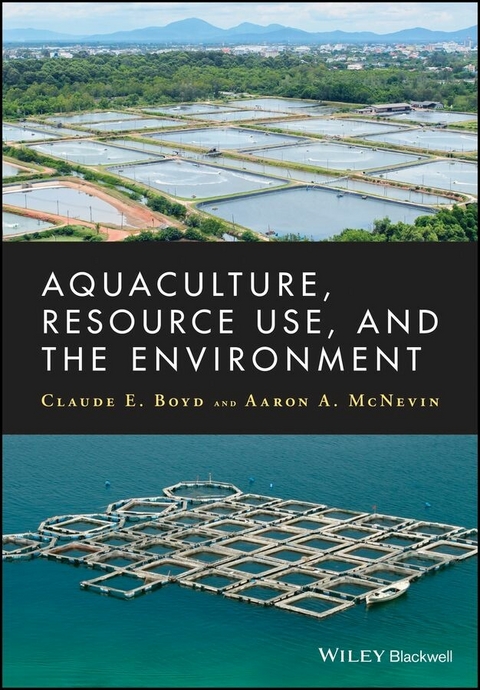
Aquaculture, Resource Use, and the Environment places aquaculture within the larger context of global population growth, increased demand for sustainable, reliable sources of food, and the responsible use of natural resources. Aquaculture production has grown rapidly in recent decades as over-exploitation and environmental degradation have drastically reduced wild fish stocks. As fish production has increased, questions have persisted about the environmental sustainability of current aquaculture practices.
Aquaculture, Resource Use, and the Environment is a timely synthesis and analysis of critical issues facing the continued growth and acceptance of aquaculture practices and products. Chapters look at the past, present, and future demands for food, tackle key issues ranging from land and water use to mitigation of negative environmental impacts of fish production, and critically review aquaculture production systems.
Providing broad coverage of issues that are essential to the continued development of aquaculture production, Aquaculture, Resource Use, and the Environment will be vital resource for anyone involved in the field of aquaculture.
Claude E. Boyd is the Butler Cunningham Eminent Scholar and Professor in the School of Fisheries, Aquaculture, and Aquatic Sciences at Auburn University. Aaron A. McNevin is Director of Aquaculture at the World Wildlife Fund.
Foreword by Jason Clay vii
Foreword by George W. Chamberlain xiii
Foreword by Craig S. Tucker xv
Abbreviations xix
Preface xxiii
Chapter 1 An overview of aquaculture 1
Chapter 2 World population 21
Chapter 3 World food production 35
Chapter 4 Assessing resource use and environmental impacts 61
Chapter 5 Land use 81
Chapter 6 Water use by aquaculture systems 101
Chapter 7 Energy use and atmospheric emissions 123
Chapter 8 Protein conversion and the fish meal and oil issue 157
Chapter 9 Chemicals in aquaculture 173
Chapter 10 Water pollution 211
Chapter 11 Biodiversity 235
Chapter 12 Governmental regulations 261
Chapter 13 Best management practices 279
Chapter 14 Eco-label certification 297
Chapter 15 Some final thoughts 321
Index 329
Foreword
Aquaculture is the fastest growing food production system in the world. And, it is not because it plays such a minor role in global food production. In the past five years, the production of seafood from all aquaculture that is consumed directly by people exceeded that of all global fisheries. Two years ago, production from aquaculture exceeded that of all beef on the planet. For the past 30 years, aquaculture production has grown on average, 7–10% per year globally.
Put another way, aquaculture production has surpassed both fisheries and beef production in a span of about 30 years compared with ten thousand years or more that it took the latter to achieve such levels. The learning curve of aquaculture has been steep, and mistakes have been made. But if you think about the amount of production, the amount of time, and the overall effort involved, aquaculture producers have learned very quickly how to become more efficient and produce more with less—both fewer inputs and impacts.
The math of the planet is simple—population × consumption = the planet's resources. This can be mitigated by technology and improved practices, but some parameters are hard and fast limits to the planet's carrying capacity. Today we have 7 billion people and they consume an average of 7 billion units of resources. By 2050 we will have at least 9 billion people and they are expected to have 2.9 times as much income per capita and consume about twice as much per capita. So by 2050, the projections of the World Bank and others suggest that we will have 18 billion units of consumption. If nothing is done differently in 37 years, the global footprint of consumption will double what it is today as each person will consume twice as much as they do now.
No one actually believes that the business as usual case will continue. People are ingenious. We have invented new technologies and found solutions to problems like this when Malthus first raised this issue. However, the question is how much and how quickly can we reduce the footprint of each unit of consumption, for example, how much land, water, feed, soil erosion, N, P, K, other nutrients, and pesticides will be used to produce each unit of consumption. If we indeed have 18 billion units of consumption by 2050, we will need to reduce the impact of each unit of consumption by more than 60% of what it is today just to be within the resource limitations of the planet. Yet, World Wildlife Fund's Living Planet Report suggests that we are living at 1.5 planets worth of resources today, that is, we are living beyond the carrying capacity. For farmers, that is the equivalent of eating our seed. To actually return to a balance with the planet's resources we will need to reduce the impacts of each unit of consumption by 75–80%.
Which food production systems can improve this dramatically? To date, only aquaculture has achieved such performance. Recent history has shown that aquaculture, when most efficient, can support the levels of performance required to live within the planet's resource boundaries. But it will not be easy.
And, the journey has not been easy to date. In the 1990s, NGOs became concerned by the rapid growth of the global aquaculture industry. Inevitably it was local NGOs (both social and environmental) that saw the impacts more quickly because they were living with them. This was true of salmon, shrimp, tilapia, catfish, Pangasius, trout, shellfish, and even seaweed. Later, global NGOs became aware of the issues and began to engage the sector beginning in the early to mid‐1990s.
The initial interaction was not pretty. In fact it was very contentious and in at least some cases involved not only confrontations at various meetings but also lawsuits and countersuits. No “side” felt that it was being listened to or accurately portrayed by the other. The hot issues early on in the debate were mangroves, disease, access to resources, escapes, chemicals, predator control, zoning and carrying capacity, and a range of social issues from worker rights to cumulative impacts on local communities. Without a credible baseline, much less science‐based consensus about what was happening within specific production areas, the arguments went on without resolution.
At this point, the World Bank, NACA, UN FAO, and WWF agreed to work together to build awareness about the issues, and consensus about a way forward, for a single species produced by aquaculture—shrimp. This work cost $1 million (coming mostly from the World Bank, and the MacArthur and Avina Foundations), spanned three years (1999–2002), explored issues in 30 countries, produced 44 studies, involved 140 different researchers, and involved more than 7000 experts in local, regional, and national meetings. In the end, these efforts produced the most up‐to‐date analyses about the impacts of shrimp aquaculture production, what was being done to address them, and the economics of moving forward. This work took the steam out of the debate, built awareness about the actual reality of shrimp aquaculture, and built consensus about how to move forward. There were still detractors—extremes at both ends, the NGO and producer level—but a middle ground had been found and there was agreement about how to move forward. That is not to say that there were no ongoing battles over real issues—Ecuador and shrimp and British Colombia and salmon are good examples—but these were the exceptions whereas before they had been the rule.
In 2004, the first species‐specific aquaculture dialogues were launched beginning with the Salmon Aquaculture Dialogue (SAD) on Valentine's Day in Washington, DC. And, while three of the eight founding members of the SAD were actually suing each other at the time, it did not turn into another Valentine's Day Massacre as had been predicted. In fact, even before the meeting, the 130 participants had agreed on six of the seven key impacts that would consume the work of the SAD for 8 years. Science‐based presentations at the meeting kicked off the discussions around each of the issues and where there was conflicting science, two presenters were asked to make the cases.
The aquaculture dialogues focused the attention of producers, NGOs, and researchers on the real issues. There was a lot of education and exchange going both ways. But if anything, I would argue that the NGOs gained the most from the exchanges (with some notable exceptions regarding issues like feed in/out ratios!) because the information about the aquaculture industry that was in the public domain was not up‐to‐date. Most published information was at least 10 years old. For an industry with a steep learning curve, 10 years is a lifetime.
Depending upon the species, the dialogues were started from 2004 to 2007. It took each dialogue 5–8 years to develop credible standards. All told, it cost about $10 million (there were additional in‐kind contributions for travel, accommodation, etc.) and 10 years to run the dialogues, generate the standards, develop guidance documents, create the Aquaculture Stewardship Council (ASC) and hand the standards off to the ASC.
Specifically, it took about $3.5 million to launch the SAD in 2004 and support its work to its conclusion in 2012 when the standards were handed off to the ASC. This is not an insignificant amount of time or money. At the producer level, salmon aquaculture is a $5.4 billion per year industry, however. In that context, the investment of time and money does not seem so large if it actually improves the industry's performance.
Unbeknownst to the NGOs, over the past 2 years, salmon aquaculture producers created the Global Salmon Initiative (GSI). In August, the GSI was launched at AquaNor in Trondheim, and 15 CEOs announced that as a group representing some 70% of global production they were committed to be 100% certified according to ASC standards by 2020. For them, the ASC was the gold standard.
This is the first time that any sector in the food business has made such a commitment. That in itself is groundbreaking. However, what is even more important is the fact that the companies have all agreed to share information about how to improve performance more quickly. In short, these companies see sustainability as a precompetitive issue. They recognize that the poor performance of one company can affect all the others—and not just their access to markets but also their license to operate as well. In short, the products these companies sell are still competitive, but how they are produced and what their impact is on the environment is precompetitive—they need to work on it together not only to achieve improved performance, but to achieve it faster and cheaper as well.
To do this, the companies will need an open source database to allow them to share their information about better management practices as well as their costs and payback periods. In addition, they need to share lessons about practices and paths to avoid as well as lessons learned the hard way. This interaction has also made it easier for the companies to share concerns about the industry and to identify trends and issues much more quickly than they have in the past.
The impact of the GSI does not stop there, however. Within 24 hours of their announcement, the world's largest chocolate company contacted me to see if the same thing could be done for cocoa. The next day...
| Erscheint lt. Verlag | 19.12.2014 |
|---|---|
| Sprache | englisch |
| Themenwelt | Naturwissenschaften ► Biologie |
| Technik | |
| Weitere Fachgebiete ► Land- / Forstwirtschaft / Fischerei | |
| Schlagworte | Aquaculture • Aquaculture, Fisheries & Fish Science • Aquaculture production • Aquakultur • Aquakultur, Fischereiwesen u. Fischforschung • Environment • Environmental Degradation • environmental impacts • Fish production • global population growth • management practices • natural resources • resource use • sustainability • wild fish stocks |
| ISBN-10 | 1-118-85781-X / 111885781X |
| ISBN-13 | 978-1-118-85781-6 / 9781118857816 |
| Informationen gemäß Produktsicherheitsverordnung (GPSR) | |
| Haben Sie eine Frage zum Produkt? |
 EPUB (Adobe DRM)
Kopierschutz: Adobe-DRM
Adobe-DRM ist ein Kopierschutz, der das eBook vor Mißbrauch schützen soll. Dabei wird das eBook bereits beim Download auf Ihre persönliche Adobe-ID autorisiert. Lesen können Sie das eBook dann nur auf den Geräten, welche ebenfalls auf Ihre Adobe-ID registriert sind.
Details zum Adobe-DRM
Dateiformat: EPUB (Electronic Publication)
EPUB ist ein offener Standard für eBooks und eignet sich besonders zur Darstellung von Belletristik und Sachbüchern. Der Fließtext wird dynamisch an die Display- und Schriftgröße angepasst. Auch für mobile Lesegeräte ist EPUB daher gut geeignet.
Systemvoraussetzungen:
PC/Mac: Mit einem PC oder Mac können Sie dieses eBook lesen. Sie benötigen eine
eReader: Dieses eBook kann mit (fast) allen eBook-Readern gelesen werden. Mit dem amazon-Kindle ist es aber nicht kompatibel.
Smartphone/Tablet: Egal ob Apple oder Android, dieses eBook können Sie lesen. Sie benötigen eine
Geräteliste und zusätzliche Hinweise
Buying eBooks from abroad
For tax law reasons we can sell eBooks just within Germany and Switzerland. Regrettably we cannot fulfill eBook-orders from other countries.
aus dem Bereich