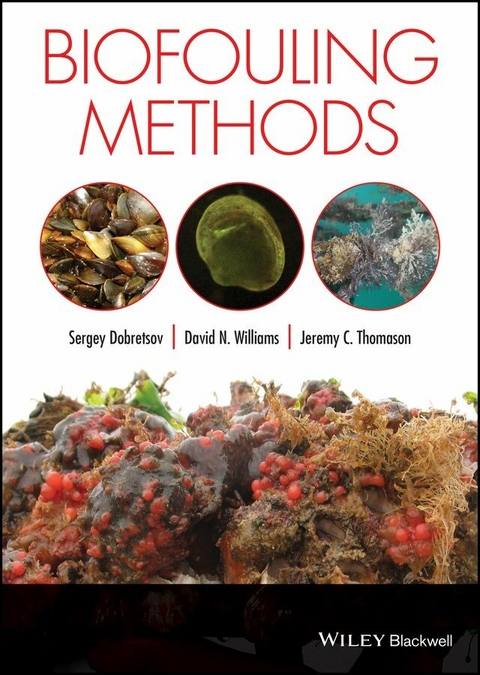
Biofouling Methods (eBook)
John Wiley & Sons (Verlag)
978-1-118-33611-3 (ISBN)
Biofouling Methods provides a “cook book” for both established workers and those new to the field. The methods included in this important new book range from tried and tested techniques to those at the cutting edge, encompassing the full diversity of this multidisciplinary field.
The book covers methods for microbial and macrofouling, coatings and biocides, and ranges from methods for fundamental studies to methods relevant for industrial applications. There is an emphasis on answering questions and each chapter provides technical methods and problem-solving hints and tips.
Bringing together a wealth of international contributions and edited by three internationally known and respected experts in the subject Biofouling Methods is the essential methodology reference in the field for all those working in the antifouling industry including those involved in formulation of antifouling products such as paints and other coatings. Aquatic biologists, ecologists, environmental scientists and lawyers, marine engineers, aquaculture personnel, chemists, and medical researchers will all find much of interest within this book. All universities and research establishments where these subjects are studied and taught should have copies of this important work on their shelves.
Dr. Sergey Dobretsov has worked for more than 20 years on biofouling, is widely published, and is the co-inventor on four international antifouling patents. He trained as a biologist in St Petersburg State University, Russia, and has worked in leading biofouling research centers in Russia, Hong Kong, Germany, and the USA. He is currently an Assistant Professor at Sultan Qaboos University, Oman. He is on the editorial boards of the journals Marine Ecology Progress Series and Biofouling.
Dr. David N. Williams is the RD&I Director for AkzoNobel Marine & Protective Coatings. Based in the North East of England he originally trained as a chemist at Durham University and at Lausanne University, Switzerland. His specific expertise is in the area of nonbiocidal antifouling technologies and he is the co-inventor on a number of patents on silicone foul-release coatings and applications.
Dr. Jeremy C. Thomason is a marine biologist, a former academic at a British University and Royal Society Industrial Research Fellow, and now runs a scientific and technical consultancy, Ecoteknica, from the Yucatán, México. He has worked in the field of biofouling for more than 20 years, is co-inventor on several patents, and is a co-editor of the book Biofouling also published by Wiley Blackwell in 2010.
Biofouling Methods provides a cook book for both established workers and those new to the field. The methods included in this important new book range from tried and tested techniques to those at the cutting edge, encompassing the full diversity of this multidisciplinary field. The book covers methods for microbial and macrofouling, coatings and biocides, and ranges from methods for fundamental studies to methods relevant for industrial applications. There is an emphasis on answering questions and each chapter provides technical methods and problem-solving hints and tips. Bringing together a wealth of international contributions and edited by three internationally known and respected experts in the subject Biofouling Methods is the essential methodology reference in the field for all those working in the antifouling industry including those involved in formulation of antifouling products such as paints and other coatings. Aquatic biologists, ecologists, environmental scientists and lawyers, marine engineers, aquaculture personnel, chemists, and medical researchers will all find much of interest within this book. All universities and research establishments where these subjects are studied and taught should have copies of this important work on their shelves.
Dr. Sergey Dobretsov has worked for more than 20 years on biofouling, is widely published, and is the co-inventor on four international antifouling patents. He trained as a biologist in St Petersburg State University, Russia, and has worked in leading biofouling research centers in Russia, Hong Kong, Germany, and the USA. He is currently an Assistant Professor at Sultan Qaboos University, Oman. He is on the editorial boards of the journals Marine Ecology Progress Series and Biofouling. Dr. David N. Williams is the RD&I Director for AkzoNobel Marine & Protective Coatings. Based in the North East of England he originally trained as a chemist at Durham University and at Lausanne University, Switzerland. His specific expertise is in the area of nonbiocidal antifouling technologies and he is the co-inventor on a number of patents on silicone foul-release coatings and applications. Dr. Jeremy C. Thomason is a marine biologist, a former academic at a British University and Royal Society Industrial Research Fellow, and now runs a scientific and technical consultancy, Ecoteknica, from the Yucatán, México. He has worked in the field of biofouling for more than 20 years, is co-inventor on several patents, and is a co-editor of the book Biofouling also published by Wiley Blackwell in 2010.
Section 1
Traditional light and epifluorescent microscopy
Sergey Dobretsov1 and Raeid M.M. Abed2
1 Department of Marine Science and Fisheries, College of Agricultural and Marine Sciences, Sultan Qaboos University, Al Khoud, Muscat, Oman
2 Biology Department, College of Science, Sultan Qaboos University, Al Khoud, Muscat, Oman
1.1 Introduction
Light microscopy is among the oldest methods used to investigate microorganisms [1, 2]. Early microscopic observations are usually associated with the name of Antony van Leeuwenhoek, who was able to magnify microorganisms 200 times using his designed microscope [1]. A modern light microscope has a magnification of about 1000× and is able to resolve objects separated by 0.275 μm. This resolving power is limited by the wavelength of the used light for the illumination of the specimens. Several light microscopy techniques, such as bright field, dark field and phase contrast, enhance contrast between microorganisms and background [1]. Fluorescent microscopy takes advantage of the ability of some materials or organisms to emit visible light when irradiated with ultraviolet radiation at a specific wavelength. Phototrophic organisms have a natural fluorescence due to the presence of chlorophyll in their cells [3]. Other organisms require additional dyes in order to become fluorescent.
Light microscopy is a simple and cheap method [2]. It is commonly used for observation of relatively large (>0.5 μm) cells of microorganisms (Figure 1.1). In comparison, epifluorescent microscopy provides higher resolution and is generally used for observation of bacteria or cell organelles. The pros and cons of these methods are presented in Table 1.1.
Figure 1.1 Microfouling community dominated by different cyanobacteria, diatoms and bacteria under a light microscope. Magnification 100×. Picture by Julie Piraino.
Table 1.1 Pros and cons of light and epifluorescent microscopy.
| Method | Pros | Cons |
| Light microscopy |
|
|
| Epifluorescent microscopy |
|
|
Epifluorescent stains allow quick and automatic counting of bacteria using flow cytometry (discussed later in this chapter). Epifluorescent microscopy is preferable over scanning electron microscopy (SEM) (Chapter 1, section 3) for bacterial size and abundance studies [4]. While direct light microscopy measurements can be highly sensitive to low cell numbers, electron microscopy methods are not. Light and epifluorescent microscopy has the advantage over electron microscopy that a larger surface area can be assessed for a given amount of time [5]. Two fluorescent stains are widely used to stain microbial cells, namely 4',6-diamidino-2-phenylindole (DAPI), which binds to DNA [6] (Figure 1.2), and acrydine orange, which binds to DNA and RNA as well as to detritus particles [7]. Therefore, the estimated number of bacteria stained with DAPI is on average 70% of bacterial counts made with acrydine orange [8]. The use of DAPI stain allows a longer period between slide preparation and counting, since DAPI fluorescence fades less rapidly than acrydine orange. DAPI staining does not allow accurate measurement of the size of the bacterial cells, since it could only stain the specific part of the cell containing DNA [8]. Visualization of bacteria in dense biofilms is highly difficult. This problem can be overcome to a certain extent by using confocal scanning laser microscopy (CSLM) (Chapter 1, part 2). DAPI staining has been intensively used for determination of bacterial abundance in water samples [9] as well as in biofilms [10]. This can be useful for the determination of the efficiency of biocides (Chapter 2).
Figure 1.2 Bacterial cells stained with DAPI visualized under an epifluorescent microscope. Magnification 1000 ×.
Fluorescent in situ hybridization (FISH) allows quick phylogenetic identification (phylogenic staining) of microorganisms in environmental samples without the need to cultivate them or to amplify their genes using the polymerase chain reaction (PCR) [11] (Table 1.2, Figure 1.3). This method is based on the identification of microorganisms using short (15–20 nucleotides) rRNA-complementary fluorescently labeled oligonucleotide probes (species, genes or group specific) that penetrate microbial cells, bind to RNA and emit visible light when illuminated with UV light [12]. Common fluorescent dyes include Cy3, Cy5 and Alexa®. In comparison with other molecular methods (Chapter 3), FISH provides quantitative data about abundance of bacterial groups without PCR bias [13]. The FISH-based protocol is presented later in this chapter (Chapter 1, section 2); here the modified protocol of catalyzed reporter deposition fluorescent in situ hybridization (CARD-FISH) is described. CARD-FISH is based on the deposition of a large number of labeled tyramine molecules by peroxidase activity (Figure 1.3), which enhances visualization of a small, slow growing or starving bacteria that have a small amount of rRNA and, thus, give a weak FISH signal [14]. Additionally, CARD-FISH can be used for the visualization and assessment of the densities of microorganisms in the samples that have high background fluorescence, such as algal surfaces, fluorescent paints, phototrophic biofilms and sediments [14–16]. In this procedure, FISH probes are conjugated with the enzyme (horseradish peroxidase) and after hybridization the subsequent deposition of fluorescently labeled tyramides results in substantially higher signal intensities on target cells [16]. The critical step of CARD-FISH is to ensure probe microbial cell permeability with cellular integrity, especially in diverse, multispecies microbial communities [17]. Recent improvements in CARD-FISH samples preparation, permeabilization and staining techniques have resulted in a significant improvement in detection rates of benthic and planktonic marine bacteria [14, 15].
Table 1.2 Common probes used in FISH and CARD-FISH and their specific conditions. Detailed information about rRNA-targeted oligonucleotide probes can be found in the public database ProbeBase (http://www.microbial-ecology.net/default.asp) [19, 20].
| Probe | Sequence (5’-3’) of the probe | Target group | Formamide (%) | Reference |
| Universal |
| EUB338 | GCT GCC TCC CGT AGG AGT | Most of bacteria | 20–35 | [21] |
| Eury806 | CAC AGC GTT TAC ACC TAG | Euryarchaea | 20 | [22] |
| NONEUB | ACT CCT ACG GGA GGC AGC | Non-specific to bacteria (control for EUB338) | 20 | [23] |
| Group specific |
| ALF968 | GGT AAG GTT CTG CGC GTT | Alphaproteobacteria except Rickettsiales | 20 | [24] |
| GAM42aa | GCC TTC CCA CAT CGT TT | Most Gammaproteobacteria | 35 | [25] |
| CF319a | TGG TCC GTG TCT CAG TAC | Bacteroidetes (most Flavobacteria, some Bacteroidetes, some Sphingobacteria) | 35 | [26] |
| BET42ab | GCC TTC CCA CTT CGT TT | Betaproteobacteria | 35 | [25] |
| LGC354C | CCG AAG ATT CCC TAC TGC | Firmicutes (Gram-positive bacteria with low G + C content) | 35 | [27] |
| HGC69A | TAT AGT TAC CAC CGC CGT | Actinobacteria (high G + C Gram-positive bacteria) | 25 | [28] |
| Genes specific |
| GV | AGG CCA CAA CCT CCA AGT AG | Vibrio spp. | 30 | [29] |
| Species specific |
| PseaerA | TCT CGG CCT TGA AAC CCC | Pseudomonas aeruginosa | 30 | [30] |
aGAM42a requires competitor GCC TTC CCA CTT CGT TT that increases chances of specific binding.
bBET42a requires competitor GCC TTC CCA CAT CGT TT that increases...
| Erscheint lt. Verlag | 4.8.2014 |
|---|---|
| Sprache | englisch |
| Themenwelt | Naturwissenschaften ► Biologie |
| Technik | |
| Weitere Fachgebiete ► Land- / Forstwirtschaft / Fischerei | |
| Schlagworte | Agrarwirtschaft • Agriculture • Biofouling • Coating and Biocide Methods • David W. Williams • Jeremy Thomason • Landwirtschaft • Macrofouling Methods • Microbial Methods • Sergey Dobretsov |
| ISBN-10 | 1-118-33611-9 / 1118336119 |
| ISBN-13 | 978-1-118-33611-3 / 9781118336113 |
| Informationen gemäß Produktsicherheitsverordnung (GPSR) | |
| Haben Sie eine Frage zum Produkt? |
 EPUB (Adobe DRM)
Kopierschutz: Adobe-DRM
Adobe-DRM ist ein Kopierschutz, der das eBook vor Mißbrauch schützen soll. Dabei wird das eBook bereits beim Download auf Ihre persönliche Adobe-ID autorisiert. Lesen können Sie das eBook dann nur auf den Geräten, welche ebenfalls auf Ihre Adobe-ID registriert sind.
Details zum Adobe-DRM
Dateiformat: EPUB (Electronic Publication)
EPUB ist ein offener Standard für eBooks und eignet sich besonders zur Darstellung von Belletristik und Sachbüchern. Der Fließtext wird dynamisch an die Display- und Schriftgröße angepasst. Auch für mobile Lesegeräte ist EPUB daher gut geeignet.
Systemvoraussetzungen:
PC/Mac: Mit einem PC oder Mac können Sie dieses eBook lesen. Sie benötigen eine
eReader: Dieses eBook kann mit (fast) allen eBook-Readern gelesen werden. Mit dem amazon-Kindle ist es aber nicht kompatibel.
Smartphone/Tablet: Egal ob Apple oder Android, dieses eBook können Sie lesen. Sie benötigen eine
Geräteliste und zusätzliche Hinweise
Buying eBooks from abroad
For tax law reasons we can sell eBooks just within Germany and Switzerland. Regrettably we cannot fulfill eBook-orders from other countries.
aus dem Bereich