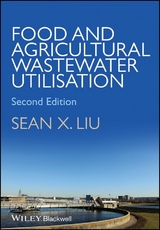
Food and Agricultural Wastewater Utilization and Treatment (eBook)
John Wiley & Sons (Verlag)
978-1-118-35395-0 (ISBN)
Wastes, whether they are solid wastes or wastewater, are resources from which economic values may be derived. Almost all components of agricultural and food wastewater can be and should be utilized or recovered; the stumbling block of achieving this aspiration is economical, not technical. The last one and a half decades have seen the surging of agricultural and non-agricultural commodity prices across the board and increased public consciousness of environmental impact of industrial wastewater discharge and treatment. The confluence of these new developments have generated new interests and applications of agricultural and food wastewater and their treatment residuals in diverse fields and industries.
This new edition will expand topics related to wastewater utilizations and new uses of treatment residuals while providing up-to-date information on new treatment technologies and practices across the globe. The new edition's target audience is anyone who has the responsibility of dealing with its plant effluents in agricultural and food processing operations. It should be of value to waste management personnel responsible for managing major waste effluents from agro and food industries. It will also be useful for college students whose majors are in environmental science or waste management fields as a reference.
Dr Sean X. Liu is Research Leader, Functional Foods Research Unit, National Center for Agricultural Utilization Research, Peoria, Illinois, USA
Wastes, whether they are solid wastes or wastewater, are resources from which economic values may be derived. Almost all components of agricultural and food wastewater can be and should be utilized or recovered; the stumbling block of achieving this aspiration is economical, not technical. The last one and a half decades have seen the surging of agricultural and non-agricultural commodity prices across the board and increased public consciousness of environmental impact of industrial wastewater discharge and treatment. The confluence of these new developments have generated new interests and applications of agricultural and food wastewater and their treatment residuals in diverse fields and industries. This new edition will expand topics related to wastewater utilizations and new uses of treatment residuals while providing up-to-date information on new treatment technologies and practices across the globe. The new edition s target audience is anyone who has the responsibility of dealing with its plant effluents in agricultural and food processing operations. It should be of value to waste management personnel responsible for managing major waste effluents from agro and food industries. It will also be useful for college students whose majors are in environmental science or waste management fields as a reference.
Dr Sean X. Liu is Research Leader, Functional Foods Research Unit, National Center for Agricultural Utilization Research, Peoria, Illinois, USA
Cover 1
Title Page 5
Copyright 6
Contents 7
Preface to the second edition 11
Chapter 1 Introduction 13
1.1 Characteristics of agricultural and food wastewater 13
1.1.1 General characteristics of wastewaters in agriculture and food processing 15
1.1.2 Parameters for physicochemical treatment of wastewater 24
1.1.3 Parameters for biological treatment of wastewater 26
1.1.4 Nitrogen and phosphorous 29
1.1.5 Sampling 29
1.2 Material balances and stoichiometry 30
1.3 Fluid flow rate and mass loading 32
1.4 Kinetics and reaction rates 32
1.4.1 Zero-order reactions 33
1.4.2 First-order reactions 33
1.4.3 Second-order reactions 33
1.4.4 Mixed-order or higher-order reactions 34
1.4.5 Catalytic reactions 34
1.5 Theoretical modeling and design of biological reactors 36
1.5.1 Batch reactors 37
1.5.2 Continuous stirred tank reactors (CSTRs) 38
1.6 Process economics 39
1.6.1 Capital costs 39
1.6.2 Operational costs and facility maintenance 39
1.7 Further reading 40
1.8 References 40
Chapter 2 Basic microbiology in wastewater treatment 41
2.1 Introduction 41
2.2 Structures of cells 42
2.3 Important microorganisms in wastewater 42
2.3.1 Bacteria and fungi 42
2.3.2 Algae 47
2.3.3 Protozoa and metazoa 47
2.3.4 Role of microorganisms in biological wastewater treatment 47
2.4 Microbial metabolism 49
2.4.1 Microbial energy generation 49
2.4.2 Uptake of substrates into microbial cell 49
2.4.3 Oxidation of organic and inorganic substrates 50
2.5 Nitrification 51
2.6 Denitrification 53
2.7 Further reading 54
2.8 References 55
Chapter 3 Physicochemical wastewater treatment processes 57
3.1 Introduction 57
3.2 Equalization basins 58
3.3 Screening 60
3.4 Flotation 61
3.5 Sedimentation 64
3.5.1 Discrete settling (Type I) 65
3.5.2 Flocculent settling (Type II) 67
3.5.3 Zone settling (Type III) 69
3.5.4 Compression zone (Type IV) 69
3.6 Coagulation and flocculation 69
3.7 Filtration processes 74
3.8 Adsorption 77
3.9 Chemical oxidation 82
3.10 Membrane separations 83
3.10.1 Membrane separation by hydrostatic pressure difference 86
3.10.2 Membrane separations by electrical potential difference: electrodialysis (ED) 92
3.10.3 Membrane separations by partial vapor pressure gradient 93
3.10.4 Membrane contactor (MC) 97
3.10.5 Design considerations 98
3.10.6 Membrane modules 100
3.10.7 Whose fault? membrane fouling 104
3.11 Ion exchange 105
3.11.1 Strong acid cation resins 107
3.11.2 Weak acid cation resins 108
3.11.3 Strong base anion resins 108
3.11.4 Weak base anion resins 108
3.11.5 Evaluation of resins 109
3.11.6 Ion exchange systems 110
3.12 Closing remarks 111
3.13 Further reading 113
3.14 References 113
Chapter 4 Biological wastewater treatment processes 115
4.1 Introduction 115
4.2 Kinetics of biochemical systems in wastewater microbiology 116
4.2.1 Effects of temperature on reaction rates 119
4.2.2 Effects of pH and dissolved oxygen concentration on reaction rates 120
4.2.3 Kinetic equations of bacterial growth 120
4.3 Idealized biochemical reactors 122
4.3.1 The ideal batch reactor 123
4.3.2 Ideal plug-flow reactor 124
4.3.3 Ideal continuous-flow stirred-tank reactor (CSTR) 125
4.4 Completely mixed aerated lagoon (CMAL) 126
4.5 Trickling filter (TF) 128
4.5.1 How TFs work 128
4.5.2 Advantages and disadvantages 129
4.5.3 Design criteria 130
4.6 Rotating biological contactor (RBC) 131
4.6.1 Process selection 133
4.6.2 Pretreatment 134
4.6.3 Design criteria 134
4.7 Combined aerobic processes 137
4.8 Contact anaerobic systems 138
4.8.1 Advantages and disadvantages of anaerobic processes 138
4.8.2 Anaerobic contact processes 140
4.9 Further reading 143
4.10 References 143
Chapter 5 Advanced wastewater treatment processes 145
5.1 Introduction 145
5.2 Biological removal of nitrogen: nitrification and denitrification 147
5.3 Physicochemical removal of nitrogen 148
5.4 Biological removal of phosphorus 149
5.5 Physicochemical removal of phosphate 153
5.5.1 Lime precipitation of phosphate 154
5.5.2 Ferrous precipitation of phosphate 154
5.5.3 Alum and ferric precipitation of phosphate 155
5.6 Membrane processes for advanced wastewater treatment 155
5.7 VOC removal with pervaporation 158
5.8 Disinfection 159
5.9 Further reading 162
5.10 References 162
Chapter 6 Natural systems for wastewater treatment 165
6.1 Introduction 165
6.2 Stabilization ponds 166
6.2.1 Facultative ponds 169
6.2.2 Maturation ponds 170
6.2.3 Aerated lagoons 171
6.2.4 Aerobic ponds 171
6.2.5 Anaerobic ponds 172
6.2.6 Design of stabilization ponds 173
6.3 Land treatment systems 178
6.3.1 Slow-rate (SR) systems 181
6.3.2 Overland-flow systems 186
6.3.3 Rapid-infiltration systems 190
6.4 Wetland systems 193
6.5 Floating aquatic plant systems 197
6.6 Further reading 204
6.7 References 204
Chapter 7 Sludge treatment and management 207
7.1 Sludge quality and characteristics 208
7.2 Sludge thickening (concentration) 209
7.3 Sludge stabilization 213
7.3.1 Sludge aerobic digestion 215
7.3.2 Sludge anaerobic digestion 215
7.3.3 Vermistabilization 216
7.3.4 Composting 217
7.4 Reed beds 217
7.5 Conditioning of sludge 220
7.6 Dewatering 221
7.6.1 Belt press filtration 222
7.6.2 Centrifugation 222
7.6.3 Filter press 224
7.6.4 Sludge freezing 226
7.6.5 Sludge drying 228
7.7 Land applications and surface disposal 230
7.8 Incineration 231
7.9 Further reading 234
7.10 References 234
Chapter 8 Recoverable products and energy from food and agricultural wastewaters 237
8.1 Introduction 237
8.2 Water recovery and reuse in the food and agricultural processing industries 240
8.3 Recoverable carbohydrates, fats, and proteins for human and animal consumption 241
8.4 Recoverable aroma flavoring compounds from food processing 244
8.5 Recoverable food/agricultural biomaterials for non-food uses 245
8.6 Energy or fuel generations from wastewaters 246
8.7 Algae-based biodiesel and fuel ethanol 249
8.8 Potential applications of industrial commodities derived from sludge treatment 251
8.9 Further reading 254
8.10 References 254
Chapter 9 Economics of food and agricultural wastewater treatment break and utilization 259
9.1 Introduction 259
9.2 Estimating the unit cost of treating food and agricultural wastewater 260
9.2.1 Capital costs 260
9.2.2 Operating costs 262
9.2.3 Estimation of total costs 263
9.3 Estimating overall costs of wastewater treatment processes with substance and energy recovery 265
9.4 Further reading 266
9.5 References 266
Index 267
Supplemental Images 273
| Erscheint lt. Verlag | 28.5.2014 |
|---|---|
| Sprache | englisch |
| Themenwelt | Naturwissenschaften ► Biologie |
| Technik ► Lebensmitteltechnologie | |
| Technik ► Umwelttechnik / Biotechnologie | |
| Weitere Fachgebiete ► Land- / Forstwirtschaft / Fischerei | |
| Schlagworte | across • Agricultural • Applications • Aspiration • Bauingenieur- u. Bauwesen • block • Board • Civil Engineering & Construction • Commodity • components • Confluence • Developments • economical • Food • food engineering • Food Management • Food Science & Technology • Last • Lebensmittelforschung u. -technologie • Lebensmittel-Management • Lebensmitteltechnik • Müll- u. Abfallwirtschaft • Müll- u. Abfallwirtschaft • New • nonagricultural • oneandahalf decades • Prices • residuals • resources • surge • Waste treatment • wastewater |
| ISBN-10 | 1-118-35395-1 / 1118353951 |
| ISBN-13 | 978-1-118-35395-0 / 9781118353950 |
| Informationen gemäß Produktsicherheitsverordnung (GPSR) | |
| Haben Sie eine Frage zum Produkt? |
 PDF (Adobe DRM)
Kopierschutz: Adobe-DRM
Adobe-DRM ist ein Kopierschutz, der das eBook vor Mißbrauch schützen soll. Dabei wird das eBook bereits beim Download auf Ihre persönliche Adobe-ID autorisiert. Lesen können Sie das eBook dann nur auf den Geräten, welche ebenfalls auf Ihre Adobe-ID registriert sind.
Details zum Adobe-DRM
Dateiformat: PDF (Portable Document Format)
Mit einem festen Seitenlayout eignet sich die PDF besonders für Fachbücher mit Spalten, Tabellen und Abbildungen. Eine PDF kann auf fast allen Geräten angezeigt werden, ist aber für kleine Displays (Smartphone, eReader) nur eingeschränkt geeignet.
Systemvoraussetzungen:
PC/Mac: Mit einem PC oder Mac können Sie dieses eBook lesen. Sie benötigen eine
eReader: Dieses eBook kann mit (fast) allen eBook-Readern gelesen werden. Mit dem amazon-Kindle ist es aber nicht kompatibel.
Smartphone/Tablet: Egal ob Apple oder Android, dieses eBook können Sie lesen. Sie benötigen eine
Geräteliste und zusätzliche Hinweise
Buying eBooks from abroad
For tax law reasons we can sell eBooks just within Germany and Switzerland. Regrettably we cannot fulfill eBook-orders from other countries.
aus dem Bereich