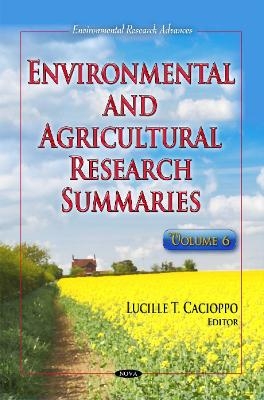
Environmental & Agricultural Research Summaries
Nova Science Publishers Inc (Verlag)
978-1-63117-219-9 (ISBN)
Preface; Legumes for Grazing and Health: The Case of Bituminaria bituminosa; Nutritional Characterization of Wild Legumes (Lathyrus and Vicia Genera); Legumes Leading the War against Diabesity-the Obesity-Diabetes Epidemic: An Overview; Soybean: Overview of the Nutritional Profile and the Implications for Nutrition and Health Effects; Fermentation of Lesser Known Legumes; Dark and Bright Facets of the Nutritional Value of Grass Pea (Lathyrus sativus L.) Seeds; Lentils (Lens Culinaris L.): Linking Whole Foods for Better Human Health; Medicago truncatula: A Model Organism to Study the Biology of Agriculturally Important Legume Crops; Antihypertensive Potential of Protein Hydrolysates from the Velvet Bean (Mucuna pruriens); Use of Herbicide (Roundup (R)): Potential Influence on Soil Metals Lability and on Radish Metal Uptake; Common Bean as an Emerging Model Grain Legume; Health Benefits of Legumes; Current Update in Methodologies for Extraction and Analysis of Proteins and Isoflavones; Mediterranean Sea Biodiversity between the Legacy from the Past and a Future of Change; Tectonic Development of the Levant Continental Margin, Eastern Mediterranean; The Nile Littoral Cell and Recent Shoreline Change: A Review; Circulation in the Mediterranean Sea; The Upper Mixed Layer; Nutrient Distribution in the Eastern Mediterranean before and after the Transient Event; Underwater Light Field of the Mediterranean Sea; Dinitrogen Fixation as a Source for New Production in the Mediterranean Sea: A Review; Heterotrophic Bacteria in the Pelagic Realm of the Mediterranean Sea; Seize the Sea: Alien Invertebrates in the Mediterranean Sea; Red Sea Fishes in the Mediterranean Sea History and Recent Developments; Cetaceans of the Mediterranean Sea; Shallow Water Scleractinian Corals of the Mediterranean Sea; The Deep-Mediterranean Sea: Habitats, Biodiversity and Ecosystem Functioning; Sandhoppers as Bioindicators of Anthropogenic Influences on Mediterranean Sandy Beaches; Eutrophication in the Mediterranean Sea; Ecological Indices Based on Macroalgae and Angiosperms in the Mediterranean Eco-Region: An Overview; Caulerpa racemosa, an invasive habitat-modifying macroalga in the Mediterranean Sea; Habitat Changes in the Mediterranean Sea and the Consequences for Harmful Algal Blooms Formation; Floating Plastics, Plastic Pellets, and Organic Micropollutants in the Mediterranean Sea; Floating and Benthic Marine Litter in the Mediterranean Sea: Typology, Abundance, Sources, Survey Methods and Impacts on Marine Biota; Aquaculture Impacts on Mediterranean Seagrasses: An Evaluation of Current Status and Future Prospects; Environmental Interactions of Marine Aquaculture in the Mediterranean: Current Status and Expected Changes; Oil Pollution in the Mediterranean; Effects of Ocean Acidification on Mediterranean Coastal Habitats: Lessons From Carbon Dioxide Vents Off Ischia; Climate Change Effects on Mediterranean Cetaceans: Time for Action; Biodiversity and Biotechnological Potential of Endophytic Fungi from Mangrove Forests; Mangrove Conservation in Trinidad and Tobago, West Indies; Actinomycetes in Mangrove Environments: Taxonomy and Metabolites; Xylariaceae and Mangroves; Mangrove Finch Camarhynchus heliobates: An Obligate Mangrove Specialist from the Galapagos Islands; Analysis of Coastal Erosion and Forest Loss in the Sundarbans Mangrove Using Time-Series Satellite Data; The Mangrove Ecosystem Conservation Strategy in the Niger Delta, Nigeria; Madagascar Teal Anas bernieri: A Mangrove Specialist from Madagascars West Coast; Biogeochemistry Study in Mangrove Ecosystem Sediments Using Dialysis Porewater Sampler; Reconsidering Climatic Roles of Marshes: Are they Sinks or Sources of Greenhouse Gases?; The Introduction, Impacts, and Management of a Large, Invasive, Aquatic Rodent in the United States; The Mesocosm Marsh Ecology of Two Southwestern Spanish Estuaries: Applications; Factors Conditioning the Vegetation in the Salt Marshes of the Atlantic Coast of the Iberian Peninsula; Nutrient Cycling in Salt Marshes: An Ecosystem Service to Reduce Eutrophication; Conservation of the European Wildcat (Felis silvestris) in Mediterranean Environments: A Reassessment of Current Threats; The Aerial Arthropod Community as a Descriptor of Farming Management in Arable Systems: From a Taxonomical to a Functional Approach; Comparing Several Mathematical Methods to Predict Potential Distribution of Mediterranean Forest Types Using CORINE Land Cover Data and Soil Related Variables; Conserving Biodiversity through the Protection and Management of Forest Fragments in Changing Semiarid Mediterranean Landscapes; Spatio-Temporal Dynamics of Soil Food Webs in a Mediterranean Arid Ecosystem; Microbial Ecosystem of Traditional Dry Fermented Sausages in Mediterranean Countries And Slovakia; Dynamics of a Very Special Mediterranean Coastal Area: The Gulf of Naples; Shrub Plants and Associated Mycorrhizal Fungi Sustainably Improve the Native Tree Establishment in Mediterranean Ecosystems; Structural Aspects of Mercury Complexes; OrganicInorganic Mesoporous Monolithic Scaffolds and Their Functionality in the Optical Ion-Sensitive Removal of Mercury Ions; Isomers in the Chemistry of Mercury Organometallic and Heterometallic Complexes; Generation of Superoxide by the Interaction between Mercury Ions and Endogenous Thiols; Effects of Acute Mercury Exposition on the Expression and Function of Organic Anion Transporters in the Kidneys; Mercury: Environmental Concerns and Management Technologies; Mercury Toxicity Alters The Antioxidant System of Growing Cucumber Seedlings; Mercury Contamination in Reptiles: An Emerging Problem with Consequences for Wild Life and Human Health; Atmospheric Deposition of Mercury from Waites Island, Horry County, South Carolina, as Compared to Regional Mercury Deposition and South Carolina Fish Consumption Advisories; The Non-Point Pollution of Nitrogen and Phosphorus in Chinese Agriculture Ecosystem: Current Status and Progress; Some Advances in Bio-Removing Hazardous Heavy Metals from Contaminated Soils; Immobilization of Heavy Metals in Soil by Phosphate Treatment: A Review; Metal Contaminant Source, Transport and Fate in the Environment and Phytoremediation Methods; Pollution Sources and Fluxes in the South-Western Spanish Littoral; Controlled Organic Treatment System for Acid Mine Drainage (AMD) and Municipal Waste Water; Assessment of Trace Element Contamination in the River and Alluvial Sediments Using a Sequential Extraction Technique and Statistical Analysis; Metal Concentrations in Marine Sediments Influenced by Anthropogenic Activities in Bahrain, Arabian Gulf; Comparative Study in the Bivalve Capacity for Metal Bioaccumulation in the Balearic Islands (Spain). Mytilus Galloprovincialis as an Adequate Sentinel Species for Monitoring Coastal Waters; Risk Assessment for the Environment, Population and Infrastructures of Some Abandoned Tailing Ponds in the Mining District of Cartagena-La Union (SE Spain); Methane as a Source of Energy: Enhancing the Catalytic Combustion Process by Electrochemical Promotion Phenomenon; High Resolution Spectra of Methane and Interfering Gases and Their Application to the Atmospheric Radiative Transfer Simulation in the Methane Concentration Retrieval Tasks; Methane Cycling Microorganisms in Soils from the Peruvian Amazon River Basin; Biogeochemical Cycling of Methane in the Sevastopol Coastal Area, Black Sea; Synthesis and Characterization of CeAlO3 Phase: Role in Ni Catalysts for Methane-Reforming Reactions; Complete Methane Oxidation on Supported Palladium Catalysts: Steady State Isotopic Transient Kinetic Analysis; Effects of Feed Strategies on Anaerobic Sequencing Batch Reactors Applied to Biomethane Production; Bio-Inspired Methane Oxidation; Evaluation of Methane Emissions Generated by the Use of Compressed Natural Gas in the Transport Sector; New Strategy of Methane Analysis: Forensic Applications; Effects of Hydrogen and Water Vapor Additions on Emissions of Turbulent Methane Flame Spread on Corner Walls; Methane Emissions from Ruminants in the Tropics: Implications for Global Warming and Options for Mitigation; Status and Trends of Chinas Tourism Development; Tourism Potential of the Sheikh Abd el-Qurna Tombs (West Bank of Luxor, Egypt); Linking Ecotourisms Opportunities and National Parks Protection through Geocaching; Sustainable Tourism Indicators: A Mapping of the Italian Destinations; A Case Study of the Methodology Implemented to Develop the Geographic Information System of Tourism Offer in the Alentejo Region; Tourism Impact at Local Scale: The Case of Tuscany; Visitor Profiles at World Cultural Heritage Sites: An Empirical Study of Evora, Portugal; Analysis of the Spatial Standards and Perceptual Components of the Recreational Carrying Capacity Applied to Archaeological Sites: Case Study of Castellet de Bernabe (Lliria, Spain); Image of Extremadura as a Touristic Destination: Fidelity Factor in Countryman Tourism; The Countryman Tourism in Rural Areas: The Case of Extemadura (Spain); International Regulation of the Right of Access to Information in Environmental Matters; Energy Efficiency of the European Listed Hotels and Stock Market Value; Categories of European Exchange-listed Hotels According to Their Level of Environmental Information Disclosure; An Initial Approach to Calculation of the Carbon Footprint in the Lodging Industry; Environmental Management Systems, Financial Crisis and Competitive Advantage; Confronting Spanish Textiles Industry Future through Sustainable Management; Assessment of the Impact of Business Activity in Sustainability Terms: Empirical Confirmation of its Determination in Spanish Companies; The Role of Selenium in Mitigating Mercury Toxicity; Fish as a Dietary Source of Mercury and Methylmercury, Risks and Benefits; Inexpensive Low-Cost Mercury Speciation by Hydride Generation Atomic Absorption Spectrometry after Ion Exchange Separation in a FIA System (FIA-IE-HG-AAS); Cathepsin-Dependent Neuronal Death Pathways Induced by Methylmercury; Not Only Concentrations Matter: Some Practical Considerations of In Vitro MeHg Toxicity Studies; Methylmercury and Total Mercury Contamination in an Aquatic Ecosystem of Hg-Mining River in Guizhou, China; Mercury Methylation Versus Demethylation: Main Processes Involved; MeHg-Exposure through Seafood Consumption: Cholinergic Muscarinic Receptor as a Target of Toxicity and Potential Biomarker of CNS Effects; Nitrogen Fixing Symbioses Adapted to Contaminated Soils; Use of Nitrogen-Fixing Legume Trees to Revegetate Degraded Lands; Legume Nodule Oxidative Stress and N2 Fixation Efficiency; Analysis of Microbial Diversity to Monitor the Impacts of Soil Use on Brazilian Soils; Molecular Microbial Ecology and Conservation: A Molecular Approach; The Modulation of Cultivable Bacterial Diversity Due to Introduction of Bacteria and DNA in Tropical Soil Microcosms; Biodiversity and the Potential of PGPR: Plant-Microorganism Interactions; Antimicrobial Substances Produced by Paenibacillus polymyxa, P. brasilensis and P. peoriae Against Phytopathogenic Microorganisms; Biofertilizers From Phosphate and Potash Rocks with Acidithiobacillus and Organic Matter Enriched by Free Living Diazotrophic Bacteria; Free Living Soil Fungi: Interaction with Heavy Metals and Plant Growth Promoting Activities; Glomalin as an Indicator of Mycorrhizae in Tropical Agroecosystems; Arbuscular Mycorrhizal Fungi in Degraded Areas; Ecology of Soil Yeasts; Effects of Heavy Metal and Metalloid Contamination on the Soil Microbial Response: An Overview; Comparative Characteristics of Land Surface Thermal-Hydrologic Processes among Monsoonal, Non-Monsoonal, and Monsoon Marginal Regions over Northern China during Prevailing Summer Monsoon Periods; The Synergistic Influence of El Nino/ La Nina and Indian Ocean Dipole on Indian Summer Monsoon Rainfall; Findlater Jet Intensity and Characteristics in Relation to Indian Summer Monsoon; Impact of El Nino/La Nina on Indian Summer Monsoon Rainfall; Characteristics of the Change Between Dry and Rainy Seasons or Summer and Winter Seasons Judging with the Monitoring Data: Case Studies of Cambodia and Japan in Asia Monsoon Zone; Euro-Mediterranean Torrents: Case Studies on Tools that can Improve their Management; Altered Community Dynamics in Rocky Mountain Whitebark Pine Forests and the Potential for Accelerating Declines; Mountains Ecosystems as a Temporal Sink for Persistent Organic Pollutants; Impact of Land-Use Change on Seasonal Dynamics of Total Protein Flow from Roots of Mountain Meadow Plant Communities; Atmospheric Carbon Dioxide Transport Over Mountainous Terrain; Multifunctional Agriculture and Wellbeing in Developing Nations; Economic Analysis of Consumer Behavior and Agricultural Products Based on Biodiversity Conservation Value; Multifunctional Agriculture in Indonesia: Agricultural Policy and Farming Systems; Tropical Mountains Multifunctionality: Dendritic Appropriation of Rurality or Rhyzomic Community Resilience as Food Security Panacea; Re-Defining the Rural-Urban Relationship Through Multifunctional Peri-Urban Agriculture: The Case of Native Maize Conservation in Mexico City; Youth Employment in Least Developed Countries: The Contribution of Sustainable Agriculture; An Overview of Multifunctional Benefits in Relation to Small Scale Farming in China; The Multi-Functionality of Smallholder Farming: A Case of Ethiopia; Multifunctional Agriculture in Brunei Darussalam: The Prospect of Developing Agritourism as a Diversification Strategy; Multifunctional Agriculture in Sudan: Indigenous Practices and Potential Environmental and Social Roles; Agriculture, Indigenous Knowledge and Rural Livelihoods in Tanzania; Multifunctional Aquaculture in Brunei Darussalam: Potential and Policy Options; Albanian Agriculture: Analyzing the Past to Decidefor the Future; Biological Control Agents for Crop Protection and Sustainability of Agro-Ecosystems in Kyrgyzstan; Multifunctional Agriculture in Sri Lanka; Priorities and Capacity of Food Policy in Mongolia: The Dilemma Between Ambitions and Reality; Encouraging Youth Participation in Agriculture: The Case of Brunei Darussalam; Sustainable Agriculture and Food Security of Bangladesh Issues and Recommendations; Multifunctional and Organic Agriculture: Trade and Development Perspectives; Potentials of Organic Farming in Sustaining a Rich Biodiversity and Best Conservation Practices: Opportunities for Africa; Multifunctionality of Organic Agriculture in Romania; Multifunctional Agriculture, Food Security and Poverty Reduction in India: The Case of Organic Agriculture; Sustainable Agriculture, Food Security and Social Wellbeing: The Cuba Model; Creating Space for Integrated Management of Aiako Harria Natural Park, Basque Country; Mountains to Sea: Riparian Rehabilitation as a Multiple Management Strategy in the Basque Region, Spain; Changing Values, Changing Forests: Converting Radiata Pine Plantations and Restoring Native Forest in the Basque Country; Financial and Ecological Implications of Transitioning Pinus Radiata Plantations to Mixed-Species Fagus Sylvatica and Quercus Spp. Forests in the Basque Country, Spain; Management Approaches for Protected Areas of Cultural and Biological Significance: The Beech Pollards of Aiako Harria Natural Park; Arbuscular Mycorrhizas in Natural Environments: An Overview; Large-scale Diversity Patterns in Spore Communities of Arbuscular Mycorrhizal Fungi; Arbuscular Mycorrhizas and their Importance for Tropical Forest Formation in Brazil; Arbuscular Mycorrhizal Fungi in the Amazon Region; Ocurrence of Mycorrhizas in Highland Fields; Co-ocurrence of Arbuscular Mycorrhizas and Dark Septate Endophytes in Pteridophytes from a Valdivian Temperate Rainforest in Patagonia, Argentina; Mycorrhizas, an Important Component in Semiarid Sites; Mycorrhizal Status and Responsiveness of Early successional Communities from Chaquean Region in Central Argentina; Measuring and Estimating Ectomycorrhizal Fungal Diversity: A Continuous Challenge; Mycorrhizal Diversity in Native and Exotic Willows (Salix humboldtiana and S. alba) in Argentina; Tree Species Composition and Diversity in Brazilian Freshwater Floodplains; Arbuscular Mycorrhizae in Aquatic Plants, India; Importance of Arbuscular Mycorrhizal Fungi for Recovery of Riparian Sites in Southern Brazil; The Forgotten Nature of National Parks; Balancing Management Needs for Conserving Biodiversity in Grand Canyon National Park; (Jerald C. Mast and Joy N. Mast); Determination of Optimum Management Strategy for Kure Mountains National Park in Turkey; The Concept of Ecotourism Development with Fqfd in the Kinmen National Park; Protection of Nature Chamois in the Slovak National Parks; The Dilemma of Balancing Conservation and Strong Tourism Interests in a Small National Park: The Case of Amboseli, Kenya; Sacred Groves: Informal Protected Areas in the High Altitudes of Eastern Himalaya, Arunachal Pradesh, Northeast India: Traditional Beliefs, Biodiversity and Conservation; High Temperature Environments Represent a Model for the Analysis of Bacterial Dynamics and Preservation of National Parks; Microbial Diversity Supporting Unique Ecosystems within National Parks. The Donana National Park as an Example; Fire: A Threat and a Lacking Tool for Biodiversity Conservation in Brazilian National Parks; Valuation of the Benefits of Wildlife Tourism in Remote Protected Areas: The Case of Gros Morne; The Tragedy of the Governmentality of Nature: The Case of National Parks in Cameroon; Linking Protected Area Conservation with Poverty Alleviation in Uganda: Integrated Conservation and Development at Bwindi Impenetrable National Park; Community-Based Conservation: An Institutional Approach to Assessing Biodiversity Conservation Efforts at Bardia National Park in Nepal; Priority Areas Integration (PAI) Method: A Tool to Facilitate Biodiversity Conservation?; Communal Game Farming: A Sustainable Land Use Option?; Land As Sustenance and Sanctuary: Settlement History and Resource Use in and around Utahs Grand Staircase-Escalante National Monument; Assessing the Competitiveness of Protected Areas: The Competitive Positioning of the Peneda-Geres; National Park; The Donana National Park (SW Spain): From the Sea to the Future; Index.
| Verlagsort | New York |
|---|---|
| Sprache | englisch |
| Maße | 180 x 260 mm |
| Gewicht | 920 g |
| Themenwelt | Weitere Fachgebiete ► Land- / Forstwirtschaft / Fischerei |
| ISBN-10 | 1-63117-219-0 / 1631172190 |
| ISBN-13 | 978-1-63117-219-9 / 9781631172199 |
| Zustand | Neuware |
| Informationen gemäß Produktsicherheitsverordnung (GPSR) | |
| Haben Sie eine Frage zum Produkt? |
aus dem Bereich