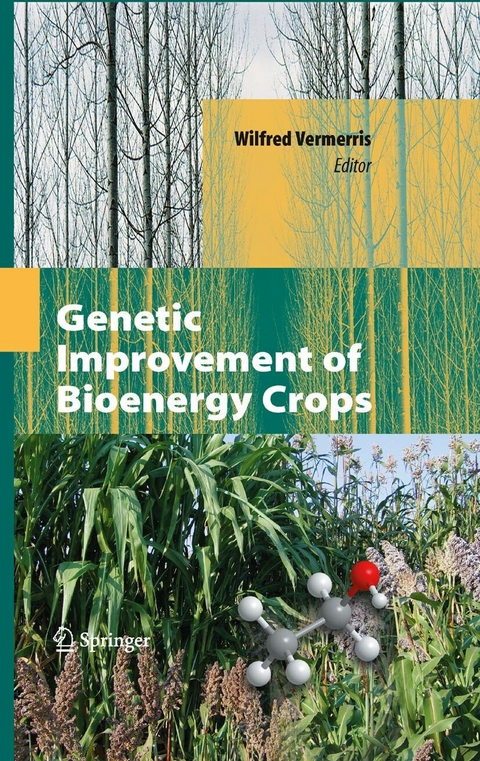
Genetic Improvement of Bioenergy Crops (eBook)
XXII, 450 Seiten
Springer New York (Verlag)
978-0-387-70805-8 (ISBN)

Ethanol as an alternative fuel is receiving a lot of attention because it addresses concerns related to dwindling oil supplies, energy independence, and climate change. The majority of the ethanol in the US is produced from corn starch. With the US Department of Energy's target that 30% of the fuel in the US is produced from renewable resources by 2030, the anticipated demand for corn starch will quickly exceed the current production of corn. This, plus the concern that less grain will become available for food and feed purposes, necessitates the use of other feedstocks for the production of ethanol. For the very same reasons, there is increasing research activity and growing interest in many other biomass crops.
Genetic Improvement of Bio-Energy Crops focuses on the production of ethanol from lignocellulosic biomass, which includes corn stover, biomass from dedicated annual and perennial energy crops, and trees as well as a number of important biomass crops. The biomass is typically pretreated through thermochemical processing to make it more amenable to hydrolysis with cellulolytic enzymes. The enzymatic hydrolysis yields monomeric sugars that can be fermented to ethanol by micro-organisms. While much emphasis has been placed on the optimization of thermo-chemical pretreatment processes, production of more efficient hydrolytic enzymes, and the development of robust microbial strains, relatively little effort has been dedicated to the improvement of the biomass itself.
Ethanol as an alternative fuel is receiving a lot of attention because it addresses concerns related to dwindling oil supplies, energy independence, and climate change. The majority of the ethanol in the US is produced from corn starch. With the US Department of Energy's target that 30% of the fuel in the US is produced from renewable resources by 2030, the anticipated demand for corn starch will quickly exceed the current production of corn. This, plus the concern that less grain will become available for food and feed purposes, necessitates the use of other feedstocks for the production of ethanol. For the very same reasons, there is increasing research activity and growing interest in many other biomass crops. Genetic Improvement of Bio-Energy Crops focuses on the production of ethanol from lignocellulosic biomass, which includes corn stover, biomass from dedicated annual and perennial energy crops, and trees as well as a number of important biomass crops. The biomass is typically pretreated through thermochemical processing to make it more amenable to hydrolysis with cellulolytic enzymes. The enzymatic hydrolysis yields monomeric sugars that can be fermented to ethanol by micro-organisms. While much emphasis has been placed on the optimization of thermo-chemical pretreatment processes, production of more efficient hydrolytic enzymes, and the development of robust microbial strains, relatively little effort has been dedicated to the improvement of the biomass itself.
I.- Why Bioenergy Makes Sense.- A Primer on Genetics, Genomics and Plant Breeding.- Production of Ethanol from Grain.- Composition and Biosynthesis of Lignocellulosic Biomass.- Selection of Promising Biomass Feedstock Lines Using High-Throughput Spectrometric and Enzymatic Assays.- Current Technologies for Fuel Ethanol Production from Lignocellulosic Plant Biomass.- II.- Genetic Improvement of Corn for Lignocellulosic.- Development and Utilization of Sorghum as a Bioenergy Crop.- Genetic Improvement of Sugarcane (Saccharum spp.) as an Energy Crop.- Miscanthus: Genetic Resources and Breeding Potential to Enhance Bioenergy Production.- Improvement of Switchgrass as a Bioenergy Crop.- Improvement of Perennial Forage Species as Feedstock for Bioenergy.- Genetic Improvement of Willow (Salix spp.) as a Dedicated Bioenergy Crop.- Genetic Improvement of Poplar (Populus spp.) as a Bioenergy Crop.- Southern Pines: A Resource for Bioenergy.
| Erscheint lt. Verlag | 2.8.2008 |
|---|---|
| Zusatzinfo | XXII, 450 p. 35 illus., 7 illus. in color. |
| Verlagsort | New York |
| Sprache | englisch |
| Themenwelt | Medizin / Pharmazie |
| Naturwissenschaften ► Biologie ► Botanik | |
| Technik ► Umwelttechnik / Biotechnologie | |
| Weitere Fachgebiete ► Land- / Forstwirtschaft / Fischerei | |
| Schlagworte | Bio-energy • Bio-energy Crops • enzymes • Genome • lignocellulosic biomass • Maize • Plant genetics • plant science • sorghum |
| ISBN-10 | 0-387-70805-7 / 0387708057 |
| ISBN-13 | 978-0-387-70805-8 / 9780387708058 |
| Informationen gemäß Produktsicherheitsverordnung (GPSR) | |
| Haben Sie eine Frage zum Produkt? |
 PDF (Wasserzeichen)
DRM: Digitales Wasserzeichen
Dieses eBook enthält ein digitales Wasserzeichen und ist damit für Sie personalisiert. Bei einer missbräuchlichen Weitergabe des eBooks an Dritte ist eine Rückverfolgung an die Quelle möglich.
Dateiformat: PDF (Portable Document Format)
Mit einem festen Seitenlayout eignet sich die PDF besonders für Fachbücher mit Spalten, Tabellen und Abbildungen. Eine PDF kann auf fast allen Geräten angezeigt werden, ist aber für kleine Displays (Smartphone, eReader) nur eingeschränkt geeignet.
Systemvoraussetzungen:
PC/Mac: Mit einem PC oder Mac können Sie dieses eBook lesen. Sie benötigen dafür einen PDF-Viewer - z.B. den Adobe Reader oder Adobe Digital Editions.
eReader: Dieses eBook kann mit (fast) allen eBook-Readern gelesen werden. Mit dem amazon-Kindle ist es aber nicht kompatibel.
Smartphone/Tablet: Egal ob Apple oder Android, dieses eBook können Sie lesen. Sie benötigen dafür einen PDF-Viewer - z.B. die kostenlose Adobe Digital Editions-App.
Buying eBooks from abroad
For tax law reasons we can sell eBooks just within Germany and Switzerland. Regrettably we cannot fulfill eBook-orders from other countries.
aus dem Bereich