


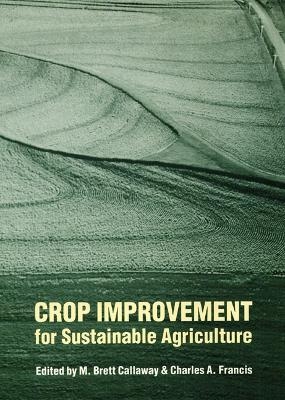
Crop Improvement for Sustainable Agriculture
Seiten
1993
University of Nebraska Press (Verlag)
978-0-8032-1462-0 (ISBN)
University of Nebraska Press (Verlag)
978-0-8032-1462-0 (ISBN)
- Lieferbar (Termin unbekannt)
- Versandkostenfrei
- Auch auf Rechnung
- Artikel merken
Conventional agriculture has attempted to exploit arable land by applying chemical fertilizers, pesticides, and irrigation water. This volume argues that instead of changing the environment, we can change the adaptation of the plants that we grow in it.
Conventional agriculture has attempted to exploit arable land by applying chemical fertilizers, pesticides, and irrigation water. These practices become increasingly tenuous as they exhaust our supplies of fossil fuels, deplete aquifers and raise concerns about the safety of food and the overall effect of agriculture on the quality of rural life. The contributors to this volume believe that instead of changing the environment, we can change the adaptation of the plants that we grow in it. Genetic improvement of crop plants for stress conditions and for less favorable environments is a cost-effective way to develop future sustainable agricultural systems. There area number of favorable genetic traits that can be incorporated into crop plants, thus making them more hardy and more productive. Eighteen noted researchers currently working in plant breeding and related fields bring together the best thinking about achieving crop improvement—especially the development of new genetic combina-tions—to create a sustainable agriculture.
Conventional agriculture has attempted to exploit arable land by applying chemical fertilizers, pesticides, and irrigation water. These practices become increasingly tenuous as they exhaust our supplies of fossil fuels, deplete aquifers and raise concerns about the safety of food and the overall effect of agriculture on the quality of rural life. The contributors to this volume believe that instead of changing the environment, we can change the adaptation of the plants that we grow in it. Genetic improvement of crop plants for stress conditions and for less favorable environments is a cost-effective way to develop future sustainable agricultural systems. There area number of favorable genetic traits that can be incorporated into crop plants, thus making them more hardy and more productive. Eighteen noted researchers currently working in plant breeding and related fields bring together the best thinking about achieving crop improvement—especially the development of new genetic combina-tions—to create a sustainable agriculture.
M. Brett Callaway is tropical germplasm manager at Pioneer Hi-Bred International. He has written a number of publications on plant breeding and horticulture and has done research in Central America. Charles A. Francis is director of the Center for Sustainable Agricultural Systems, a professor of agronomy, and an extension crops specialist at the University of Nebraska-Lincoln. His other books include Enough Food, Multiple Cropping Systems, and Sustainable Agriculture for Temperate Zones.
| Erscheint lt. Verlag | 1.11.1993 |
|---|---|
| Reihe/Serie | Our Sustainable Future |
| Verlagsort | Lincoln |
| Sprache | englisch |
| Maße | 152 x 229 mm |
| Gewicht | 596 g |
| Themenwelt | Weitere Fachgebiete ► Land- / Forstwirtschaft / Fischerei |
| ISBN-10 | 0-8032-1462-6 / 0803214626 |
| ISBN-13 | 978-0-8032-1462-0 / 9780803214620 |
| Zustand | Neuware |
| Informationen gemäß Produktsicherheitsverordnung (GPSR) | |
| Haben Sie eine Frage zum Produkt? |
Mehr entdecken
aus dem Bereich


aus dem Bereich
Buch | Hardcover (2023)
Haymarket Media (Verlag)
CHF 44,50
erfolgreich produzieren & selbst vermarkten
Buch | Hardcover (2023)
Stocker Verlag
CHF 34,95


