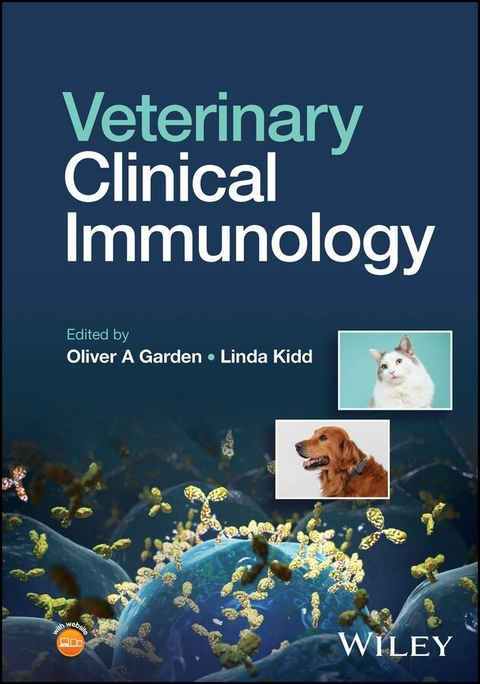
Veterinary Clinical Immunology (eBook)
1439 Seiten
Wiley (Verlag)
978-1-119-23289-6 (ISBN)
A richly illustrated reference on immune-mediated diseases in dogs and cats, grounded in veterinary clinical practice
Veterinary Clinical Immunology provides clear and accurate information on the pathogenesis, diagnosis, and treatment of immune-mediated diseases in small animals. Written by practicing clinicians for practicing clinicians, this highly practical resource contains user-friendly chapters on general and specific testing methods, common and atypical immune-mediated diseases, vaccination best practice and controversies, and more.
Divided into four sections, the textbook opens with a thorough immunology primer for clinicians, describing innate and adaptive immunity, pathophysiology, immunogenetics, and pathogens. Subsequent sections focus on diagnostic approaches and treatments, immunodeficiency and onco-immunology, and a range of specific immune-mediated diseases, including diseases of the hematopoietic system, the oral cavity and gastrointestinal tract, the kidneys and bladder, and the nervous and endocrine systems.
- Provides information directly applicable to clinical practice with emphasis on the diagnosis and management of immunological conditions
- Features numerous real-world case examples supported by high-quality images of blood smears, tissue sections, and other specimens relevant to the clinical pathology of immune-mediated diseases
- Includes access to a companion website with video clips of clinical cases and additional teaching resources
- Authored and edited by internationally-recognized experts in their respective fields
Veterinary Clinical Immunology is a must-have for busy primary practitioners and specialists looking for a current and comprehensive reference source. It is also a valuable clinically-based textbook for undergraduate and postgraduate veterinary students, trainees, residents, and veterinary technicians and nurses.
Oliver A Garden, BSc, BVetMed, PhD, FHEA, FCPP, FRCVS, DACVIM, DECVIM-CA, Dean of the School of Veterinary Medicine and the Kenneth Burns Endowed Chair in Veterinary Medicine at Louisiana State University, USA. He is a European and American Board-certified specialist clinician with almost three decades' experience in the field. He is the founder and President of the Veterinary and Comparative Clinical Immunology Society.
Linda Kidd, DVM, PhD, DACVIM, Professor of Small Animal Internal Medicine, Linda Kidd Internal Medicine Consulting, Carlsbad, CA, USA.
1
A Clinician's Guide to the Immune System: Innate and Adaptive Immunity
Oliver A Garden
CHAPTER MENU
- 1.1 Introduction: Innate Versus Adaptive Immunity
- 1.2 The Innate Response – An Immediate Front Line of Defense
- 1.3 The Adaptive Response – Specialized Cells with Specificity and Memory
- 1.4 Blurring the Lines Between Innate and Adaptive Immunity
- 1.5 Regulation of the Immune Response
- 1.6 Cell Death Mechanisms
- 1.7 Microbiota and Immunity
- 1.8 Areas for Further Research
- Companion Website
- Key References
1.1 Introduction: Innate Versus Adaptive Immunity
The discipline of immunology is advancing at a staggering pace. The discoveries of today were only recently considered science fiction, and immunological knowledge now impacts virtually every aspect of medicine, from infectious, autoimmune and immunodeficiency disease to tumor biology, allergy, transplantation and critical care. A working knowledge of the cells and molecules of the immune system is thus an important part of the clinician's toolkit of skills, essential to an understanding of many of the most exciting medical advances of recent times.
The immune system shows both mechanistic and geographical segregation, including distinctions between (i) the innate and adaptive arms of immunity and (ii) primary and secondary lymphoid organs [1–4]. Innate immunity, a primordial system that pre‐dates adaptive immunity in evolution, comprises soluble proteins that bind microbial products, for example complement proteins, and leukocytes that ingest particles and kill microorganisms, including neutrophils, eosinophils, mast cells, basophils, natural killer (NK) cells, and macrophages. It is immediately responsive, with broad (non‐clonal) specificity based on recognition of common microbial motifs (pathogen or microbial‐associated molecular patterns [PAMPS/MAMPS]). In contrast, adaptive immunity is based on a system of T and B lymphocytes that respond to specific recognition motifs (antigenic epitopes) via surface receptors, require time to generate a response, and demonstrate the phenomenon of memory, in which secondary exposure to the same antigen elicits a more immediate immune response of greater magnitude – the concept underlying vaccination [5–7]. T cells may be broadly classified into CD4+ and CD8+ lineages, respectively labeled “helper” (Th) and “cytotoxic” (Tc or CTL), according to their predominant function [8, 9]. Cytotoxic T cells recognize peptide presented on MHC class I molecules, which are expressed ubiquitously by nucleated cells; they are thus able to kill cells infected with viruses or other intracellular pathogens, or cells expressing abnormal tumor antigens [10]. In contrast, Th cells recognize peptide presented by specialized (“professional”) antigen‐presenting cells (APCs) expressing MHC class II molecules [11, 12] (Figure 1.1).
Figure 1.1 Key interactions of the innate and adaptive immune responses. Invasion of peripheral tissues by pathogens [1] is sensed by cells of the innate immune system [2], such as macrophages and dendritic cells (DCs), by means of pattern‐recognition receptors (PRRs) binding microbial‐associated molecular patterns (“danger signals”). This activates the cells, leading to immediate effector responses, such as phagocytosis. The DCs become activated and migrate to the draining lymph node [3], where they present peptides of pathogen‐derived antigens to naïve T cells (CD4+, CD8+) with appropriate specificity circulating through the node (priming) [4]. Some of the pathogens may enter the draining lymph node directly in the afferent lymphatics [5], activating resident DCs within the node. The T cells undergo differentiation and many “home” to the tissues where the pathogen was first sensed – via the efferent lymphatics and the thoracic duct – to mediate effector functions [6]. Some of the primed T cells interact with B cells in the lymphoid follicles [7], in turn providing help for B cell differentiation. Though poorly characterized, plasma cells (terminally differentiated B cells that secrete antibody) also migrate to peripheral tissues, although a long‐lived population of these cells is thought to reside in the bone marrow [8]. The innate and adaptive arms of the immune system are often considered separately, though this very simplified overview shows that they are in fact exquisitely coordinated, with the DC – possibly interacting with natural killer (NK) cells – forming a bridge between the two [13, 14]. Abbreviations: B, B cells; PC, plasma cells; TN, naïve T cells; TAct, activated T cells.
1.2 The Innate Response – An Immediate Front Line of Defense
1.2.1 Physical Barriers and Cells
Acting as the interface with the external environment, the epidermis of the skin [15, 16] and the epithelium of the mouth [17], gastrointestinal tract (GIT) [18], and respiratory system [19] form the first line of defense against mechanical, chemical, and microbial insults. (The epidermis is actually a form of epithelium, but for the sake of clarity this terminological distinction will be made.) Each of these barriers serves a crucial protective role, comprising a dynamic community of specialized cells that closely interacts with the surface microbiota and the underlying immune cells [20]. Specific functions of the surface cells reflect the anatomical location of the barrier. For example, respiratory epithelial cells continuously clear particles that have been inhaled, ensuring that gaseous exchange in the lungs can occur without interference by debris.
The oral mucosa is lined by a stratified squamous epithelium that is non‐keratinized in buccal and sublingual areas and keratinized in gingival and palatal areas, reflecting regional mechanical demands [17]. The dorsal surface of the tongue comprises a mosaic of keratinized and non‐keratinized epithelium. Various populations of epithelial cells may be identified in the airways and GIT. Respiratory epithelium comprises predominantly ciliated columnar cells, along with mucus‐secreting goblet and club cells. These cells and the overlying mucus form a mucociliary escalator, clearing particulate debris by moving it in an orad direction. Additional, rare cells in the airways include neuroendocrine cells, ionocytes, solitary chemosensory cells, and basal, stem‐like progenitor cells [19]. The predominant epithelial cells in the GIT are enterocytes, columnar absorptive cells with microvilli forming a brush border. There are also goblet cells, which secrete mucus (as they do in the airways); Paneth cells, which produce antimicrobial peptides such as alpha defensins, lysozyme C, and phospholipases; enteroendocrine cells, which secrete various GIT hormones; and stem cells, which lie at the base of the crypts and differentiate into the specialized epithelial cells [18]. There is increasing recognition of the immune functions of epithelium, which interacts with both the overlying microbes and the underlying immune cells. Epithelial cells produce various molecules with immune and antimicrobial functions, and serve to process and present antigens to other immune cells [21–25].
Innate immune cells support the barrier function of the epidermis and epithelium, helping to contain and eliminate pathogens. They include neutrophils, eosinophils, mast cells, basophils, NK cells, and macrophages. Neutrophils are one of the most important effector cells of the innate immune response, protecting against an array of extracellular pathogens, especially bacteria, by means of their phagocytic and intracellular killing activity [26–28]. Eosinophils play a role in the elimination of metazoan parasites (helminths) in the GIT and airways; in addition, they are increasingly recognized as having anti‐fungal and antiviral activity [29–31]. Their overactivity is key to the development of allergy [32, 33]. Mast cells [34, 35] and basophils [36–38] have conventionally also been considered effectors of allergy, but their role in defense against a variety of bacterial, fungal, viral, and helminth pathogens – as well as in regulation of the immune response – is now recognized...
| Erscheint lt. Verlag | 10.9.2025 |
|---|---|
| Sprache | englisch |
| Themenwelt | Veterinärmedizin |
| Schlagworte | immunology small animals • veterinary immune-mediated diseases • veterinary immunology • veterinary immunology diagnosis • veterinary immunology guide • veterinary immunology reference • veterinary immunology textbook • veterinary immunology treatment |
| ISBN-10 | 1-119-23289-9 / 1119232899 |
| ISBN-13 | 978-1-119-23289-6 / 9781119232896 |
| Informationen gemäß Produktsicherheitsverordnung (GPSR) | |
| Haben Sie eine Frage zum Produkt? |
 EPUB (Adobe DRM)
Kopierschutz: Adobe-DRM
Adobe-DRM ist ein Kopierschutz, der das eBook vor Mißbrauch schützen soll. Dabei wird das eBook bereits beim Download auf Ihre persönliche Adobe-ID autorisiert. Lesen können Sie das eBook dann nur auf den Geräten, welche ebenfalls auf Ihre Adobe-ID registriert sind.
Details zum Adobe-DRM
Dateiformat: EPUB (Electronic Publication)
EPUB ist ein offener Standard für eBooks und eignet sich besonders zur Darstellung von Belletristik und Sachbüchern. Der Fließtext wird dynamisch an die Display- und Schriftgröße angepasst. Auch für mobile Lesegeräte ist EPUB daher gut geeignet.
Systemvoraussetzungen:
PC/Mac: Mit einem PC oder Mac können Sie dieses eBook lesen. Sie benötigen eine
eReader: Dieses eBook kann mit (fast) allen eBook-Readern gelesen werden. Mit dem amazon-Kindle ist es aber nicht kompatibel.
Smartphone/Tablet: Egal ob Apple oder Android, dieses eBook können Sie lesen. Sie benötigen eine
Geräteliste und zusätzliche Hinweise
Buying eBooks from abroad
For tax law reasons we can sell eBooks just within Germany and Switzerland. Regrettably we cannot fulfill eBook-orders from other countries.
aus dem Bereich