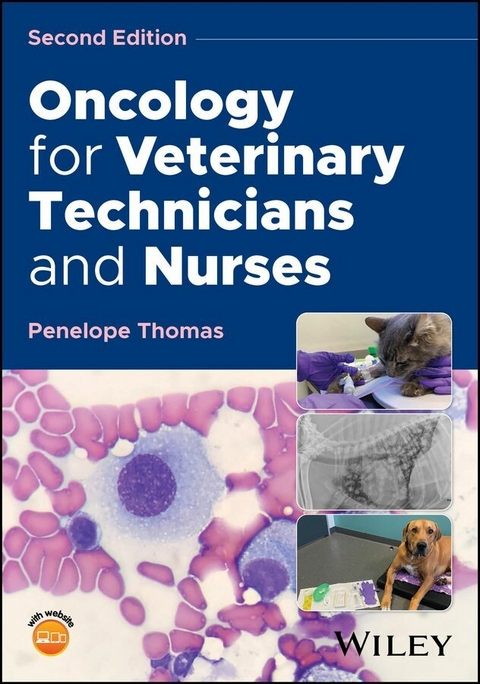
Oncology for Veterinary Technicians and Nurses (eBook)
751 Seiten
Wiley (Verlag)
978-1-394-21600-0 (ISBN)
Comprehensive, straightforward oncology learning resource with coverage of diagnosis, staging, treatment, support, and common emergencies and cancer types
Oncology for Veterinary Technicians and Nurses is a straightforward educational resource that imparts a basic understanding of practical oncology therapy from the technician perspective thorough coverage of diagnosis and staging, radiation therapy and chemotherapy, pain management, GI support, most cancer types, analgesics, antiemetics, appetite stimulants, and antibiotics. This newly revised and updated Second Edition covers the many advances in veterinary medicine and oncology since the original edition was published in 2009.
Readers will find detailed information on oncological emergencies, including hematologic, metabolic, urological, and bone emergencies, as well as common cancers in veterinary patients, including lymphoma and mammary carcinoma in both cats and dogs, along with a number of canine-centric cancers.
The book includes nearly 400 images and figures to elucidate key concepts. A series of helpful appendices assists readers in the practical application of concepts discussed throughout the book.
With content presented in a logical order, Oncology for Veterinary Technicians and Nurses includes information on:
- Basics of oncology, covering fundamental concepts in the field and causes of cancer in pets, as well as the processes behind diagnosing and staging cancers
- Treatment of cancer through surgery, radiation therapy, chemotherapy, receptor and small molecule inhibitors, immunotherapy, intralesional therapies, and electrochemotherapy
- Supportive care of patients through comfort, pain management, physical rehabilitation, gastrointestinal and nutritional support, and hematologic support
- Support for pet owners and caregivers, including communicating with the patient's human family and supporting the nurse's emotional experience
Oncology for Veterinary Technicians and Nurses is an essential reference on the subject for veterinary nurses and technicians seeking the information they need to properly and safely perform cancer treatments, especially those undergoing diploma, certificate, and bachelor's degrees in Australia, New Zealand, UK, and USA in particular.
Dr. Penelope Thomas, BVSc Hons MRCVS MANZCVS (Small Animal Medicine) FANZCVS (Veterinary Oncology), Owner and Director of Veterinary Oncology Consultants, Australia.
Comprehensive, straightforward oncology learning resource with coverage of diagnosis, staging, treatment, support, and common emergencies and cancer types Oncology for Veterinary Technicians and Nurses is a straightforward educational resource that imparts a basic understanding of practical oncology therapy from the technician perspective thorough coverage of diagnosis and staging, radiation therapy and chemotherapy, pain management, GI support, most cancer types, analgesics, antiemetics, appetite stimulants, and antibiotics. This newly revised and updated Second Edition covers the many advances in veterinary medicine and oncology since the original edition was published in 2009. Readers will find detailed information on oncological emergencies, including hematologic, metabolic, urological, and bone emergencies, as well as common cancers in veterinary patients, including lymphoma and mammary carcinoma in both cats and dogs, along with a number of canine-centric cancers. The book includes nearly 400 images and figures to elucidate key concepts. A series of helpful appendices assists readers in the practical application of concepts discussed throughout the book. With content presented in a logical order, Oncology for Veterinary Technicians and Nurses includes information on: Basics of oncology, covering fundamental concepts in the field and causes of cancer in pets, as well as the processes behind diagnosing and staging cancersTreatment of cancer through surgery, radiation therapy, chemotherapy, receptor and small molecule inhibitors, immunotherapy, intralesional therapies, and electrochemotherapySupportive care of patients through comfort, pain management, physical rehabilitation, gastrointestinal and nutritional support, and hematologic supportSupport for pet owners and caregivers, including communicating with the patient s human family and supporting the nurse s emotional experience Oncology for Veterinary Technicians and Nurses is an essential reference on the subject for veterinary nurses and technicians seeking the information they need to properly and safely perform cancer treatments, especially those undergoing diploma, certificate, and bachelor s degrees in Australia, New Zealand, UK, and USA in particular.
Chapter 1
Introduction to Clinical Veterinary Oncology
What Is Cancer?
Cancer is the process where normal cells in the body undergo transformation to become capable of excessive or unrestrained growth. Cancer can occur in any bodily organ, and cancerous cells are often capable of traveling from one part of the body to other sites via the bloodstream or lymph system. There are more than 100 different types of cancer that can be grouped into one of several major categories.
Sarcomas are cancers that begin in tissue that connects, supports, or surrounds other tissues and organs (such as muscle, bone, and fibrous tissue). Examples include fibrosarcoma (malignant tumor of fibrocytes), hemangiosarcoma (malignant tumor of blood vessels), and osteosarcoma (malignant tumor of bone).
Carcinomas are cancers that originate in tissues that cover a body surface, line a body cavity, or make up an organ or gland. Carcinomas that derive from glandular tissue are prefixed with adeno. Examples include mammary adenocarcinoma (tumor of mammary glands) and invasive urothelial carcinoma or transitional cell carcinoma (malignant tumor of bladder or urethral lining).
Sarcomas and carcinomas together are sometimes referred to as solid tumors.
Lymphomas are cancers that occur in cells that make up an important component of the immune system. Lymphomas are characterized by the type of lymphocytes forming the cancer (large or small, as well as B-cell or T-cell) and by the grade of the lymphoma (low- vs. intermediate- or high-grade lymphoma).
Leukemias are cancers that occur in the blood-forming tissues and blood cells. Leukemias can be acute (high-grade and rapidly progressive) or chronic (low-grade and often slow to progress if treated).
Both leukemias and lymphomas belong to the “hematopoietic tumors” or “hematopoietic neoplasias.”
Communicating with Owners of Pets with Cancer
Veterinary clients often find veterinary technicians and nurses more approachable and easier to communicate with than the veterinarian, and you will find clients asking you questions regarding their pet or their pets’ diagnosis that you may not be sure how to handle. First, it is important to clarify with the veterinarian with whom you are working, how much direct communication you should undertake and whether there are any topics or advice that you should specifically seek to cover or avoid. Some veterinarians are happy to have technicians and nurses take on as much client communication as possible, whereas others prefer to handle communications themselves. Regardless of how client communication is handled, it should always be accurately recorded within the patient’s file so that the veterinarian or other technicians can access this information. It is important to keep this key working relationship harmonious, so be sure that you are in agreement with the person you are working with as to who will handle which part of communication and that there is continuity and agreement in the advice given.
Veterinary technicians and nurses are often in a position to discuss the fears and doubts that an owner has, even before cancer is diagnosed. Try as they might, when pet owners hear the words “cancer” or “malignant,” it’s hard to focus on anything but what it may mean for their pet. Common questions are: What are the treatment options? What will work? How will having cancer affect my pet’s quality of life?
First, it is important to explain that the answers to most of these questions hinge on the specific diagnosis. Most cancers require more than one form of treatment to effectively fight the disease. This can mean using multiple different approaches to cancer therapy, including surgery (surgical oncology), chemotherapy (medical oncology), radiation therapy (radiation oncology), and immunotherapy. This requires a multidisciplinary cancer care team that develops, coordinates, and monitors all aspects of an individual pet’s treatment plan. You, as a veterinary technician or nurse, are critical to the successful functioning of this team.
Suggest that owners collate their pet’s medical history. Particularly if owners are seeing a specialist veterinarian for the first time, it’s important for them to give a complete picture of the health status of their pet. If the pet has several health problems or a long history with one, it can help the owner if you collate a history of events, recurrences, treatments, medications, and outcomes associated with the condition that you have on file; then suggest that the owner add to that record with his or her own recollections of the pet’s medical history. If you are working in a referral hospital, collect as much data as possible from the owner, including the contact information of any veterinarian that may have information regarding the pet on file. A written list can save time and ensure completeness.
Make sure all members of the cancer care team are informed. If a patient develops a condition that requires one or more specialists or needs surgery or radiation therapy, it’s important that all members of that pet’s veterinary medical team have complete and consistent information. Encourage owners to share the names and contact numbers of any other clinicians or supportive care practitioners (such as physiotherapists and nutritionists) involved with the pet’s care and bring all records with them.
Tell the owners when and how they will receive test results. Often owners are confused and impatient to receive results after tests have been ordered. Giving owners realistic timelines for them to be notified of test results and letting them know how they will receive them will allay a lot of this concern. Remember to tell them that if results do not arrive when they expect them, they should contact their veterinarian and inquire. A dedicated oncology technician may take on the role of contacting owners when test results are in and scheduling time for them to discuss the results with their veterinarian.
A common question from owners is, “how is my pet likely to respond to treatment for cancer?” For cancer in veterinary patients, expected remission times and life span, or prognosis, are highly variable and depend on a number of factors. Often the most important is the type of cancer was diagnosed by pathology testing (aspirates, biopsy, or other blood/urine testing). Untreated pets with malignant cancer, especially if it is an aggressive type or has spread beyond the one site, often live 2 months or less, but this varies greatly depending on the type of tumor and the individual patient with their possible co-morbidities. With therapy, most dogs with lymphoma or osteosarcoma (two common cancers in dogs) will live 9 months to 1 year, and a percentage more than 2 years. Therefore, a reasonable goal with treatment in many cases is a 1-year survival. Occasionally the pet will live much longer, up to 2.5 years or more, and some will live out their normal lifespan. Some animals are truly cured of cancer, but this depends greatly on the tumor type. Other factors that will influence an individual pet’s prognosis include the following:
- The stage (or extent) of the disease, which reflects the number, location, and size of major populations of tumor cells in the body.
- Whether the pet is feeling sick or well at diagnosis and whether any clinical signs are due to their cancer. In general, pets that are not feeling sick and are diagnosed early in the course of tumor growth have a better chance of remission with treatment. Loss of appetite is an important symptom of all cancers, particularly if accompanied by unplanned, significant (>15%) weight loss.
- Histologic grading: the specific appearance of tumor cells and their pattern of infiltration in various tissues (what the pathologists report from a biopsy specimen).
- The presence of paraneoplastic syndromes (tumor-associated conditions), such as high blood calcium (hypercalcemia) or changes to blood cell lines (like low platelet counts or anemia).
- The treatment chosen and the care given by the owner and veterinary cancer treatment team.
- The pet’s response to therapy. It is never possible to accurately predict the future for a given individual pet. Although it may be possible to predict the likelihood of achieving remission or long-term survival, ultimately the only remission that will matter to pet owners will be their own pet’s—whether it fits in with the expected statistics or not. In many situations, the only way to know whether a particular patient will benefit from treatment is to make an attempt.
Specialist Veterinary Care
Although a primary care veterinarian is an integral part of cancer care for any pet, pets with cancer may need to visit an expert in a specific area of veterinary medicine. These veterinarians have undertaken further training and have achieved certification by various veterinary colleges. They are often called specialists.
Medical oncology is the general study and treatment of cancer. Medical oncologists are trained in the prevention, detection, and medical treatment of all forms of cancer. In the United States, such specialists are certified by the American College of Veterinary Internal Medicine (ACVIM) subspecialty of Oncology; in Europe, by the European College of Veterinary Internal Medicine (ECVIM) subspecialty of Oncology; and in Australia by the Australian and New Zealand College of...
| Erscheint lt. Verlag | 24.4.2025 |
|---|---|
| Sprache | englisch |
| Themenwelt | Veterinärmedizin |
| Schlagworte | cat cancer • dog cancer • oncology analgesics • oncology antiemetics • oncology chemotherapy • Oncology Diagnosis • oncology GI support • oncology pain management • oncology radiation therapy • oncology staging • oncology therapy |
| ISBN-10 | 1-394-21600-9 / 1394216009 |
| ISBN-13 | 978-1-394-21600-0 / 9781394216000 |
| Informationen gemäß Produktsicherheitsverordnung (GPSR) | |
| Haben Sie eine Frage zum Produkt? |
 EPUB (Adobe DRM)
Kopierschutz: Adobe-DRM
Adobe-DRM ist ein Kopierschutz, der das eBook vor Mißbrauch schützen soll. Dabei wird das eBook bereits beim Download auf Ihre persönliche Adobe-ID autorisiert. Lesen können Sie das eBook dann nur auf den Geräten, welche ebenfalls auf Ihre Adobe-ID registriert sind.
Details zum Adobe-DRM
Dateiformat: EPUB (Electronic Publication)
EPUB ist ein offener Standard für eBooks und eignet sich besonders zur Darstellung von Belletristik und Sachbüchern. Der Fließtext wird dynamisch an die Display- und Schriftgröße angepasst. Auch für mobile Lesegeräte ist EPUB daher gut geeignet.
Systemvoraussetzungen:
PC/Mac: Mit einem PC oder Mac können Sie dieses eBook lesen. Sie benötigen eine
eReader: Dieses eBook kann mit (fast) allen eBook-Readern gelesen werden. Mit dem amazon-Kindle ist es aber nicht kompatibel.
Smartphone/Tablet: Egal ob Apple oder Android, dieses eBook können Sie lesen. Sie benötigen eine
Geräteliste und zusätzliche Hinweise
Buying eBooks from abroad
For tax law reasons we can sell eBooks just within Germany and Switzerland. Regrettably we cannot fulfill eBook-orders from other countries.
aus dem Bereich