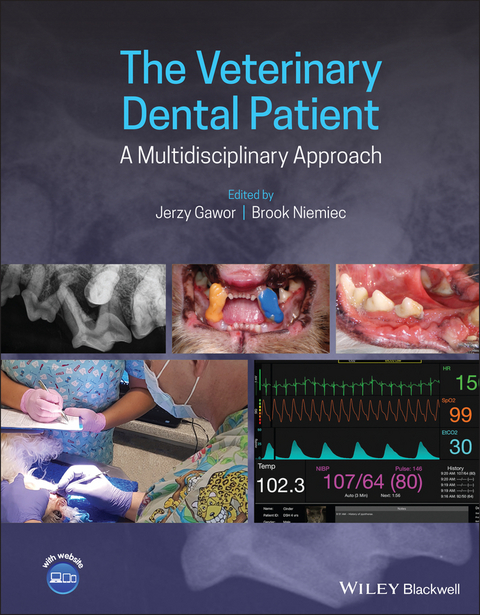
The Veterinary Dental Patient: A Multidisciplinary Approach (eBook)
John Wiley & Sons (Verlag)
978-1-118-97468-1 (ISBN)
Provides an interdisciplinary approach to the veterinary dental patient and offers guidance on all aspects of integrating dentistry into veterinary general practice
The Veterinary Dental Patient: A Multidisciplinary Approach helps veterinarians understand the dental aspects of every canine and feline patient and shows them how to effectively manage their oral health. It also provides guidance to the rest of the veterinary team so they can offer a coordinated approach when recommending and performing veterinary dentistry as a regular part of general practice.
Edited by two prominent veterinary dentists who are Board Certified in both Europe and the United States, the text includes the latest information on safe anesthetic and monitoring protocols, accurate diagnosis and management, and referring patients to specialists. Chapters cover: establishing a dental presence in general veterinary practice; nutrition, oral health, and feeding dental patients; local, regional, and systemic complications of dental diseases; pain management; ophthalmic considerations; common situations for malpractice and mistakes; oral and maxillofacial surgery; extraction techniques and equipment; drug dosages and more. The book also offers several helpful appendixes.
The Veterinary Dental Patient: A Multidisciplinary Approach is an essential book for all vets in general small animal practice as well as the wider veterinary team, including managers, veterinary nurses and technicians, and administrative staff.
About the Editors
Jerzy Gawor, DVM, PhD, DAVDC, DEVDC, FAVD, provides dental teaching services at the European School of Advanced Veterinary Studies in Europe and China. Dr Gawor acts as President of the European Veterinary Dental College and Dental Guidelines Committee of WSAVA. He is a Fellow of the Academy of Veterinary Dentistry, President Elect of the Federation of European Companion Animal Veterinary Associations (FECAVA), board member of the Polish Small Animal Veterinary Association, and former President of the European Veterinary Dental Society. He is the owner of a general referral practice and has achieved the status of specialist and recognized dentist in Poland.
Several hundred advanced dentistry procedures a year have resulted in a wealth of skill and practical knowledge. He has also published and presented over 120 publications in veterinary dentistry.
Brook Niemiec DVM, DAVDC, DEVDC, FAVD, is the Chief of Staff at Veterinary Dental Specialties & Oral Surgery, with 16 locations throughout the USA. In addition, he is Founding Consultant of www.vetdentalrad.com, Director of San Diego Veterinary Dental Training Center, and President of Practical Veterinary Publishing.
Provides an interdisciplinary approach to the veterinary dental patient and offers guidance on all aspects of integrating dentistry into veterinary general practice The Veterinary Dental Patient: A Multidisciplinary Approach helps veterinarians understand the dental aspects of every canine and feline patient and shows them how to effectively manage their oral health. It also provides guidance to the rest of the veterinary team so they can offer a coordinated approach when recommending and performing veterinary dentistry as a regular part of general practice. Edited by two prominent veterinary dentists who are Board Certified in both Europe and the United States, the text includes the latest information on safe anesthetic and monitoring protocols, accurate diagnosis and management, and referring patients to specialists. Chapters cover: establishing a dental presence in general veterinary practice; nutrition, oral health, and feeding dental patients; local, regional, and systemic complications of dental diseases; pain management; ophthalmic considerations; common situations for malpractice and mistakes; oral and maxillofacial surgery; extraction techniques and equipment; drug dosages and more. The book also offers several helpful appendixes. The Veterinary Dental Patient: A Multidisciplinary Approach is an essential book for all vets in general small animal practice as well as the wider veterinary team, including managers, veterinary nurses and technicians, and administrative staff.
About the Editors Jerzy Gawor, DVM, PhD, DAVDC, DEVDC, FAVD, provides dental teaching services at the European School of Advanced Veterinary Studies in Europe and China. Dr Gawor acts as President of the European Veterinary Dental College and Dental Guidelines Committee of WSAVA. He is a Fellow of the Academy of Veterinary Dentistry, President Elect of the Federation of European Companion Animal Veterinary Associations (FECAVA), board member of the Polish Small Animal Veterinary Association, and former President of the European Veterinary Dental Society. He is the owner of a general referral practice and has achieved the status of specialist and recognized dentist in Poland. Several hundred advanced dentistry procedures a year have resulted in a wealth of skill and practical knowledge. He has also published and presented over 120 publications in veterinary dentistry. Brook Niemiec DVM, DAVDC, DEVDC, FAVD, is the Chief of Staff at Veterinary Dental Specialties & Oral Surgery, with 16 locations throughout the USA. In addition, he is Founding Consultant of www.vetdentalrad.com, Director of San Diego Veterinary Dental Training Center, and President of Practical Veterinary Publishing.
List of Contributors vii
Preface ix
Acknowledgments xi
About the Companion Website xiii
Part I General Considerations: How to Start Dentistry 1
1 Establishing a Dental Presence within a General Veterinary Practice 3
Jerzy Gawor
2 Marketing and Communication in Veterinary Dentistry 27
Rachel Perry
3 Teaching Veterinary Dentistry 37
Zlatko Pavlica, Jerzy Gawor, and Lisa Mestrinho
4 Distribution of Tasks Around the Dental Patient in General Practice: Receptionists, Technicians, and Other Veterinary Team Members 45
Mary Berg
5 Prophylactic Program for Oral Health 59
Brook Niemiec
6 Nutrition, Oral Health, and Feeding Dental Patients 75
Michal Jank
7 Antimicrobials in Veterinary Dentistry 87
J. Scott Weese
8 Dental Patient Welfare 109
Kymberley C. McLeod
Part II The Dental Patient 119
9 Local, Regional, and Systemic Complications of Dental Diseases 121
Jerzy Gawor and Brook Niemiec
10 Hereditary Oral Disorders in Purebred Dogs and Cats 133
Jerzy Gawor
11 Pain Management in the Dental Patient 139
Paulo Steagall and Peter Pascoe
12 Anesthesia of the Dental Patient 169
Victoria M. Lukasik
13 The Dental Patient and Its General Conditions: Cardiac Disease, Diabetes Mellitus, Pregnancy, History of Seizures, and Brachycephalic Syndrome 189
Eva Eberspächer-Schweda
14 Ophthalmic Considerations in the Veterinary Dental Patient 201
Jamie J. Schorling
15 Oral Health in the Context of Other Planned Surgeries 211
Daniel Koch
16 Systemic Diseases Influencing Oral Health and Conditions 219
Jerzy Gawor
17 Common Situations of Malpractice and Mistakes, and How Best to Avoid Them 233
Jerzy Gawor and Brook Niemiec
18 Dentistry Through Life: Pediatric and Geriatric Dentistry 245
Jerzy Gawor and Brook Niemiec
Part III Dentistry in Daily Practice: What Every Veterinarian Should Know 259
19 Management of the Dental Patient 261
Jerzy Gawor and Brook Niemiec
20 Professional Dental Cleaning 269
Brook Niemiec
21 Oral and Maxillofacial Surgery: What's the Difference? 291
Jerzy Gawor
22 Extraction Techniques and Equipment 305
Brook Niemiec
23 Oral Emergencies 319
Jerzy Gawor
24 Feline Dentistry 339
Jerzy Gawor and Brook Niemiec
Part IV When to Call the Specialist 363
25 A Brief Introduction to Specific Oral and Dental Problems that Require Specialist Care 365
Jerzy Gawor
26 How to Cooperate with a Specialist 373
Brook Niemiec
Useful Algorithms for the Management of Oral Problems 377
Jerzy Gawor
Appendix A: Drugs and Doses 387
Margo Karriker
Appendix B: Instruments Handling and Sharpening 393
Jerzy Gawor
Appendix C: Abbreviations and Dental Charts 399
Jerzy Gawor
Appendix D: List of Hereditary Problems and Breed Predispositions in Dogs and Cats 409
Jerzy Gawor
Appendix E: Tolerance of Malocclusion and Dental Abnormalities in Dogs 419
Jerzy Gawor
Appendix F: Assisted Feeding in Dental Patients (website) 423
Michal Jank and Jerzy Gawor
Index 429
1
Establishing a Dental Presence within a General Veterinary Practice
Jerzy Gawor
Veterinary Clinic Arka, Kraków, Poland
1.1 Introduction
This chapter will cover the creation of a dental presence within a general practice. In addition, it will discuss how to create a business plan and how to design a consulting room and dental operatory. It will describe all the necessary equipment, instrumentation, and materials. Finally, it will cover the practical use of instruments.
1.2 General Considerations: How to Begin Offering Dentistry
There are many reasons why creating a dental presence within a general practice is a natural, necessary, and reasonable move in the development of a small‐animal veterinary business. Some are listed in this chapter, and they should provide more than enough motivation for the practice manager or owner to provide dental services. However, this book focuses on the dental patient, and the proposed solutions will thus emphasize the benefits to the patient, not the business. The author believes that it is very important to combine a focus on the patient with the commercial side of dentistry.
Studies have shown that most of our patients require immediate dental care. By the age of just two years, 80% of dogs and 70% of cats have some level of periodontal disease (Lund et al. 1999); more recent studies have reported the incidence at closer to 90% of all patients: (Fernandes et al. 2012; Stella et al. 2018). Some 10% of dogs presented to veterinary clinics have pulp exposure, while the prevalence of teeth resorption in cats is estimated at 28–62% (Reiter and Mendoza 2002). The oral cavity is the fourth most common place to find oral cancer. There are proven links between periodontal disease and pathologic findings in the liver, kidney, and myocardium (DeBowes 1998). Thus, with this obvious systemic impact of dental problems, we must not neglect dentistry in our general preventative care program for dogs and cats under our care.
Three major areas cover approximately 75% of dental procedures offered in small‐animal dentistry: diagnostics, prophylactic procedures, and extractions. These also make up a significant part of the day‐to‐day work of specialty clinics.
Having a dental presence within a general practice means having the ability and equipment to properly perform these three groups of procedures. Each area present challenging cases, and therefore it is necessary to have a good relationship with the relevant specialists. Currently, the internet provides a very fast and easy means of communication, in addition to professional portals offering specialty consultations based on submitted radiographs, videos, photographs, and other resources.
The vast majority of small‐animal patients require what is known by the general public as “dental” or “prophy.” The Veterinary Internet Network (VIN) refers to this instead as “comprehensive oral health assessment and treatment” (COHAT), which much better describes the essence of prophylactic procedure. According to American Veterinary Dental College (AVDC) nomenclature, the current preferred term is “professional dental cleaning”. This procedure will be detailed in Chapter 20.
It is possible to perform professional dental cleanings within a general practice with a dedicated and well‐equipped dental room along with a skilled veterinarian and personnel. Considering the number of dental cases which may or should be performed daily in our practices, a dental X‐ray, high‐speed dental unit, sonic or ultrasonic scaler, and polisher are at the top of the list of profitable equipment to obtain for a surgery, and the fastest to pay for themselves.
A clinic's investment plan and equipment selection should be the result of a thorough deliberation on what kind and range of dentistry it wants to offer. Most procedures belong to one of the three aforementioned groups, but the fundamental one is diagnostics. Without appropriate diagnostics, the number and degree of mistakes and the likelihood of malpractice become unacceptably large. Therefore, sufficient investment in diagnostic tools is very important. With improvement in skills and equipment, additional procedures can be performed; however, the majority of cases will still be part of the main three core ones.
The most critical diagnostic element of veterinary dentistry is radiography. One can obtain sufficiently good radiographs with conventional full‐body X‐Ray when exposing intraoral films or plates. For many indications in dental and maxillofacial conditions, such a device is likewise useful. For intraoral exposures, dental radiology is more convenient and appropriate. Ideally, practices should have both modalities: dental and conventional full‐body X‐ray machines. The next thing to consider in diagnostic radiography is the selection of a system that will both provide the radiation (generator) and create the image. Analog dental films, which require a darkroom and chemicals, are slowly leaving the market, and being replaced by digital systems. There are numerous products available, and it is not easy to decide between them based exclusively on manufacturer information and advertising.
A professional dental cleaning includes a thorough examination in both the conscious and the sedated patient, radiography (preferably intraoral), a dental exam including periodontal probing and dental charting, supragingival and subgingival deposit removal with the use of mechanical scalers and hand instruments, polishing, and gingival sulcus lavage. An important part of prophylaxis is the establishment of homecare, composed of both active and passive methods: toothbrushing, diet, supplements, dental chews, and toys. To properly perform dentistry in a clinic, it is necessary to carry out all these tasks at a standardized level.
The provision of dental services in private practice should include all necessary parts of the business plan. For most such plans, it is useful to follow the “SMART” acronym:
Specific: Specify what exactly is needed. Dentistry is a large subject, and for novices it can be quite confusing. Election of a range of dental procedures to implement at the outset is necessary to the design of a good plan. In addition to equipment investments, the education required to utilize them should also be considered.
Measurable: Plan expenses on an appropriate level. Consummate with the local market, select prices that will provide a relatively quick recoup of expenses without driving away clients. At the same time, the quality of purchased equipment must be high. Skimping on quality, warranty, or durability often works out to be more expensive in the long run.
Achievable: There are no limits to possible expenses, so it is important at the outset to establish the minimum amount of money that it will be necessary to invest according to local prices and stock.
Realistic: Buy what is necessary according to the skills available at the practice, its specific features, human resources, and the practice's general business plan.
Time‐bound: Be realistic. Plan timing and deadlines, then make them real. Use promotion. If possible, plan future development and evaluate its results.
1.3 Education
The educational opportunities listed in this section may not be available in every country, but e‐learning is becoming ever easier to access, and its quality is steadily increasing. Teaching dentistry is the subject of Chapter 3, so here we will only emphasize the critical need for education prior to establishing a dental presence and the importance of continuous further development.
Dental Program During Veterinary School: See Chapter 3
Self‐Education: This can include books, articles, journals, training, and cooperation with a referral vet. Despite there being just one journal dedicated to veterinary dentistry – the Journal of Veterinary Dentistry (https://journals.sagepub.com/home/jov)– dental articles can be found frequently in Journal of American Veterinary Medical Association (JAVMA), Journal of Small Animal Practitioner (JSAP), European Journal of Companion Animal Practitioners (EJCAP), Journal of Feline Medicine and Surgery (JFMS), Frontiers in Veterinary Science and its section: Veterinary Dentistryand Oromaxillofacial Surgery and other publications. Textbooks are available both from traditional publishers and from smaller, independent ones, or in e‐formats like those offered by the International Veterinary Information Service (IVIS). Finally, the Dental Guidelines of the World Small Animal Veterinary Association (WSAVA) offer a comprehensive overview of the veterinary dentistry field.
Associations: The European Veterinary Dental Society (https://www.evds.org), Foundation for Veterinary Dentistry (https://veterinarydentistry.org), and British Veterinary Dental Association (https://www.bvda.co.uk) offer many educational opportunities via their websites, publications, and conferences.
Continuing Education: Courses organized and tutored by specialists are often available. The really good ones combine a practical component with theoretical prerequisites. Additionally, dentistry streams are offered by the WSAVA and...
| Erscheint lt. Verlag | 9.7.2021 |
|---|---|
| Sprache | englisch |
| Themenwelt | Veterinärmedizin |
| Schlagworte | administrative staff • Anaesthesia • anesthesia • Animal dentistry • animal medicine • animal surgery • canine • dental diseases • Diagnosis • drug dosage • extraction techniques • feeding dental patients • feline • Management • maxillofacial surgery • Nutrition • Ophthalmology • Oral health • Oral surgery • pain management • practice manager • protocols • small animal • small animal dentistry • small animal medicine • Tierzahnheilkunde • Tooth extraction • VET • Veterinärmedizin • Veterinärmedizin f. Kleintiere • Veterinärmedizin / Zahnheilkunde • veterinary dental patient • veterinary dental specialty • Veterinary Dentistry • Veterinary Medicine • Veterinary Medicine - Small Animal General • vet nurse • vet technician |
| ISBN-10 | 1-118-97468-9 / 1118974689 |
| ISBN-13 | 978-1-118-97468-1 / 9781118974681 |
| Informationen gemäß Produktsicherheitsverordnung (GPSR) | |
| Haben Sie eine Frage zum Produkt? |
 EPUB (Adobe DRM)
Kopierschutz: Adobe-DRM
Adobe-DRM ist ein Kopierschutz, der das eBook vor Mißbrauch schützen soll. Dabei wird das eBook bereits beim Download auf Ihre persönliche Adobe-ID autorisiert. Lesen können Sie das eBook dann nur auf den Geräten, welche ebenfalls auf Ihre Adobe-ID registriert sind.
Details zum Adobe-DRM
Dateiformat: EPUB (Electronic Publication)
EPUB ist ein offener Standard für eBooks und eignet sich besonders zur Darstellung von Belletristik und Sachbüchern. Der Fließtext wird dynamisch an die Display- und Schriftgröße angepasst. Auch für mobile Lesegeräte ist EPUB daher gut geeignet.
Systemvoraussetzungen:
PC/Mac: Mit einem PC oder Mac können Sie dieses eBook lesen. Sie benötigen eine
eReader: Dieses eBook kann mit (fast) allen eBook-Readern gelesen werden. Mit dem amazon-Kindle ist es aber nicht kompatibel.
Smartphone/Tablet: Egal ob Apple oder Android, dieses eBook können Sie lesen. Sie benötigen eine
Geräteliste und zusätzliche Hinweise
Buying eBooks from abroad
For tax law reasons we can sell eBooks just within Germany and Switzerland. Regrettably we cannot fulfill eBook-orders from other countries.
aus dem Bereich