Backyard Poultry Medicine and Surgery (eBook)
John Wiley & Sons (Verlag)
978-1-119-51176-2 (ISBN)
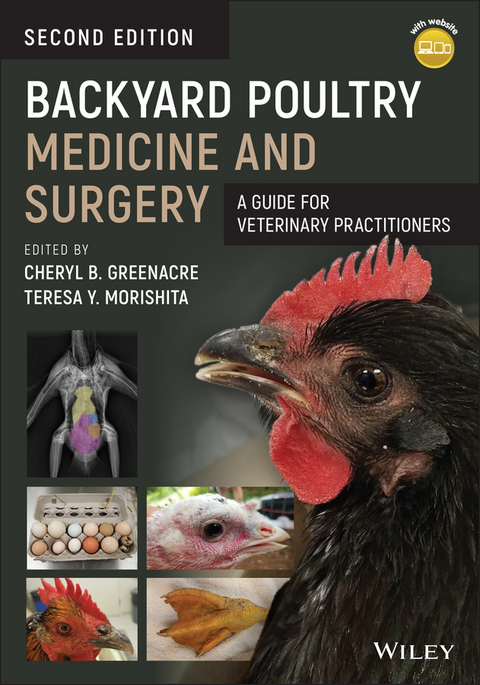
Backyard Poultry Medicine and Surgery, Second Edition is a thorough revision and expansion of the first book to provide practical information for veterinarians treating individual or small flocks of poultry. With seven new chapters covering toxicology, euthanasia, gross pathology, behavior, game bird medicine, vaccinations, and drugs, and many existing chapters significantly expanded, the book offers a complete guide to all aspects of husbandry, medicine, and surgery for backyard poultry. Organized by organ system for ease of use, the book is designed to support veterinarians in diagnosing and treating backyard chickens, whether they see an occasional bird or regularly treat poultry.
More than 400 color photographs aid in breed identification and diagnosis, and the clinical focus enables veterinarians to confidently and knowledgably develop a diagnostic and treatment plan. Chapters are written by leading experts in avian medicine and surgery. Backyard Poultry Medicine and Surgery is a must-have reference for any veterinarian called on to care for backyard flocks, whether they see an occasional chicken or treat poultry regularly.
- Offers a comprehensive guide to diagnosing and treating backyard poultry
- Presents practical information on husbandry, medicine, and surgery
- Written from an individual medicine perspective to aid practitioners in developing a diagnostic and treatment plan for the individual or small flock of poultry
- Expands significantly on the first edition, with many expanded chapters and seven brand-new chapters
- Includes new chapters covering toxicology, euthanasia, gross pathology, behavior, game bird medicine, vaccinations, and drugs
- Provides more color photographs to aid in breed and disease identification
BACKYARD POULTRY MEDICINE AND SURGERY An expanded edition that explains the diagnosis and treatment of backyard poultryYou can look to Backyard Poultry Medicine and Surgery, Second Edition for practical veterinary information on the treatment of poultry. You ll find six new chapters covering radiology, toxicology, euthanasia, gross pathology, behavior, and emergency medicine. The book is written by some of the most respected specialists in a broad range of fields.With many original chapters also significantly expanded, the book provides a complete guide to all aspects of husbandry, medicine, and surgery for poultry. Diseases are organized by body systems to aid in developing a diagnosis. This book supports your work as a practitioner, whether you treat birds occasionally or regularly.Review information on the topics of husbandry, medicine, and surgeryGain guidance on developing a diagnostic or treatment plan for the individual or small flock of poultryChoose appropriate doses of labeled and extra-label drugsFind new chapters on emergency medicine, toxicology, euthanasia, gross pathology, normal and abnormal radiographic findings, and other key topicsUse color photographs to aid in breed identification and poultry disease diagnosesView photographs, videos, and linked references and websites on an accompanying websiteThis is an essential and comprehensive guide providing enhanced and updated information to support all types of practitioners from the dedicated avian veterinarian to those who rarely treat these species.
The editors CHERYL B. GREENACRE, DVM, DABVP (Avian), DABVP (ECM), is Professor and Section Head of Avian and Zoological Medicine at the University of Tennessee's College of Veterinary Medicine in Knoxville, Tennessee, USA. TERESA Y. MORISHITA, DVM, MPVM, PhD, DACPV, is Professor of Poultry Medicine & Food Safety at Western University of Health Sciences, College of Veterinary Medicine in Pomona, California, USA.
Contributors, ix
Foreword, xi
Preface, xiii
Acknowledgments, xv
Companion website, xvii
Section 1: General Care
Chapter 1 - Laws and Regulations Governing Backyard Poultry in the US
Bruce Nixon
Chapter 2 - Common Breeds of Backyard Poultry
Lillian Gerhardt and Cheryl Greenacre
Chapter 3 - Chicken and Turkey Husbandry and Management
Darrin Karcher
Chapter 4 - Anseriforme Husbandry and Management
Scott Echols
Chapter 5 - Biosecurity
Teresa Morishita and Theodore Derksen
Chapter 6 - Backyard Poultry Nutrition
Todd Applegate and Justin Fowler
Section 2: Initial Examinations
Chapter 7 - Anatomy, and Physiology
Josep Rutllant-Labeaga and Wael Khamas
Chapter 8 - Physical Examination
Cheryl Greenacre
Chapter 9 - Radiographic Evaluation of Normal and Common Diseases
John Mattoon, Marcie Logsdon, and Ashley Hanna
Section 3: Diseases
Chapter 10 - Zoonotic Diseases
Marcy Souza
Chapter 11 - Parasitic Diseases
Richard Gerhold
Chapter 12 - Respiratory Diseases
Richard Fulton
Chapter 13 - Avian Influenza and Viscerotropic Velogenic (Exotic) Newcastle Disease
Richard Fulton
Chapter 14 - Musculoskeletal Diseases
Cheryl Greenacre
Chapter 15 - Dermatological Diseases
Angela Lennox and Cheryl Greenacre
Chapter 16 - Reproductive Diseases
Eric Gingerich and Daniel Shaw
Chapter 17 - Gastrointestinal and Hepatic Diseases
Teresa Morishita and Robert Porter
Chapter 18 - Cardiovascular Diseases
Hugues Beaufrere and Marina Brash
Section 4: Specialized Care and Surgery
Chapter 19 - Emergency Medicine and Critical Care
Jennifer Graham and Elizabeth Rozanski
Chapter 20 - Common Toxicoses
Marieke Rosenbaum and Cheryl Greenacre
Chapter 21 - Soft Tissue Surgery
Scott Echols
Chapter 22 - Behavior
Christine Calder and Julie Albright
Section 5: Diagnosis of Disease
Chapter 23 - Euthanasia of Companion Poultry
Cheryl Greenacre
Chapter 24 - Egg Diagnostics
Teresa Morishita, Josep Rutllant-Labeaga, Darrin Karcher
Chapter 25 - How to Perform a Necropsy
Jarra Jagne and Elizabeth Buckles
Chapter 26 - Diagnostic Laboratory Sampling
Rocio Crespo and H.L. Shivaprasad
Chapter 27 - Interpretation of Laboratory Results and Values
Rocio Crespo and H.L. Shivaprasad
Section 6: Treatment and Prevention of Disease
Chapter 28 - Regulatory Considerations for Medication Use in Poultry
Lisa Tell and Krysta Martin
Chapter 29 - Commonly Used Medications
Cheryl Greenacre
Chapter 30 - Vaccination of Poultry
Robert Porter
Index
"As welcomed, much needed, and excellent as the 1st edition was, the second truly improves on a good thing. This new edition has been expanded to almost twice the size of the original textbook with careful reorganization, outstanding additions, and further development of a well-planned resource text....The most significant change is the addition of six brilliant new chapters on the topics of radiology, toxicology, necropsy procedures, emergency and critical care, behavior, and euthanasia. These well-written and thorough chapters fill in any gaps the 1st edition missed and provide practitioners with information in areas beyond basic clinical medicine." -Journal of Exotic Pet Medicine 40 (2022) 80
1
Laws and Regulations Governing Backyard Poultry in the United States
J. Bruce Nixon
Texas Avian & Exotic Hospital, Grapevine, TX, USA
Introduction
When a veterinarian is presented with the task of caring for a client's backyard flock, many daunting obstacles will eventually become evident, including questions of legal and regulatory requirements and obligations. While the appropriateness of whether to extend your professional services to these clients is a personal choice, legal requirements of the veterinarian and your client are mandatory. Violations of law may have criminal consequences, and regulatory violations may carry punishments of fines and/or reprimands. It is even possible for a client to have their backyard flock depopulated and/or quarantined against their will. As in almost every area of modern veterinary practice, civil liability is always a threat.
For the veterinarian, there is no substantial legal requirement specific to practicing on poultry other than state licensure. Providing standard of care to backyard poultry is the primary issue of concern, and this determination falls squarely within each state's veterinary licensing body. While backyard flocks are gaining in popularity with a concurrent rise in the number of veterinarians seeing such patients, these relationships are still relatively rare within a given practice area, even in major metropolitan cities. If a standard of care complaint is lodged with a state licensing board, its members must decide whose standards you will be held against. For instance, if a small flock under your care succumbs to Marek disease, any commercial poultry veterinarian would consider it standard practice to have had a vaccination protocol in place. While it would seem unreasonable to hold a veterinarian who occasionally practices on small flocks to such a standard, it is not an impossible scenario. Even if the licensing authority dismisses such a complaint, a client is still free to sue for civil damages. This sort of risk is ever present in modern society, however, and hopefully will not dissuade those inclined to enter this new and growing area of veterinary medicine.
It might also be helpful for the veterinarian to know exactly who would be defined as a specialist, or expert, in poultry, backyard or otherwise. Unquestionably, boarded members of the American College of Poultry Veterinarians are considered veterinary poultry specialists, and most members spend their careers managing poultry. They work in academia, government, industry, and the private sector. Most of these veterinarians are also members of the American Association of Avian Pathologists. Because most of these veterinarians are working with large, commercial flocks, they may not be readily accessible to most backyard poultry enthusiasts. Many veterinarians working with the occasional backyard chicken may not even be aware of their existence. It is obvious that their assistance, when sought, can be invaluable.
The American Board of Veterinary Practitioners (ABVP) also board certifies specialists in the field of avian medicine and surgery. These veterinarians are bona fide experts for all avian species, including chickens. Veterinarians who are ABVP (avian) boarded specialists are largely found in private practices devoted to companion animal care, although they are certainly also found in academia, government, and industry.
The largest veterinary avian community (by membership) is the Association of Avian Veterinarians (AAV). Its membership is primarily composed of veterinarians working with companion birds but is by no means confined to it. In fact, there is no avian family that is excluded by AAV. Historically, psittacine birds have comprised a very large percentage of the species seen by AAV members, but members have always worked with passerines (finches, canaries), ratites (ostriches), Columbiformes (pigeons), and others. Backyard chicken care is a rapidly growing topic within the AAV.
The more common legal issues for the practitioner involves our role as an advisor to our clients, informing them of their own legal responsibilities. Many clients will enthusiastically and quickly form their own backyard flock and invest a substantial amount of time and financial resources into their new hobby without a moment's thought that they may have already grossly violated the law. To the best of our ability, it is our professional duty to at least provide them with some guidance on applicable laws, much as we inform clients of leash laws and local ordinances that may forbid certain types of pets.
Homeowners and Neighborhood Associations
Covenants, conditions, and restrictions (CC&Rs) are limitations and rules placed on a group of homes by a builder, developer, neighborhood association, or homeowners association (HOA). Most established neighborhoods and subdivisions and practically all townhomes and condominiums have CC&Rs. This is the first place for a prospective backyard poultry client to look for obstacles. When clients purchase a home in a covenant‐protected community, they enter into a contract with the HOA or neighborhood association. The owner agrees to be bound by the restrictions contained in the community's governing documents, which include the declaration of CC&Rs that are recorded with the clerk's office of the county in which that community is located. Those restrictions are legally binding on all property owners in the community.
Even when a town, city, or county adopts an ordinance allowing backyard flocks, such permissiveness does NOT negate the contractual agreement between the owner and the association. So even if your client lives in a city that expressly allows (even encourages!) small backyard flocks, a prohibiting clause within the client's CC&Rs will take precedence and the client will not be able to proceed with establishing their flock. The more restrictive rule applies, and HOAs can and do exist in rural settings, even within land zoned for agricultural use. Also, if the homeowner is seeking to build a coop, they must first comply with requirements for preapproval of construction of enclosures with the HOA before obtaining any necessary building permits from the city or county.
Some HOAs are extremely active, whereas others seem to be almost nonexistent in reality. These neighborhood associations usually have no real policing powers but can appeal to civil courts to force compliance on an uncooperative member. Monetary penalties can show up as a lien when a property is sold. On the other hand, HOA rules can be the easiest and least complicated to amend or create. A simple appeal directly to the HOA board or a letter of support from the neighbors bordering a potential small coop is often all that is needed to gain permission. Another common tactic is for homeowners to get themselves elected to the HOA board, which can be surprisingly easy to accomplish. Once elected, it is a simple matter to add poultry issues to the agenda and only a majority of the existing board members need be convinced of the need for a rule change.
Renters should also note that although their lease may not specifically prohibit chickens, the owner of the property is bound by any such agreement and subsequently anyone occupying the property is bound by the same. Even a willing and accepting landlord may not be aware of such restrictions and a renter should ask for a copy of HOA rules rather than risk the demolition of a newly constructed coop and re‐homing of just‐bought chicks.
Are Backyard Chickens Pets or Farm Animals?
Because many municipal officials and members of HOA's lack agricultural knowledge, they lack a basis for understanding whether chickens can peacefully coexist with their constituents in a cosmopolitan area [1]. Few things excite people as greatly as the goings‐on in their neighborhood. It is often the case that the set of rules that apply to backyard chickens is determined by whether chickens are defined as pets or livestock, as some may believe that chicken raising and other agricultural practices involving animals simply have no place in the modern city. Some cities define chickens as domestic animals or pets and thus subject them to the same enclosure and nuisance regulations as other domestic animals like cats and dogs [2]. Other cities specifically define poultry as farm animals [3], and hence they are subject to the same laws and regulations that apply to cattle and swine. Some owners may be shocked to find that their hometown outlaws chickens as dangerous animals, placing them in the same category as lions, tigers, bears, and sharks [4]. A novel way to address the issue is to treat chickens as a separate category of animal, giving homeowners, city inspectors, and animal control officers clear guidelines on how to approach and handle personal flocks [5]. In at least one instance, a city allowed a homeowner to keep her chickens because the owner herself considered them to be pets and the chickens did not create a nuisance [6].
Once the HOA/neighborhood association hurdle is cleared, the next step is to review city codes and ordinances. Internet access to city records is now almost universal even in small towns, and although this has simplified access, it can be bewildering to find the appropriate and applicable ordinances. Interestingly, most large American cities have at least some provision that allows for backyard poultry, and smaller...
| Erscheint lt. Verlag | 30.4.2021 |
|---|---|
| Sprache | englisch |
| Themenwelt | Veterinärmedizin |
| Schlagworte | Nutztiere • Veterinärmedizin • Veterinärmedizin f. Nutztiere • Veterinärmedizin / Vögel • Veterinary Medicine • Veterinary Medicine - Birds • Veterinary Medicine - Farm Animals |
| ISBN-10 | 1-119-51176-3 / 1119511763 |
| ISBN-13 | 978-1-119-51176-2 / 9781119511762 |
| Informationen gemäß Produktsicherheitsverordnung (GPSR) | |
| Haben Sie eine Frage zum Produkt? |
 EPUB (Adobe DRM)
Kopierschutz: Adobe-DRM
Adobe-DRM ist ein Kopierschutz, der das eBook vor Mißbrauch schützen soll. Dabei wird das eBook bereits beim Download auf Ihre persönliche Adobe-ID autorisiert. Lesen können Sie das eBook dann nur auf den Geräten, welche ebenfalls auf Ihre Adobe-ID registriert sind.
Details zum Adobe-DRM
Dateiformat: EPUB (Electronic Publication)
EPUB ist ein offener Standard für eBooks und eignet sich besonders zur Darstellung von Belletristik und Sachbüchern. Der Fließtext wird dynamisch an die Display- und Schriftgröße angepasst. Auch für mobile Lesegeräte ist EPUB daher gut geeignet.
Systemvoraussetzungen:
PC/Mac: Mit einem PC oder Mac können Sie dieses eBook lesen. Sie benötigen eine
eReader: Dieses eBook kann mit (fast) allen eBook-Readern gelesen werden. Mit dem amazon-Kindle ist es aber nicht kompatibel.
Smartphone/Tablet: Egal ob Apple oder Android, dieses eBook können Sie lesen. Sie benötigen eine
Geräteliste und zusätzliche Hinweise
Buying eBooks from abroad
For tax law reasons we can sell eBooks just within Germany and Switzerland. Regrettably we cannot fulfill eBook-orders from other countries.
aus dem Bereich