Veterinary Anaesthesia (eBook)
John Wiley & Sons (Verlag)
978-1-119-24678-7 (ISBN)
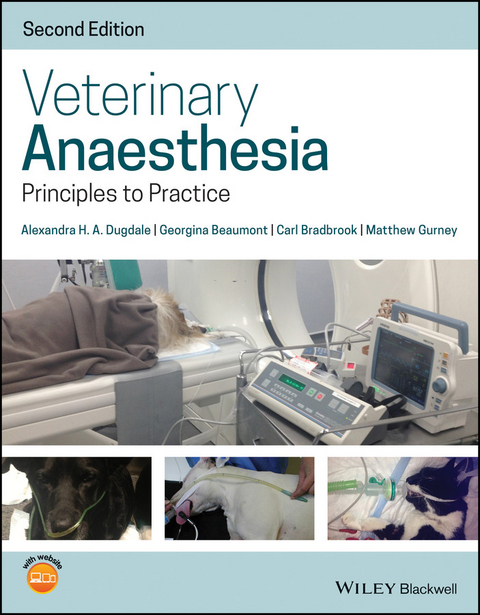
Thorough revision of a comprehensive and highly readable textbook on veterinary anaesthesia
A popular book amongst veterinary students and veterinary anaesthesia residents, the new edition of Veterinary Anaesthesia: Principles to Practice continues to be a comprehensive textbook covering the key principles of veterinary anaesthesia, encompassing a wide range of species.
Fully revised, the information is summarised in a simple, accessible format to help readers navigate and locate relevant information quickly. Filled with technical and species-based chapters, it offers a quick reference guide to analgesic infusions, as well as emergency drug dose charts for canines, felines, and equines.
- Provides broad coverage of the basics of veterinary anaesthesia and how it is implemented in clinical practice
- Includes new information on mechanisms of general anaesthesia
- Features new and improved photographs and line illustrations, plus end of chapter questions to test your knowledge
- Covers veterinary anaesthesia for a wide range of species, including dogs, cats, horses, rabbits, donkeys, and pigs
- Expands example case material to increase relevance to day-to-day clinical practice
Updated to contain the latest developments in the field, Veterinary Anaesthesia: Principles to Practice is designed specifically for veterinary students and those preparing to take advanced qualifications in veterinary anaesthesia. It is also a useful reference for veterinarians in practice and advanced veterinary nurses and technicians.
Alex Dugdale, MA, VetMB, PhD, DVA, Dip.ECVAA, PGCert (LTHE), FHEA, MRCVS, joined ChesterGates Veterinary Specialists CVS (UK) Ltd. as a Clinical Anaesthetist in 2016, after 17 years' teaching veterinary anaesthesia at the University of Liverpool's Veterinary School, UK. She is an RCVS Recognised Specialist in Veterinary Anaesthesia and an EBVS® European Specialist in Veterinary Anaesthesia and Analgesia.
Georgina Beaumont, BVSc (Hons), MANZCVSc (VA&CC), Dip.ECVAA, MRCVS, joined Manchester Veterinary Specialists CVS (UK) Ltd. in 2017 as a Clinical Anaesthetist. She is an RCVS Recognised Specialist in Veterinary Anaesthesia and an EBVS® European Specialist in Veterinary Anaesthesia and Analgesia.
Carl Bradbrook, BVSc, CertVA, Dip.ECVAA, MRCVS, joined Anderson Moores Veterinary Specialists in 2018. He is an RCVS Recognised Specialist in Veterinary Anaesthesia and an EBVS® European Specialist in Veterinary Anaesthesia and Analgesia.
Matthew Gurney, BVSc, CertVA, Dip.ECVAA, MRCVS, joined Northwest Surgeons in early 2009, and moved to Anderson Moores Veterinary Specialists in 2018. He is an RCVS Recognised Specialist in Veterinary Anaesthesia and an EBVS® European Specialist in Veterinary Anaesthesia and Analgesia.
Alex Dugdale, MA, VetMB, PhD, DVA, Dip.ECVAA, PGCert (LTHE), FHEA, MRCVS, joined ChesterGates Veterinary Specialists CVS (UK) Ltd. as a Clinical Anaesthetist in 2016, after 17 years' teaching veterinary anaesthesia at the University of Liverpool's Veterinary School, UK. She is an RCVS Recognised Specialist in Veterinary Anaesthesia and an EBVS® European Specialist in Veterinary Anaesthesia and Analgesia. Georgina Beaumont, BVSc (Hons), MANZCVSc (VA&CC), Dip.ECVAA, MRCVS, joined Manchester Veterinary Specialists CVS (UK) Ltd. in 2017 as a Clinical Anaesthetist. She is an RCVS Recognised Specialist in Veterinary Anaesthesia and an EBVS® European Specialist in Veterinary Anaesthesia and Analgesia. Carl Bradbrook, BVSc, CertVA, Dip.ECVAA, MRCVS, joined Anderson Moores Veterinary Specialists in 2018. He is an RCVS Recognised Specialist in Veterinary Anaesthesia and an EBVS® European Specialist in Veterinary Anaesthesia and Analgesia. Matthew Gurney, BVSc, CertVA, Dip.ECVAA, MRCVS, joined Northwest Surgeons in early 2009, and moved to Anderson Moores Veterinary Specialists in 2018. He is an RCVS Recognised Specialist in Veterinary Anaesthesia and an EBVS® European Specialist in Veterinary Anaesthesia and Analgesia.
Preface ix
Acknowledgements xi
About the Companion Website xiii
1 Concepts and Mechanisms of General Anaesthesia 1
2 Patient Safety 7
3 Pain 19
4 Sedation and Premedication: Small Animals 55
5 Injectable Anaesthetic Agents 77
6 Analgesic Infusions 95
7 Intravascular Catheters/Cannulae: Some Considerations and Complications 99
8 Inhalation Anaesthetic Agents 117
9 Anaesthetic Breathing Systems and Airway Devices 139
10 Anaesthetic Machines, Vaporisers, and Gas Cylinders 167
11 Anaesthetic Machine Checks 187
12 Local Anaesthetics 191
13 Local Anaesthetic Techniques for the Head: Small Animals 205
14 Local Anaesthetic Techniques for the Limbs: Small Animals 215
15 Miscellaneous Local Anaesthetic Techniques: Small Animals 237
16 Local Anaesthetic Techniques: Horses 243
17 Muscle Relaxants 259
18 Monitoring Animals during General Anaesthesia 279
19 Troubleshooting Some of the Problems Encountered in Anaesthetised Patients 307
20 Inadvertent Peri-operative Hypothermia 313
21 Blood Gas Analysis 321
22 Lactate 337
23 Fluid Therapy 347
24 Electrolytes 377
25 Drugs Affecting the Cardiovascular System 393
26 Shock, SIRS, MODS/MOF, Sepsis 401
27 Gastric Dilation/Volvulus (GDV) 423
28 Equine Sedation and Premedication 427
29 Equine Heart Murmurs 443
30 Equine Anaesthesia 445
31 Equine Intravenous Anaesthesia in the Field and Standing Chemical Restraint 477
32 Donkeys 481
33 Ruminants: Local and General Anaesthesia 485
34 Lamoids (South American Camelids) 519
35 Pigs: Sedation and Anaesthesia 529
36 Rabbit Anaesthesia 541
37 Neonates/Paediatrics 547
38 Senescent/Geriatric Patients 551
39 Pregnancy and Caesarean Sections 555
40 Obesity 561
41 Dental and Oral Considerations 567
42 Ocular Surgery Considerations 571
43 Orthopaedic and Neurosurgery Considerations 575
44 Renal Considerations 579
45 Hepatic Considerations 583
46 Endocrine Considerations 587
47 Background to Neuroanaesthesia for the Brain 595
48 Cardiac Considerations 603
49 Respiratory Considerations 607
50 Respiratory Emergencies 611
51 Cardiopulmonary Cerebral Resuscitation (CPCR) 627
Appendix A Canine Emergency Drug Doses 637
Appendix B Feline Emergency Drug Doses 639
Appendix C Equine Emergency Drug Doses 641
Answers to Self-test Questions 643
Index 651
1
Concepts and Mechanisms of General Anaesthesia
LEARNING OBJECTIVES
- To be able to define general anaesthesia.
- To be able to discuss general anaesthesia in terms of its component parts, i.e. the triad of general anaesthesia.
- To be able to define balanced anaesthesia.
1.1 Definitions
Anaesthesia literally means ‘lack of sensation/feeling’ (from an meaning ‘without’ and aesthesia pertaining to ‘feeling’). Therefore, general anaesthesia means global/total lack of sensations, whereas local anaesthesia relates to lack of sensation in a localised part of the body.
General anaesthesia can be defined as a state of unconsciousness produced by a process of controlled, reversible, intoxication of the central nervous system (CNS), whereby the patient neither perceives nor recalls noxious (or other) stimuli.
General anaesthesia is, however, often referred to as the state of the patient when the three criteria in the triad of general anaesthesia have been met.
1.1.1 The Triad of General Anaesthesia
- Unconsciousness: no perception or memory (therefore including amnesia), of any sensory, or indeed motor, event.
- Analgesia (or, more correctly in an unconscious patient, antinociception): can also be thought of as suppressed responses/reflexes to nociceptive sensory inputs.
- Suppressed reflexes: autonomic (e.g. haemodynamic, respiratory and thermoregulatory) and somatic (e.g. proprioceptive reflexes such as the righting reflex).
- Suppression of somatic reflexes can be useful, e.g. it can provide a degree of muscular weakness/relaxation.
- Suppression of autonomic reflexes can be a nuisance (see Chapter 18 on Monitoring), but autonomic stability can be a desirable component of anaesthesia and is often listed as a fourth component.
All these components could potentially be achieved in a patient following administration of a single ‘anaesthetic’ drug but, e.g. if that drug did not have very good analgesic properties, then large doses would be required to produce sufficiently ‘deep’ unconsciousness to reduce the response to noxious stimuli. Such deep anaesthesia is often associated with extreme depression of the CNS and homeostatic reflexes (Table 1.1).
An alternative approach, therefore, would be to produce each component (of the ‘triad’) separately by administering several drugs, each of which targets one component more specifically. This latter approach is theoretically advantageous because, by ‘titrating to specific effect’, relatively smaller doses of each individual drug tend to be sufficient, thereby minimising both each individual drug's, and the overall, side effects. This ‘polypharmacy’ approach is often referred to as balanced anaesthesia.
1.1.2 Balanced Anaesthesia
The administration of a number of different drugs, each with different actions, given during the immediate peri‐operative period, to produce an overall state of general anaesthesia, which fulfils the criteria of unconsciousness, analgesia, and muscle relaxation.
Table 1.1 Summary of effects of general anaesthesia.
Central Nervous System Depression
Cardiovascular System Depression (→ Hypotension)
|
1.1.2.1 Components of the Peri‐operative Period
- Pre‐operative assessment: patient stabilisation; provision of (pre‐emptive) analgesia.
- Premedication: anxiolysis/sedation and initiation/continuation of analgesia provision if not already provided.
- Induction of anaesthesia.
- Maintenance of anaesthesia; provision of muscle relaxation; continuation of analgesia/antinociception provision.
- Recovery from anaesthesia (sometimes referred to as ‘reanimation’): aftercare; continuation of (‘preventive’) analgesia provision.
1.2 The Depth of General Anaesthesia
Some texts refer to various stages and planes of anaesthesia that try to mark the progression of the continuum between consciousness and death. When ether was used as the sole anaesthetic agent, five ‘degrees’ of progression through ever ‘deeper’ stages of anaesthesia in people, from consciousness to deep coma, were described by John Snow; Overton did similar for chloroform. Guedel developed Snow's ideas further and, in 1937, produced a chart outlining the patient's responses at each of four successive stages of diethyl ether anaesthesia. This was developed still further by Artusio in 1954, who divided Guedel's stage 1 into three planes.
Table 1.2, included purely for historical interest, describes the features of diethyl ether anaesthesia in the dog, after Guedel. The features of these stages and planes, however, do not necessarily apply similarly to other inhalant agents, and apply even less to injectable agents, to say nothing of the combination of inhalational and injectable agents that can be administered when balanced anaesthesia is practised. Furthermore, the chart is not necessarily transferrable to other species.
So, when we do not want to use ether, when we need to consider species other than dogs, when we prefer to practise ‘polypharmacy’ to achieve the desired state/depth of general anaesthesia, and when we add surgical stimulation to the anaesthetised patient (because depth of anaesthesia is not only related to the ‘dose’ of drug/s administered, but is also dependent upon the degree of stimulation [usually surgery] at the time), we should still monitor the patient's physiological responses to, and status during, anaesthesia, which are considered in more detail in Chapter 18.
Although Table 1.2 is included purely for interest, it is important to note that during induction of anaesthesia, stage II (involuntary excitement/movement) may be witnessed; and during recovery from anaesthesia, all the stages are traversed in the reverse order, such that emergence excitement/delirium (stage II) may be observed.
1.3 Mechanisms of Action of General Anaesthetic Drugs
Compounds that exert general anaesthetic effects exhibit a wide diversity of chemical structure and can be administered by injection (usually intravenously), or by inhalation. Although a unifying target for their action has been sought, the diversity in their structure makes a single target site unlikely.
Nevertheless, Meyer (1899) and Overton (1901), independently, reported that anaesthetic potency was strongly correlated with lipid solubility which sparked interest in lipid membranes as the site of action. It was variously hypothesised that anaesthetic agents may exert a non‐selective physical perturbation of a lipid site within the membrane or possibly perturb the volume or fluidity of the membrane itself. That physical dissolution of lipid‐soluble agents within plasma membranes caused their expansion, sparked the ‘critical volume’ and ‘membrane expansion’ hypotheses, with some demonstration of pressure‐reversal. The lipid theory, however, had several problems, including the fact that some isomers with identical lipid solubilities had different anaesthetic potencies, not all anaesthetic effects were reversible with applied pressure, and small temperature changes could also change membrane volume but without anaesthetic effects.
Table 1.2 Stages of ether anaesthesia in the dog, after Guedel.
| Stage of anaesthesia | Depression of CNS | MM colour | Pupil size | Eyeball activity | Breathing |
| Stage I: stage of voluntary movement/excitement | ?Sensory cortex | N / flushed | Small | Voluntary | Rapid/irregular |
| Stage II: stage of involuntary movement/excitement ‘delirium’ | Motor cortex Decerebrate rigidity... |
| Erscheint lt. Verlag | 26.5.2020 |
|---|---|
| Sprache | englisch |
| Themenwelt | Veterinärmedizin |
| Schlagworte | Anaesthesiology • anaesthetic • anaesthetic machines • analgesia infusions • Anesthesiology • anesthetic • anesthetic machines • animal anaesthesia • Animal anesthesia • animal medicine • cannulae • General anaesthesia • horse local block • inhalation agents • injectable agents • injured animal • local anaesthetic • managed sedation • miscell block • muscle relaxant • pain management • pain relief • patient safety • Sedation • small animal head block • small animal leg block • Veterinäranästhesie, Analgesie, Schmerzbehandlung • Veterinärmedizin • veterinary anaesthesiology • veterinary analgesia • Veterinary Anesthesia, Analgesia & Pain Medicine • Veterinary Medicine • veterinary surgery |
| ISBN-10 | 1-119-24678-4 / 1119246784 |
| ISBN-13 | 978-1-119-24678-7 / 9781119246787 |
| Informationen gemäß Produktsicherheitsverordnung (GPSR) | |
| Haben Sie eine Frage zum Produkt? |
 EPUB (Adobe DRM)
Kopierschutz: Adobe-DRM
Adobe-DRM ist ein Kopierschutz, der das eBook vor Mißbrauch schützen soll. Dabei wird das eBook bereits beim Download auf Ihre persönliche Adobe-ID autorisiert. Lesen können Sie das eBook dann nur auf den Geräten, welche ebenfalls auf Ihre Adobe-ID registriert sind.
Details zum Adobe-DRM
Dateiformat: EPUB (Electronic Publication)
EPUB ist ein offener Standard für eBooks und eignet sich besonders zur Darstellung von Belletristik und Sachbüchern. Der Fließtext wird dynamisch an die Display- und Schriftgröße angepasst. Auch für mobile Lesegeräte ist EPUB daher gut geeignet.
Systemvoraussetzungen:
PC/Mac: Mit einem PC oder Mac können Sie dieses eBook lesen. Sie benötigen eine
eReader: Dieses eBook kann mit (fast) allen eBook-Readern gelesen werden. Mit dem amazon-Kindle ist es aber nicht kompatibel.
Smartphone/Tablet: Egal ob Apple oder Android, dieses eBook können Sie lesen. Sie benötigen eine
Geräteliste und zusätzliche Hinweise
Buying eBooks from abroad
For tax law reasons we can sell eBooks just within Germany and Switzerland. Regrettably we cannot fulfill eBook-orders from other countries.
aus dem Bereich