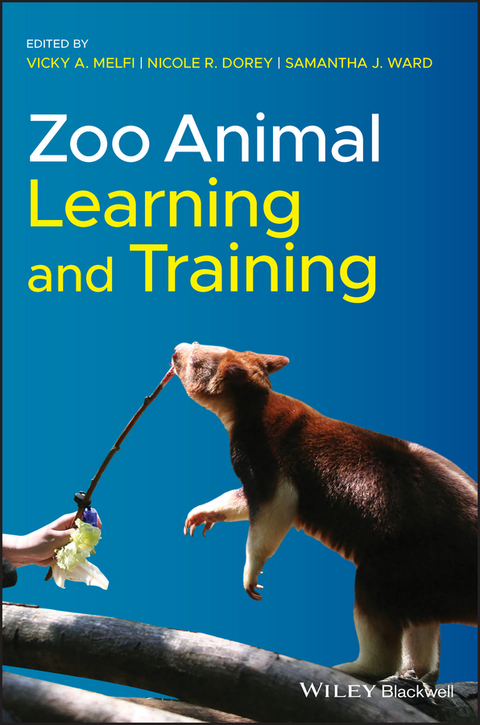
Zoo Animal Learning and Training (eBook)
John Wiley & Sons (Verlag)
978-1-118-96855-0 (ISBN)
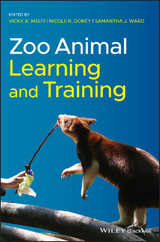
Comprehensively explains animal learning theories and current best practices in animal training within zoos
This accessible, up-to-date book on animal training in a zoo/aquaria context provides a unified approach to zoo animal learning, bringing together the art and science of animal training. Written by experts in academia and working zoos, it incorporates the latest information from the scientific community along with current best practice, demystifying the complexities of training zoo animals. In doing so, it teaches readers how to effectively train animals and to fully understand the consequences of their actions.
Zoo Animal Learning and Training starts with an overview of animal learning theory. It describes the main categories of animal learning styles; considers the diverse natural history of zoo animals; reviews the research undertaken which demonstrates ultimate benefits of learning; and highlights the advantages and disadvantages of the different approaches. It also shows how the direct application of learning theory can be integrated into zoo animal management; discusses how other factors might affect development; and investigates situations and activities from which animals learn. It also explores the theoretical basis that determines whether enrichments are successful.
- Provides an easily accessibly, jargon-free introduction to the subject
- Explores different training styles, providing theoretical background to animal learning theory as well as considerations for practical training programme - including how to set them up, manage people and animals within them and their consequences
- Includes effective skills and 'rules of thumb' from professional animal trainers
- Offers commentary on the ethical and welfare implications of training in zoos
- Features contributions from global experts in academia and the zoo profession
- Uniquely features both academic and professional perspectives
Zoo Animal Learning and Training is an important book for students, academics and professionals. Suited to senior undergraduate students in zoo biology, veterinary science, and psychology, and for post-graduate students in animal management, behaviour and conservation, as well as zoo biology. It is also beneficial to those working professionally in zoos and aquaria at different levels.
VICKY A. MELFI, PHD, is Professor at Hartpury University, Research Associate at the University of Sydney, and Managing Editor of the Journal of Zoo and Aquaria Research, published by the European Association of Zoos and Aquaria (EAZA).
NICOLE R. DOREY, PHD, is a Senior Lecturer at the University of Florida, a Certified Applied Animal Behaviorist (CAAB) and has actively served as a board member for a number of professional organizations. She also conducts and consults on research and training at zoos.
SAMANTHA J. WARD, PHD, is a Senior Lecturer in Animal Science at Nottingham Trent University, and is currently on the BIAZA research committee and also sits as the welfare expert on Defra's Zoo Executive Committee.
Comprehensively explains animal learning theories and current best practices in animal training within zoos This accessible, up-to-date book on animal training in a zoo/aquaria context provides a unified approach to zoo animal learning, bringing together the art and science of animal training. Written by experts in academia and working zoos, it incorporates the latest information from the scientific community along with current best practice, demystifying the complexities of training zoo animals. In doing so, it teaches readers how to effectively train animals and to fully understand the consequences of their actions. Zoo Animal Learning and Training starts with an overview of animal learning theory. It describes the main categories of animal learning styles; considers the diverse natural history of zoo animals; reviews the research undertaken which demonstrates ultimate benefits of learning; and highlights the advantages and disadvantages of the different approaches. It also shows how the direct application of learning theory can be integrated into zoo animal management; discusses how other factors might affect development; and investigates situations and activities from which animals learn. It also explores the theoretical basis that determines whether enrichments are successful. Provides an easily accessibly, jargon-free introduction to the subject Explores different training styles, providing theoretical background to animal learning theory as well as considerations for practical training programme including how to set them up, manage people and animals within them and their consequences Includes effective skills and rules of thumb from professional animal trainers Offers commentary on the ethical and welfare implications of training in zoos Features contributions from global experts in academia and the zoo profession Uniquely features both academic and professional perspectives Zoo Animal Learning and Training is an important book for students, academics and professionals. Suited to senior undergraduate students in zoo biology, veterinary science, and psychology, and for post-graduate students in animal management, behaviour and conservation, as well as zoo biology. It is also beneficial to those working professionally in zoos and aquaria at different levels.
VICKY A. MELFI, PHD, is Professor at Hartpury University, Research Associate at the University of Sydney, and Managing Editor of the Journal of Zoo and Aquaria Research, published by the European Association of Zoos and Aquaria (EAZA). NICOLE R. DOREY, PHD, is a Senior Lecturer at the University of Florida, a Certified Applied Animal Behaviorist (CAAB) and has actively served as a board member for a number of professional organizations. She also conducts and consults on research and training at zoos. SAMANTHA J. WARD, PHD, is a Senior Lecturer in Animal Science at Nottingham Trent University, and is currently on the BIAZA research committee and also sits as the welfare expert on Defra's Zoo Executive Committee.
Notes on Contributors
Kirstin Anderson‐Hansen is currently a postdoc at the University of Southern Denmark and in cooperation with the University of Veterinary Medicine Hannover, where she trains grey seals and aquatic birds, currently cormorants and common murres to investigate the effects of underwater noise on marine life. She started her career at the University of California in Santa Cruz over 25 years ago, working with cetaceans as a research assistant and trainer. Later, she followed some of the dolphins to the Shedd Aquarium in Chicago, where she worked and trained Pacific white‐sided dolphins, beluga whales, harbour seals, sea otters, and penguins. In 1998, she was offered a trainer position at the Fjord and Baelt in Denmark, training harbour porpoises and harbour seals for research and public demonstrations. From 2003 to 2013, she was the training coordinator and zoological curator at Odense Zoo, where she had the opportunity to expand her training experience to all types of animals, including lions, tigers, giraffes, tapirs, birds, and manatees. Kirstin is the co‐chair for the Training Committee at the Danish Association for Zoos and Aquariums (DAZA), as well as an expert advisor for the Animal Training Working Group at the European Association of Zoos and Aquariums (EAZA), where she is also an instructor for the animal training and management courses for both DAZA and EAZA.
Cristiano Schetini de Azevedo is a Brazilian biologist interested in zoo animals, animal behaviour, and animal conservation. This author has been studying the effects of environmental enrichment on the behaviour and welfare of zoo animals, especially birds. In addition, antipredator training techniques for captive‐born animals are being tested with the aim of increasing reintroduction success. Finally, aspects of animal personalities are being investigated to increase the efficiency of the environmental enrichment and for conservation purposes.
Kathy Baker works for the Whitley Wildlife Conservation Trust and her main role is to manage the zoo‐based research and higher education delivery for Newquay Zoo. She coordinates and supervises student projects from FdSc to MSc level. Her research focus covers a wide range of behaviour and welfare related topics. In particular, cross species comparisons of animal personality, the evaluation of personality as a management tool for captive animals, and multi‐institutional research to inform management practices for captive animals. Kathy's also a committee member of SHAPE – UK‐Ireland, the regional division of The Shape of Enrichment, Inc. that is dedicated to furthering enrichment efforts in the UK and Ireland, and she is also a member of the Primate Society of Great Britain.
Gordon B. Bauer is professor emeritus of psychology at New College of Florida where he held the Peg Scripps Buzzelli chair in psychology until his retirement. He received an MS from Bucknell University and a PhD from the University of Hawaii, where he studied under Louis M. Herman at the Kewalo Basin Marine Mammal Laboratory. He is a fellow of the American Psychological Association (Division 6) and Association for Psychological Science. He has studied animal senses, cognition, and behaviour in a variety of species including manatees, bottlenose dolphins, humpback whales, sea turtles, honeybees, and humans. In recent years he has focused on a broad survey of manatee senses, including vision, hearing, and touch. He has also investigated magnetoreception by cetaceans and sea turtles, hearing by dolphins and sea turtles, imitation and synchronous behaviour of dolphins, humpback whale behaviour, and memory in honeybees.
Sabrina Brando is director of animal welfare consulting company AnimalConcepts and 247 Animal Welfare. Sabrina is trained as a human psychologist, has a MSc in animal studies, and is currently completing a PhD in human and non‐human animal welfare. Sabrina's research interests are welfare, behaviour, effecting change, advocacy, and storytelling. She has presented extensively as an invited and keynote speaker at animal welfare and advocacy conferences globally and is a reviewer for various animal behaviour and welfare journals. Sabrina is passionate about animals and the natural world, and focuses on promoting positive animal welfare and good human–animal interactions and relationships, to facilitate excellent animal care and protection and with the aims to effect behaviour change and challenge the status quo. Sabrina uses stories and storytelling as a means to connect, share, encourage, and empower.
Culum Brown is an associate professor at Macquarie University and has made a significant contribution to the study of behavioural ecology of fishes over his research career. His research niche lies in the study of fish behaviour with his most significant contribution being enhancing our understanding of fish cognition and behaviour. Culum is a well‐known champion of fish intelligence and welfare.
Gordon M. Burghardt is alumni distinguished service professor in the Departments of Psychology, and Ecology and Evolutionary Biology at the University of Tennessee. He received his PhD in biopsychology from the University of Chicago and his research focus has been on comparative studies of behavioural development in species as diverse as turtles, bears, lizards, stingrays, spiders, crocodilians, and, especially, snakes. He has worked on many topics involving snakes including sensory perception, foraging, and prey capture, antipredator behaviour, sociality, multiple paternity, sexual dimorphism, colour and pattern variation, environmental enrichment, learning, genetics, conservation, ethical treatment, and mating systems. He has served or is serving as editor or editorial board member of numerous journals including, Ethology, Herpetologica, Herpetological Monographs, Journal of Comparative Psychology, Animal Learning and Behaviour, Zoo Biology, Society and Animals, Journal of Applied Animal Welfare Science, and Evolutionary Psychology. He is a past president of the Animal Behaviour Society and Division 6 (Neuroscience and Comparative Psychology) of the American Psychological Association. He has edited or co‐edited 7 books, including The Cognitive Animal: Empirical and Theoretical Perspectives on Animal Cognition (MIT Press, 2002) and the APA Handbook of Comparative Psychology (APA, 2017) and authored The Genesis of Animal Play: Testing the Limits (MIT Press, 2005). Besides his reptile research, his current research involves play in animals and responses of primates and other animals to snakes.
Jackie Chappell's research interests focus on the ways in which the environment shapes intelligence through evolution, the ways in which animals (including humans) understand their physical environments, and how this changes during development. For example, how do animals integrate information about their physical environments and properties of objects discovered during exploration with their pre‐existing knowledge? Her current research as head of the Cognitive Adaptations Research Group primarily focuses on great apes (in collaboration with Dr Susannah Thorpe), but she is also interested in avian and human cognition, and the design of behaviourally flexible, interactive robots, able to explore and learn about their environment.
Fay Clark is an animal welfare scientist based at Bristol Zoo Gardens, who specialises in the assessment and enhancement of captive animal welfare in traditional zoos, safari parks, sanctuaries, and aquariums. Fay received her PhD from the Royal Veterinary College and Institute of Zoology (Zoological Society of London/University of Cambridge) after an MPhil at the University of Cambridge. Prior to joining Bristol Zoological Society in 2013, Fay worked for and studied at the Zoological Society of London for six years, examining gorilla welfare and how the welfare of bottlenose dolphins and chimpanzees could be enhanced by providing them with cognitively challenging activities. Fay has a special interest in how technology and advanced statistical techniques can be used to improve the validity of zoo‐based research. Fay project leads internal (zoo‐based) health and welfare research at Bristol Zoo Gardens, including two longitudinal studies on primate cognition and enrichment, and animal welfare assessments.
Cynthia Fernandes Cipreste is a biologist in the Animal Welfare Sector of the Belo Horizonte Zoo in Brazil and is responsible for the environmental enrichment and animal conditioning (training) activities. She has a keen interest in animal behaviour and animal learning as well as in laws and ethics applied to animal welfare.
Nicole R. Dorey is a Senior Lecturer at the University of Florida, where she teaches courses in psychology and animal behaviour. In addition to her teaching, Nicole is founder of the undergraduate Animalia research laboratory, which has published many peer reviewed papers on a variety of species and has earned her a faculty/mentoring award. Dr. Dorey is a Certified Applied Animal Behaviourist (CAAB), has served as a board member for professional organisations, consulted on animal research and training at a variety of zoos, and has been an invited speaker to a number of national and international conferences and workshops. Nicole holds a BS degree in both zoology and psychology from the University of Florida, an MS degree in behaviour analysis with a minor in biology from the University of North Texas and a PhD in animal behaviour from the University of Exeter (UK).
Richard Gibson has vast herpetology...
| Erscheint lt. Verlag | 13.12.2019 |
|---|---|
| Sprache | englisch |
| Themenwelt | Naturwissenschaften ► Biologie ► Zoologie |
| Veterinärmedizin ► Großtier ► Zoo- / Wildtier | |
| Schlagworte | animal behavior • animal cognition • animal communication</p> • animal learning theory • Animal management • Animal training • Animal welfare • Animal Welfare, Ethics & Law • Aquaria • Behavior & Behavioral Ecology • Biowissenschaften • Husbandry • Life Sciences • <p>zoo animal • Tierschutz, Ethik u. Recht • training program • Verhalten, Verhaltensökologie • Veterinärmedizin • Veterinary Medicine • Veterinary Science • wildlife • zoo • zoo animal learning • zoo biology • Zoologie / Verhaltensforschung |
| ISBN-10 | 1-118-96855-7 / 1118968557 |
| ISBN-13 | 978-1-118-96855-0 / 9781118968550 |
| Informationen gemäß Produktsicherheitsverordnung (GPSR) | |
| Haben Sie eine Frage zum Produkt? |
 EPUB (Adobe DRM)
Kopierschutz: Adobe-DRM
Adobe-DRM ist ein Kopierschutz, der das eBook vor Mißbrauch schützen soll. Dabei wird das eBook bereits beim Download auf Ihre persönliche Adobe-ID autorisiert. Lesen können Sie das eBook dann nur auf den Geräten, welche ebenfalls auf Ihre Adobe-ID registriert sind.
Details zum Adobe-DRM
Dateiformat: EPUB (Electronic Publication)
EPUB ist ein offener Standard für eBooks und eignet sich besonders zur Darstellung von Belletristik und Sachbüchern. Der Fließtext wird dynamisch an die Display- und Schriftgröße angepasst. Auch für mobile Lesegeräte ist EPUB daher gut geeignet.
Systemvoraussetzungen:
PC/Mac: Mit einem PC oder Mac können Sie dieses eBook lesen. Sie benötigen eine
eReader: Dieses eBook kann mit (fast) allen eBook-Readern gelesen werden. Mit dem amazon-Kindle ist es aber nicht kompatibel.
Smartphone/Tablet: Egal ob Apple oder Android, dieses eBook können Sie lesen. Sie benötigen eine
Geräteliste und zusätzliche Hinweise
Buying eBooks from abroad
For tax law reasons we can sell eBooks just within Germany and Switzerland. Regrettably we cannot fulfill eBook-orders from other countries.
aus dem Bereich