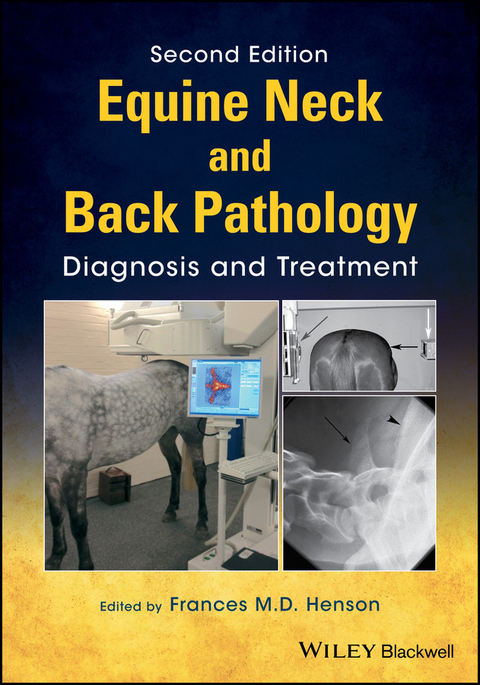
Equine Neck and Back Pathology (eBook)
John Wiley & Sons (Verlag)
978-1-118-97450-6 (ISBN)
A unique reference dedicated to the diagnosis and treatment of problems of the equine neck and back
Building on the strength of the first edition, Equine Neck and Back Pathology: Diagnosis and Treatment, Second Edition explores conditions and problems of the horse's back and pelvis, and has been expanded to include coverage of the neck as well. This book is a vital tool for all those engaged in improving the diagnosis and management of horses with neck or back problems.
The only book devoted to the conditions and problems of the equine neck, back and pelvis, it provides comprehensive coverage by international specialists on how to diagnose and treat problems in these areas. This updated and revised edition covers normal anatomy and kinematics, neck and back pathology, diagnosis and treatment of specific conditions, and complementary therapy and rehabilitation.
Equine Neck and Back Pathology: Diagnosis and Treatment, Second Edition is a valuable working resource for equine practitioners, specialists in equine surgery, veterinary nurses and allied professionals involved in treating horses. It is also an excellent supplementary text for veterinary students with a keen interest in horses.
Frances M.D. Henson is a Senior Lecturer in Equine Studies and Head of the Comparative Musculoskeletal Biology Group at the University of Cambridge, UK. Specialising in horses with back problems and poor performance, she takes referral cases from all over the country, and lectures to other equine veterinary surgeons on the back. Dr Henson is a RCVS Specialist in Equine Surgery (Orthopaedics).
A unique reference dedicated to the diagnosis and treatment of problems of the equine neck and back Building on the strength of the first edition, Equine Neck and Back Pathology: Diagnosis and Treatment, Second Edition explores conditions and problems of the horse s back and pelvis, and has been expanded to include coverage of the neck as well. This book is a vital tool for all those engaged in improving the diagnosis and management of horses with neck or back problems. The only book devoted to the conditions and problems of the equine neck, back and pelvis, it provides comprehensive coverage by international specialists on how to diagnose and treat problems in these areas. This updated and revised edition covers normal anatomy and kinematics, neck and back pathology, diagnosis and treatment of specific conditions, and complementary therapy and rehabilitation. Equine Neck and Back Pathology: Diagnosis and Treatment, Second Edition is a valuable working resource for equine practitioners, specialists in equine surgery, veterinary nurses and allied professionals involved in treating horses. It is also an excellent supplementary text for veterinary students with a keen interest in horses.
Frances M.D. Henson is a Senior Lecturer in Equine Studies and Head of the Comparative Musculoskeletal Biology Group at the University of Cambridge, UK. Specialising in horses with back problems and poor performance, she takes referral cases from all over the country, and lectures to other equine veterinary surgeons on the back. Dr Henson is a RCVS Specialist in Equine Surgery (Orthopaedics).
Equine Neck and Back Pathology: Diagnosis and Treatment 1
Contents 9
List of Contributors 11
Chapter 1: The Normal Anatomy of the Neck 13
Introduction 13
Cervical Vertebrae 3-7 13
Atlas and Axis, C1 and C2 15
Joints of the Neck 16
Ligaments of the Neck 17
Muscles of the Neck 18
References 19
Chapter 2: The Normal Anatomy of the Osseous and Soft Tissue Structures of the Back and Pelvis 21
Introduction 21
2.1 Normal Anatomy of the Osseous Structures 21
Vertebral Numbering System 21
Vertebral Formula 21
Ossification Centres and Growth Plate Closure Times 23
Structure of the Thoracic and Lumbar Vertebrae 23
Vertebral Bodies 23
Intervertebral Discs 25
Vertebral Arch 25
Intervertebral Foramina 25
Lateral Foramina 26
Sacral Foramina 26
Vertebral Canal Contents 26
Transitional Vertebrae 26
Dorsal Spinous Processes 27
Articular Processes (Facets) 28
Transverse Processes 30
Lumbosacral Junction 30
Sacrum 30
Sacroiliac Joint 30
Articulations of the Vertebral Column 31
The Pelvis 31
The Ilium 31
The Ischium 32
The Pubis 32
Obturator Foramen 33
Coccygeal Vertebrae 33
2.2 Normal Anatomy of the Soft Tissue Structures of the Back 33
Introduction 42
Musculature 33
Epaxial Musculature 33
First Layer 38
Second Layer 39
Third Layer 39
Hypaxial Musculature 40
Ligaments 41
Long Ligaments 41
Short Ligaments 41
Miscellaneous Soft Tissue Structures 41
2.3 Normal Anatomy of the Soft Tissue Structures of the Pelvis 42
Introduction 42
Sacroiliac Joint 42
The Dorsolateral and Caudal Walls 44
The Ventral Fibrous Structures 47
References 48
Chapter 3: The Normal Anatomy of the Nervous System 51
Introduction 51
The Spinal Cord Segments 51
The Spinal Nerves 51
Anatomical Distribution 51
The Composition of the Spinal Nerve 52
The Sensory (Afferent) System 52
The General Somatic Afferent System 52
The General Visceral Afferent System 53
The General Proprioceptive Pathway 53
The Motor System 54
The General Somatic Efferent System 54
The General Visceral Efferent System 54
Spinal Nerve Distribution 54
The Dorsal Branches 54
The Ventral Branches 56
The Meningeal Rami and Ramus Communicans 57
Innervation of the Limbs 58
The Brachial Plexus 58
Lumbosacral and Pelvic Plexuses 58
Summary 58
References 60
Chapter 4: Kinematics 61
Introduction 61
Historical Perspective 61
Biomechanical Models of How the Equine Back Works 62
From Roman Times - The `Architectural´ Analogy 62
The Nineteenth Century - The `Bridge´ Analogy 62
The Twenty-First Century - The `Bow-and-String´ Analogy 63
Factors that Influence the `Bow and String´ 63
Kinematics of the Equine Back 65
Kinematics of the Equine Back - in vivo Research 67
Skin Marker Based Measurement Techniques 67
Invasive Marker Measurement Techniques 68
Further Modification of the Skin Marker Measurement Technique 71
Applied Kinematics of the Equine Back 72
Physiological Factors 72
Therapeutic or Diagnostic Interventions 72
Manual Manipulation and Rehabilitation 72
Effect of Clinical Pathology 73
Performance 74
Saddlery 74
Conclusions and Possible Future Developments 76
References 79
Chapter 5: Neurological Examination of the Back and Pelvis 85
Introduction 85
History 85
Examination at Rest 85
Palpation 86
Sweating 86
Cranial Nerve Assessment 86
Reflex and Function Tests 86
Cervicofacial and Local Cervical Reflexes 87
Thoracolaryngeal Reflex (`Slap Test´) 87
Thoracic Limbs and Trunk Reflexes 87
Back and Pelvis 88
Perineal Reflexes and Tail Tone 88
Examination of Posture and Gaits 89
Evaluation of Weakness 89
Evaluation of Ataxia 89
References 90
Chapter 6: Clinical Examination 93
Examination of the Neck 93
Introduction 93
Presentations of Neck Pathology 93
Clinical History 93
Clinical Examination of the Neck at Rest 94
Orthopaedic Examination 96
Neurological Examination 96
Diagnostic Imaging 96
Other Tests 96
Examination of the Back and Pelvis 97
Introduction 97
Objectives of the Clinical Examination 97
Clinical History 98
Clinical Examination at Rest 99
Initial Inspection 99
Symmetry of Pelvis and Hindquarter Muscles 100
Palpation of the Thoracolumbar Spine and Pelvis 101
Manipulation 102
Examination of Fore- and Hindlimbs 102
Rectal Examination 103
Oral Examination 103
Clinical Examination at Exercise 103
Ridden Exercise 104
Neurological Examination 105
Further Management of the Case 105
References 106
Chapter 7: Radiography of the Cervical Spine 107
Indications for Radiography of the Cervical Spine 107
Radiographic Technique 107
Equipment 107
Patient Preparation and Positioning - The Standing Horse 108
Radiographic Exposures 108
Image Acquisition 109
Normal Radiographic Anatomy and Incidental Findings 109
Radiographic Diagnosis of some Conditions Affecting the Cervical Spine 110
Cervical Stenotic Myelopathy 110
Subjective Evaluation 110
Measurement-Based Evaluation: Abnormal Values 111
Degenerative Joint Disease 112
Osteochondrosis 113
Cervical Fractures 114
Congenital Malformation 114
Infectious Diseases 115
Neoplasia 115
Soft Tissue Injuries 115
Myelography 115
Patient Preparation and Image Acquisition 116
Interpretation 116
References 116
Chapter 8: Radiography of the Back 119
Introduction 119
Indications for Radiography of the Back and/or Pelvis 119
Technical Difficulties with Radiography of the Equine Back and Pelvis 119
Structures That Can Be Readily Imaged in the Standing Horse 119
Radiographic Technique 120
Patient Preparation 120
Equipment 120
Exposure Values 121
Positioning and Radiograph Acquisition 121
Lateromedial Radiographs 122
Oblique Radiographs 122
Radiography under General Anaesthesia 122
Radiography of the Pelvis - Standing Technique 123
Lateromedial Radiography 123
Ventrodorsal Radiography 124
Lateral-Oblique Radiography (Lateral-Dorsal 30° Lateroventral Obliques) 124
Normal Radiographic Appearance of the Back 124
Skeletally Immature Horses 124
Skeletally Mature Radiographic Anatomy 125
Dorsal Spinous Processes 125
Vertebral Bodies and Discs 125
Vertebral Body Articulations 126
Lumbar, Sacral and Coccygeal Vertebrae 126
Sacroiliac Region 126
Pelvis 127
An Introduction to Radiographic Abnormalities of the Back and Pelvis 127
Congenital Defects 127
Radiographic Abnormalities of the DSP 127
Radiographic Abnormalities of the Vertebral Bodies 128
Radiographic Abnormalities of the Articular Facets 131
Radiographic Abnormalities of the Pelvis 131
References 132
Chapter 9: Nuclear Scintigraphy and Computed Tomography of the Neck, Back and Pelvis 133
Introduction 133
Nuclear Scintigraphy 133
Mechanism of Action 134
Procedure for Scintigraphy of the Neck, Back and Pelvis 134
Image Acquisition of the Cervical, Thoracic and Lumbar Spine 136
Image Acquisition of the Pelvis 136
Technicalities of Image Acquisition 136
Image Interpretation 137
The Normal Scintigraphic Appearance of the Spine and Pelvis of the Horse 138
Scintigraphic Abnormalities of the Spine 138
Caudal Cervical Facet Joint Osteoarthrosis 138
Thoracic and Lumbar Facet Joint Osteoarthrosis 140
Conditions of the Dorsal Spinous Processes 140
Vertebral Body Fractures 141
Ankylosing Spondylosis/Discospondylosis/Discospondylitis 141
Sacroiliac Disease/Dysfunction 141
Pelvic Fractures 143
Rib Fractures 143
Miscellaneous IRU in the Back and Pelvis 143
Limitations of Scintigraphy of the Spine and Pelvis 144
Computed Tomography 144
Indications for CT of the Neck, Back and Pelvis 144
Mechanism of Action 145
Procedure for CT of the Neck, Back and Pelvis 145
CT Anatomy and Normal Variation 146
Computed Tomographic Abnormalities of the Equine Spine and Pelvis 146
Poll Injuries and Conditions of the Nuchal Ligament 146
Vertebral Fractures 147
Cervicovertebral Malformations 147
Scoliosis 147
Discospondylitis and Spinal Abscesses 148
Spinal Masses Causing Spinal Cord Compression 148
Sacroiliac Joint and Lumbosacral Dysfunction 150
Limitations of CT of the Equine Neck, Back and Pelvis 151
References 152
Chapter 10: Ultrasonography 155
Introduction 155
10.1 Ultrasonography of the Thoracic Spine 155
General Considerations 155
Supraspinous Ligament and Interspinous Ligament Ultrasonography 155
Ultrasonographic Technique 156
Longitudinal Section 156
Transverse Section 156
Ultrasound of the Muscles of the Thoracic Spine 158
Ultrasonography of the Bone 158
Ultrasonography of the Dorsal Spinous Processes 159
Ultrasonography of the Articular Processes (Facets) 159
Technique 159
Ultrasound Guided Injection in the Thoracic Spine 160
10.2 Ultrasonography of the Pelvis, Lumbar Spine and SacroIliac Region 161
Introduction 161
Lumbar Spine and Sacroiliac Region 161
Transcutaneous Evaluation 162
Lumbar Spine 162
Sacroiliac Ligaments 163
Transrectal Ultrasound 167
Ultrasonographic Examination of the Pelvis 168
Deep Structures of the Pelvis 170
Superficial Structures of the Pelvis 172
Transrectal Examination 173
References 175
Chapter 11: Thermography 177
Introduction 177
Instrumentation 177
Principles of Use 178
Use in Veterinary Medicine 179
Clinical Thermography 180
Conclusions 184
References 185
Chapter 12: Neck Pathology 187
Introduction 187
Functional Anatomy 187
Neck Pain 190
Cervical Neurological Disease 190
Neurological Consequences of Spinal Compression 191
Radiographic Considerations with Cervical Spinal Compression 191
Clinical Conditions 192
Cervical Vertebral Compressive Myelopathy 192
Cervical APJ Injection Technique 197
Cervical APJ Osteoarthritis 198
Occipitoatlantoaxial Malformation 198
Discospondylitis 199
Cervical Vertebral Fractures 199
Cervical Vertebral Epidural Haematomas 200
Vertebral Subluxation 200
Vertebral Neoplasia 200
Vertebral Osteomyelitis 201
Apparent Muscle Pain 201
Nuchal Ligament Insertional Desmopathy 201
Nuchal Bursitis 202
References 202
Chapter 13: Back Pathology 207
13.1 Traumatic damage 207
General principles 207
Fracture of the Dorsal Spinous Processes (DSP) of the Thoracic Vertebrae (Fractured Withers) 207
Presentation and Clinical Signs 207
Diagnostic Imaging 208
Treatment and Prognosis 208
Fractures of the Thoracolumbar Vertebral Column 208
Fractures of the Articular Facet Joints 208
Presentation and Clinical Signs 208
Diagnosis 209
Treatment and Prognosis 209
Fractures of the Vertebral Body and Laminae 209
Presentation and Clinical Signs 209
Diagnosis 209
Treatment and Prognosis 210
Pelvic Factures 210
Fractures of the Tuber Coxae 210
Presentation and Clinical Signs 210
Diagnosis 211
Treatment and Prognosis 211
Fractures of the Ilial Wing and Shaft 212
Presentation and Clinical Signs 212
Diagnosis 212
Prognosis and Treatment 213
Fractures of the Ischium and Tuber Ischii 214
Presentation and Clinical Signs 214
Diagnosis 214
Treatment and Prognosis 214
Pubic Fractures 215
Presentation and Clinical Signs 215
Diagnosis 215
Fractures and Dislocation of the Coxofemoral Joint 215
Presentation and Clinical Signs 215
Diagnosis 216
Treatment and Prognosis 216
Multiple, Complex, Comminuted Fractures of the Pelvis 216
Presentation and Clinical Signs 216
Diagnosis 217
Treatment and Prognosis 217
Sacral Fractures 217
Presentation and Clinical Signs 217
Diagnosis 218
Treatment and Prognosis 218
Coccygeal Fractures 219
Presentation and Clinical Signs 219
Diagnosis 219
Treatment and Prognosis 219
13.2 Over Riding Dorsal Spinous Processes (`Kissing Spines´) 220
Anatomy of the Dorsal Spinous Processes 220
Incidence 220
Pathogenesis 221
Site of Pathology 221
History 221
Clinical Signs 222
Clinical Examination 222
Diagnosis 223
Diagnosis of Anatomical Abnormalities 223
The Use of Radiography in the Diagnosis of ORDSPs 223
The Use of Nuclear Scintigraphy in the Diagnosis of ORDSPs 224
The Use of Ultrasonography in the Diagnosis of ORDSPs 224
Diagnostic Local Analgesic 224
Treatment 225
Conservative and Medical Treatment 225
Surgical Treatment 226
Surgical Techniques 226
Open Method under General Anaesthetic 227
Endoscopic Method under General Anaesthesia 227
Ostectomy in the Standing, Sedated Horse 227
Surgical Complications and Bone Reactions after Resection of ORDSPs 228
Interspinous Ligament (ISL) Desmotomy 228
Surgical Outcome 228
Conclusion 228
13.3 Miscellaneous Osseous Pathology 228
Introduction 228
Anatomical Abnormalities 229
Lordosis 229
Kyphosis 229
Scoliosis 229
Degenerative Conditions 230
Osteoarthritis of the Synovial Intervertebral Facet Joints (`Articular Facets´) 230
Diagnosis of Articular Facet OA 230
Treatment of Articular Facet OA 231
General treatment 231
Specific Treatment 232
Ventral Spondylosis 232
Diagnosis 232
Treatment 233
Discospondylosis 233
Infections of the Back and Pelvis 233
Spondylitis/Discospondylitis 233
Diagnosis 234
Treatment 234
Fistulous Withers 234
Clinical Signs 234
Diagnosis 234
Treatment 235
Stress Fractures 235
Vertebral Lamina Stress Fracture 235
Diagnosis 235
Treatment 236
Neoplasia 236
Miscellaneous Conditions of the Vertebral Bodies 236
13.4 Pathology of the Supraspinous and Dorsal Sacroiliac Ligaments 236
Introduction 236
Supraspinous Ligament 236
Aetiology of Damage to the SSL 237
Clinical Signs 237
Acute Injuries 237
Chronic and Low Grade Injuries 238
Diagnosis 238
Ultrasound 238
Radiography 239
Nuclear Scintigraphy 239
Thermography 239
Local Analgesia 240
Management 240
Acute injuries 240
Chronic Injuries 240
Other Therapies 240
Extracorpoeal Shockwave Therapy (ESWT) 240
Mesotherapy 240
Prognosis 241
Dorsal Sacroiliac Ligament Pathology 241
Anatomy and Biomechanics 241
Aetiology 242
Clinical Signs 242
Diagnosis 242
Ultrasonography 242
Pathology of the DSIL 243
Lateral (Long) Portion of the DSIL 243
Radiography 244
Thermography 244
Nuclear Scintigraphy 244
Local Analgesia 244
Management 245
Acute Injuries 245
Long-Term Management 245
References 245
Chapter 14: Sacroiliac Dysfunction 251
Introduction 251
Anatomy 251
Incidence 252
Clinical Signs 253
SIJ Provocation Tests 254
Manual Compression of the Dorsal Aspects of the Tuber Sacrale 254
'Sway Test' 254
Ventral Force 254
Tuber Coxae Stress Test 254
Application of Lateral Forces to the Pelvis 254
Diagnosis of SID 255
Diagnostic Imaging of the SIJ Region 255
Nuclear Scintigraphy 255
Ultrasonography 255
Radiography 256
Local Analgesic Techniques 256
Management of SID 257
Acute SID 257
Chronic SID 257
Conclusion 258
References 258
Chapter 15: Muscular Disorders 261
Introduction 261
Diagnostic Procedures 261
Clinical Exam 261
Biochemistry 262
DNA Testing 262
Biopsy 263
Ultrasonography 263
Technique 263
Indication for Muscle Ultrasonography 264
Scintigraphy 266
Electromyography 266
Surface EMG 266
Needle EMG 267
Disorders: Aetiopathogenesis and Treatment 268
Muscle Strains, Bruises and Tears 268
Exertional Myopathies 268
Recurrent Exertional Rhabdomyolysis (RER) 269
Polysaccharide Storage Myopathy 270
Treatment of Exertional Myopathies 270
Muscle Atrophy 271
References 272
Chapter 16: Integrative and Physical Therapies 277
16.1 Integrative Therapies 277
Introduction 277
Integrative Approach to Diagnosis of Back Pain 277
History of the Horse with Back Pain 278
Observation of the Horse 278
Palpation of the Back 279
Acupuncture Palpation and Diagnosis 279
Chiropractic Examination 280
The Use of Diagnostic Imaging 280
Saddle Fit 281
Saddle Structure 281
Saddle Position 281
Saddle Panels and Bars 281
Saddle Trees 282
The Importance of a Level Seat 282
Position and Shape of the Girth 282
Rider Fit 282
Locating Pressure Points 283
Measuring the Back for Saddle Fitting 283
Rider Variables 283
The Use of Therapeutic Pads 283
Teeth, Mouth Pain 284
Additional Management Factors Influencing Back Pain 284
Treatments for Back Pain 284
Acupuncture 284
Chiropractic and Spinal Manipulation 285
Stretching 286
Massage 288
Homeopathic Treatment of Back Pain 288
Ledum Palustra (Marsh Tea) 289
Traumeel 289
Herbal Therapy for Back Pain 289
16.2 Physical Therapies 290
The Role of the Equine Physical Therapist 290
Therapies 290
Ice 290
Therapeutic Ultrasound 290
Therapeutic Laser 291
Electrical Stimulation - The Longitudinal Muscle Channel System 291
Pulse Signal Therapy 292
Therapeutic Exercise 292
Lateral Flexion-Extension Exercise 292
Hip Disengagement Exercise 292
Dorsiflexion-Extension Exercise 293
Conclusion 293
References 293
Chapter 17: Rehabilitation 295
Introduction 295
The Back 295
Anatomy 296
Vertebral Ligaments 296
Ligaments Influencing the Dorsal Section of the Body 296
Muscles Influencing the Dorsal and Ventral Sections of the Body 297
Dorsal Section 297
Ventral Section 297
Back Pain 298
Possible Causes Associated with Back Discomfort 298
Rehabilitation Programmes 298
Rebuilding Muscle 299
Long Reins 300
Why Rehabilitate in Long Reins Rather than Lunge? 300
Early Rehabilitation 301
Why Classical Exercises? 301
Muscle Loading 302
Lateral Work 302
Serpentines 303
Transitions Down (Deceleration) 303
When to Start Early Rehabilitation 303
Why Is a Period of Rest Important in the Rehabilitation Programme? 303
Examples of Inefficient Patterns 303
Neck Discomfort 303
Forelimb Pain 303
Hindlimb Pain 304
Introduction of Active Rehabilitation 304
Failure 304
Slopes as a Rehabilitation Aid 304
Treadmill 305
Hydrotherapy - Water as a Rehabilitation Aid 305
Cardiovascular and Muscular Effects of Water Therapy 305
Equine Pools 305
Benefits of Swimming 305
Cardiovascular Stress 306
Side Effects of Swimming 306
Water Walking 306
The Sea Walker 306
The Water Treadmill 307
Conclusion 307
References 308
Index 309
End User License Agreement 315
| Erscheint lt. Verlag | 27.11.2017 |
|---|---|
| Sprache | englisch |
| Themenwelt | Veterinärmedizin ► Vorklinik |
| Veterinärmedizin ► Klinische Fächer ► Pathologie | |
| Veterinärmedizin ► Pferd | |
| Schlagworte | equine alternative therapies • equine anatomy • equine back anatomy • equine back conditions • equine back diagnosis • equine back imaging • equine back muscle disorders • equine back pathologies • equine back problems • equine back surgery • equine back treatment • equine complementary therapy • equine health • equine kinematics • equine neck anatomy • equine neck conditions • equine neck diagnosis • equine neck imaging • equine neck muscle disorders • equine neck pathologies • equine neck problems • equine neck surgery • equine neck treatment • equine orthopaedics • equine pathology • equine pelvic muscle disorders • equine pelvis anatomy • equine pelvis conditions • equine pelvis diagnosis • equine pelvis imaging • equine pelvis pathologies • equine pelvis problems • equine pelvis surgery • equine pelvis treatment • equine physiotherapy • equine rehabilitation • equine veterinary problems • Pferdemedizin • Veterinäranatomie u. -physiologie • Veterinärmedizin • Veterinärmedizin / Chirurgie, Orthopädie, Trauma • Veterinärmedizin f. Pferde • Veterinary Anatomy & Physiology • Veterinary Medicine • Veterinary Medicine - Equine • Veterinary Surgery, Orthopedics & Trauma |
| ISBN-10 | 1-118-97450-6 / 1118974506 |
| ISBN-13 | 978-1-118-97450-6 / 9781118974506 |
| Informationen gemäß Produktsicherheitsverordnung (GPSR) | |
| Haben Sie eine Frage zum Produkt? |
 PDF (Adobe DRM)
Kopierschutz: Adobe-DRM
Adobe-DRM ist ein Kopierschutz, der das eBook vor Mißbrauch schützen soll. Dabei wird das eBook bereits beim Download auf Ihre persönliche Adobe-ID autorisiert. Lesen können Sie das eBook dann nur auf den Geräten, welche ebenfalls auf Ihre Adobe-ID registriert sind.
Details zum Adobe-DRM
Dateiformat: PDF (Portable Document Format)
Mit einem festen Seitenlayout eignet sich die PDF besonders für Fachbücher mit Spalten, Tabellen und Abbildungen. Eine PDF kann auf fast allen Geräten angezeigt werden, ist aber für kleine Displays (Smartphone, eReader) nur eingeschränkt geeignet.
Systemvoraussetzungen:
PC/Mac: Mit einem PC oder Mac können Sie dieses eBook lesen. Sie benötigen eine
eReader: Dieses eBook kann mit (fast) allen eBook-Readern gelesen werden. Mit dem amazon-Kindle ist es aber nicht kompatibel.
Smartphone/Tablet: Egal ob Apple oder Android, dieses eBook können Sie lesen. Sie benötigen eine
Geräteliste und zusätzliche Hinweise
Buying eBooks from abroad
For tax law reasons we can sell eBooks just within Germany and Switzerland. Regrettably we cannot fulfill eBook-orders from other countries.
aus dem Bereich