Dentistry in Rabbits and Rodents (eBook)
John Wiley & Sons (Verlag)
978-1-118-80258-8 (ISBN)
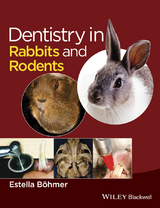
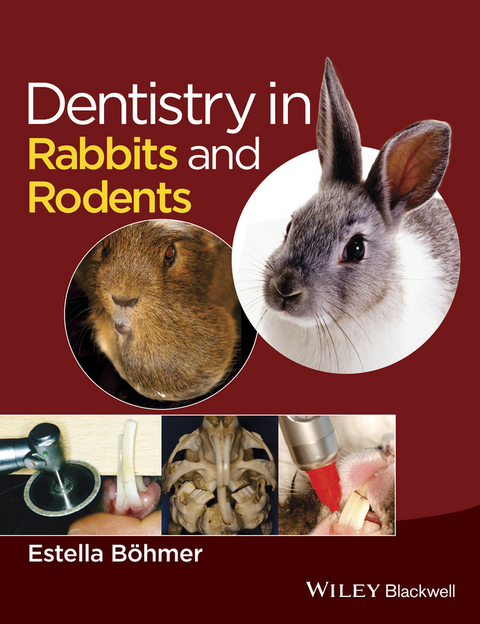
Dentistry in Rabbits and Rodents is a practical guide aimed at helping clinicians successfully diagnose and treat dental problems in rabbits and rodents within their own surgeries. With over two-thirds of small mammals presenting with tooth related problems, there is great potential to enhance the treatment offered to the owners of these species. Focusing on innovative diagnostics using normal radiographic machines as well as specific positioning techniques, radiographs are presented with reference lines and detailed annotations. Richly illustrated with high quality photographs, pathological findings are described before selection of appropriate therapy and treatment is discussed.
Key features include:
- Covers the dental anatomy and physiology of all small mammal species commonly kept as pets.
- Intraoral radiography and innovative positioning for imaging the guinea pig and chinchilla dentitions are described, enabling the practitioner to visualize each tooth in detail.
- Once a diagnosis has been reached, selection of different treatments and the advantages and disadvantages of each surgical technique are discussed.
- Offers helpful directives for approaching and treating dental disease without the need for referral to a specialist or the use of expensive equipment.
Dr Estella Böhmer, DVM, Dr. med. vet. is Senior Physician at the Clinic of Small Animal Surgery and Reproduction, Centre for Clinical Veterinary Medicine, Ludwig-Maximilians-Universität, Munich, Germany, and head of the department for small mammal surgery. She is an official consultant on small mammals for the Veterinary Information Network. She also lectures on small mammal dentistry seminars in Germany.
Dentistry in Rabbits and Rodents is a practical guide aimed at helping clinicians successfully diagnose and treat dental problems in rabbits and rodents within their own surgeries. With over two-thirds of small mammals presenting with tooth related problems, there is great potential to enhance the treatment offered to the owners of these species. Focusing on innovative diagnostics using normal radiographic machines as well as specific positioning techniques, radiographs are presented with reference lines and detailed annotations. Richly illustrated with high quality photographs, pathological findings are described before selection of appropriate therapy and treatment is discussed. Key features include: Covers the dental anatomy and physiology of all small mammal species commonly kept as pets. Intraoral radiography and innovative positioning for imaging the guinea pig and chinchilla dentitions are described, enabling the practitioner to visualize each tooth in detail. Once a diagnosis has been reached, selection of different treatments and the advantages and disadvantages of each surgical technique are discussed. Offers helpful directives for approaching and treating dental disease without the need for referral to a specialist or the use of expensive equipment.
Dr Estella Böhmer, DVM, Dr. med. vet. is Senior Physician at the Clinic of Small Animal Surgery and Reproduction, Centre for Clinical Veterinary Medicine, Ludwig-Maximilians-Universität, Munich, Germany, and head of the department for small mammal surgery. She is an official consultant on small mammals for the Veterinary Information Network. She also lectures on small mammal dentistry seminars in Germany.
Foreword, vi
Preface, viii
1 Dental Treatment of Small Mammals - Development and Aims, 1
2 Basics of Odontology, 5
3 Classification and Anatomical Characteristics of the Lagomorphs and Rodents, 21
4 Clinical Examination, 35
5 Radiographic Examination, 49
6 Computed Tomography, 88
7 Anesthesia and Analgesia, 90
8 Instruments for Examination and Treatment, 107
9 Diseases of the Incisors, 118
10 Changes of the Cheek Teeth, 153
11 Abscesses, 213
12 Periodontal Diseases and Caries, 242
13 Other Changes of the Jaw, 254
14 Follow-up and Prognosis, 260
15 Appendix, 267
References, 270
Further Reading, 276
Index, 280
"In conclusion, Dentistry of Rabbits and Rodents provides a clear, thorough and complete overview of the various aspects of rabbit and rodent dentistry." (European Journal of Companion Animal Practice, 1 October 2015)
"The core chapters detailing basic anatomy and pathogenesis of dental disease and the treatment of incisor and cheek teeth diseases are of a high standard and contain a great deal of practical and theoretical information. I highly recommend this text for any practitioner wishing to further their knowledge of dentistry of rabbits and rodents." (Australian Veterinary Journal, 3 March 2016)
Overall I am very impressed with the book. It has incredible
detail and fantastic photographs, with many excellent suggestions
on ways to improve radiographic technique and treatment techniques.
The suggestions seem so simple and straightforward, yet have not
been commonly used or thought of until now. This book provides much
needed detailed, step-by-step information on how to diagnose and
treat the most common problems identified in small mammals. This
book will change the way I practice rabbit and rodent dentistry, in
a good way!
Dr. Kris Bannon, DVM, FAVD, DAVDC
President, American Veterinary Dental Society
This book is an outstanding work of scholarship. This work
represents a significant contribution to the veterinary
literature. Veterinarians on VIN ask questions about rabbit
and rodent dental issues literally on a daily basis. This book will
fill a gigantic void in answering such questions.
Dr. Ned Gentz, MS DVM, DACZM
Veterinary Information Network
Every now and then a book is published in veterinary medicine
which will set new standards - Dentistry in Rabbits and Rodents by
Dr. Estella Böhmer is definitely one! Rabbit and rodent
dentistry is absolutely taken to the next level with this
outstanding publication. I am glad that Dr Böhmer shares her
wealth of knowledge with us with this book.
Dr. Jörg Mayer, DVM, MS, DABVP (ECM), DECZM (Small mammal),
DACZM
Associate Professor of Zoological Medicine,
College of Veterinary Medicine, University of Georgia
The main feature of this textbook is the clear and compact
text illustrated with many photographs, allowing the reader to find
information quickly. For enthusiasts the text is complemented with
a very detailed collection of references for further reading. This
textbook is a very valuable component of every veterinary
library.
Dr. Gottfried Morgenegg-Wegmüller, Switzerland
Past President, European Veterinary Dental Society
The book is unique in its message of paying more attention to
diagnosing and, if possible, treating primary causes of dental
disorders in rabbits and rodents. It is also unique in presenting
such a wealth of knowledge of dental anatomy, physiology, practical
hints and tips, and cutting edge treatment methods for those
species.
Simone Kirby, MRCVS
Diplomate of the European Veterinary Dental College, Past-President
of the British Veterinary Dental Association
CHAPTER 1
Dental Treatment of Small Mammals – Development and Aims
Eighty to a hundred years ago, the majority of a veterinary surgeon’s dental patients were horses. They were primarily used as working animals and thus needed a healthy dentition. In the decades that followed, the number of dogs kept as pets rose significantly. Consequently, more dogs with dental conditions were presenting to general veterinary practices and to the increasing number of specialized small animal practices. From the 1970s on, the number of pet cats was also increasing, with a concomitant increase in the number of cats requiring dental treatment, particularly in urban areas. During the last 15 years, a focus of interest has been on small herbivorous mammals (rabbits, guinea pigs, chinchillas and degus) as pets.
Keeping small pets is becoming ever more popular, with lagomorphs and rodents in particular attracting attention as being “low-maintenance” animals – especially in urban areas. Nowadays, small pets comprise almost a quarter of patients in an urban veterinary practice, excluding those practices that focus only on small mammals. This is challenging for veterinarians, as they are presented with a great variety of animal species, and many of them must be treated in different ways due to their anatomical and physiological peculiarities. An ever-increasing knowledge in a variety of disciplines is required in order to make correct diagnoses and treat these patients appropriately. This is especially true in the area of odontology, as many small mammals have dental ailments.
One of the reasons for the high number of dental ailments presenting in small mammals is that some pet owners have an insufficient understanding of the dietary requirements of their herbivorous pets, which can lead to dental overgrowth with all of its possible consequences. This problem is compounded by the fact that for each species there is a vast multitude of foods available in specialist shops. In principle (and often contrary to the labeling), many of these are not suitable when given as a complete diet. The variety of feeds on offer is difficult to choose from for a pet owner who is not well informed. Consequently, the owner will often feed these pets – more or less randomly and uncritically – whatever seems suitable to them and whatever the animal prefers to eat. These kinds of high-energy grain mixtures often lead to gastrointestinal diseases, as well as resulting in insufficient abrasion of the incisors and cheek teeth, which keep growing during the whole lifetime of the animal. This will inevitably result in an acquired malocclusion.
Gastrointestinal disease tends to be readily recognized by the pet owner due to fairly obvious symptoms such as diarrhoea, abdominal pain or constipation. In contrast, dental problems may go unnoticed in their early stages by an animal’s owner. Most animals that are starting to develop malocclusions continue to eat enough, although they may already be suffering from painful changes in their teeth and jaws. Their general condition may appear well, they may be lively, continue to groom and exhibit an interest in their surroundings, their owners or their conspecifics. Any weight loss may not be noticed early on unless the animal is regularly weighed. Early symptoms of malocclusion are also difficult to detect when the animals are kept in a group. For example, in the early stages of a dental disorder, many patients start to eat selectively, i.e. they prefer soft feeds and avoid harder feeds like hay. Such behavior may go unnoticed in animal groups. For these reasons, many patients do not present for treatment until they suffer from quite advanced malocclusions or the formation of a tooth-associated jaw abscess which is clearly visible (Figure 1.1). Radiographs showing the extent of osseous changes that are already present are often met with amazement. How could the animals hide these painful conditions for such a long time?
Figure 1.1 Abscess of the mandible as a result of chronic apical periodontitis of the first lower cheek tooth (P4) in a four'year'old guinea pig.
In order to prevent situations like these arising, veterinarians should take every opportunity to describe early symptoms of dental disorders to an animal’s owner and give advice about species-appropriate feeding and husbandry. Such opportunities include routine examinations, annual vaccinations, visits for neutering, clipping of claws and treatments for ecto- and endoparasitic diseases. Additionally, prophylactic dental examinations are generally recommended. The earlier malocclusions are detected, the better are the chances of curing them with specific therapies, or at least having a positive impact on the course of the disease.
During the last three decades, not only has the way that corrections of the dental problems are performed changed but also the aims of these corrections. In the 1970s and 1980s, lagomorphs and herbivorous rodents with malocclusions would simply have had their elongated incisors clipped, and tips of teeth or spikes and spurs of the molars removed with a fine Luer bone rongeur forceps. Finally, the occlusal surface of the molars would have been “filed” a little. Little attention was given to the etiology of dental disorders, the anatomical and pathological peculiarities of the dentition of different species or to a possible prophylaxis of dental changes. In addition, there were no adequate instruments suitable to use for closer diagnostic examinations or therapies. Furthermore, radiographs of the head were generally taken in only one or two views, and almost always just for jaw abscesses, but not for so-called “uncomplicated” dental treatments. During recent years, dramatic changes have occurred concerning all of the aforementioned, and these changes require a re-definition of the aims of an optimal dental treatment.
Nowadays, the aim of correcting an occlusion involves more than re-establishing the best possible intraoral occlusion by simple trimming of the incisors and molars. Dental therapies are now looking to establish the primary causes of disorders of the jaw and teeth. If the cause of a disorder can be determined using adequate diagnostics (e.g. history taking, clinical and intraoral examinations, radiographic examination using a variety of positionings, etc.), it may then be possible to rectify it by means of a specific therapy. Often, a long-term cure may be feasible. Even if it is not possible to rectify the condition, then a treatment specific to the individual situation may at least delay progress of the pathological changes.
However, if diagnostics and therapy are limited to pathological changes that can be seen intraorally, as they were in the past, then hidden intraosseous processes will continue to progress unrestrictedly. One may sometimes wonder why a treatment has not been successful despite the correction of the dentition having been performed precisely according to the intraoral findings, not realizing that the pain is caused by intra-alveolar changes. A typical example of this is shown in Figure 1.2. This rabbit has an abscess of the lower jaw. Its cause is a longitudinally split lower mandibular cheek tooth (P3), with apical inflammation. A subtle overgrowth of the affected premolar dominates intraorally. Secondarily, the infection has spread to the adjacent incisor. Unless the whole problem is identified correctly and both teeth causing it are extracted, the initially local infection will spread, leading to an area of lesion that is “inexplicably” not improving.
Figure 1.2 Abscess of the mandible in a three-year-old rabbit. (a) On a laterolateral radiographic view, periapical periodontitis and a longitudinal split of the first lower cheek tooth (P3; white arrows) can be seen. A slight distension of the ventral mandibular cortical bone with swelling of soft tissue is also clearly visible. Retrograde displacement of the apex of the lower incisor with periapical osteolysis (turquoise arrow), secondary malocclusion of the incisor with dental overgrowth and abnormal, blunt contact surface of the mandibular incisor as well as retrograde displacement of the maxillary incisor (yellow arrow) are also recognizable. The nasolacrimal duct is dilated (yellow lines). (b) Eight months after a simple abscess-related incision without tooth extraction, the laterolateral view shows a pronounced abscess of the mandible with a markedly distended, bony abscess capsule. A mandibular cheek tooth (P3) and a mandibular incisor are missing. The second lower cheek tooth (P4) is severely deformed intra-alveolar as well as extra-alveolar (white arrows). The clinical crown of the remaining mandibular incisor is markedly elongated (prognathic tooth position) and there are manifestations of apical inflammation. The maxillary incisors are elongated. (c) The intraoral radiographic image of the mandibles shows that the right incisor is missing and the adjacent first cheek tooth (P3) is only recognizable as an unstructured, multipart dentinoid (white arrows). There is a strong intra-alveolar deviation of the following second cheek tooth (P4; turquoise arrows) as well as extra-alveolar overgrowth and apical periodontitis of the left incisor (yellow arrow). The socket of the first left cheek tooth (P3) is slightly expanded.
Misdiagnoses like these, as well as other complications, can be avoided by the use of well-founded radiographic...
| Erscheint lt. Verlag | 26.2.2015 |
|---|---|
| Sprache | englisch |
| Themenwelt | Medizin / Pharmazie |
| Veterinärmedizin ► Klinische Fächer ► Zahnheilkunde | |
| Veterinärmedizin ► Kleintier | |
| Schlagworte | dentistry, rabbit, rodent, small mammal, guinea pig, chinchilla, veterinary, dental anatomy, dental radiography, boehmer • Hase • Nagetiere • Veterinärmedizin • Veterinärmedizin / Exoten • Veterinärmedizin / Zahnheilkunde • Veterinärmedizin • Veterinärmedizin / Exoten • Veterinärmedizin / Zahnheilkunde • Veterinary Dentistry • Veterinary Medicine • Veterinary Medicine - Exotic Pets • Zahnmedizin |
| ISBN-10 | 1-118-80258-6 / 1118802586 |
| ISBN-13 | 978-1-118-80258-8 / 9781118802588 |
| Informationen gemäß Produktsicherheitsverordnung (GPSR) | |
| Haben Sie eine Frage zum Produkt? |
 EPUB (Adobe DRM)
Kopierschutz: Adobe-DRM
Adobe-DRM ist ein Kopierschutz, der das eBook vor Mißbrauch schützen soll. Dabei wird das eBook bereits beim Download auf Ihre persönliche Adobe-ID autorisiert. Lesen können Sie das eBook dann nur auf den Geräten, welche ebenfalls auf Ihre Adobe-ID registriert sind.
Details zum Adobe-DRM
Dateiformat: EPUB (Electronic Publication)
EPUB ist ein offener Standard für eBooks und eignet sich besonders zur Darstellung von Belletristik und Sachbüchern. Der Fließtext wird dynamisch an die Display- und Schriftgröße angepasst. Auch für mobile Lesegeräte ist EPUB daher gut geeignet.
Systemvoraussetzungen:
PC/Mac: Mit einem PC oder Mac können Sie dieses eBook lesen. Sie benötigen eine
eReader: Dieses eBook kann mit (fast) allen eBook-Readern gelesen werden. Mit dem amazon-Kindle ist es aber nicht kompatibel.
Smartphone/Tablet: Egal ob Apple oder Android, dieses eBook können Sie lesen. Sie benötigen eine
Geräteliste und zusätzliche Hinweise
Buying eBooks from abroad
For tax law reasons we can sell eBooks just within Germany and Switzerland. Regrettably we cannot fulfill eBook-orders from other countries.
aus dem Bereich