Animal Biology and Care (eBook)
John Wiley & Sons (Verlag)
978-1-118-27604-4 (ISBN)
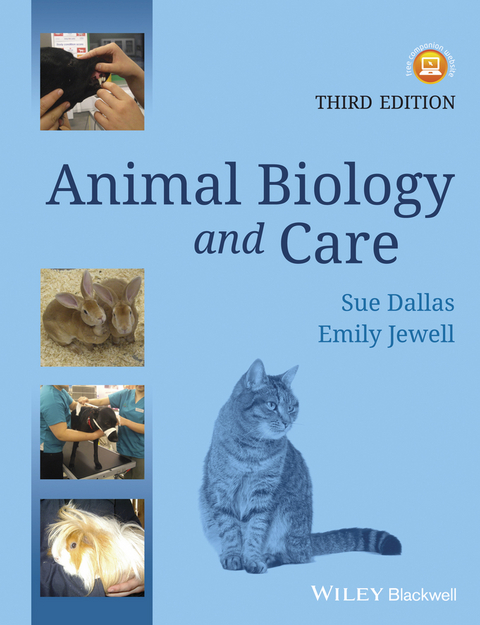
The perfect study companion, Animal Biology and Care, 3rd Edition is specifically designed for students on animal care, animal nursing assistant and veterinary care assistant courses. This edition is fully updated with new course content, a refreshed design and colour illustrations throughout. Basic biological theory is introduced with diagrams for visual learners while photographs demonstrate the common practical procedures carried out by animal care assistants.
Key features include:
- New content on exotic species, recognising the increasing number of these animals kept as pets.
- Extensive coverage of the Animal Welfare Act 2006 and recent advances in animal welfare.
- Written in line with course curricula, chapter summaries help you to remember key points and learning objectives.
- A companion website has interactive MCQs to help you test your knowledge.
Divided into three main sections covering animal science and genetics, health and husbandry and nursing procedures, this book will help lay the foundations for a successful career in animal care and management!
Sue Dallas VN Cert. Ed. is a qualified veterinary nurse, and has worked in veterinary schools and veterinary practices in the UK and in North America. She has taught on both veterinary nursing and animal care courses for over 22 years and has been involved in a number of educational and examination developments in the UK and New Zealand. Sue has spoken at veterinary congresses both in the UK and around the world, promoting nursing and care of animals through training and education.
Emily Jewell BSc (Hons), MSc, Cert. Ed. is a Curriculum Area Manager in Animal Management at Reaseheath College in Nantwich, Cheshire. Emily graduated from the University of Leeds in 1995 with a BSc (Hons) in Animal Science. After working in a land-based college in Wiltshire for 7 years, she returned to study and graduated from Harper Adams University College in 2003 with an MSc in Animal Health and Welfare. Emily has taught across a range of subjects and has had responsibility for many different species. Emily has also previously worked as an External Verifier in Animal Management for the awarding body Edexcel.
Sue Dallas VN Cert. Ed. is a qualified veterinary nurse, and has worked in veterinary schools and veterinary practices in the UK and in North America. She has taught on both veterinary nursing and animal care courses for over 22 years and has been involved in a number of educational and examination developments in the UK and New Zealand. Sue has spoken at veterinary congresses both in the UK and around the world, promoting nursing and care of animals through training and education. Emily Jewell BSc (Hons), MSc, Cert. Ed. is a Curriculum Area Manager in Animal Management at Reaseheath College in Nantwich, Cheshire. Emily graduated from the University of Leeds in 1995 with a BSc (Hons) in Animal Science. After working in a land-based college in Wiltshire for 7 years, she returned to study and graduated from Harper Adams University College in 2003 with an MSc in Animal Health and Welfare. Emily has taught across a range of subjects and has had responsibility for many different species. Emily has also previously worked as an External Verifier in Animal Management for the awarding body Edexcel.
Animal Biology and Care 5
Copyright 6
Contents 7
Preface 13
Acknowledgments 14
Companion Website 15
Section 1 Animal Biology 17
Chapter 1 Cells and Basic Tissues 19
Summary 19
What is biology? 19
Cells 22
Animal Tissues 22
Blood 25
Bone and cartilage 29
Muscular tissue 30
Nervous tissue 32
Chapter 2 Movement of Materials within the Body 33
Summary 33
Diffusion 33
Osmosis 34
Phagocytosis 35
Active transport 35
Body fluid 35
Acids and bases in the body 36
Tissue fluid and the lymphatic system 36
The lymphatic system 37
Functions of the lymphatic system 38
Chapter 3 Body Systems and Functions 40
Summary 40
The circulatory system 40
The respiratory system 47
The digestive system 56
The urinary system 67
The nervous system 69
The endocrine system 75
The sense organs 78
The skin 82
The skeleton 84
The reproductive system 89
Homeostasis 95
Chapter 4 Basic Genetics 97
Summary 97
What is genetics? 97
Why is genetics important? 97
Important events in the history of genetics 97
Chromosomes, genes and DNA 98
Genetic terms 99
Cell division 99
Breeding and genetics 103
Chapter 5 Body Areas 105
Summary 105
Thoracic cavity 105
Abdominal cavity 105
Pelvic region 106
Cavity linings 106
Section 2 Animal Health and Husbandry 107
Chapter 6 Animal Welfare 109
Summary 109
Definition of animal welfare 109
How is animal welfare assessed? 110
Animal welfare legislation 111
Animal welfare organisations 122
Animal rights 123
Chapter 7 Basic Animal Health Care 124
Summary 124
Assessing the health status of an animal 124
Factors affecting health status 128
Prophylactic treatments 132
Microchipping 132
Chapter 8 Disease Transmission and Control 134
Summary 134
How can disease be transmitted? 134
Incubation of disease 138
Infection 138
Diagnosis of disease 139
Basic animal treatments 140
Chapter 9 Basic Microbiology 143
Summary 143
Microbial terms 144
Bacteria 144
Viruses 148
Fungi 148
Protozoa 149
Chapter 10 Diseases of the Dog and Cat 151
Summary 151
Diseases of dogs 151
Diseases of cats 157
Immunity 164
Chapter 11 Zoonotic Diseases 165
Summary 165
Dogs 165
Cats 166
Zoonotic diseases from other species 166
Prevention of zoonotic diseases 166
Chapter 12 Parasitology 168
Summary 168
External parasites 169
Ectoparasites in birds 176
Ectoparasites in reptiles 176
Internal parasites 177
Chapter 13 Hygiene 182
Summary 182
Disinfectants and antiseptics 182
Terms relating to hygiene 183
Disinfectants 183
Antiseptics 188
Chapter 14 Basic Nutrition 190
Summary 190
Proteins 191
Carbohydrates 193
Fats/lipids 194
Vitamins 194
Minerals 195
Water 197
General considerations for feeding 198
Life stages for nutrition of the dog and cat 198
Nutritional differences between the dog and the cat 199
Home-made diets 200
Feeding guidelines 200
Nutritional balance 201
Dietary supplementation 201
Growing puppies and kittens 202
Adult 203
Working dogs 203
Senior dogs and cats 203
Pregnancy 205
How much should be fed? 206
Chapter 15 Handling 207
Summary 207
Possible reasons for handling 207
Approaching an animal for handling 208
Handling procedures 208
Restraint procedures in the dog and cat 214
Chapter 16 Grooming and Coat Care 218
Summary 218
Reasons for grooming 218
Main aims of grooming 219
Grooming dogs 219
Cats 236
Chapter 17 Other Animals Kept as Pets 241
Summary 241
Basic husbandry for other animals 241
Small mammals 243
Birds 268
Fish 275
Reptiles, amphibians and invertebrates 283
Section 3 Nursing 287
Chapter 18 First Aid and Nursing 289
Summary 289
First aid 289
Evaluating situations requiring first aid intervention 290
Poisons 298
Insect stings 299
Bleeding or haemorrhage 299
Shock 301
Heat stroke (hyperthermia) 303
Hypothermia 304
Bone fractures 305
Wounds 306
Types of wound 307
Eye injuries 308
Chapter 19 Basic Bandaging 310
Summary 310
Reasons for bandaging 310
Aims of bandaging 311
Rules for bandaging 312
Application 312
Chapter 20 The Hospital Environment 315
Summary 315
Environmental temperature in the hospital environment 316
Hygiene and cleaning 317
Routine room cleaning 318
Chapter 21 The Hospitalised Patient 324
Summary 324
Records and monitoring 324
Observation 324
Feeding and watering 325
Hygiene 326
Temperature control 327
Recumbent patients 328
Handling the hospitalised patient 328
Welfare during hospitalisation 329
Nursing models 329
Isolation and barrier nursing 330
Pathogenic resistance 330
Medication 331
Fluid therapy 331
Environmental enrichment 331
Chapter 22 Monitoring Temperature, Pulse and Respiration 333
Summary 333
Temperature 333
Pulse 336
Respiration 338
Chapter 23 Pharmacy and the Administration of Drugs 341
Summary 341
Routes of administration 342
Pharmacology and dispensing 343
Handling and dispensing of drugs 346
Drugs glossary 348
Chapter 24 Isolation and Quarantine 349
Summary 349
Isolation 349
Quarantine 350
Further Reading 353
Appendix Anatomy and Physiology Terminology 357
Medical terminology 357
Prefixes in anatomy/physiology 358
Suffixes in anatomy/physiology 358
Word use 358
Anatomical directions 358
Index 361
"This book will be useful for introductory level courses in animal biology, animal nursing, or veterinary assistant programs." (Doody's, 6 February 2015)
"The depth, detail, and subject matter of this book are definitely appropriate for veterinary assistant students, and the price is in line with most soft-covered textbooks of similar size and quality." (JAVMA, 15 December 2014)
Chapter 1
Cells and Basic Tissues
Summary
In this chapter, the learning outcomes are:
- To understand the essential functions required to sustain life – MRS GREN
- To be able to identify the structure and function of animal cells and tissues
- To be able to recognize the diversity of animal cells and tissues in existence
What is biology?
Biology is the study of life and living organisms
What is life?
In order to be considered as a living organism, an organism must be able to perform all the following essential functions of life:
- Movement – the organism is capable of moving itself or a part of itself.
- Reproduction – the organism is capable of reproducing itself so that the species doesn’t die out.
- Sensitivity – to stimuli in its surroundings in order to avoid life-threatening occurrences in the environment.
- Growth – sustained growth from within by a process which involves the intake of new materials from the outside and their incorporation into the internal structure of the organism.
- Release of energy from respiration – in a controlled manner and in a form usable by the organism. The process of respiration releases energy from food to sustain life.
- Excretion – the removal of the waste products of metabolism from the organism.
- Nutrition – taking in food materials which provide energy to maintain life and growth.
The cell is the simplest functional unit of all tissues and has the ability to perform individually all the essential life functions. Organisms may be single-celled or multi-celled. Within the multicellular organisms, the constituent cells show a wide range of specialisations. Cells can be viewed as the building blocks of the body, and so the following can be said:
- Cells form…
- Tissues, and tissues form…
- Organs, and organs… join together to form systems within the body.
- Systems have a specific function to perform in the living organism.
The diversity of cells
Cells are not all identical (Fig. 1.1) but all have the same basic structure. Each component of a cell is known as an organelle:
Fig. 1.1 Diversity of cells from their basic form.
- Cell membrane – the surrounding membrane of the cell which encloses the cytoplasm and is only 0.00001 mm in thickness. The cell membrane is the outer boundary that controls all exchanges between the cell and its surrounding environment. The cell membrane allows certain chemicals to pass in and out of the cell either by diffusion, osmosis or active transport. The cell membrane is described as being selectively permeable.
- Nucleus – acts as the cell’s brain and controls the cell’s activities and there is usually only one nucleus in the cell. The nucleus also contains the chromosomes.
- Cytoplasm – a jelly-like material that supports the organelles within the cell. It contains enzymes and many other chemicals that aid cell metabolism.
- Chromosomes – rod-shaped components that contain the hereditary information of the organism. Chromosomes contain deoxyribonucleic acid (DNA) which controls the characteristics that an organism inherits from its parents.
- Mitochondria – the energy-producing organelles where cell respiration takes place.
- Endoplasmic reticulum (ER) – is a series of tubules acting as a transport and packaging system. ER may be rough ER or smooth ER. Rough ER has ribosomes attached to it where proteins are synthesized. This protein can be used by the cell to synthesize enzymes and hormones. Smooth ER has no ribosomes and is used to synthesize and transport lipids (fats) and steroids made within the body.
- Ribosomes – build proteins within the cell which are then joined to form amino acids which are essential to growth. Ribosomes contain ribonucleic acid (RNA).
- Centrosome – an area found near the nucleus and made up of two centrioles. Centrioles are important during cell division and the formation of the cilia and flagella of certain cells (the slender projecting hairs for movement of single-celled organisms). Centrioles can only be seen during cell division; otherwise, a dark area known as the centrosome is observed.
- Lysosomes – are dark round bodies containing enzymes responsible for splitting complex chemical compounds into simpler ones (known as lysis, meaning ‘to break up’) followed by digestion. They also destroy worn-out organelles within the cell. These destructive enzymes are packaged in an area of the cell called the Golgi complex or Golgi body.
- Peroxisomes – are similar to lysosomes but they contain a different type of enzyme that breaks down toxic materials in the cell. Peroxisomes are good at breaking down fatty acids, alcohol and hydrogen peroxide made during digestion.
The organelles listed earlier are common to virtually all cells, but the shape, form and contents of individual cells show much variation. The structural characteristics of a particular cell are closely related to its functions (Fig. 1.2).
Fig. 1.2 Basic cell structure.
Types of cell found in the animal body
- Epithelial cells – have a shape and form that make them most suitable for lining the surface of the body and the organs and cavities within it.
- Glandular cells – are responsible for producing some kind of secretion, for example, mucus, to lubricate between tissues.
- Osteoblasts – produce bone tissue.
- Erythrocytes (red blood cells) – have a shape designed to hold the red pigment haemoglobin which conveys oxygen around the body. In order to do this, they are one of the few cells in the body which no longer contain a nucleus.
- Nerve cells – or neurones have slender armlike processes which will transmit electrical impulses through the nervous system to reach the whole body.
- Muscle cells – are also capable of electrical activity accompanied by a muscle contraction for body movement.
- Sperm cells – are the male sex cells. They have a tail for swimming and only contain half the amount of chromosomes.
- Ova – are the female sex cells. They contain only half the amount of chromosomes of other cells in the body.
Cells
No matter what the type of cell found in an organism, cells have needs that must be met in order to survive:
- Food for energy
- Water (body fluid) to hydrate the cells
- Oxygen to all cells
- A suitable temperature in which to live
Animal Tissues
Tissues are a collection of cells and their products which have a common fundamental function and in which one particular type of cell predominates:
- Epithelial tissue – forms a protective layer both inside and on the surface of the body. Examples of this tissue are the skin, glands and linings of the various body systems.
- Connective tissue – supports body tissues and acts as a transport system to move materials vital to tissue cells around the body. Examples of this tissue are:
- loose connective tissue which surrounds organs
- dense connective tissue which has great strength and is found as tendons and ligaments
- blood which transports essential nutrients, gases, waste products, hormones and enzymes to and from all body cells
- cartilage and bone which provide shape and protection for organs and allow movement.
- Muscular tissue – are concerned with movement of the skeleton, the organ systems and the heart.
- Nervous tissue – is concerned with transporting messages to tissues and connecting the body as a whole for the required response.
Epithelial tissue
This tissue covers all surfaces of the body, both inside and out, whether it is a surface, a cavity or a tube. It is made up of a diverse group of tissues which are involved in a wide range of activities such as secretion of a special fluid, protection and absorption.
Depending on their function, the cells of this tissue will have varied shape, structure and thickness. Epithelial tissues are classified according to appearance:
- Number of layers – a single layer of these cells is called simple epithelium; more than one layer is called stratified epithelium.
- Shape of the cells involved.
- Specialisations, such as tiny hairs called cilia or special thickened surface tissue called keratin, which covers the nose and pads of the feet.
- Glandular – means that it is involved in secretion. Secretions which go directly into the bloodstream are called hormones and are produced by glands of the endocrine or ductless system. Some secretions are produced by glands that have ducts. The secretion is released through the duct onto...
| Erscheint lt. Verlag | 3.4.2014 |
|---|---|
| Sprache | englisch |
| Themenwelt | Medizin / Pharmazie |
| Veterinärmedizin | |
| Schlagworte | animal • Assistant • BASIC • biological • Care • Colour • Common • Companion • Content • Course • Courses • Design • Diagrams • Exotic • Frettchen • Fully • learners • New • perfect • Pflege i. d. Veterinärmedizin • Pflege i. d. Veterinärmedizin • Practical • Procedures • RD • specifically • students • theory • throughout • Tierpflege • Veterinärmedizin • Veterinärmedizin • Veterinary Medicine • Veterinary Nursing & Animal Care • Visual |
| ISBN-10 | 1-118-27604-3 / 1118276043 |
| ISBN-13 | 978-1-118-27604-4 / 9781118276044 |
| Informationen gemäß Produktsicherheitsverordnung (GPSR) | |
| Haben Sie eine Frage zum Produkt? |
 PDF (Adobe DRM)
Größe: 30,6 MB
Kopierschutz: Adobe-DRM
Adobe-DRM ist ein Kopierschutz, der das eBook vor Mißbrauch schützen soll. Dabei wird das eBook bereits beim Download auf Ihre persönliche Adobe-ID autorisiert. Lesen können Sie das eBook dann nur auf den Geräten, welche ebenfalls auf Ihre Adobe-ID registriert sind.
Details zum Adobe-DRM
Dateiformat: PDF (Portable Document Format)
Mit einem festen Seitenlayout eignet sich die PDF besonders für Fachbücher mit Spalten, Tabellen und Abbildungen. Eine PDF kann auf fast allen Geräten angezeigt werden, ist aber für kleine Displays (Smartphone, eReader) nur eingeschränkt geeignet.
Systemvoraussetzungen:
PC/Mac: Mit einem PC oder Mac können Sie dieses eBook lesen. Sie benötigen eine
eReader: Dieses eBook kann mit (fast) allen eBook-Readern gelesen werden. Mit dem amazon-Kindle ist es aber nicht kompatibel.
Smartphone/Tablet: Egal ob Apple oder Android, dieses eBook können Sie lesen. Sie benötigen eine
Geräteliste und zusätzliche Hinweise
Zusätzliches Feature: Online Lesen
Dieses eBook können Sie zusätzlich zum Download auch online im Webbrowser lesen.
Buying eBooks from abroad
For tax law reasons we can sell eBooks just within Germany and Switzerland. Regrettably we cannot fulfill eBook-orders from other countries.
 EPUB (Adobe DRM)
Kopierschutz: Adobe-DRM
Adobe-DRM ist ein Kopierschutz, der das eBook vor Mißbrauch schützen soll. Dabei wird das eBook bereits beim Download auf Ihre persönliche Adobe-ID autorisiert. Lesen können Sie das eBook dann nur auf den Geräten, welche ebenfalls auf Ihre Adobe-ID registriert sind.
Details zum Adobe-DRM
Dateiformat: EPUB (Electronic Publication)
EPUB ist ein offener Standard für eBooks und eignet sich besonders zur Darstellung von Belletristik und Sachbüchern. Der Fließtext wird dynamisch an die Display- und Schriftgröße angepasst. Auch für mobile Lesegeräte ist EPUB daher gut geeignet.
Systemvoraussetzungen:
PC/Mac: Mit einem PC oder Mac können Sie dieses eBook lesen. Sie benötigen eine
eReader: Dieses eBook kann mit (fast) allen eBook-Readern gelesen werden. Mit dem amazon-Kindle ist es aber nicht kompatibel.
Smartphone/Tablet: Egal ob Apple oder Android, dieses eBook können Sie lesen. Sie benötigen eine
Geräteliste und zusätzliche Hinweise
Buying eBooks from abroad
For tax law reasons we can sell eBooks just within Germany and Switzerland. Regrettably we cannot fulfill eBook-orders from other countries.
aus dem Bereich