


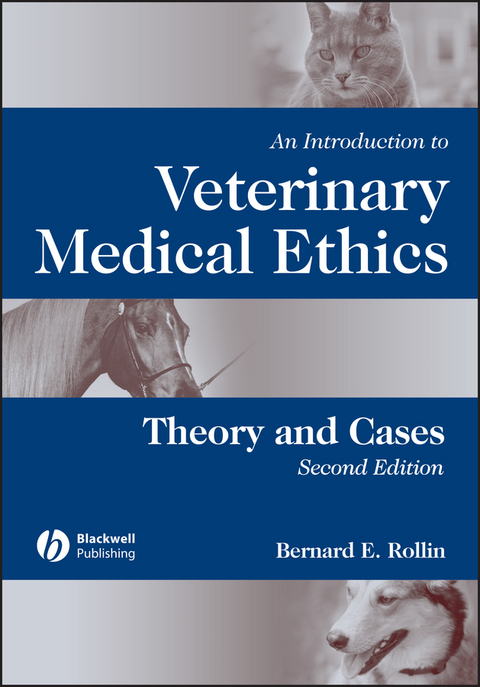
An Introduction to Veterinary Medical Ethics (eBook)
John Wiley & Sons (Verlag)
978-1-118-70453-0 (ISBN)
Written by an acknowledged pioneer in veterinary ethics, An Introduction to Veterinary Medical Ethics addresses the ethical challenges that veterinarians face daily as they seek to balance obligations to animal, client, peers, society and self. The book offers a highly readable and approachable introduction to the nature of ethical theory, reasoning and decision-making, and its practical application to veterinary medicine. Now with over 100 real-life veterinary case histories and analysis, this edition also includes new discussions of animal pain, distress and happiness, ethics of critical care, alternative medicine, legal status and value of animals, and Aesculapian authority.
An Introduction to Veterinary Medical Ethics: Theory and Cases, Second Edition is recommended as essential reading for all veterinary students and practitioners, as well as those interested in general animal welfare.
- New edition from an acknowledged pioneer in veterinary ethics
- Addresses ethical challenges that veterinary medicine, with over 100 real-life cases
- Includes new discussion of legal status and value of animals, alternative medicine, Aesculapian authority, ethics and critical care, and animal pain, distress and happiness
- Ideal for veterinary students and practitioners
ABOUT THE AUTHOR:
Bernard E. Rollin, Ph.D. is University Distinguished Professor of Philosophy, Biomedical Sciences, Animal Sciences, and University Bioethicist at Colorado State University, Fort Collins, where he developed the world's first course in veterinary ethics and animal ethics. He is the recipient of the prestigious Henry Spira Award from the Johns Hopkins Center for Alternatives to Animal Testing.
One of the most difficult issues that confronts veterinarians and staff today concerns the profession s obligation to the animal and the sometimes conflicting demands from clients, peers and society. The veterinarian s role has become more complex with new ethical challenges posed by issues such as growing public awareness regarding animal welfare, increasing economic value of companion animals, growth of veterinary specialization, experimentation with alternative and complementary medicine, and concern for pain management and mental well-being of animals. Written by an acknowledged pioneer in veterinary ethics, An Introduction to Veterinary Medical Ethics addresses the ethical challenges that veterinarians face daily as they seek to balance obligations to animal, client, peers, society and self. The book offers a highly readable and approachable introduction to the nature of ethical theory, reasoning and decision-making, and its practical application to veterinary medicine. Now with over 100 real-life veterinary case histories and analysis, this edition also includes new discussions of animal pain, distress and happiness, ethics of critical care, alternative medicine, legal status and value of animals, and Aesculapian authority. An Introduction to Veterinary Medical Ethics: Theory and Cases, Second Edition is recommended as essential reading for all veterinary students and practitioners, as well as those interested in general animal welfare. New edition from an acknowledged pioneer in veterinary ethics Addresses ethical challenges that veterinary medicine, with over 100 real-life cases Includes new discussion of legal status and value of animals, alternative medicine, Aesculapian authority, ethics and critical care, and animal pain, distress and happiness Ideal for veterinary students and practitioners
ABOUT THE AUTHOR: Bernard E. Rollin, Ph.D. is University Distinguished Professor of Philosophy, Biomedical Sciences, Animal Sciences, and University Bioethicist at Colorado State University, Fort Collins, where he developed the world's first course in veterinary ethics and animal ethics. He is the recipient of the prestigious Henry Spira Award from the Johns Hopkins Center for Alternatives to Animal Testing.
Title Page 5
Contents 9
Preface to the Second Edition 13
Preface to the First Edition 15
PART I. Theory 17
Social, Personal, and Professional Ethics 23
Ethics1 and Ethics2 26
Ethical Vectors in Veterinary Medicine 30
The Anatomy of Ethical Decision Making 33
The Nature of Ethical Theory 35
Effecting Ethical Change 40
The Fundamental Question of Veterinary Ethics 43
New Patterns of Animal Use 45
Articulating a New Ethic for Animals 50
Veterinarians and the New Social Ethic for Animals 53
How Veterinary Medicine Should Respond to the New Ethic: The Case of Animal Research 55
Veterinarians and Farm Animal Welfare 57
Recent Progress 62
Veterinarians and Companion Animal Welfare 65
Subtle Advantages of Pursuing Companion Animal Welfare 69
The Changing Role of Companion Animals and Their Value 75
Pain in Veterinary (and Human) Scientific Medicine 80
Animal Distress and Animal Happiness 85
The Ethics of Critical Care 93
Aesculapian Authority in Veterinary Medicine 99
The Ethics of Alternative Veterinary Medicine 109
PART II. Cases 119
Introduction 121
Case 1. Cow with Cancer Eye 122
Case 2. Substandard Husbandry for Sheep 124
Case 3. Fracture Fixation 126
Case 4. Farmer Using Illegal Growth Promotant 127
Case 5. Client Sells Known BVD Shedders 129
Case 6. Client Requests Dog Euthanasia Because She Is Moving 131
Case 7. Farmer Requests a Fetotomy 134
Case 8. Suspected Dogfighting 136
Case 9. Docking and Cropping of Dobermans 138
Case 10. Leaving a Sow Untreated 141
Case 11. Euthanasia of Cat Who Sprays 143
Case 12. Euthanasia of Treatable Horse for Insurance 145
Case 13. Euthanasia of Grieving Dog 147
Case 14. Supernumerary Teat Removal 149
Case 15. Breeder Seeking Euthanasia for Puppy with Overbite 151
Case 16. Veterinary Anatomist Spaying Farm Cats 153
Case 17. Breeder Asking for Anesthetics So She Can Crop Ears 155
Case 18. Penicillin Residue in Milk 157
Case 19. Marketing Heartworm Regimen 159
Case 20. Dairy Farmers Using Unauthorized Feed Additive Prescribed by a Veterinarian 161
Case 21. Veterinarian’s Responsibility When a Dog Is Suspected to Be Overly Aggressive 163
Case 22. Painful Research Designed without Analgesia 165
Case 23. Clients Who Insist on Continuing Treatment for Failing Cancer Dog 167
Case 24. Tail Docking in Dairy Cattle 170
Case 25. Killing of Neonatal Buck Kids 172
Case 26. Veterinarian Discovers Violations in Religious Slaughter 174
Case 27. Using Information about Alternative Surgical Training in Hiring 176
Case 28. Pig Farmer Asking for Euthanasia Solution 178
Case 29. Feeding Kittens to Snakes 180
Case 30. Veterinarian Seeking Maternity Leave 181
Case 31. Surgical Procedures Performed by a Technician 183
Case 32. Veterinary Liaison with Pet Store Chain Providing Poor Animal Care 185
Case 33. Freeze-Firing Racehorses 187
Case 34. Performing Cat Castration on the Farm 189
Case 35. Irresponsible Veterinarian-Breeder 191
Case 36. Annual Rabies Vaccination 193
Case 37. Government Policy Regarding Export of Breeding Swine 195
Case 38. Improperly Labeled Prescriptions Swallowed by Child 197
Case 39. Referral Practice “Stealing” Clients 199
Case 40. Confidentiality and a Breeder Perpetuating a Line of Dogs with Seizures 201
Case 41. Should Veterinarians Be Required to Report Animal Abuse? 203
Case 42. Two Cases of Found Dogs 205
Case 43. Should a Biting Dog Be Adopted Out? 207
Case 44. Euthanizing Sick Animals without Their Owner’s Permission 209
Case 45. Partner’s Misdiagnosis 211
Case 46. Heavy Metal Toxicosis and Slaughter for Food 213
Case 47. Conflict of Interest 215
Case 48. Rabies Vaccine for Livestock 217
Case 49. Female Veterinarian Receiving Unwelcome Attention 219
Case 50. Female Veterinarian Offended by Colleagues’ Humor 221
Case 51. Client Refuses Euthanasia for Sick Cat 223
Case 52. Should Veterinarians Prescribe Drugs to Increase Productivity? 225
Case 53. Previous Practitioner Leaves Sponge in Dog’s Peritoneum 227
Case 54. Illicit Importation of Boar Semen 229
Case 55. Misreading of Radiograph 231
Case 56. Cattery Serving as Source of FIP 233
Case 57. Injured, Unowned Animal 235
Case 58. Writing Prescriptions for Branded Drugs in Return for Financial Incentive 237
Case 59. Negligence of an Emergency Clinician in Treating Trauma 239
Case 60. Poor Air Quality in Swine Barn 241
Case 61. Supplementing Income with Prescription Drugs 244
Case 62. Client’s Request to Euthanize His Dog after His Death 246
Case 63. Confidentiality and an Employee’s History of Drug Abuse 248
Case 64. Convenience Euthanasia of a Dog without Proper Permission 251
Case 65. Veterinarian Who Ignores Roundworms in Puppies 253
Case 66. Stray Tattooed Beagle 255
Case 67. Prescribing and Selling Pharmaceuticals 257
Case 68. Suspected Poisoning 259
Case 69. Euthanasia of Research Animal without Researcher’s Permission 261
Case 70. Anorexic Client Not Feeding Her Dog 263
Case 71. Improving Rural Euthanasia 265
Case 72. Second Commentary on Stray Tattooed Beagle 267
Case 73. Bull Mastiff with Osteosarcoma 269
Case 74. Financially Stressed Client and Annual Physical 271
Case 75. Botched Caesarean Section 273
Case 76. Farmer Asking Advice of “Experts” 275
Case 77. Confidentiality in the Case of a Client Selling Sick Animals 277
Case 78. Conflict in Obligations to a Peer and a Client 279
Case 79. Reporting a Dog Being Used to Carry Drugs 281
Case 80. An Elderly Client Seeking “Unnecessary” Medical Advice 283
Case 81. A Cat Who Fractures Both Legs after a Surgical Procedure 285
Case 82. Can Annual Vaccinations Be Justified? 287
Case 83. An Organic Farmer Who Won’t Use Antibiotics for Foot Rot 289
Case 84. Using Wood Chippers to Kill Chickens 291
Case 85. Should Shelters Place Animals in Less than Perfect Homes? 293
Case 86. Why Should We Worry about Animal Suffering Right before Death? 295
Case 87. “Good” versus “Natural” Death 297
Case 88. Is It Wrong to Modify Animals to Fit Production Systems? 299
Case 89. How Do Veterinarians Respond to Clients with Too Many Animals? 301
Case 90. Should a Veterinarian Wear Company Logos? 303
Case 91. Technicians Performing Management Procedures on Farm 305
Case 92. Extralabel Drug Use 307
Case 93. Animal Welfare versus Animal Rights 309
Case 94. Raw Diet 311
Case 95. Using an Elastrator on Older Bulls 313
Case 96. Finding Animals for Continuing Education 315
Case 97. Should Veterinarians Support Activist Groups? 317
Case 98. Auditability of Animal Welfare 319
Case 99. Producer Unwilling to Euthanize Sick Pigs 321
Case 100. Veterinarians and Laws Banning Pitbulls 323
Case 101. Giving Analgesics to Mask Pain in Horses 325
Case 102. Are Animals Raised in Confinement Happy in Confinement? 327
Case 103. Elderly Couple Adopting Many Animals 329
Case 104. The Ethics of Killing Healthy Animals 331
Appendix 333
References 337
Index 341
| Erscheint lt. Verlag | 13.5.2013 |
|---|---|
| Sprache | englisch |
| Themenwelt | Medizin / Pharmazie ► Medizinische Fachgebiete ► Medizinethik |
| Studium ► Querschnittsbereiche ► Geschichte / Ethik der Medizin | |
| Veterinärmedizin | |
| Schlagworte | Alternative • animal • Animal Welfare, Ethics & Law • awareness • become • challenges • companion animals • Complex • confronts • difficult • Ethical • growing • growth • Issues • New • professions • Public • regarding • Role • Staff • Tierschutz, Ethik u. Recht • Today • Veterinärmedizin • veterinarians • Veterinärmedizin • Veterinary Medicine • veterinary specialization |
| ISBN-10 | 1-118-70453-3 / 1118704533 |
| ISBN-13 | 978-1-118-70453-0 / 9781118704530 |
| Informationen gemäß Produktsicherheitsverordnung (GPSR) | |
| Haben Sie eine Frage zum Produkt? |
 PDF (Adobe DRM)
Kopierschutz: Adobe-DRM
Adobe-DRM ist ein Kopierschutz, der das eBook vor Mißbrauch schützen soll. Dabei wird das eBook bereits beim Download auf Ihre persönliche Adobe-ID autorisiert. Lesen können Sie das eBook dann nur auf den Geräten, welche ebenfalls auf Ihre Adobe-ID registriert sind.
Details zum Adobe-DRM
Dateiformat: PDF (Portable Document Format)
Mit einem festen Seitenlayout eignet sich die PDF besonders für Fachbücher mit Spalten, Tabellen und Abbildungen. Eine PDF kann auf fast allen Geräten angezeigt werden, ist aber für kleine Displays (Smartphone, eReader) nur eingeschränkt geeignet.
Systemvoraussetzungen:
PC/Mac: Mit einem PC oder Mac können Sie dieses eBook lesen. Sie benötigen eine
eReader: Dieses eBook kann mit (fast) allen eBook-Readern gelesen werden. Mit dem amazon-Kindle ist es aber nicht kompatibel.
Smartphone/Tablet: Egal ob Apple oder Android, dieses eBook können Sie lesen. Sie benötigen eine
Geräteliste und zusätzliche Hinweise
Buying eBooks from abroad
For tax law reasons we can sell eBooks just within Germany and Switzerland. Regrettably we cannot fulfill eBook-orders from other countries.
aus dem Bereich


