


Tokyo
Seiten
2009
Edition Axel Menges (Verlag)
978-3-936681-27-7 (ISBN)
Edition Axel Menges (Verlag)
978-3-936681-27-7 (ISBN)
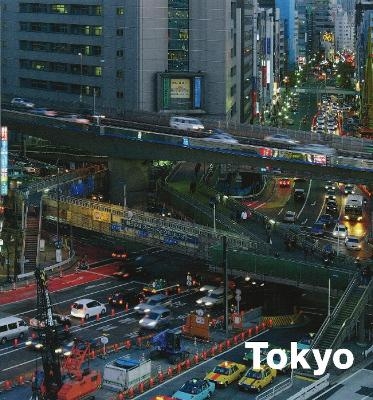
Cities are often seen as symbols of order: the existence of city walls, fortified gates, palaces, temples, roads, pavements, highways, public institutions, city centres and residential areas is nterpreted as indicating the existence of a central authority that plans and controls the city. On the other hand, the very same cities are also seen as symbols of spontaneous growth. The little winding streets and alleys, the mixture of physical structures, styles and human activities have often given the impression that cities, like forests, and other natural entities are organic structures - strange 'natural artifacts'. Tokyo is a good example for this dual nature of cities. When you first encounter it, you get the impression of chaos: old buildings with one or two storeys next to 30-, 40- or 50-storey skyscrapers; pedestrians, cars, trains moving in all directions, each with its own trajectory. But then you realize that this seemingly chaotic structure provides a context for perfectly ordered human activities: trains leave and arrive as timetabled, their doors open at the exact points that are marked with yellow lines on the platforms; early in the morning fishermen bring their catch to Tokyo's big fish market, auctions are held, and by six o'clock this huge amount of sea food has already been distributed among thousands of restaurants all over the city. And if you look deeper you learn that the chaotic face of Tokyo is the precondition for its ordered and organized life.
Cities are often seen as symbols of order: the existence of citywalls, fortified gates, palaces, temples, roads, pavements, highways,public institutions, city centres and residential areas is interpretedas indicating the existence of a central authority that plansand controls the city. On the other hand, the very same cities arealso seen as symbols of spontaneous growth. The little windingstreets and alleys, the mixture of physical structures, styles andhuman activities have often given the impression that cities, likeforests, and other natural entities are organic structures - strange'natural artifacts'.Tokyo is a good example for this dual nature of cities. When youfirst encounter it, you get the impression of chaos: old buildingswith one or two storeys next to 30-, 40- or 50-storey skyscrapers;pedestrians, cars, trains moving in all directions, each with its owntrajectory. But then you realize that this seemingly chaotic structureprovides a context for perfectly ordered human activities: trainsleave and arrive as timetabled, their doors open at the exact pointsthat are marked with yellow lines on the platforms; early in themorning fishermen bring their catch to Tokyo's big fish market, auctionsare held, and by six o'clock this huge amount of sea food hasalready been distributed among thousands of restaurants all overthe city. And if you look deeper you learn that the chaotic face ofTokyo is the precondition for its ordered and organized life.Complexity theory or self-organization theory are umbrella termsfor a set of theories that study the interplay between chaos andorder. Originating in the sciences, these theories have been appliedto the study of cities in the last three decades. They show that asin natural systems, in the artificial systems that we call cities, chaosand order do not stand in opposition to each other. Rather, theycoexist in an ongoing interplay of circular causality: chaos is the preconditionfor new urban orders to emerge and then to reproducethemselves, whereas order and organization set the boundarieswithin which chaotic structures and behaviors can take place.Juval Portugali is professor of human geography in the Departmentof Geography and the Human Environment at Tel Aviv University.His research is devoted to the city as a self-organizing system.In addition to his teaching in Israel, he has taught at many universitiesoutside his home country as a guest professor, including TokyoUniversity. Wolf-Dieter Gericke studied architecture at Stuttgart University.He works as a free-lance photographer and designer inWaiblingen near Stuttgart. He has been visiting Tokyo almost everyyear for some time now.
Cities are often seen as symbols of order: the existence of citywalls, fortified gates, palaces, temples, roads, pavements, highways,public institutions, city centres and residential areas is interpretedas indicating the existence of a central authority that plansand controls the city. On the other hand, the very same cities arealso seen as symbols of spontaneous growth. The little windingstreets and alleys, the mixture of physical structures, styles andhuman activities have often given the impression that cities, likeforests, and other natural entities are organic structures - strange'natural artifacts'.Tokyo is a good example for this dual nature of cities. When youfirst encounter it, you get the impression of chaos: old buildingswith one or two storeys next to 30-, 40- or 50-storey skyscrapers;pedestrians, cars, trains moving in all directions, each with its owntrajectory. But then you realize that this seemingly chaotic structureprovides a context for perfectly ordered human activities: trainsleave and arrive as timetabled, their doors open at the exact pointsthat are marked with yellow lines on the platforms; early in themorning fishermen bring their catch to Tokyo's big fish market, auctionsare held, and by six o'clock this huge amount of sea food hasalready been distributed among thousands of restaurants all overthe city. And if you look deeper you learn that the chaotic face ofTokyo is the precondition for its ordered and organized life.Complexity theory or self-organization theory are umbrella termsfor a set of theories that study the interplay between chaos andorder. Originating in the sciences, these theories have been appliedto the study of cities in the last three decades. They show that asin natural systems, in the artificial systems that we call cities, chaosand order do not stand in opposition to each other. Rather, theycoexist in an ongoing interplay of circular causality: chaos is the preconditionfor new urban orders to emerge and then to reproducethemselves, whereas order and organization set the boundarieswithin which chaotic structures and behaviors can take place.Juval Portugali is professor of human geography in the Departmentof Geography and the Human Environment at Tel Aviv University.His research is devoted to the city as a self-organizing system.In addition to his teaching in Israel, he has taught at many universitiesoutside his home country as a guest professor, including TokyoUniversity. Wolf-Dieter Gericke studied architecture at Stuttgart University.He works as a free-lance photographer and designer inWaiblingen near Stuttgart. He has been visiting Tokyo almost everyyear for some time now.
| Erscheint lt. Verlag | 10.6.2009 |
|---|---|
| Vorwort | Juval Portugali |
| Sprache | englisch |
| Maße | 280 x 300 mm |
| Gewicht | 810 g |
| Einbandart | gebunden |
| Themenwelt | Reisen ► Bildbände ► Asien |
| Technik ► Architektur | |
| Schlagworte | Tokio; Bildband • Tokio, Kunst; Architektur |
| ISBN-10 | 3-936681-27-9 / 3936681279 |
| ISBN-13 | 978-3-936681-27-7 / 9783936681277 |
| Zustand | Neuware |
| Informationen gemäß Produktsicherheitsverordnung (GPSR) | |
| Haben Sie eine Frage zum Produkt? |
Mehr entdecken
aus dem Bereich


aus dem Bereich
mit der Bahn, mit dem Rad oder zu Fuß unterwegs in Metropolen und auf …
Buch | Hardcover (2025)
MAIRDUMONT (Verlag)
CHF 44,90
die legendäre Expedition von George Mallory
Buch | Hardcover (2024)
Frederking & Thaler (Verlag)
CHF 51,90


