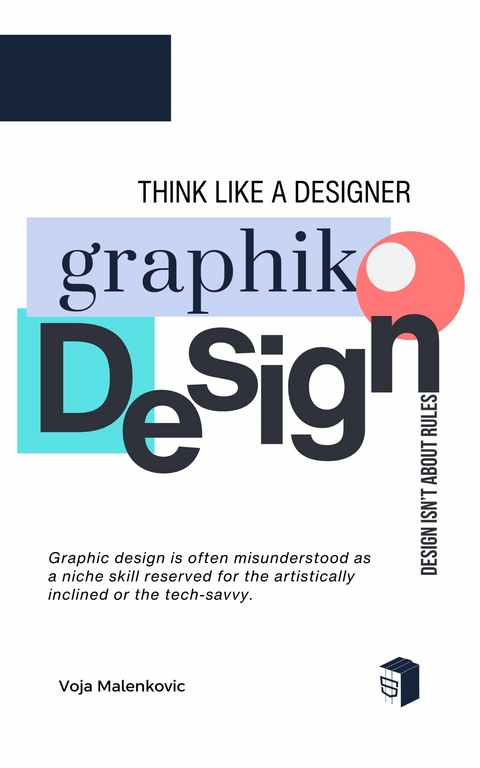
Think Like a Designer (eBook)
190 Seiten
FIVE POCKET publishing (Verlag)
978-0-00-111913-0 (ISBN)
Unleash your creativity and learn to think like a designer.
Whether you're a complete beginner or a self-taught creative looking to sharpen your skills, Think Like a Designer is your essential guide to mastering the art and strategy of graphic design. This visually driven and deeply practical book breaks down everything from foundational principles to professional insights - without the fluff.
Explore how typography, color theory, layout, branding, and creativity come together to shape powerful design. Learn the mindset that drives great creatives, and gain real-world skills to craft logos, packaging, social media graphics, and more.
With rich examples, case studies, and hands-on exercises, you'll not only learn how to design - you'll learn how to think like a designer in any medium.
Inside, you'll discover:
- The fundamentals of visual communication and design thinking
- How to use color, typography, grids, and hierarchy effectively
- Strategies for creativity, idea generation, and overcoming creative blocks
- The psychology behind strong branding and visual storytelling
- Real-world applications in print, digital, and packaging design
- A historical perspective that brings timeless lessons into today's work
- How to build your personal brand, portfolio, and career as a designer
Whether you're a student, entrepreneur, artist, or creative thinker, this book will help you turn ideas into impact. Design is not just what you see - it's how you think.
The Foundations of Graphic Design
What is Graphic Design?
Graphic design is all around us. It shapes the world we interact with, from the packaging on your morning cereal to the advertisements you scroll past on your phone. But graphic design is much more than aesthetics - it’s a powerful tool for communication, where creativity meets strategy to convey messages that words alone often can’t achieve.
At its essence, graphic design is about solving problems visually. It’s the process of transforming abstract ideas - whether a brand identity, an event promotion, or a public service announcement - into visual solutions that are clear, engaging, and impactful. It’s not just a skill for artists; it’s a craft for thinkers, strategists, and communicators who want to make ideas resonate.
This dynamic, ever-evolving field thrives at the intersection of art, strategy, and communication. Whether you’re designing a logo, crafting a website, or building a marketing campaign, the foundation of great work always remains the same: a deep understanding of design principles and a commitment to effective communication.
In this chapter, we’ll explore the building blocks of graphic design, providing you with the insights and tools to create work that is not only visually appealing but also purposeful and impactful. Welcome to your journey into the world of design-a craft that empowers you to connect, inspire, and create.
The Purpose and Role of Graphic Design.
Graphic design is more than just creating visually appealing content - it’s a way to communicate, shape perceptions, and create memorable experiences. At its heart, graphic design serves a purpose: to bridge the gap between ideas and audiences through visuals that inform, inspire, and persuade. Whether it’s crafting a bold advertisement or designing an intuitive app interface, graphic design plays a critical role in how we engage with the world around us.
Visual Communication: Turning Ideas into Visual Stories
At its core, graphic design is about communication. It takes abstract or complex ideas and translates them into clear, visual messages that are easy to understand and emotionally engaging. In a world inundated with information, design acts as a filter that simplifies and organizes content, ensuring that the intended message reaches its audience effectively.
Why Visual Communication Matters
Clarity: A well-designed infographic can explain a concept in seconds, while a text-heavy document might take minutes to read and process.
Engagement: People are naturally drawn to visuals, making them a powerful tool to capture attention.
Retention: Studies show that people remember information better when it’s presented visually, reinforcing the importance of design in communication.
Example: Consider a public health campaign aimed at raising awareness about handwashing. A poster with a clear, engaging design - featuring easy-to-follow icons and a bold headline - will be far more effective than a block of text. The design’s ability to communicate quickly and clearly can make all the difference in achieving its purpose.
Shaping Perception: The Emotional Power of Design
Graphic design doesn’t just convey information - it shapes how people feel about that information. It connects on an emotional level, creating associations that make messages more memorable and impactful. From a brand’s identity to a political campaign, design can evoke trust, excitement, nostalgia, or even urgency.
How Design Shapes Perception
Branding: Think about iconic brands like Nike, Apple, or Coca-Cola. Their logos and visual identities are more than just visuals - they’re symbols of the emotions and values these companies represent. Nike’s swoosh evokes movement and empowerment, Apple’s minimalist logo signifies innovation and simplicity, and Coca-Cola’s classic typography fosters a sense of nostalgia and happiness.
Marketing: A visually stunning advertisement doesn’t just grab attention; it persuades and motivates. It connects the viewer’s emotions to the product or message being advertised.
Example: The 2014 Airbnb rebrand transformed the company perception. The introduction of the “Bélo” symbol, represent-ing belonging and community, shifted Airbnb from a simple booking platform to a global brand that promised meaningful experiences. The rebrand was more than a logo; it redefined how people felt about travel and connection.
Real-World Examples: Design in Action
The role of graphic design extends across various fields and mediums, from digital interfaces to print materials. Here are some real-world examples that highlight the purpose and power of design in different contexts:
1. A Minimalist Website That Enhances User Experience
A clean, well-structured website prioritizes usability and accessibility. Take Google’s homepage as an example: its minimalist design, with a single search bar and plenty of white space, ensures a seamless user experience. The simplicity not only reflects Google’s brand identity but also puts the user’s needs front and center.
2. A Vibrant Movie Poster That Captures the Film’s Essence
Movie posters are an art form in themselves. Consider the poster for Jaws (1975): a single striking image of a massive shark beneath an unsuspecting swimmer. Combined with bold typography, the design captures the suspense and terror of the film, making it unforgettable. A successful movie poster doesn’t just promote the film - it sets the tone and builds excitement.
3. An Elegant Product Package That Drives Purchase Decisions
In a crowded supermarket aisle, the design of a product’s packaging can make or break a sale. Apple’s packaging, for example, is a masterclass in design. Its clean, minimalist aesthetic reflects the brand’s values of sophistication and innovation, making the unboxing experience almost as iconic as the product itself. This level of design not only attracts customers but reinforces the brand’s identity at every touchpoint.
Why the Purpose and Role of Graphic Design Matter
Graphic design is more than just a creative discipline - it’s a strategic one. Its purpose goes beyond making things look good; it’s about solving problems, influencing decisions, and creating meaningful connections. By understanding the role of design as a tool for communication and perception, designers can create work that resonates deeply and achieves its intended goals.
The Designer’s Toolbox.
Every designer, whether a beginner or a seasoned professional, relies on a set of tools to bring their ideas to life. These tools, ranging from hardware to software to traditional sketching methods, are the foundation of the creative process. While technology has revolutionized the field of graphic design, the essentials remain a mix of the digital and analog, blending modern innovation with timeless techniques. The first step in building your designer’s toolbox is ensuring you have the right hardware. Your equipment can significantly impact the efficiency and quality of your work, so choosing reliable and capable tools is essential.
1. A Reliable Computer or Laptop
Your computer is the cornerstone of your design work. Whether you’re editing photos, creating complex vector graphics, or rendering animations, you need a machine that can handle demanding design software.
2. A Graphic Tablet (Optional)
For illustrators and designers who work with intricate details, a graphic tablet can be a game-changer. It allows for natural hand-drawn input, bridging the gap between traditional and digital art.
Software You’ll Use
The right software is just as important as your hardware. Today’s designers have access to a wide array of tools tailored for various tasks, from photo editing to collaborative design.
Sketchbooks and Analog Tools
Even in a digital age dominated by software, the humble sketchbook remains an invaluable tool for designers. There’s something uniquely intuitive about putting pencil to paper - a process that fosters creativity and allows for freeform brainstorming without the constraints of digital tools.
Why Analog Tools Still Matter
Flexibility: Sketching lets you quickly jot down ideas or explore multiple concepts without worrying about software precision.
Creativity: The tactile experience of drawing often sparks ideas that might not emerge in a digital environment.
Portability: A small sketchbook and pencil can accompany you anywhere, making it easy to capture inspiration on the go.
Building Your Toolbox for Success
Each designer’s toolbox will look slightly different, tailored to their needs and preferences. As you grow in your craft, you’ll discover which tools resonate most with your workflow. Whether it’s the precision of a Wacom tablet, the simplicity of Canva, or the versatility of Adobe Creative Suite, the key is to find the combination that empowers you to bring your ideas to life.
The Designer’s Mindset.
Great design doesn’t just happen - it starts...
| Erscheint lt. Verlag | 8.12.2025 |
|---|---|
| Sprache | englisch |
| Themenwelt | Technik |
| ISBN-10 | 0-00-111913-3 / 0001119133 |
| ISBN-13 | 978-0-00-111913-0 / 9780001119130 |
| Informationen gemäß Produktsicherheitsverordnung (GPSR) | |
| Haben Sie eine Frage zum Produkt? |
 EPUB (Adobe DRM)
Größe: 1,5 MB
Kopierschutz: Adobe-DRM
Adobe-DRM ist ein Kopierschutz, der das eBook vor Mißbrauch schützen soll. Dabei wird das eBook bereits beim Download auf Ihre persönliche Adobe-ID autorisiert. Lesen können Sie das eBook dann nur auf den Geräten, welche ebenfalls auf Ihre Adobe-ID registriert sind.
Details zum Adobe-DRM
Dateiformat: EPUB (Electronic Publication)
EPUB ist ein offener Standard für eBooks und eignet sich besonders zur Darstellung von Belletristik und Sachbüchern. Der Fließtext wird dynamisch an die Display- und Schriftgröße angepasst. Auch für mobile Lesegeräte ist EPUB daher gut geeignet.
Systemvoraussetzungen:
PC/Mac: Mit einem PC oder Mac können Sie dieses eBook lesen. Sie benötigen eine
eReader: Dieses eBook kann mit (fast) allen eBook-Readern gelesen werden. Mit dem amazon-Kindle ist es aber nicht kompatibel.
Smartphone/Tablet: Egal ob Apple oder Android, dieses eBook können Sie lesen. Sie benötigen eine
Geräteliste und zusätzliche Hinweise
Buying eBooks from abroad
For tax law reasons we can sell eBooks just within Germany and Switzerland. Regrettably we cannot fulfill eBook-orders from other countries.
aus dem Bereich