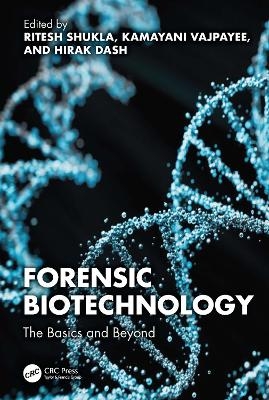
Forensic Biotechnology
CRC Press (Verlag)
978-1-032-75500-7 (ISBN)
- Noch nicht erschienen (ca. Juni 2026)
- Versandkostenfrei
- Auch auf Rechnung
- Artikel merken
Forensic Biotechnology: The Basics and Beyond provides a comprehensive exploration of biotechnology's transformative role in modern forensic science. This essential resource covers the field through carefully structured chapters, beginning with foundational concepts including sample collection, preservation, and data interpretation, then progressing through practical applications such as microbial forensics, wildlife forensics, and DNA barcoding. The book advances to sophisticated topics including DNA mixture interpretation, forensic DNA phenotyping, epigenetic signatures, and proteomics. It concludes with a critical examination of DNA evidence admissibility in courtroom proceedings.
Beyond technical expertise, the book tackles the ethical, legal, and social implications of biotechnology in forensic investigations, including privacy concerns and scientific evidence admissibility. It provides in-depth analysis of cutting-edge techniques including polymerase chain reaction (PCR), short tandem repeat (STR) analysis, mitochondrial DNA analysis, next-generation sequencing (NGS), and advanced molecular biology methods. Coverage examines both the strengths and limitations of various forensic biotechnology methodologies, ensuring readers develop a balanced understanding of current capabilities and constraints in the field.
Enhanced with real-world case studies and practical examples, the book serves as an educational resource and professional reference guide, of vital importance to forensic scientists, attorneys, researchers, and students exploring the impact of biotechnology on justice and criminal investigations.
Hirak Ranjan Dash is currently an Assistant Professor of Forensic Biology and Biotechnology at the National Forensic Sciences University, Delhi Campus, New Delhi, India. Before joining academics, he served as a Forensic DNA Expert at Madhya Pradesh Forensic Science Services for over six years. He obtained his doctoral degree from the National Institute of Technology, Rourkela. He’s an expert in the fields of environmental and forensic microbiology, DNA fingerprinting, microbial phylogeny and diversity, genetics, bioremediation, degradation of biological materials, and applied microbiology. Dr. Dash has authored 54 peer-reviewed publications, ten book chapters, 9 books, and 3 popular scientific articles to date. Kamayani Vajpayee is a doctoral candidate currently studying the factors behind inconclusive DNA reports in the Nanomaterial and Toxicology Laboratory at the Biological and Life Sciences Division, School of Arts and Sciences, Ahmedabad University, Ahmedabad, Gujarat, India. She is a biotechnology graduate who completed her Master’s in Forensic Science from the University of Lucknow, Uttar Pradesh. Her doctoral research mainly focuses on understanding PCR inhibition mechanisms in Forensic DNA analysis and how NanoPCR could circumvent this issue. Ms. Vajpayee has authored 12 peer-reviewed publications and 5 book chapters to date. Ritesh K. Shukla has been an Assistant Professor in the Biological and Life Sciences, the School of Arts and Sciences of Ahmedabad University, Ahmedabad, Gujarat, India since 2014. He received his doctorate degree in Toxicology (Nanomaterial Toxicology) in 2013 from Jamia Hamdard, New Delhi for the work he did at CSIR-IITR, Lucknow. Before joining Ahmedabad University, he served as Assistant Professor at the Institute of Forensic Science, Nagpur, and Guru Ghasidas Vishwavidyalaya, a Central University, Bilaspur. Dr. Shukla has co-authored more than 42 research journal articles and 9 book chapters; his also the editor of 3 books.
1: Forensic Biotechnology: Introduction and Advancements 2: Collection and Preservation of Samples for Forensic DNA Analysis 3: Insights into Body Fluid Identification for Criminal Investigations 4: Introduction to DNA Profiling Techniques5: Next-Generation Sequencing in Forensic Science: Advancements, Limitations, and Applications 6: From Data to Interpretation: Statistical Software in Forensic DNA Typing 7: Challenges and Limitations of Forensic DNA Profiling Technique 8: Ethical and normative implications of Forensic DNA Technology 9: DNA Barcoding and its Potential Applications in Forensic Investigations 10: Microbial Forensics 11: The Rising Path of Forensic Archaeology: An Indian Perspective 12: Wildlife Forensics: From the Science of Conservation to the Courtroom 13: Forensic DNA Phenotyping: Techniques, Successes, and Future Directions 14: Streamlining Forensic DNA Analysis with RAPID DNA Typing: Current Developments and Future Directions 15: Exploring the Role of Epigenetic Factors in Forensic Science 16: Mass spectrometry in forensic DNA analysis: A new frontier 17: Role of Proteomics in Criminal Investigations 18: Unraveling Injustice: The Impact of DNA Exonerations
| Erscheint lt. Verlag | 30.6.2026 |
|---|---|
| Zusatzinfo | 22 Tables, black and white; 15 Line drawings, color; 5 Line drawings, black and white; 11 Halftones, color; 1 Halftones, black and white; 26 Illustrations, color; 6 Illustrations, black and white |
| Verlagsort | London |
| Sprache | englisch |
| Maße | 178 x 254 mm |
| Themenwelt | Naturwissenschaften ► Biologie ► Genetik / Molekularbiologie |
| Recht / Steuern ► Strafrecht ► Kriminologie | |
| Technik ► Umwelttechnik / Biotechnologie | |
| ISBN-10 | 1-032-75500-8 / 1032755008 |
| ISBN-13 | 978-1-032-75500-7 / 9781032755007 |
| Zustand | Neuware |
| Informationen gemäß Produktsicherheitsverordnung (GPSR) | |
| Haben Sie eine Frage zum Produkt? |
aus dem Bereich