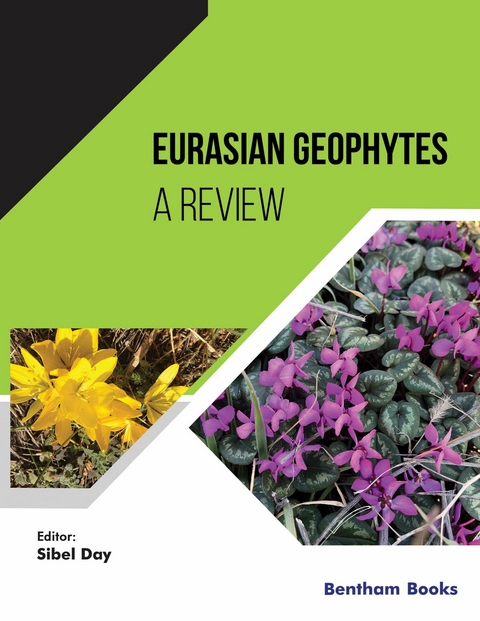
Eurasian Geophytes: A Review (eBook)
180 Seiten
Bentham Science Publishers (Verlag)
979-8-89881-057-3 (ISBN)

This volume bridges scientific research with applied horticultural practices by examining the taxonomy, cultivation, ecological significance and conservation of ornamental and medicinal plants such as Fritillaria, Gladiolus, and Saffron. This book explores environmental requirements and sustainable cultivation methods by covering topics from plant morphology and classification to seed and vegetative propagation techniques-including tissue culture. Chapters also highlight the ethnobotanical value of these species and the challenges posed by habitat loss and overharvesting, offering practical conservation strategies to mitigate human impact. Key features: Details morphological and taxonomic insights Presents propagation techniques including advanced tissue culture Discusses soil, climate, and ecological needs for optimal cultivation Highlights traditional medicinal and ornamental applications Emphasizes conservation strategies for protecting wild populations
An Overview of Geophytes: Features and Cultivation
Sibel Day1, *
Abstract
Geophytes, the specialised stems, are classified as true bulbs, onion bulbs, tubers, corms, and rhizomes. Their scientific exploration heightened attention due to their economic and evolutionary significance. Their morphology and cultivation methods show a wide diversity all over the world. Depending on species and genera, their environmental requirements show differences. Improving cultivation practices and conservation efforts for geophytes is important due to anthropogenic pressure. By recognizing the value of geophytes and implementing effective conservation measures, we can safeguard these botanical treasures for future generations.
* Corresponding author Sibel Day: Department of Field Crops, Faculty of Agriculture, Ankara University, Ankara, Türkiye; E-mail: day@ankara.edu.tr
INTRODUCTION
Geophytes are biennial or perennial plants that have organs that can continue to live underground, even though their above-ground organs dry up and die after completing their development during the growing season. These specialised stems have the ability to store nutrients under the soil. The primary function of underground organs is to store nutrients and moisture for growth and to ensure the survival of the species. Geophytes are often referred to as bulbs. Researchers categorise them as true bulbs, onion bulbs, tubers, corms (bulb-like tubers), and rhizomes. However, the term 'bulb' is an appropriate label for all geophytes, regardless of whether they are bulbous, tuberous, or rhizomatous. Therefore, geophytes are commonly known as bulbous plants [1]. Bulbs can be a skin (Tulipa spp. and Narcissus spp., etc.) or without a skin (Fritillaria spp. and Lilium spp., etc.).
Geophytes, botanical organisms renowned for their possession of specialised underground storage organs, exhibit a rich diversity of morphological adaptations that are crucial for nutrient retention, water storage, and survival in varied environmental conditions.
While our understanding of geophytes is gradually advancing, particularly with regard to the evolution of underground traits [1-4] and the ecological determinants of their distribution [5-7], the scientific exploration of these taxa warrants heightened attention due to their economic and evolutionary significance.
So far, the focus of research on the evolution of geophytes has been mainly on specific taxonomic groups [1-3, 5, 8, 9] or geographical regions [6, 7, 10-14]. However, comprehensive studies examining the evolution of these traits on a global scale are lacking, hindering a holistic understanding of the evolutionary drivers of geophytism and the diversity of growth forms observed today.
Geophyte Morphology: Adaptations of Underground Storage Organs
Geophytes, plants with underground storage organs, exhibit diverse morphological adaptations that are essential for survival, growth, and ecological niche. These adaptations are evident in various aspects of their morphology, including storage organs, shoot systems, root systems, reproductive structures, and adaptations to environmental conditions. A comprehensive understanding of geophyte morphology is elucidated through botanical studies, contributing to broader insights into plant evolution, ecology, and horticulture.
Storage Organs
Storage organs such as bulbs, corms, tubers, rhizomes, and tuberous roots (Fig. 1) are prominent features of geophyte morphology [15]. These organs serve as reservoirs of nutrients and water, facilitating survival during adverse conditions and supporting new growth [16]. The diversity of storage organs reflects the adaptive strategies of geophytes to different environmental niches and climatic conditions [17].
Bulbs
Bulbs, characterised by modified, underground stems covered by succulent scale leaves, have been extensively studied in the botanical literature [16]. The basal plate of bulbs serves as the point of root attachment, while the central axis facilitates shoot emergence, often shielded by protective scale leaves [15]. Notable geophytes associated with bulbs include species such as Tulipa, Narcissus, and Lilium [17].
Fig. (1))Storage organs.
Corms
The bulbous tuber (corm) is an enlarged body (basal plate) with scattered nodes and internodes. It is not shaped like onion scales. The basal plate is integrated with many shells and contains spreading root buds. In bulbous tubers, the storage organ is the basal plate. At the top of the bulbous stem is the apical shoot bud, which will later form the leaves and flower shoots. Corms, stout underground stems devoid of fleshy scale leaves, represent another prevalent form of storage organ in geophytes [18]. Surrounded by dry tunics, corms exhibit a solid interior with a centrally located growing point [19]. Botanical investigations have highlighted the significance of corms in species such as Crocus, Gladiolus, and Crocosmia [15].
Tubers
Tubers, characterised by enlarged underground stems that serve as reservoirs for energy reserves, have been extensively studied in the botanical literature [20]. Tubers, whether of stem or root in origin, have multiple eyes or buds for shoot emergence [21]. Well-known geophytes with tuberous storage organs include dahlia, Solanum tuberosum, and cyclamen [22].
Rhizomes
Rhizomes, horizontal underground stems that facilitate storage and vegetative propagation, have garnered significant attention in botanical research [23]. Rhizomes produce shoots and roots at nodes along their length, showcasing varied morphological adaptations [24]. Botanical studies have elucidated the role of rhizomes in geophytes such as Iris, Zingiber officinale, and Asparagus officinalis [25].
Tuberous Roots
Tuberous roots, characterised by thickened, fleshy structures for nutrient storage, are subject to extensive botanical investigation [26]. These roots, often featuring multiple growth points, contribute to the propagation of geophytes [27]. Botanical literature documents the prevalence of tuberous roots in species such as Anemone, Begonia, and Dahlia imperialis [28].
These storage organs, meticulously documented in the botanical literature, underscore the adaptive significance of geophytes in diverse ecological contexts and highlight their central role in plant biology and ecosystem dynamics.
Shoot System
Geophytes often possess modified shoot systems adapted for emergence from underground storage organs [23]. Shoots may consist of stems, leaves, flowers, or combinations thereof and vary in size, shape, and texture among species [24]. Seasonal growth patterns, including dormancy and active growth phases, characterise the shoot systems of geophytes [15].
Root System
Geophytes typically develop fibrous root systems for anchorage, water absorption, and nutrient uptake [20]. Adventitious roots may arise from storage organs or along stems, contributing to resource acquisition and stability [26]. Root systems exhibit adaptations to soil structure, moisture levels, and nutrient availability, optimising plant performance in diverse habitats [22].
Reproductive Structures
Flowers play a vital role in the reproduction of geophytes, often featuring specialized structures for pollination [29]. Flower morphology varies widely among species, reflecting adaptations to pollinators, breeding systems, and environmental conditions [25]. Geophytes employ sexual and asexual reproductive strategies, including seed production and vegetative propagation via offsets, rhizomes, or tubers [28]. Flowers of geophytes play a...
| Erscheint lt. Verlag | 28.10.2025 |
|---|---|
| Reihe/Serie | Frontiers in Horticulture |
| Sprache | englisch |
| Themenwelt | Sachbuch/Ratgeber ► Natur / Technik |
| Technik | |
| ISBN-13 | 979-8-89881-057-3 / 9798898810573 |
| Informationen gemäß Produktsicherheitsverordnung (GPSR) | |
| Haben Sie eine Frage zum Produkt? |
 EPUB (Ohne DRM)
Digital Rights Management: ohne DRM
Dieses eBook enthält kein DRM oder Kopierschutz. Eine Weitergabe an Dritte ist jedoch rechtlich nicht zulässig, weil Sie beim Kauf nur die Rechte an der persönlichen Nutzung erwerben.
Dateiformat: EPUB (Electronic Publication)
EPUB ist ein offener Standard für eBooks und eignet sich besonders zur Darstellung von Belletristik und Sachbüchern. Der Fließtext wird dynamisch an die Display- und Schriftgröße angepasst. Auch für mobile Lesegeräte ist EPUB daher gut geeignet.
Systemvoraussetzungen:
PC/Mac: Mit einem PC oder Mac können Sie dieses eBook lesen. Sie benötigen dafür die kostenlose Software Adobe Digital Editions.
eReader: Dieses eBook kann mit (fast) allen eBook-Readern gelesen werden. Mit dem amazon-Kindle ist es aber nicht kompatibel.
Smartphone/Tablet: Egal ob Apple oder Android, dieses eBook können Sie lesen. Sie benötigen dafür eine kostenlose App.
Geräteliste und zusätzliche Hinweise
Buying eBooks from abroad
For tax law reasons we can sell eBooks just within Germany and Switzerland. Regrettably we cannot fulfill eBook-orders from other countries.
aus dem Bereich