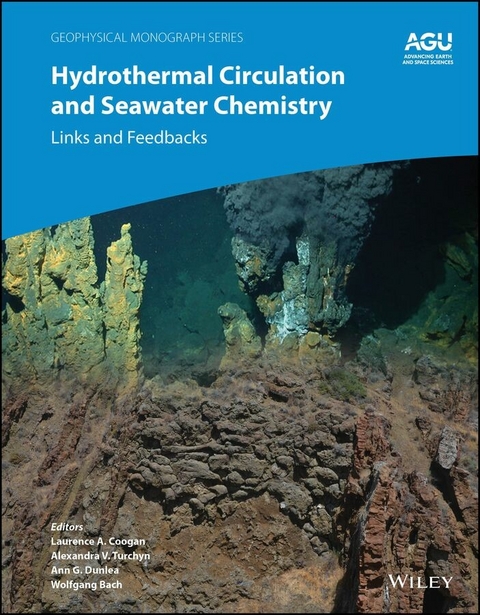
Hydrothermal Circulation and Seawater Chemistry (eBook)
1193 Seiten
American Geophysical Union (Verlag)
978-1-394-22916-1 (ISBN)
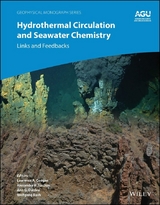
GEOPHYSICAL MONOGRAPH SERIES
Hydrothermal Circulation and Seawater Chemistry
Links and Feedbacks
The chemical exchange between seawater and the underlying ocean crust occurs at temperatures ranging from about 2°C on the seafloor to more than 500°C deep in the crust. These hydrothermal reactions strongly influence the chemical composition of seawater and, in turn, seawater chemistry impacts hydrothermal exchange; these feedbacks play a crucial role in the Earth system.
Hydrothermal Circulation and Seawater Chemistry: Links and Feedbacks explores on- and off-axis hydrothermal systems and their effects on ocean chemistry and the Earth system.
Volume highlights include:
- Hydrothermal fluxes dependent on boundary conditions such as climate and sedimentation history
- Low-temperature, off-axis systems that have large fluxes of elements
- Observational and experimental perspectives of on-axis hydrothermal processes
- Methods for tracking hydrothermal and oceanic processes using sediments or isotope proxies
- The role of oceanic hydrothermal systems in planetary-scale cycles on Earth and beyond
The American Geophysical Union promotes discovery in Earth and space science for the benefit of humanity. Its publications disseminate scientific knowledge and provide resources for researchers, students, and professionals.
Laurence A. Coogan, University of Victoria, Canada
Alexandra V. Turchyn, University of Cambridge, United Kingdom
Ann G. Dunlea, Woods Hole Oceanographic Institution, United States of America
Wolfgang Bach, University of Bremen, Germany
GEOPHYSICAL MONOGRAPH SERIES Hydrothermal Circulation and Seawater Chemistry Links and Feedbacks The chemical exchange between seawater and the underlying ocean crust occurs at temperatures ranging from about 2 C on the seafloor to more than 500 C deep in the crust. These hydrothermal reactions strongly influence the chemical composition of seawater and, in turn, seawater chemistry impacts hydrothermal exchange; these feedbacks play a crucial role in the Earth system. Hydrothermal Circulation and Seawater Chemistry: Links and Feedbacks explores on- and off-axis hydrothermal systems and their effects on ocean chemistry and the Earth system. Volume highlights include: Hydrothermal fluxes dependent on boundary conditions such as climate and sedimentation historyLow-temperature, off-axis systems that have large fluxes of elementsObservational and experimental perspectives of on-axis hydrothermal processesMethods for tracking hydrothermal and oceanic processes using sediments or isotope proxiesThe role of oceanic hydrothermal systems in planetary-scale cycles on Earth and beyond The American Geophysical Union promotes discovery in Earth and space science for the benefit of humanity. Its publications disseminate scientific knowledge and provide resources for researchers, students, and professionals.
PREFACE
Seawater chemistry, the chemical composition of seawater and how it changes over time, plays a critical role in many aspects of the Earth system, and the same is likely to be true on any habitable planet. As such, understanding the controls on seawater chemistry is a central goal of the Earth sciences. One such controlling factor, the chemical exchange between the ocean and the underlying ocean crust, is the focus of this volume. The fluid–rock reactions that control the chemical exchange between the ocean crust and the ocean occur at temperatures ranging from ∼2 °C in bottom ocean water to >500 °C deeper in the crust and closer to the ridge axis where crustal accretion occurs. Hydrothermal Circulation and Seawater Chemistry pulls together chapters describing the state of the art in studies of the role of oceanic hydrothermal systems in influencing seawater chemistry. The chapters address a wide range of questions about how oceanic hydrothermal interactions, including overall fluxes, respond to changes in boundary conditions (e.g., seawater chemistry, ocean crust accretion rates, and climate) and how the imprint of these boundary conditions is recorded in the crust and sediment. The focus of this monograph is on hydrothermal systems associated with the formation and aging of ocean crust, rather than those systems associated with intraplate magmatism and ocean arc magmatism. As explained in Chapter 1, this is mainly due to the larger amount of heat available to drive fluid flow in the crustal accretion and plate cooling settings.
This monograph begins with an introductory chapter (Chapter 1) that provides brief context for other chapters in the volume. The introduction is followed by a series of chapters describing the state of knowledge of how on-axis oceanic hydrothermal systems function, focusing on modern systems and using observational and experimental evidence. Seyfried et al. (Chapter 2) review the controls on the composition of high-temperature (on-axis) hydrothermal fluids based on experimental data. They discuss how the chemical and physical compositions of vent fluids provide constraints on the differences in hydrothermal conditions of fluid–rock reactions at fast- and slow-spreading ridges. The authors argue that differences in the pressure of fluid–rock interaction, and hence the conditions of phase separation, along with differences in the initial rock composition and lifetimes of the systems can explain the differences in end-member hydrothermal fluid compositions between different hydrothermal systems. Syverson and Evans (Chapter 3) describe the range of experimental techniques used to explore fluid–rock reactions relevant to oceanic hydrothermal systems. They review how experimental data have been used to explain numerous characteristics of high-temperature vent fluids such as pH, redox conditions, and metal mobility. Chapters 2 and 3 demonstrate that there is a fairly good understanding of the fundamental controls on high-temperature fluid chemistry from rigorous experimental studies and comparison of the results of these with natural end-member vent fluid compositions. However, as discussed in the final part of Chapter 3 and detailed in Chapter 4, most of the fluid that undergoes high-temperature fluid–rock reaction deep below the seafloor mixes and cools before crossing the seafloor, leading to mineral precipitation in the subsurface.
Diehl and Bach (Chapter 4) discuss the importance of the generation of so-called diffuse flow fluids through the mixing of high-temperature fluids and seawater-like fluids in the lavas. These diffuse fluids (typically <50 °C) carry 50–90% of the heat flux from axial hydrothermal systems and have very different chemistry from end-member high-temperature fluids. Diehl and Bach use a compilation of vent fluid compositions to unravel the changes in fluxes that occur due to subsurface processes that generate diffuse flow. They demonstrate the importance of global fluxes of nonconservative elements at mid-ocean ridges for a better understanding of diffuse flow fluids. Diffuse flow fluids also host most of the microbes and macrofauna that form the unique ecosystems at mid-ocean ridges. The composition of the fluids plays a key role in these ecosystems, as discussed by Yohe and Syverson (Chapter 5). Links and feedbacks between fluid temperature and chemistry and the micro and macro fauna appear ubiquitous, but the extreme heterogeneity in the environmental conditions makes studying such systems complex.
Challenges associated with understanding conditions at the seafloor, and the development of in situ instruments and cabled observatories to overcome some of these challenges, are covered in the chapter by Li et al. (Chapter 6). The authors describe the potential for in situ sensors that can measure chemical and physical parameters near-continuously to revolutionize the understanding of hydrothermal processes. They describe three such approaches: in situ Raman spectroscopy, in situ laser-induced breakdown spectroscopy, and in situ mass spectrometry. Chapter 6 also describes the recent development of cabled observatories that deliver power and internet connectivity to instruments on the seafloor, allowing real-time observations to be made and such data to drive other studies, such as sampling or even rapid-response cruises.
Mixing in the subsurface that leads to the formation of diffuse flow fluids is not the only site of mixing and mineral precipitation in oceanic hydrothermal systems. The spectacular “black smoke” above vents is the result of phase precipitation during mixing and rapid cooling near the vent. Such mixing and particle formation continues in hydrothermal plumes within the water column, which can be traced thousands of kilometers across the ocean, depositing precipitates in the underlying sediment along its flow path. The formation and fate of such hydrothermal sediments is the focus of the chapter by Dunlea et al. (Chapter 7). The formation of these particles not only modifies the chemical flux into the ocean but also, through scavenging, leads to a flux of many elements out of the ocean. Dunlea et al. discuss the potential for these particles in marine sediments to record the history of hydrothermal inputs over multiple timescales and the methods to unravel such signatures. Another method of tracking past seawater-ocean crust exchange during hydrothermal alteration is discussed by Stolper et al. (Chapter 8). Here the Sr isotopic composition of the sheeted dike complex of ocean crust and ophiolites of different ages are compared. Because most high-temperature fluid–rock reactions at intermediate- to fast-spreading ridges occur in the sheeted dikes, this comparison allows evaluation of the Sr concentration in seawater required to explain the changes in rock Sr isotope composition. Applying this to the Bay of Islands ophiolite, Stolper et al. conclude that seawater contained about seven times more Sr in the Cambrian than today, consistent with results from fluid inclusions in halite.
While on-axis hydrothermal systems with spectacular chimneys, black smoke, and unique ecosystems have received the most attention, low-temperature, off-axis hydrothermal systems have larger fluxes of many elements and may support equally important ecosystems. Coggon et al. (Chapter 9) describe the fundamentals of how such systems work, powered by the cooling of the oceanic lithosphere. They describe the importance of factors such as the initial crustal architecture, sedimentation rate, seawater chemistry, and climate on the alteration that occurs during off-axis fluid–rock reaction. These factors mean that chemical fluxes into and out of the ocean are not fixed, but depend on a range of tectonic (e.g., spreading rates) and environmental (e.g., climate) conditions, analogous to weathering fluxes on continents. Shalev and Santiago Ramos (Chapter 10) expand on this, focusing on the role of off-axis hydrothermal systems in the oceanic magnesium (Mg) cycle using Mg isotope ratios. The Mg cycle is key to the ocean's alkalinity budget and, therefore, Earth's carbon cycle. The authors show that although rapid progress has been made in recent years, we still have much to learn about Mg fluxes associated with off-axis hydrothermal systems and the broader Mg cycle in the ocean.
Derry (Chapter 11) overviews ideas developed from studies of continental weathering in the “Critical Zone,” the surficial environment in which rock, soil, water, air, and living organisms interact. He introduces how such work may influence future studies of low-temperature, off-axis hydrothermal systems that effectively “weather” the upper oceanic crust. A major focus of Chapter 11 is the range of fluid flow transit times within natural systems and how they impact the net extent of fluid–rock reaction. Application of such models, which were developed in better-studied continental settings, will allow more quantitative analysis of the sparse data from less-accessible seafloor settings.
The remaining chapters of this monograph explore the role of oceanic hydrothermal systems in planetary-scale cycles both on Earth and beyond. Kemeny et al. (Chapter 12) provide an overview of models of long-term element cycles focused on the controls on atmospheric pCO2 and pO2. They argue that the plethora of existing models are built around just five underlying frameworks and that none of these include all the key processes. In particular, they recommend that future modeling efforts focus on two areas: (1) including...
| Erscheint lt. Verlag | 5.11.2025 |
|---|---|
| Reihe/Serie | Geophysical Monograph Series |
| Sprache | englisch |
| Themenwelt | Naturwissenschaften ► Geowissenschaften ► Geologie |
| Technik | |
| Schlagworte | Biogeochemical cycles • carbon cycle • climate change • Earth History • earth system • exoplanets • hydrothermal vents • Mid-ocean ridge • ocean elemental and isotope budgets • off-axis hydrothermal fluxes • on-axis hydrothermal fluxes • seafloor weathering • Seawater Chemistry |
| ISBN-10 | 1-394-22916-X / 139422916X |
| ISBN-13 | 978-1-394-22916-1 / 9781394229161 |
| Informationen gemäß Produktsicherheitsverordnung (GPSR) | |
| Haben Sie eine Frage zum Produkt? |
 EPUB (Adobe DRM)
Kopierschutz: Adobe-DRM
Adobe-DRM ist ein Kopierschutz, der das eBook vor Mißbrauch schützen soll. Dabei wird das eBook bereits beim Download auf Ihre persönliche Adobe-ID autorisiert. Lesen können Sie das eBook dann nur auf den Geräten, welche ebenfalls auf Ihre Adobe-ID registriert sind.
Details zum Adobe-DRM
Dateiformat: EPUB (Electronic Publication)
EPUB ist ein offener Standard für eBooks und eignet sich besonders zur Darstellung von Belletristik und Sachbüchern. Der Fließtext wird dynamisch an die Display- und Schriftgröße angepasst. Auch für mobile Lesegeräte ist EPUB daher gut geeignet.
Systemvoraussetzungen:
PC/Mac: Mit einem PC oder Mac können Sie dieses eBook lesen. Sie benötigen eine
eReader: Dieses eBook kann mit (fast) allen eBook-Readern gelesen werden. Mit dem amazon-Kindle ist es aber nicht kompatibel.
Smartphone/Tablet: Egal ob Apple oder Android, dieses eBook können Sie lesen. Sie benötigen eine
Geräteliste und zusätzliche Hinweise
Buying eBooks from abroad
For tax law reasons we can sell eBooks just within Germany and Switzerland. Regrettably we cannot fulfill eBook-orders from other countries.
aus dem Bereich