Green Hydrogen (eBook)
837 Seiten
Wiley-Scrivener (Verlag)
978-1-394-35668-3 (ISBN)
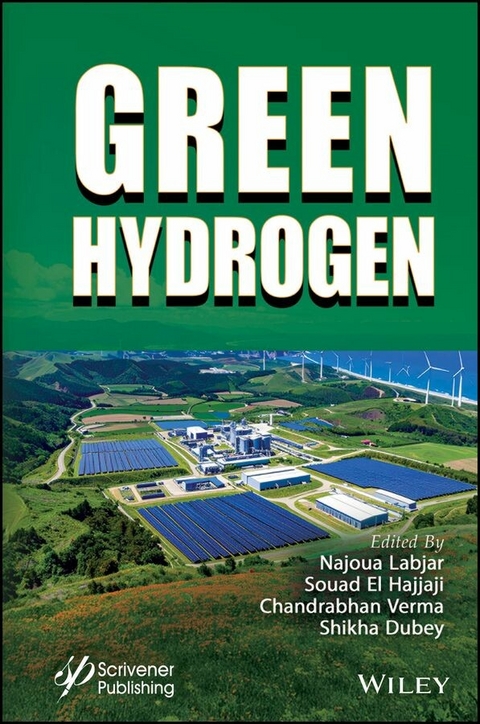
Discover the key to a sustainable future with Green Hydrogen, an essential guide for those invested in the innovative potential of green hydrogen production for decarbonization.
One of the worldwide objectives for 2050 is to decarbonize the planet. According to the International Energy Agency's most recent projections, the world's energy demand will rise by 25% to 30% by 2040. In an economy that depends on coal and oil, this will increase CO2, exacerbating climate change. Decarbonizing the Earth envisions a different world in 2050-one that is more open, effective, and sustainable, powered by clean energy like green hydrogen. Generating an element like hydrogen is one of the keys to achieving this goal because, unlike coal and oil, green hydrogen is a pure energy source that emits water vapor and leaves no residue in the air. Industry and hydrogen have a long-standing, global partnership that will only grow stronger as the planet moves away from fossil fuels. Green Hydrogen discusses the challenges and opportunities of sustainable hydrogen production and its applications in different industries, including heat and power generation, industry feedstock, and goods and passenger transport.
Najoua Labjar is a professor in the Ecole Nationale Supérieure d'Arts et Métiers (ENSAM) at Université Mohammed V. She has authored and co-authored over 70 articles and book chapters and coordinates engineering courses on materials, quality, and environmental engineering. Her research focuses on materials science, the recovery and treatment of water and waste, and life cycle analysis approaches, particularly for monitoring and assessing environmental impacts.
Souad El Hajjaji is a material, water, and environmental sciences professor at University Mohammed V. She has published over 250 peer-reviewed scientific papers and book chapters. Her research interests include the development of new processes for wastewater treatments, solid waste valorization, monitoring of pesticides and emergent pollutants in water and soil, and the management of water resources.
Chandrabhan Verma, PhD is a researcher at the Interdisciplinary Research Center for Advanced Materials at the King Fahd University of Petroleum and Minerals. He serves as a reviewer for several international journals and is a member of the American Chemical Society. His research focuses on synthesizing and designing environmentally friendly corrosion inhibitors useful for several industrial applications.
Shikha Dubey, PhD is an assistant professor of analytical chemistry in the Department of Chemistry at Hemvati Nandan Bahuguna Garhwal University. She has synthesized various nanomaterials via simple precipitation methods and green routes to treat metal-laden water and wastewater during her research. Her research interests include nanobiomaterial synthesis and characterization, development of low-cost adsorbents, nanoadsorbents, magnetic nanosorbents for water remediation, and green synthesis of materials, and characterization and applications in environmental remediation.
Discover the key to a sustainable future with Green Hydrogen, an essential guide for those invested in the innovative potential of green hydrogen production for decarbonization. One of the worldwide objectives for 2050 is to decarbonize the planet. According to the International Energy Agency s most recent projections, the world s energy demand will rise by 25% to 30% by 2040. In an economy that depends on coal and oil, this will increase CO2, exacerbating climate change. Decarbonizing the Earth envisions a different world in 2050 one that is more open, effective, and sustainable, powered by clean energy like green hydrogen. Generating an element like hydrogen is one of the keys to achieving this goal because, unlike coal and oil, green hydrogen is a pure energy source that emits water vapor and leaves no residue in the air. Industry and hydrogen have a long-standing, global partnership that will only grow stronger as the planet moves away from fossil fuels. Green Hydrogen discusses the challenges and opportunities of sustainable hydrogen production and its applications in different industries, including heat and power generation, industry feedstock, and goods and passenger transport.
1
Green Hydrogen: Fundamentals, Properties, Classifications, Advantages and Challenges
Gaydaa AlZohbi
Department of Mechanical Engineering, Prince Mohammad Bin Fahd University, Al Khobar, Saudi Arabia
Abstract
Green hydrogen is emerging as a pivotal element in transitioning to a sustainable energy fuel. Its main benefits are its high energy density, versatility, and low carbon footprint, making it a promising candidate to decarbonize different sectors. Green hydrogen could be used as fuel in transportation, to store and transport energy, and as a feedstock for several industrial processes. It has the potential to diversify the energy grid, minimize the dependency on fossil fuels, enhance energy security, and foster sustainable economic growth. This chapter presents the history of hydrogen, its physical and chemical properties, and the different types of hydrogen that depend on the feedstock and the technology applied in its production. The different technologies and processes used and under development that are applied to generate hydrogen are presented in this chapter. This chapter also sheds light on the benefits and advantages of green hydrogen. This chapter discusses and presents the challenges of generating, transporting, and storing green hydrogen.
Keywords: Green hydrogen, versatile, sustainable fuel, electrolyzer, decarbonization
1.1 Introduction
The hydrogen atom consists of a nucleus involving one electron and one proton. Hydrogen is known as the most abundant element in the universe, with an abundance of three times helium. Antoine Lavoisier gave the name of hydrogen, a Greek name that means water former.
Hydrogen exists also on Earth, mainly as water and slightly as gas (less than 1 part per million by volume). Hydrogen is a fundamental element for life; it exits in water and all molecules in living things. It occurs mainly in the water of oceans, rivers, lakes, ice packs, and atmosphere. However, it forms only 0.14% of Earth’s crust by weight. It also exists in petroleum and the tissues of vegetables and animals. Hydrogen usually exists in all carbon compounds and constitutes serval compounds with all other elements, making it the most numerous compound compared to carbon compounds. It is one of the main constituents of sun, stars, and planets. The main component of the Jupiter planet is hydrogen. It cannot play an active role unless it is bound to carbon or oxygen.
The hydrogen was accidentally discovered in the 16th century when the physician and chemist Paracelsus was dissolving the metal in acid, and the reaction released a flammable gas that was confused with the other flammable gases. In 1766, the English chemist and physicist Henry Cavendish identified the difference between hydrogen and other flammable gases based on their density and released amount from the acid and metal reaction. Additionally, in 1781, Cavendish discovered that burning hydrogen generates water. In 1929, the hydrogen properties were studied by the German physical and chemist Karl Friedrich Bonhoeffer and the Austrian chemist Paul Hartack based on theoretical work. They found that the hydrogen contains a mix of two types of molecules, ortho-hydrogen, and parahydrogen.
Recently, hydrogen has gained more attention for being the clean fuel of the future. It can be generated from different materials, and it can be used in different sectors. Hydrogen-powered fuel cells can be used in transportation and in electricity generation. It is used to fill balloons and airships; thanks to its low density, but its use in airships was stopped due to the fire of the Hindenburg airship. Additionally, it can be used in the chemical industry, in the fabrication of ammonia in agriculture fertilizer, and in the fabrication of methanol and cyclohexane, used in the generation of pharmaceuticals and plastics. Hydrogen is used in the oil-refining process to remove sulfur from fuels. In addition, the hydrogenated oils process uses a large quantity of hydrogen to produce fat. Moreover, hydrogen is used in the electronic sectors as a flushing gas in the process of silicon chip manufacturing. Also, it is used as a protective atmosphere in glass manufacturing to fabricate flat glass sheets. Hydrogen could be generated by different reactions. It could be generated by reacting zinc and sulfuric acid, aluminum and sodium hydroxide, and silicon and sodium hydroxide. In addition, hydrogen could be generated through the electrolysis of water and as byproducts during the formation of sodium hydroxide from salt.
Hydrogen is classified into seven categories based on the feedstock used and the technologies used to generate it.
- Brown/black hydrogen: Black coal or brown coal (lignite) is used to generate black or brown hydrogen. This type of hydrogen is considered as the most environmentally unfriendly since its generation releases carbon dioxide and carbon monoxide.
- Grey hydrogen: natural gas is used as feedstock in a process called steam reforming. It is the most common method to generate hydrogen.
- Blue hydrogen: it is generated in the same way as grey hydrogen, capturing the generated carbon from the process and storing it underground through a process called carbon capture and storage. It can be considered as carbon neutral since the carbon emissions are not released in the atmosphere.
- Turquoise hydrogen: methane is used as a feedstock to generate hydrogen through a process called methane pyrolysis. Solid carbon is one of the outputs of methane pyrolysis.
- Yellow hydrogen: it is the hydrogen generated through an electrolysis process powered by solar energy.
- Purple/pink or red hydrogen: it is the hydrogen generated through electrolysis powered by nuclear energy. The advantage of using nuclear energy to power electrolysis is the high temperature of nuclear reactors that can be used for other hydrogen generations by generating steam for more efficient electrolysis or fossil gas-based steam methane reforming.
- Green hydrogen: is known as ‘clean hydrogen’ since the energy generated from renewable energy resources, such as solar and wind energy, is used in the electrolysis process to break the water molecule into two hydrogen atoms and one oxygen atom. Thus, this technology is carbon neutral. It plays an important role in tackling the intermittency of renewable energy since the excess of energy generated during peak cycles could be stored as hydrogen.
1.2 Physical and Chemical Properties
Hydrogen is a transparent gas with a low molecular compared to other gases, resulting in a higher velocity with a faster diffusion than other gases. Thus, hydrogen ensures a faster distribution of kinetic energy compared to other gases, leading to a higher heat conductivity. A molecule of hydrogen is the simplest possible molecule, involving two protons and two electrons bounded together by electrostatic forces. The weak attraction forces between the hydrogen molecules lead to exceptionally low melting and boiling points. Additionally, the weak attraction force between hydrogen molecules is shown by the rise of the temperature of hydrogen gas when it expands from high to low pressure under room temperature, while the temperature decreases for the other gases. Hydrogen is known as a colorless and odorless gas. It is tasteless, nontoxic, and highly flammable. Under standard conditions, it is a gas of diatomic molecules (H2). Hydrogen burns with oxygen to create water. In terms of isotope, hydrogen has three isotopes with mass numbers of, 1, 2, and 3. The mass 1 is the most abundant one and is known as hydrogen or protium (H1). Deuterium or heavy hydrogen is the mass 2, with one proton and one neutron, and presents 0.0156 percent of the ordinary mixture of hydrogen (H2). The mass 3 is tritium (H3), with one proton and two neutrons, and presents 10−15 to 10−16 percent of hydrogen.
The chemical and physical properties of hydrogen are displayed on Table 1.1.
A molecule of dihydrogen is composed of two atoms. In each hydrogen molecule, the nuclei of the two atoms spin, and the direction of the spin of nuclei determines the type of hydrogen, ortho hydrogen or para hydrogen. The main difference between ortho and parahydrogen is the proton’s magnetic interactions caused by the protons’ spinning motions. The spins of the two protons are parallel in the case of ortho-hydrogen; however, they are antiparallel in the case of parahydrogen. The magnetic properties of the atoms depend mainly on the relationship of spin alignments. Even though the two types cannot convert into each other, they can interconvert under certain circumstances. There are different ways to attain the interconversion, such as using catalysts, adding heat to raise the temperature, and applying electric discharge to the gas. Adding charcoal (acting as a catalyst) to the mix of parahydrogen and ortho-hydrogen to prepare pure parahydrogen under the temperature of liquid hydrogen could generate pure parahydrogen. However, preparing pure ortho-hydrogen is impossible due to the high concentration of parahydrogen, which is always more than 25%. There is a difference in the physical properties of the two types of hydrogen. In terms of melting points, the mixture of ortho-hydrogen and parahydrogen has a higher melting temperature compared to parahydrogen. Regarding the pressure, the pressure applied by the vapor on liquid parahydrogen is higher than applied on a 3:1 ortho-para mixture, with a value of 1.035 atmospheres, and 1.0 atmosphere, respectively, under a temperature of −252.77°C. Thus, the separation of these types of...
| Erscheint lt. Verlag | 28.10.2025 |
|---|---|
| Sprache | englisch |
| Themenwelt | Naturwissenschaften ► Chemie |
| Technik ► Elektrotechnik / Energietechnik | |
| Schlagworte | carbon emissions • Clean Energy • economic opportunities • Electrolysis of Water • Energy Innovation • Energy Storage • Energy Transition • Green Hydrogen • hydrogen sector • Industrial Applications • Large-Scale Production • Reducing Emissions • renewable energy • sustainable development • Technological Challenges |
| ISBN-10 | 1-394-35668-4 / 1394356684 |
| ISBN-13 | 978-1-394-35668-3 / 9781394356683 |
| Informationen gemäß Produktsicherheitsverordnung (GPSR) | |
| Haben Sie eine Frage zum Produkt? |
 EPUB (Adobe DRM)
Kopierschutz: Adobe-DRM
Adobe-DRM ist ein Kopierschutz, der das eBook vor Mißbrauch schützen soll. Dabei wird das eBook bereits beim Download auf Ihre persönliche Adobe-ID autorisiert. Lesen können Sie das eBook dann nur auf den Geräten, welche ebenfalls auf Ihre Adobe-ID registriert sind.
Details zum Adobe-DRM
Dateiformat: EPUB (Electronic Publication)
EPUB ist ein offener Standard für eBooks und eignet sich besonders zur Darstellung von Belletristik und Sachbüchern. Der Fließtext wird dynamisch an die Display- und Schriftgröße angepasst. Auch für mobile Lesegeräte ist EPUB daher gut geeignet.
Systemvoraussetzungen:
PC/Mac: Mit einem PC oder Mac können Sie dieses eBook lesen. Sie benötigen eine
eReader: Dieses eBook kann mit (fast) allen eBook-Readern gelesen werden. Mit dem amazon-Kindle ist es aber nicht kompatibel.
Smartphone/Tablet: Egal ob Apple oder Android, dieses eBook können Sie lesen. Sie benötigen eine
Geräteliste und zusätzliche Hinweise
Buying eBooks from abroad
For tax law reasons we can sell eBooks just within Germany and Switzerland. Regrettably we cannot fulfill eBook-orders from other countries.
aus dem Bereich