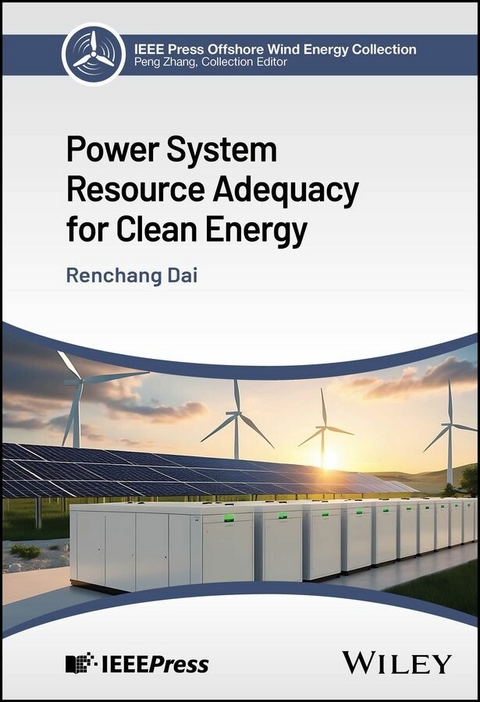
Power System Resource Adequacy for Clean Energy (eBook)
179 Seiten
Wiley-IEEE Press (Verlag)
978-1-394-31821-6 (ISBN)
Comprehensive overview of how to ensure adequate power resources in a decarbonized world powered by renewable energy
Power System Resource Adequacy for Clean Energy explores and addresses the challenges and solutions associated with ensuring adequate power resources as power grids transition toward a decarbonized and renewable energy future, discussing assumptions, methodologies, modeling frameworks, detailed inputs, and result analysis. The book illustrates the methodology, approaches, and nuances of resource adequacy studies to determine seasonal planning reserve margins as well as resource peak capacity contributions to meet peak demand. The saturation effects of renewable resources and energy-limited resources are highlighted, and importance of resource adequacy verification is emphasized.
Written by an expert with a wealth of real-world experience in the field, Power System Resource Adequacy for Clean Energy includes information on:
- The impact of climate change, seasonal planning reserve margins, multi-metric criteria for resource adequacy
- Wind and solar generation profiles, energy storage and thermal generation modeling, and the flexibility of hydroelectric generation
- Operating and balancing reserve, effective load carrying capability, saturation effects, and marginal and average ELCC
- Resource adequacy verification, a critical concept in ensuring that the peak demands are truly met by built resources
Power System Resource Adequacy for Clean Energy is an excellent reference on the subject for power system planners, federal and state energy policy makers and commissioners, and professors, researchers, and graduate students in Electrical & Computer Engineering.
Renchang Dai, PhD, is a Principal Engineer and Project Manager with Puget Sound Energy. He manages resource adequacy analysis projects and conducts long-term transmission and resource planning.
Comprehensive overview of how to ensure adequate power resources in a decarbonized world powered by renewable energy Power System Resource Adequacy for Clean Energy explores and addresses the challenges and solutions associated with ensuring adequate power resources as power grids transition toward a decarbonized and renewable energy future, discussing assumptions, methodologies, modeling frameworks, detailed inputs, and result analysis. The book illustrates the methodology, approaches, and nuances of resource adequacy studies to determine seasonal planning reserve margins as well as resource peak capacity contributions to meet peak demand. The saturation effects of renewable resources and energy-limited resources are highlighted, and importance of resource adequacy verification is emphasized. Written by an expert with a wealth of real-world experience in the field, Power System Resource Adequacy for Clean Energy includes information on: The impact of climate change, seasonal planning reserve margins, multi-metric criteria for resource adequacy Wind and solar generation profiles, energy storage and thermal generation modeling, and the flexibility of hydroelectric generation Operating and balancing reserve, effective load carrying capability, saturation effects, and marginal and average ELCC Resource adequacy verification, a critical concept in ensuring that the peak demands are truly met by built resources Power System Resource Adequacy for Clean Energy is an excellent reference on the subject for power system planners, federal and state energy policy makers and commissioners, and professors, researchers, and graduate students in Electrical & Computer Engineering.
| Erscheint lt. Verlag | 20.10.2025 |
|---|---|
| Reihe/Serie | IEEE Press Collection on Offshore Wind Energy |
| Sprache | englisch |
| Themenwelt | Technik ► Elektrotechnik / Energietechnik |
| Schlagworte | Clean Energy • climate change • decarbonization • Demand Forecast • Effective Load Carrying Capability • electrification • Energy Storage Systems • Long-term Expansion • Loss of Load Probability • Planning Reserve • Production Cost Simulation |
| ISBN-10 | 1-394-31821-9 / 1394318219 |
| ISBN-13 | 978-1-394-31821-6 / 9781394318216 |
| Informationen gemäß Produktsicherheitsverordnung (GPSR) | |
| Haben Sie eine Frage zum Produkt? |
 PDF (Adobe DRM)
Kopierschutz: Adobe-DRM
Adobe-DRM ist ein Kopierschutz, der das eBook vor Mißbrauch schützen soll. Dabei wird das eBook bereits beim Download auf Ihre persönliche Adobe-ID autorisiert. Lesen können Sie das eBook dann nur auf den Geräten, welche ebenfalls auf Ihre Adobe-ID registriert sind.
Details zum Adobe-DRM
Dateiformat: PDF (Portable Document Format)
Mit einem festen Seitenlayout eignet sich die PDF besonders für Fachbücher mit Spalten, Tabellen und Abbildungen. Eine PDF kann auf fast allen Geräten angezeigt werden, ist aber für kleine Displays (Smartphone, eReader) nur eingeschränkt geeignet.
Systemvoraussetzungen:
PC/Mac: Mit einem PC oder Mac können Sie dieses eBook lesen. Sie benötigen eine
eReader: Dieses eBook kann mit (fast) allen eBook-Readern gelesen werden. Mit dem amazon-Kindle ist es aber nicht kompatibel.
Smartphone/Tablet: Egal ob Apple oder Android, dieses eBook können Sie lesen. Sie benötigen eine
Geräteliste und zusätzliche Hinweise
Buying eBooks from abroad
For tax law reasons we can sell eBooks just within Germany and Switzerland. Regrettably we cannot fulfill eBook-orders from other countries.
aus dem Bereich