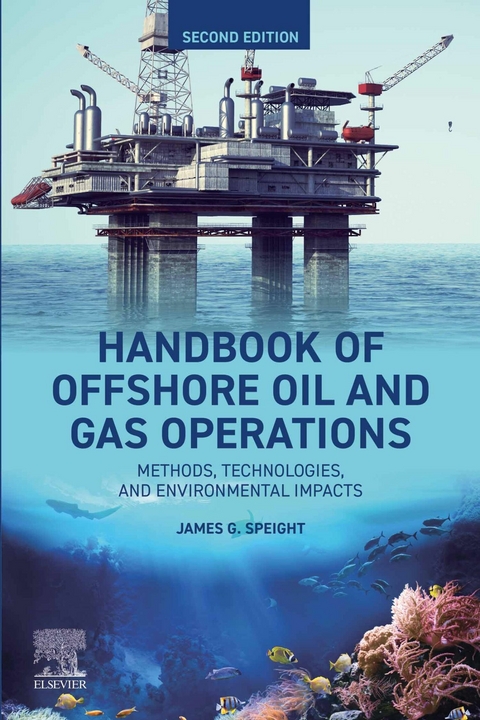
Handbook of Offshore Oil and Gas Operations (eBook)
650 Seiten
Elsevier Science (Verlag)
978-0-443-14094-5 (ISBN)
Dr. Speight has more than fifty years of experience in areas associated with the properties and processing of conventional and synthetic fuels. He has participated in, as well as led, significant research in defining the use of chemistry of tar sand bitumen, heavy oil, conventional petroleum, natural gas, coal, oil shale, and biomass as well as work related to corrosion and corrosion prevention. He has founded and/or edited several international journals, most recently the Proceedings of the Oil Gas Scientific Research Project Institute, Azerbaijan, and Petroleum Science and Technology (Taylor & Francis, until 2020). Dr. Speight is an author/editor of several databases and encyclopedic works. He has also authored more than 95 books as well as more than 400 publications, reports, and presentations detailing these research activities, and has taught more than eighty related courses.
The Handbook of Offshore Oil and Gas Operations: Methods, Technologies, and Environmental Impacts, 2nd Ed. offers a comprehensive overview of offshore energy extraction. This updated and expanded edition highlights the latest scientific advancements, technological innovations, safety protocols, and environmental considerations shaping current offshore practices. Covering foundational topics like geology, resource formation, exploration, drilling, and production, it emphasizes environmentally responsible operations and sustainable development strategies to support the reduction of carbon emissions.Authored by an industry expert, this reference explores the occurrence and formation of oil and gas, offshore geology, exploration techniques, platform types, and production methods, with insights into environmental impact mitigation. The final chapters address critical issues such as corrosion, oil spill response, legal regulations, and future industry trends. Notably, this edition introduces new chapters on oil spills and cleanup methods that bolster health, safety, and environmental (HSE) initiatives while promoting sustainability. Additionally, multiple chapters examine how offshore operations can help reduce carbon emissions, aligning industry practices with global climate goals. Rich with real-world case studies and current technical data, the book provides a thorough understanding of the entire offshore lifecycle.Designed for engineers, geologists, environmental scientists, safety managers, policymakers, and students, The Handbook of Offshore Oil and Gas Operations: 2nd Ed. equips readers with the knowledge to navigate emerging technologies, legal frameworks, and environmental challenges, making it an indispensable reference for industry professionals, students, and researchers alike. - Provides readers a quick pathway to familiarize with offshore operations- Clarifies fundamentals including basic geology, procedures, technological, safety, and environmental considerations, and future challenges- Includes updated and expanded coverage of the latest technological developments, safety protocols, and maritime environmental protections- Equips readers with knowledge of critical standards and opportunities to learn through real-world case studies- Addresses the role that offshore operations can play in the reduction of carbon emissions with new, focused content
| Erscheint lt. Verlag | 25.7.2025 |
|---|---|
| Sprache | englisch |
| Themenwelt | Technik ► Elektrotechnik / Energietechnik |
| Wirtschaft | |
| ISBN-10 | 0-443-14094-4 / 0443140944 |
| ISBN-13 | 978-0-443-14094-5 / 9780443140945 |
| Informationen gemäß Produktsicherheitsverordnung (GPSR) | |
| Haben Sie eine Frage zum Produkt? |
 EPUB (Adobe DRM)
Kopierschutz: Adobe-DRM
Adobe-DRM ist ein Kopierschutz, der das eBook vor Mißbrauch schützen soll. Dabei wird das eBook bereits beim Download auf Ihre persönliche Adobe-ID autorisiert. Lesen können Sie das eBook dann nur auf den Geräten, welche ebenfalls auf Ihre Adobe-ID registriert sind.
Details zum Adobe-DRM
Dateiformat: EPUB (Electronic Publication)
EPUB ist ein offener Standard für eBooks und eignet sich besonders zur Darstellung von Belletristik und Sachbüchern. Der Fließtext wird dynamisch an die Display- und Schriftgröße angepasst. Auch für mobile Lesegeräte ist EPUB daher gut geeignet.
Systemvoraussetzungen:
PC/Mac: Mit einem PC oder Mac können Sie dieses eBook lesen. Sie benötigen eine
eReader: Dieses eBook kann mit (fast) allen eBook-Readern gelesen werden. Mit dem amazon-Kindle ist es aber nicht kompatibel.
Smartphone/Tablet: Egal ob Apple oder Android, dieses eBook können Sie lesen. Sie benötigen eine
Geräteliste und zusätzliche Hinweise
Buying eBooks from abroad
For tax law reasons we can sell eBooks just within Germany and Switzerland. Regrettably we cannot fulfill eBook-orders from other countries.
aus dem Bereich