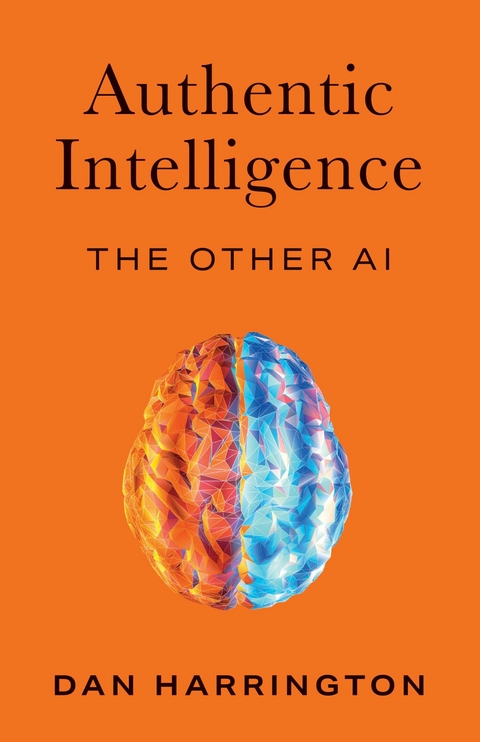
Authentic Intelligence (eBook)
184 Seiten
Bookbaby (Verlag)
9798350995725 (ISBN)
DAN HARRINGTON is the founder of Usherpa, a multimillion-dollar CRM/marketing automation platform. He lives in Denver, Colorado and Baja California Sur.
Technology can be awesome, but as Ringo Star famously sang, "e;It don't come easy."e; Even in the days of artificial intelligence and machine learning, businesses need human beings with experience, and what Dan Harrington calls "e;Authentic Intelligence"e; to make technology great. What makes technology lovable? Over the last three decades, Dan Harrington has been answering this question with his expertise in marketing automation platforms. He's seen firsthand what methods succeed in the CRM sales automation space. He shares the proven strategies that have transformed thousands of salespeople into top performers. You'll discover that technology is used, not to replace human relationships, but to enhance them.
Introduction
It was the same type of fall that, according to the Centers for Disease Control (CDC), kills around 17,000 people a year in the US alone. It happens so fast that there isn’t time to be afraid. Your feet are out, and you land on the back of your head. Bang. That’s it. Now imagine being on a weeklong Caribbean cruise, getting ready to kick back, cocktail in hand, and enjoying a gorgeous view of the deep blue ocean. Instead, Mike Jameson fell on the ship’s deck, hitting the back of his head. He would wind up in the hospital with a brain hemorrhage, three brain operations, and the loss of speech for over a year. His life changed in that instant.
Mike was an experienced sales professional with an easy smile and a full head of premature gray hair. Before his accident, Mike was a top-producing mortgage loan officer at the peak of his career. To reward him for his great sales year, his mortgage company, let’s call it Big Mortgage Company (BMC), gave Mike and his other colleagues, all top producers, a spot on the company’s annual, all-expenses-paid cruise in the Caribbean. Mike never got the chance to enjoy the cruise because two days after setting sail, he slipped while walking by the pool and landed directly on the back of his head. He was out cold for twenty minutes. The first thing Mike saw when he woke up wasn’t a sunny ocean view, but the bright white ceiling of the ship’s sick bay. The ship’s doctor brought reassuring news, though. He said he didn’t see signs of a concussion, and he suggested Mike just take it easy, finish the trip and get a checkup as soon as he got back home.
Fortunately, Mike followed the doctor’s advice and saw a doctor in Seattle as soon as he got home. Within minutes of seeing his doctor, though, his eyes rolled back and he fell to the floor. The medical staff called a “Code Blue.” After several long, tense minutes, he was finally brought back from the brink. The news this time was far less reassuring. Mike not only had a concussion, but he had suffered a brain hemorrhage too. Panic set in; the treatments would be brutal and long. Mike ended up having three craniotomies, and recovery would be no easy task. He would lose his ability to speak and spend a year relearning how to speak. Mike was worried that after spending a year away from his relationships with his referral partners and clients, those relationships he worked so hard to develop would fade away. They might be lost entirely and his career gone. Because he couldn’t even talk to them, in his mind, there was no way to keep these relationships alive. Mike was sure he would have no business left to come back to after his recuperation.
Fortunately, Mike had a system to stay connected with his sales relationships. That system would keep his relationships active and productive. Through the company’s Customer Relationship Management (CRM), then called the Media Center, his customers remained connected. Some of them didn’t even know he was in the hospital. The result was very different from the bleak future he had imagined in the early days of his recovery. Years later, Mike told me, “Without the Media Center, my career would’ve been finished. No question about it.” Astoundingly, Mike was able to make a 33% increase in sales flat on his back recovering in the hospital.
He told me, “The worst part was not being able to talk. It took a year, but I did it—I relearned how to speak, and business kept coming in.” Mike was able to maintain all of his priceless relationships during the year he was recuperating, thanks to the technology and marketing support that the Media Center had provided before and after his accident. Mike already had the programs in place, not just to save his career but to build on it. And about a year after his fall, at the company’s next award trip, Mike received a standing ovation for his astonishing accomplishment and his courage.
I tell this story because it is an example of the power a successful sales technology system can give a company and its sales team. The lesson here might be simple: invest in the right technology and your sales will improve. Well, that might be, but it’s easier said than done. If you are in business, you probably have seen big technology purchases and implementations fail. Obviously, companies can spend significant resources on these investments and still have no guarantee things will work out the way they did for Mike Jameson. As a matter of fact, most fail.
Definition of Authentic Intelligence
I wrote this book, Authentic Intelligence, because the majority of CRM projects fail. In his Harvard Business Review article, “Why CRM Projects Fail and How to Make Them More Successful,” Scott Edinger says when he asks executives if their CRM system is helping their business grow, executives say, “The failure rate is closer to 90% and overall CRM implementations fail 7–9 times out of 10.” How is this okay?
It costs trillions of dollars worldwide every year. The cost of missed opportunities can’t even be calculated, and that frustrates the hell out of me and should frighten executives. Especially because it doesn’t have to be this way. There are many reasons why technology fails. In this book, you’ll learn how to avoid many tech disasters and how to implement technology that actually gets adopted and has a fantastic return on investment (ROI).
Of course, we all want to make wise decisions about the technology our company will build or buy, but most executives are not experts in information technology. CRM is mainly concerned with managing and recording customer interactions. CRM monitors point-of-sale data and market research, along with other customer information. What I call a Relationship Engagement Platform, like the one Mike Jameson used, goes beyond basic CRM. A Relationship Engagement Platform combines CRM functionality with automated sales and marketing technologies. The Relationship Engagement Platform automates marketing in various channels as well, such as email, direct mail, and SMS texting, and it automates some sales workflow while serving up data-driven sales opportunities. The key to relationship engagement is in the word relationship. It’s vital that there is some connection between a salesperson and the recipient, even if it is just a lead. Unless the numbers are truly vast, marketing to complete strangers fails. In today’s world, CRM is beginning to use artificial intelligence as well. In this book, I’ll explain the incredible power of Authentic Intelligence and artificial intelligence and why both are needed.
As I mentioned earlier, unless they are Chief Technology Officers (CTOs), executives typically are not technology experts. More often, they know about sales and management. They have real-world experience building relationships, which is priceless, and what I call Authentic Intelligence. Authentic Intelligence is what business leaders have developed over time based on experience, the lessons learned, and the successes and failures they’ve had over their careers. Authentic Intelligence is about the process of personal encounters, observations, and subsequent actions taken in the business world.
The technology developers, for their part, know a lot about building technology but not much about developing rapport with clients and closing deals, which is sales and management. Those in technology know how to build the systems, but they rely on management and sales to tell them what to build. Those in sales think they know what they need but have no idea what features will make up a system that can serve those needs. Furthermore, salespeople don’t necessarily know how to express themselves to software developers. They speak different languages. This is the main reason technology goes off the rails and why most CRM technologies fail. Technology is purchased, and systems are built, but they rarely live up to their potential. Why? Besides communication disconnect, we often end up listing all the things we want, thinking the more complex and all-inclusive the system is, the better it is. But when that list is fulfilled, we don’t get a better system. We get a convoluted, shiny new technology often costing millions of dollars—a technology nobody uses and that gets scrapped. Millions of dollars and huge amounts of time are wasted. And then the process starts over again. Sound familiar?
Customers and salespeople are infamous for not knowing or accurately expressing their actual needs. You’ve probably heard the story about Henry Ford refusing to ask people what they wanted. Famously, he said, “If I asked what people wanted, they’d say faster horses.” More recently, Steve Jobs overruled what people were saying they wanted in the iPod—features like an FM radio, which has a lot of dials, bells, whistles, etc. Instead, he designed an elegant product with a simple scrolling feature and an on/off button. He decreased functions and then automated the rest, thereby giving customers what they actually needed and making it easy to use. Meeting needs and making it easy to operate made the iPod one of the most successful products in history.
Jobs knew complexity can be an alluring trap. It’s human nature to be drawn to shiny new things—things with lots of buttons and switches to fidget with. But if we can step away from decisions based on newness and building based merely on complexity and novelty, we should ask ourselves: What do our salespeople need? The answer is usually this: They need to be more productive in less time. These two fundamental needs are what should be driving any technology we invest in. If technology simplifies and automates processes,...
| Erscheint lt. Verlag | 6.8.2025 |
|---|---|
| Sprache | englisch |
| Themenwelt | Technik |
| ISBN-13 | 9798350995725 / 9798350995725 |
| Informationen gemäß Produktsicherheitsverordnung (GPSR) | |
| Haben Sie eine Frage zum Produkt? |
 EPUB (Ohne DRM)
Größe: 2,6 MB
Digital Rights Management: ohne DRM
Dieses eBook enthält kein DRM oder Kopierschutz. Eine Weitergabe an Dritte ist jedoch rechtlich nicht zulässig, weil Sie beim Kauf nur die Rechte an der persönlichen Nutzung erwerben.
Dateiformat: EPUB (Electronic Publication)
EPUB ist ein offener Standard für eBooks und eignet sich besonders zur Darstellung von Belletristik und Sachbüchern. Der Fließtext wird dynamisch an die Display- und Schriftgröße angepasst. Auch für mobile Lesegeräte ist EPUB daher gut geeignet.
Systemvoraussetzungen:
PC/Mac: Mit einem PC oder Mac können Sie dieses eBook lesen. Sie benötigen dafür die kostenlose Software Adobe Digital Editions.
eReader: Dieses eBook kann mit (fast) allen eBook-Readern gelesen werden. Mit dem amazon-Kindle ist es aber nicht kompatibel.
Smartphone/Tablet: Egal ob Apple oder Android, dieses eBook können Sie lesen. Sie benötigen dafür eine kostenlose App.
Geräteliste und zusätzliche Hinweise
Buying eBooks from abroad
For tax law reasons we can sell eBooks just within Germany and Switzerland. Regrettably we cannot fulfill eBook-orders from other countries.
aus dem Bereich