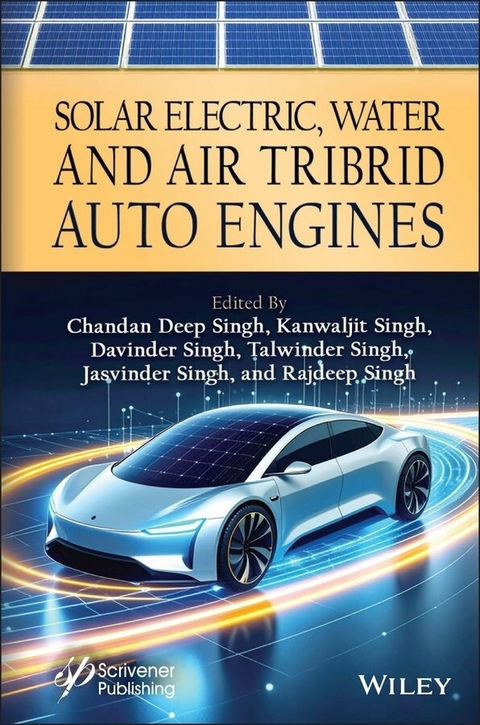
Solar Electric Water and Air Tribrid Auto Engine (eBook)
338 Seiten
Wiley-Scrivener (Verlag)
978-1-394-16687-9 (ISBN)
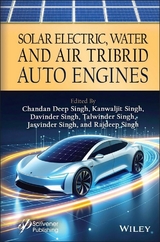
Solar Electric, Water and Air Tribrid Auto Engines is a must-have for anyone in the automotive industry, as it offers a comprehensive analysis of cutting-edge technologies that could revolutionize vehicle design and fuel efficiency, paving the way for a more sustainable future.
This book analyzes the performance of solar electric, water, and air-based engines. These technologies can be combined to create the revolutionary tribrid engine that combines the three technologies to create an environmentally friendly automobile. Electric motors are known for their low emissions, and solar has the potential to amplify this ability. Water powered engines react with oxygen in the air to create fuel, causing fewer emissions and improved fuel economy. Compressed-air motors are pressure-driven, diminishing our reliance on fossil fuels. Their combined potential in the tribrid model presents revolutionary innovations for how we power automobiles. This volume provides an in-depth exploration of these technologies, providing an advanced understanding of their fundamentals and potential for combination in a tribrid model, making it essential for innovators in the automotive sector.
Chandan Deep Singh, PhD is an assistant professor in the Department of Mechanical Engineering at Punjabi University. He has published 58 books and over 100 papers in peer-reviewed international journals and conferences. His research interests include production and industrial engineering, maintenance management, and Industry 4.0.
Kanwaljit Singh, PhD is an associate professor in the Department of Mechanical Engineering at Guru Kashi University. He has published over 50 papers in various international journals and conferences. His main research areas are production and industrial engineering and ultrasonic machining.
Davinder Singh, PhD is an assistant professor in the Department of Mechanical Engineering at Punjabi University. He has published over 25 papers in various international journals and conferences. His main areas of research are production and industrial engineering, manufacturing technology, and innovation management.
Talwinder Singh, PhD is an assistant professor in the Department of Mechanical Engineering at Punjabi University. He has published one book and 23 research papers in national and international journals. His research interests include environmentally friendly machining, green engineering, and cooling techniques.
Jasvinder Singh is an assistant professor at Lovely Professional University. He earned his B.Tech. in 2009 from Sant Longowal Institute of Engineering and Technology and hi M.Tech from the same institution in 2011. He is currently pursuing a Ph.D. from Punjabi University.
Rajdeep Singh is an assistant professor in the Department of Mechanical Engineering at Punjabi University. He has published nine books, 29 papers in various peer-reviewed international journals, and four papers in international conferences. His areas of interest are automobile engineering, competencies in the manufacturing sector, and production and industrial engineering.
Solar Electric, Water and Air Tribrid Auto Engines is a must-have for anyone in the automotive industry, as it offers a comprehensive analysis of cutting-edge technologies that could revolutionize vehicle design and fuel efficiency, paving the way for a more sustainable future. This book analyzes the performance of solar electric, water, and air-based engines. These technologies can be combined to create the revolutionary tribrid engine that combines the three technologies to create an environmentally friendly automobile. Electric motors are known for their low emissions, and solar has the potential to amplify this ability. Water powered engines react with oxygen in the air to create fuel, causing fewer emissions and improved fuel economy. Compressed-air motors are pressure-driven, diminishing our reliance on fossil fuels. Their combined potential in the tribrid model presents revolutionary innovations for how we power automobiles. This volume provides an in-depth exploration of these technologies, providing an advanced understanding of their fundamentals and potential for combination in a tribrid model, making it essential for innovators in the automotive sector.
1
Revolutionizing Transportation: A Comprehensive Review of Electricity-Run Engines
Mukhtiar Singh*, Maninder Singh, Harjit Singh, Jasvinder Singh and Mandeep Singh Rayat
School of Mechanical Engineering, Lovely Professional University, Punjab, India
Abstract
This review paper provides an in-depth analysis of electric engines, their types, advantages, disadvantages, and applications. Electric engines are increasingly being used in various industries, including transportation, renewable energy, robotics, and automation, among others. The paper highlights the different types of electric engines, including DC motors, AC motors, brushless motors, stepper motors, linear motors, hybrid motors, and magnetic levitation motors, and provides a detailed analysis of their advantages and disadvantages. The paper also discusses the use of electric engines in various industries, such as marine, aviation, and industrial machinery, highlighting their benefits and challenges. Additionally, the paper analyses the environmental benefits of using electric engines, including reduced emissions and energy consumption. Finally, the paper discusses the maintenance and troubleshooting of electric engines, highlighting the importance of regular inspections, lubrication, cleaning, testing, and addressing common problems and failures, such as overheating, bearing failure, electrical problems, and mechanical problems. Overall, this review paper provides a comprehensive analysis of electric engines, their benefits, challenges, and applications, and serves as a useful resource for researchers, engineers, and professionals in the field.
Keywords: Electric engines, transportation, review technology, innovation renewable energy
Introduction
An electricity-run engine is a type of engine that is powered by electrical energy instead of fossil fuels or other traditional sources of energy. The electrical energy is stored in batteries or other energy storage devices, and is used to power an electric motor that converts the electrical energy into mechanical energy. Electricity-run engines are commonly used in transportation vehicles, such as cars, buses, and trains, as well as in industrial machinery and renewable energy systems. They are often preferred over traditional engines due to their efficiency, reduced emissions, and lower operating costs in the long run. The history of electricity-run engines can be traced back to the early 19th century, when the concept of electric motors and generators was first discovered. The earliest form of electric motor was the electromagnetic motor, which was invented by William Sturgeon in 1832. This was followed by the development of the first DC electric motor by Thomas Davenport in 1834. However, these early electric motors were not very efficient and required significant improvements in design and technology to become practical for practical applications. In the late 19th century, with the invention of the first practical generators and the development of electrical power transmission systems, electric motors became more widely used. The first electric car was built by Thomas Parker in 1884, using a high-capacity rechargeable battery that powered an electric motor. However, the early electric cars were limited by the low capacity of the batteries and the lack of charging infrastructure. In the early 20th century, the development of more efficient DC electric motors and the use of lead-acid batteries led to the widespread use of electric vehicles, particularly for urban transportation. By 1912, electric cars were a common sight on the streets of many cities around the world. However, the emergence of the internal combustion engine and the availability of cheap oil led to the decline of electric vehicles in the 1920s and 1930s. In the post-World War II era, with the growing concern over air pollution and energy security, interest in electric vehicles began to revive. The development of new battery technologies, such as nickel-metal hydride (NiMH) and lithiumion (Li-ion) batteries, led to significant improvements in the range and performance of electric vehicles. The first mass-produced electric car, the General Motors EV1, was introduced in 1996, but was later discontinued due to limited market demand. In the 21st century, with the growing concern over climate change and the need to reduce greenhouse gas emissions, the development of electric vehicles has accelerated. The introduction of the Tesla Roadster in 2008 and the Nissan Leaf in 2010 marked a new era in electric vehicles, with improved performance, longer range, and greater availability. Today, electric vehicles are becoming increasingly popular, with many countries setting targets to phase out the production and sale of traditional internal combustion engine vehicles in the coming decades.
Importance and Applications of Electricity-Run Engines
The importance and applications of electricity-run engines are numerous and diverse. Here are some key examples:
- Environmental benefits: One of the most significant benefits of electricity-run engines is that they produce significantly fewer greenhouse gas emissions and air pollutants compared to traditional internal combustion engines. This makes them an important tool in reducing the impacts of climate change and improving air quality. Electric engines offer several environmental benefits over traditional internal combustion engines. Here are some of the most significant environmental benefits of electric engines, along with supporting data:
- Reduced Emissions: Electric engines produce fewer emissions than traditional internal combustion engines. According to the International Energy Agency (IEA), electric vehicles emit an average of 58% fewer greenhouse gases than gasoline-powered vehicles over their lifetime. In addition, electric engines do not produce harmful air pollutants such as nitrogen oxides (NOx) and particulate matter (PM).
- Reduced Energy Consumption: Electric engines are more efficient than internal combustion engines, which means they require less energy to operate. According to the US Department of Energy, electric engines can be up to three times more efficient than gasoline engines. This reduces overall energy consumption and can help reduce the environmental impact of energy production.
- Renewable Energy Integration: Electric engines can be powered by renewable energy sources such as wind and solar power. This helps reduce reliance on fossil fuels and supports the transition to a low-carbon economy. According to the IEA, the share of renewable energy in global electricity generation is expected to increase from 27% in 2019 to 80% by 2050, which will further reduce the environmental impact of electric engines.
- Reduced Noise Pollution: Electric engines produce less noise than traditional internal combustion engines, which can help reduce noise pollution in urban environments. According to a study published in the Journal of Environmental Protection, electric vehicles produce an average of 4-7 decibels less noise than gasoline vehicles.
- Energy security: Electricity-run engines can also help to reduce dependence on imported oil and other fossil fuels, which can improve energy security and reduce vulnerability to price shocks and supply disruptions.
- Improved efficiency: Electric motors are generally more efficient than internal combustion engines, which means that they require less energy to do the same amount of work. This can lead to significant energy savings over the lifetime of the engine.
There are several ways to improve the efficiency of electric engines, including:
- High-Efficiency Motor Design: The design of the motor itself can greatly affect its efficiency. High-efficiency motor designs use advanced materials and optimized geometries to reduce losses and improve efficiency.
- Variable Frequency Drives: Variable frequency drives (VFDs) can be used to control the speed of electric motors. By adjusting the frequency and voltage of the motor’s power supply, VFDs can match the motor’s speed to the load requirements, improving efficiency and reducing energy waste.
- Regenerative Braking: Regenerative braking systems capture the kinetic energy of a moving vehicle or machine and convert it into electrical energy that can be stored or used immediately. This reduces energy waste and improves overall efficiency.
- Power Electronics: Power electronics, such as inverters and converters, can be used to control the power supply to electric motors. By adjusting the voltage and current, power electronics can optimize the motor’s efficiency and reduce energy waste.
- Energy Storage: Energy storage systems, such as batteries or capacitors, can be used to store excess energy and release it when needed. This can reduce energy waste and improve overall efficiency.
- System Optimization: System optimization involves analysing the entire system in which the electric motor operates and identifying opportunities to improve efficiency. This may include optimizing the control system, reducing friction and drag, or improving the cooling system.
- Lower operating costs: Electric engines typically have lower operating costs than internal combustion engines, due to their simpler design, lower maintenance requirements, and lower fuel costs.
Here are some of the ways electric engines can help reduce operating costs:
- Lower Fuel Costs: Electric engines do not require traditional fuel, such as gasoline or diesel, which can be expensive. Instead, they rely on electricity, which can be...
| Erscheint lt. Verlag | 16.7.2025 |
|---|---|
| Sprache | englisch |
| Themenwelt | Technik ► Maschinenbau |
| ISBN-10 | 1-394-16687-7 / 1394166877 |
| ISBN-13 | 978-1-394-16687-9 / 9781394166879 |
| Informationen gemäß Produktsicherheitsverordnung (GPSR) | |
| Haben Sie eine Frage zum Produkt? |
 EPUB (Adobe DRM)
Kopierschutz: Adobe-DRM
Adobe-DRM ist ein Kopierschutz, der das eBook vor Mißbrauch schützen soll. Dabei wird das eBook bereits beim Download auf Ihre persönliche Adobe-ID autorisiert. Lesen können Sie das eBook dann nur auf den Geräten, welche ebenfalls auf Ihre Adobe-ID registriert sind.
Details zum Adobe-DRM
Dateiformat: EPUB (Electronic Publication)
EPUB ist ein offener Standard für eBooks und eignet sich besonders zur Darstellung von Belletristik und Sachbüchern. Der Fließtext wird dynamisch an die Display- und Schriftgröße angepasst. Auch für mobile Lesegeräte ist EPUB daher gut geeignet.
Systemvoraussetzungen:
PC/Mac: Mit einem PC oder Mac können Sie dieses eBook lesen. Sie benötigen eine
eReader: Dieses eBook kann mit (fast) allen eBook-Readern gelesen werden. Mit dem amazon-Kindle ist es aber nicht kompatibel.
Smartphone/Tablet: Egal ob Apple oder Android, dieses eBook können Sie lesen. Sie benötigen eine
Geräteliste und zusätzliche Hinweise
Buying eBooks from abroad
For tax law reasons we can sell eBooks just within Germany and Switzerland. Regrettably we cannot fulfill eBook-orders from other countries.
aus dem Bereich