


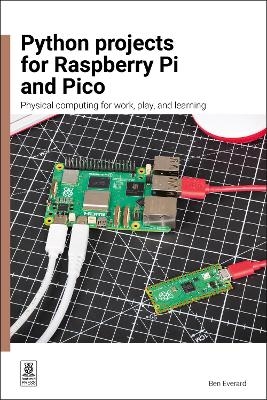
Python Projects for Raspberry Pi and Pico
Physical Computing for Work, Play, and Learning
Seiten
2026
Raspberry Pi Press (Verlag)
978-1-916868-52-6 (ISBN)
Raspberry Pi Press (Verlag)
978-1-916868-52-6 (ISBN)
- Titel nicht im Sortiment
- Artikel merken
Raspberry Pi devices offer powerful ways to interact with the world, but sometimes the choice can be bewildering. Using the flexible Python programming language, this book shows how to build your own projects powered by Raspberry Pi hardware. Sense, control and take over the world with your homemade digital assistants, smart devices, and robots.
Computers are no longer beige boxes that sit on our desks or foldable aluminium books - they are embedded into almost everything we own. Our doorbells, kitchen gadgets, vacuum cleaners, and media players are all powerful computing devices running software that someone has written. Learning to program no longer means learning to control things on a screen, it means learning to control hardware that interacts with the real world.
The Raspberry Pi platforms offer a wide range of powerful ways to interact with the world, but sometimes the choice can be bewildering. Using the flexible Python programming language, we'll show you how to get the most out of both the Pico range of microcontrollers and the larger Linux-powered Raspberry Pi boards.
Learn how to:
Select the perfect hardware
Control sensors and motors
Build a smart weather station
Make your own games console
Embed Artificial Intelligence into your projects
You'll then be able to take the skills you've learned in the book and build your own projects powered by Raspberry Pi hardware. This book is perfect for intermediate users who want to sense, control and take over the world with homemade digital assistants, smart devices, and robots.
Computers are no longer beige boxes that sit on our desks or foldable aluminium books - they are embedded into almost everything we own. Our doorbells, kitchen gadgets, vacuum cleaners, and media players are all powerful computing devices running software that someone has written. Learning to program no longer means learning to control things on a screen, it means learning to control hardware that interacts with the real world.
The Raspberry Pi platforms offer a wide range of powerful ways to interact with the world, but sometimes the choice can be bewildering. Using the flexible Python programming language, we'll show you how to get the most out of both the Pico range of microcontrollers and the larger Linux-powered Raspberry Pi boards.
Learn how to:
Select the perfect hardware
Control sensors and motors
Build a smart weather station
Make your own games console
Embed Artificial Intelligence into your projects
You'll then be able to take the skills you've learned in the book and build your own projects powered by Raspberry Pi hardware. This book is perfect for intermediate users who want to sense, control and take over the world with homemade digital assistants, smart devices, and robots.
| Erscheint lt. Verlag | 14.4.2026 |
|---|---|
| Verlagsort | Cambridge |
| Sprache | englisch |
| Maße | 156 x 234 mm |
| Themenwelt | Mathematik / Informatik ► Informatik ► Programmiersprachen / -werkzeuge |
| Informatik ► Weitere Themen ► Hardware | |
| Technik ► Elektrotechnik / Energietechnik | |
| ISBN-10 | 1-916868-52-5 / 1916868525 |
| ISBN-13 | 978-1-916868-52-6 / 9781916868526 |
| Zustand | Neuware |
| Informationen gemäß Produktsicherheitsverordnung (GPSR) | |
| Haben Sie eine Frage zum Produkt? |
Mehr entdecken
aus dem Bereich

aus dem Bereich
Computer und Notebooks selbst reparieren, geeignete Komponenten …
Buch | Softcover (2025)
Eifert, Klaus (Verlag)
CHF 44,75
Eine praktische Einführung mit 65 Projekten
Buch | Softcover (2022)
dpunkt (Verlag)
CHF 43,90


