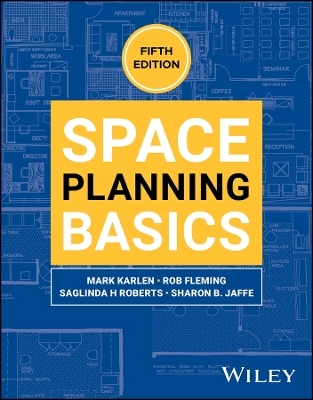
Space Planning Basics
John Wiley & Sons Inc (Verlag)
978-1-394-19754-5 (ISBN)
- Noch nicht erschienen (ca. Juli 2026)
- Versandkostenfrei
- Auch auf Rechnung
- Artikel merken
Space Planning Basics shows how to approach space planning in a way that ensures all considerations are met, from preliminary floor plans, to client programming needs, to how factors such as building codes and environmental factors affect a spatial composition, to sustainability. With step-by-step methodology based on the author team's combined decades of design experience, this authoritative guide is the de facto reference on the subject.
The text includes current design approaches, building evaluation processes, structural guidelines to replicate the current professional process with a clear, highly practical, and comprehensive approach, and basic programming skills. Text, drawings, graphics, and practice exercises are included throughout to reinforce learning, and each chapter contains recommended resources for further reading and study.
Updates to this newly revised Fifth Edition of Space Planning Basics include:
● New content on applying comprehensive client analysis and stakeholder engagement and coverage of the latest credentialing requirements
● An explanation of evidence-based design and the importance of health and wellbeing as well as the latest developments in sustainable design and current rating systems
● Updates on spatial relationships, vertical conveyance, and building shells with new drawings, diagrams and coverage of universal design and human factors
● Updated resources for instructors on a companion website including new exercises, CAD and Revit files, and interactive graphs
Space Planning Basics delivers a complete, all-in-one introduction on the subject and is an essential principal resource for thousands of designers and students in space planning or interior design courses.
Mark Karlen (1929-2022) was an architect, educator, and author with extensive experience working in and teaching in the field of interior architecture. His other titles include: Lighting Design Basics, Sustainable Design Basics, Healthcare Design Basics. (This last part is from Healthcare Design Basics) Saglinda H. Roberts, CID-NJ, NCIDQ, LEED Green Assoc, is an award-winning designer and educator with over 30 years of extensive professional experience in a broad range of project typologies. She is currently an Associate Professor in the Masters of Sustainable Design Program at Thomas Jefferson University. Rob Fleming, AIA, LEED AP, NOMA, is the Director of Sustainability at FCA, a mid-sized architecture, design, and planning firm based in Philadelphia; and is a Fellow at the Center for Environmental Building + Design, at the Weitzman School of the Design, University of Pennsylvania. Sharon B. Jaffe, LEED ID+ C, IIDA, NCIDQ, is a designer and educator specializing in environmentally sensitive interior architecture. With extensive experience in workplace and hospitality design, as well as exhibits and experiential environments, she currently teaches at Thomas Jefferson University in Philadelphia.
Preface
Introduction
Chapter 1: Pre-Design and Context
The Built Environments Role
Sense of Place
Evolving Design Standards
Evidence Based Design (EBD)
Human Centered Design (HCD)
Global Context
Integrative Design
Case or Precedent Studies
Chapter 2: Health, Wellness, and Biophilia
Health and Wellbeing
Elements of Health and Wellbeing
Biophilia
Integrating Biophilic Elements
Attributes and Elements of Biophilia
Chapter 3: Important Influencing Factors
Building Codes
Basic ADA and Barrier-free Design Standards
Travel and Egress
Toilets and Lavatories
Furniture Planning and Placement
Sustainable Design Strategies
Sustainable Rating or Design Systems
Chapter 4: Planning Methodology
The Synthesis Gap
The Synthesis Gap Expanded
Criteria Matrix
Square Footage Requirements and Prototypical Plan Sketches
Completing the Criteria Matrix
Variations
A Final Note on Planning Methodology
Chapter 5: The First Planning Steps
Adjacency or Relationship Diagrams
Bubble Diagraming
Block Planning
Chapter 6: The Building Shell and Major Systems
Building Shell or Exterior Envelope
Structural Systems
The Building Configuration
Historical and Cultural Considerations
Plumbing Systems
HVAC (Heating, Ventilation, and Air Conditioning) Systems
Artificial Lighting
Acoustics
Resilient and Adaptive Design
Chapter 7: Vertical Circulation and Stair Design Basics
Function, Purpose, and History
Stair Design
Fire or Emergency Exit Stairs
Typical Stair Materials
Lighting Considerations
Exterior Stairs
Stair Drawing Basics
Ramps
Elevators
Escalators
Chapter 8: Developing a Rough Floor Plan
Construction Reality
Getting Started
Start with Plumbing and Structure
Major Functions or Spaces Next
Circulation Spaces
Basic Room Allocations
Door Swings
Furniture and Equipment Placement
Storage and Filing
Spatial Quality
Objective Review
Revisions and Alternate Attempts
Refining the Solution for Presentation
Refining the Rough Plan
Chapter 9: Beyond the Basics
Larger and More Complex Spaces
Programs Within Programs
Multi-Floor Projects
Evolving Design –The Workplace and other Typologies
Future Expansion and Phased Construction
A Final Note
Appendix
Appendix A – Basic Furniture Sizes and Allowances
Appendix B – Project Programs and Building Shells
Appendix C – Design Exercises
Appendix D – Stair Terminology
Appendix E – Stair Design Case Studies
| Erscheint lt. Verlag | 26.7.2026 |
|---|---|
| Verlagsort | New York |
| Sprache | englisch |
| Themenwelt | Technik ► Architektur |
| ISBN-10 | 1-394-19754-3 / 1394197543 |
| ISBN-13 | 978-1-394-19754-5 / 9781394197545 |
| Zustand | Neuware |
| Informationen gemäß Produktsicherheitsverordnung (GPSR) | |
| Haben Sie eine Frage zum Produkt? |
aus dem Bereich