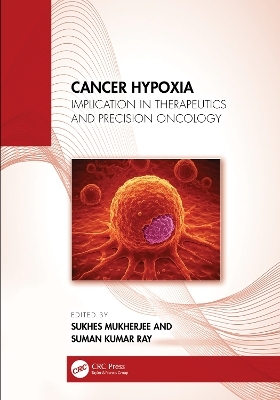
Cancer Hypoxia
CRC Press (Verlag)
978-1-032-76180-0 (ISBN)
- Noch nicht erschienen (ca. März 2026)
- Versandkostenfrei
- Auch auf Rechnung
- Artikel merken
This book comprehensively reviews the role of hypoxia in cancer initiation and progression. It explores hypoxia-driven signaling pathways and the immune microenvironment in hypoxic tumors, offering insights into network implications for cancer development and therapy, along with strategies to counter hypoxia-induced immune suppression. Investigating influence of hypoxia on cancer stem cells and cellular stemness, the book highlights its role in maintaining stemness at hypoxic niches and potential therapeutic opportunities. The book, in turn, explores tools and techniques for the detection of hypoxic phenotypes and in vivo models for studying hypoxic cancer, angiogenesis, and vasculature remodeling in hypoxic tumors, discussing innovative drug delivery, and targeting hypoxia-inducible factors. Finally, it outlines clinical applications of hypoxia research in cancer therapy, ranging from advancements in radiation strategies to biomarkers, diagnosis, precision medicine, and future directions in hypoxia-activated prodrug research. This comprehensive resource serves as a valuable reference for researchers, clinicians, and professionals engaged in understanding and combating cancer hypoxia.
Key features
Offers a thorough review of the role of hypoxia in cancer initiation and progression
Presents complex hypoxia-driven signaling pathways in tumors and their implications for cancer development and therapy
Role of hypoxia in maintaining stemness within hypoxic niches and potential therapeutic opportunities
Discusses ways to enhance drug efficacy in hypoxic tumor microenvironments.
Explores therapeutic approaches targeting hypoxic tumor vasculature.
Sukhes Mukherjee is a highly esteemed academic and researcher currently serving as an Additional Professor in the Department of Biochemistry at AIIMS Bhopal, India. With over 18 years of dedicated experience in teaching and research, he has established himself as a prominent figure in the fields of cancer biology, biochemistry, and molecular biology. His prolific scholarly output includes more than 120 peer-reviewed publications, 8 edited books, reflecting his deep engagement with cutting-edge scientific inquiry and his commitment to advancing knowledge in his field. His leadership and expertise are recognized globally, evidenced by his active participation in numerous scientific societies; he is a Fellow of the Linnean Society (UK) and the Royal Society for Medicine, a member of the Royal Society of Biology (UK), a member of National Academy of Medical Sciences (India) and a Clinical Scientist of the American Society of Clinical Pathology, among others. His contributions have been acknowledged through prestigious awards such as the ISSN Award from the International Science and Technology Organization (2023), the Farha Deeba Haq Award from the Indian Academy of Biomedical Sciences (2024), and the Blackbucks Award from Medical Dialogues (2024). Furthermore, his dedication to advancing biomedical sciences, combined with his commitment to education and professional development, positions him as a leading figure in the global scientific community. Dr. Mukherjee’s commitment to fostering a vibrant scientific community is evident through his active engagement in organizing conferences, symposiums, and scientific forums that facilitate knowledge dissemination and networking among researchers. Dr. Mukherjee’s unwavering commitment to advancing science, fostering collaboration, and mentoring future leaders exemplifies his role as a pioneer in his field. His multifaceted career reflects a blend of scientific rigor, educational passion, and leadership acumen, making him a highly influential figure whose work continues to inspire and shape the future of biomedical sciences worldwide. Suman Kumar Ray is a highly dedicated and accomplished researcher whose career spans over 15 years of rigorous investigation in the fields of Molecular Biology and Cancer Research. Throughout his esteemed career, he has authored more than 85 peer-reviewed research articles, contributed over several comprehensive book chapters, and presented his groundbreaking work at numerous prestigious national and international conferences, establishing himself as a prominent voice in the oncology community. His expertise in the study of hypoxia and its profound implications in tumor biology has earned him widespread recognition, reflected in his extensive publication record and invitations to deliver lectures at various academic institutions across India. Dr. Ray maintains active and influential affiliations with leading oncology-related organizations, including the American Association for Cancer Research, where he is involved in collaborative research and knowledge dissemination, and he also serves as an ambassador for the European Association for Cancer Research, promoting international cooperation in cancer science. Dr. Ray seamlessly integrates pioneering oncology research with strategic innovation, forging collaborative pathways and advancing scientific frontiers in public health through his dedicated laboratory expertise and visionary leadership. His academic journey is marked by several National Fellowships, which laid the foundation for his innovative research approach and he continues to make significant contributions through his research, editorial work for scientific journals, and content development in oncology. His unwavering commitment to advancing cancer research is complemented by his dedication to mentoring young researchers and engaging in public outreach. Dr. Ray’s diverse interests and passions exemplify a well-rounded personality committed to both scientific excellence and personal growth, inspiring colleagues and apprentices alike in the pursuit of knowledge and innovation in cancer research.
Hypoxia in the tumor microenvironment and cellular responses. 2. Hypoxia's role in cancer progression and their significance. 3. Unraveling intricate hypoxia signaling networks and implications for cancer development and therapy. 4. Strategies to target hypoxia-induced immune suppression and immune escape mechanisms. 5. Role of hypoxia in cancer stem cell characteristics. 6. Stemness maintenance at hypoxic niches and therapeutic opportunities in targeting hypoxic cancer stem cells. 7. Innovative Tools and techniques for visualization of cancer hypoxia. 8. In vivo models for studying hypoxic cancer. 9. Hypoxia-driven angiogenesis in cancer. 10. Therapeutic approaches targeting hypoxic tumor vasculature. 11. Novel strategies for drug delivery in hypoxic tumors. 12. Enhancing drug efficacy in hypoxic tumor microenvironments. 13. Biomarkers and diagnosis in the context of hypoxic tumors. 14. Precision medicine approaches in hypoxic cancers.
| Erscheint lt. Verlag | 12.3.2026 |
|---|---|
| Zusatzinfo | 19 Tables, black and white; 44 Line drawings, color; 44 Illustrations, color |
| Verlagsort | London |
| Sprache | englisch |
| Maße | 178 x 254 mm |
| Gewicht | 453 g |
| Themenwelt | Medizin / Pharmazie ► Medizinische Fachgebiete ► Onkologie |
| Naturwissenschaften ► Biologie ► Zellbiologie | |
| Technik | |
| ISBN-10 | 1-032-76180-6 / 1032761806 |
| ISBN-13 | 978-1-032-76180-0 / 9781032761800 |
| Zustand | Neuware |
| Informationen gemäß Produktsicherheitsverordnung (GPSR) | |
| Haben Sie eine Frage zum Produkt? |
aus dem Bereich