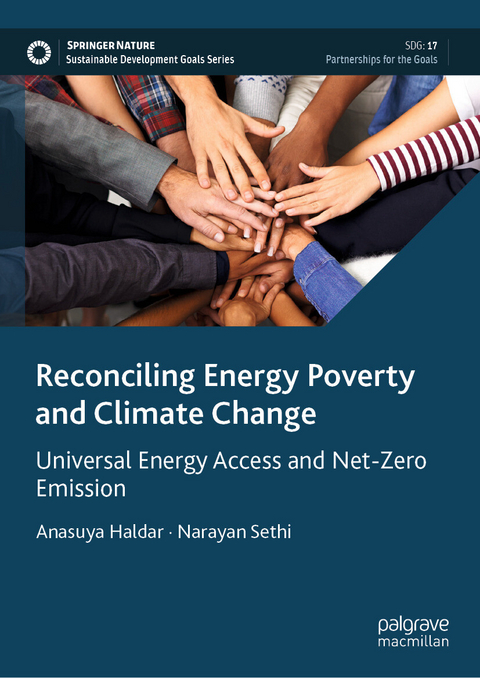
Reconciling Energy Poverty and Climate Change (eBook)
272 Seiten
Springer Nature Singapore (Verlag)
978-981-96-6145-9 (ISBN)
This book highlights innovative solutions that not only combat climate change but also address energy poverty, ensuring a more sustainable and equitable future. It explores common roots, synergies, and trade-offs between energy poverty and climate change. It argues that policies to combat climate change like decarbonization, can negatively impact energy poverty alleviation, whereas policies to reduce energy poverty like increasing energy access, reduction in energy prices, or rise in energy demand, may increase energy-related carbon emission that contributes to climate change.
This book meticulously delves into the challenges of providing clean, reliable, and modern energy access to millions of energy-poor people, without creating any negative impact on the environment. It not only provides a comprehensive review of the intricacies of energy poverty and climate change mitigation but also gives a clear understanding of the policy challenges encountered to address the dual problem. Moreover, given the sustainable development goals of attaining SDG7 by 2030 and SDG13 by 2050, the content is timely and significant. Apart from students, this book will be beneficial to academics, working as development economists or energy economists, government policymakers, media personnel covering the climate crisis, and social activists.
This book highlights innovative solutions that not only combat climate change but also address energy poverty, ensuring a more sustainable and equitable future. It explores common roots, synergies, and trade-offs between energy poverty and climate change. It argues that policies to combat climate change like decarbonization, can negatively impact energy poverty alleviation, whereas policies to reduce energy poverty like increasing energy access, reduction in energy prices, or rise in energy demand, may increase energy-related carbon emission that contributes to climate change.This book meticulously delves into the challenges of providing clean, reliable, and modern energy access to millions of energy-poor people, without creating any negative impact on the environment. It not only provides a comprehensive review of the intricacies of energy poverty and climate change mitigation but also gives a clear understanding of the policy challenges encountered to address the dual problem. Moreover, given the sustainable development goals of attaining SDG7 by 2030 and SDG13 by 2050, the content is timely and significant. Apart from students, this book will be beneficial to academics, working as development economists or energy economists, government policymakers, media personnel covering the climate crisis, and social activists.
| Erscheint lt. Verlag | 24.6.2025 |
|---|---|
| Reihe/Serie | Sustainable Development Goals Series |
| Zusatzinfo | XXVII, 272 p. 12 illus., 9 illus. in color. |
| Sprache | englisch |
| Themenwelt | Naturwissenschaften ► Biologie ► Ökologie / Naturschutz |
| Sozialwissenschaften ► Politik / Verwaltung ► Staat / Verwaltung | |
| Technik ► Elektrotechnik / Energietechnik | |
| Wirtschaft ► Volkswirtschaftslehre ► Wirtschaftspolitik | |
| Schlagworte | climate change • Community-led initiatives • energy poverty • energy poverty alleviation • SDG-7 in Global Climate Change Agreements • social equity, inclusivity, & fairness in the energy transition |
| ISBN-10 | 981-96-6145-5 / 9819661455 |
| ISBN-13 | 978-981-96-6145-9 / 9789819661459 |
| Informationen gemäß Produktsicherheitsverordnung (GPSR) | |
| Haben Sie eine Frage zum Produkt? |
 PDF (Wasserzeichen)
DRM: Digitales Wasserzeichen
Dieses eBook enthält ein digitales Wasserzeichen und ist damit für Sie personalisiert. Bei einer missbräuchlichen Weitergabe des eBooks an Dritte ist eine Rückverfolgung an die Quelle möglich.
Dateiformat: PDF (Portable Document Format)
Mit einem festen Seitenlayout eignet sich die PDF besonders für Fachbücher mit Spalten, Tabellen und Abbildungen. Eine PDF kann auf fast allen Geräten angezeigt werden, ist aber für kleine Displays (Smartphone, eReader) nur eingeschränkt geeignet.
Systemvoraussetzungen:
PC/Mac: Mit einem PC oder Mac können Sie dieses eBook lesen. Sie benötigen dafür einen PDF-Viewer - z.B. den Adobe Reader oder Adobe Digital Editions.
eReader: Dieses eBook kann mit (fast) allen eBook-Readern gelesen werden. Mit dem amazon-Kindle ist es aber nicht kompatibel.
Smartphone/Tablet: Egal ob Apple oder Android, dieses eBook können Sie lesen. Sie benötigen dafür einen PDF-Viewer - z.B. die kostenlose Adobe Digital Editions-App.
Buying eBooks from abroad
For tax law reasons we can sell eBooks just within Germany and Switzerland. Regrettably we cannot fulfill eBook-orders from other countries.
aus dem Bereich