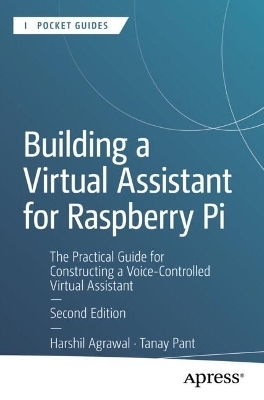
Building a Virtual Assistant for Raspberry Pi
Apress (Verlag)
979-8-8688-1759-5 (ISBN)
After walking you through the various STTs, TTSs, and implementation of these components with the Python 3, you will learn about Large Language Models (LLMs) and how to run them on Raspberry Pi. You will build applications/modules for Melissa that will be used by the LLM. The book will feature Plugin Architecture Implementation for Melissa, allowing users to script their own interactions with Melissa. You will also enable Melissa to interact with resources on the internet. In addition to Melissa's voice controlled interface for notes management, this edition will also enable Melissa to be intelligent to assist you with your tasks.
Adding to Melissa’s voice interface from the first edition, you will use an LLM to make Melissa intelligent. You will learn about function calling, providing Melissa access to tools. In conclusion, you will make a smart virtual assistant that runs on Raspberry Pi.
What You'll Learn
Implement plugin architecture to enable quicker scripting
Develop modules for conversational interaction with the assistant
Run the local LLM instance to empower Melissa with intelligence
Interact with both public and restricted APIs (Application Programming Interfaces)
Who This Book Is For
Anyone who has built a home automation project with Raspberry Pi and now want to enhance it by making it voice-controlled. The book would also interest students from computer science or related disciplines.
Harshil Agrawal is an educator, public speaker, a builder, and a developer relations professional. He is known for educating the developer community through the means of blog articles and videos. He enjoys building games and applications for everyday use. Tanay Pant is an author, speaker, educator, and developer relations expert. He is best known for his work with early-stage tech startups and various books on computer science. He has been listed in Firefox's about:credits for his contributions to the Mozilla Foundation's different open source projects.
Chapter 1: Introduction to Virtual Assistants.- Chapter 2: Understanding and Building an application with STT and TTS.- Chapter 3: Making Melissa Intelligent.- Chapter 4: Introducing Plugin Architecture .- Chapter 5: Get Top Tech Stories From Hacker News.- Chapter 6: Melissa, Tell Me The Weather!.- Chapter 7: Saving Notes from Melissa.- Chapter 8: What More Can You Build?.- Chapter 9: Integrating The Software With Raspberry Pi, And Next Steps.
| Erscheinungsdatum | 01.07.2025 |
|---|---|
| Reihe/Serie | Apress Pocket Guides |
| Zusatzinfo | 15 Illustrations, black and white |
| Verlagsort | Berkley |
| Sprache | englisch |
| Maße | 155 x 235 mm |
| Themenwelt | Informatik ► Weitere Themen ► Hardware |
| Technik ► Elektrotechnik / Energietechnik | |
| Schlagworte | home automation • internet of things • IOT • Linux • Python • Raspberry Pi • Raspberry Pi 2 • virtual assistant • voice-controlled assistant |
| ISBN-13 | 979-8-8688-1759-5 / 9798868817595 |
| Zustand | Neuware |
| Informationen gemäß Produktsicherheitsverordnung (GPSR) | |
| Haben Sie eine Frage zum Produkt? |
aus dem Bereich